 Everett
 Exterior Work in Riverside: Built for Everett's Climate, Not Just the Average Pacific Northwest Job
Riverside sits close to the water and the lowland drainage that defines so much of Everett, and that proximity shapes what a home's exterior has to put up with year after year. This isn't generic Pacific Northwest weather. Snohomish County homes near the water deal with a specific combination: salt-laden air off the Puget Sound and estuary systems, driving wind-blown rain that hits siding at an angle instead of just running off a roof, and a moss and algae season that can stretch from October through April in shaded, damp spots. Any exterior product installed here has to handle all three at once, not just one.
We work throughout Everett and the surrounding Snohomish County communities, and Riverside comes with its own read of these conditions depending on tree cover, elevation, and how close a given lot sits to standing water or low-lying drainage. A home tucked under a stand of mature conifers is going to fight moss and constant shade-driven moisture. A more exposed lot closer to open water deals more with wind-driven rain and salt exposure on metal fasteners, flashing, and painted surfaces. Knowing which problem a specific property actually has — instead of applying a one-size-fits-all fix — is most of what separates a good exterior job from one that needs redoing in eight years.
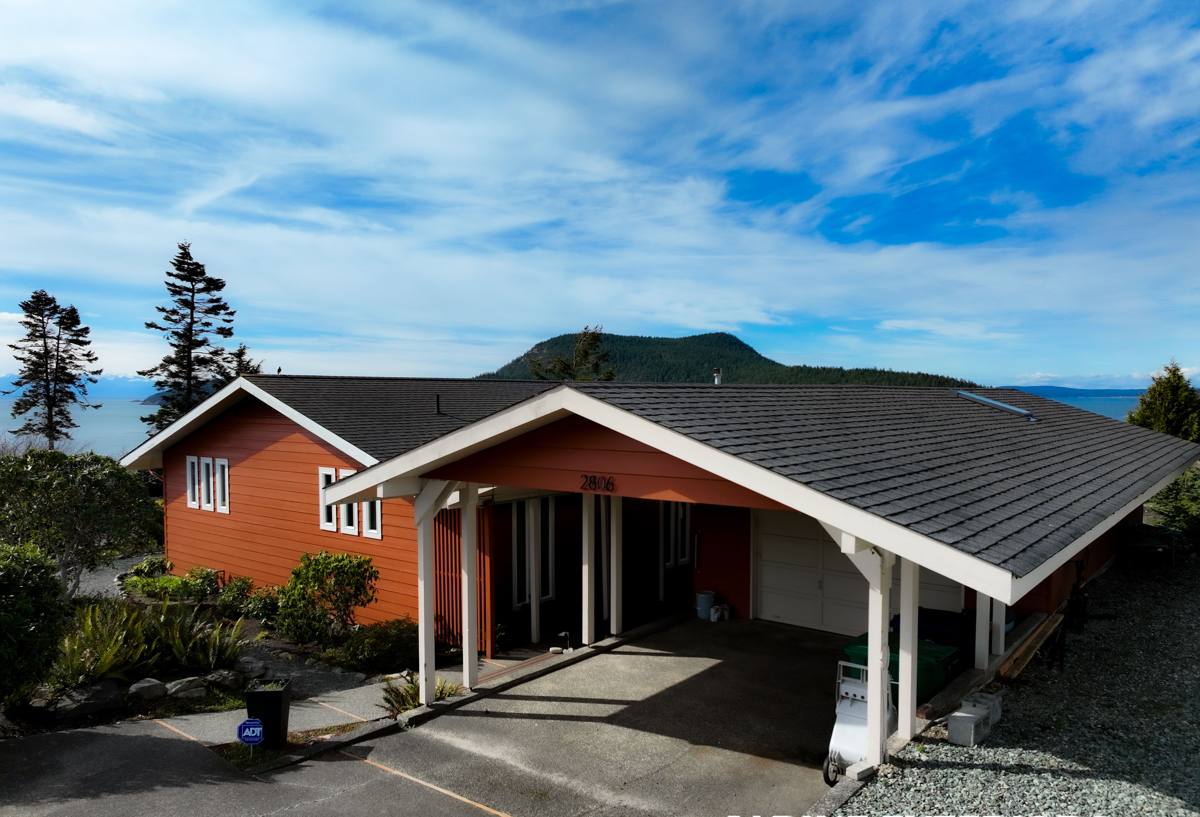
What Salt Air, Rain, and Moss Actually Do to a Home's Exterior
Salt Air
Salt in the air isn't just a coastal-Florida problem. Anywhere close to Puget Sound tidal water or estuary breezes, airborne salt settles on exterior surfaces and accelerates corrosion on anything metal — nails, screws, flashing, gutter hardware — and it slowly degrades paint films and coatings that aren't engineered to resist it. Over years, this shows up as premature rust bleed at fastener heads, pitting on lower-grade metal trim, and coatings that chalk and fade faster than the same product would inland.
Driving Rain
Everett gets plenty of straightforward vertical rainfall, but the exterior-damaging rain is the kind that comes in sideways during a windstorm off the Sound. Driving rain finds every gap in flashing, every undersized overlap in siding, and every spot where caulk has failed. It's the difference between water that sheds off a wall and water that gets pushed up and under laps, which is where rot and hidden water damage actually start.
Moss and Algae Season
Shaded, damp, and cool for a good chunk of the year — that's the exact recipe moss and algae need. On roofing, moss growth lifts shingles and holds moisture against the roof deck. On siding, algae staining is mostly cosmetic but it's also a signal: if a wall is staying damp long enough to grow algae, it's staying damp long enough to matter for whatever material is underneath the finish coat.
Siding in Riverside: Why Material Choice Is the Whole Ballgame
We install James Hardie fiber cement siding exclusively, and in an area with this combination of salt air, wind-driven rain, and extended damp season, that's not a marketing preference — it's the product category that actually holds up. Fiber cement doesn't rot, it isn't a food source for moss or algae the way wood-based products can be, and it's dimensionally stable enough that it doesn't swell and shrink with every wet-dry cycle the way engineered wood or spruce trim does.
We don't install vinyl, LP SmartSide, Cemplank, Allura, primed spruce, or cedar, and we're upfront about why. Vinyl can warp and become brittle under UV and temperature swings, and its seams and channels are more forgiving of water intrusion than a rigid fiber cement lap. Wood-based engineered siding products depend heavily on the integrity of an outer coating or resin-saturated surface; once that surface is compromised — a scratch, a poorly sealed cut end, a fastener that wasn't set right — moisture gets into the substrate and the clock starts on swelling and delamination. Real cedar is a beautiful, legitimate material, but it's also a maintenance commitment: re-staining or re-sealing on a recurring cycle, vigilance about moisture and pests, and a shorter realistic lifespan in a wet climate unless that maintenance never lapses. In a market with this much sustained moisture exposure, we'd rather put a product on a home that doesn't ask a homeowner to win that maintenance battle every single year.
James Hardie's ColorPlus finish is baked on in a factory-controlled process, which gives it better fade and chip resistance than field-applied paint, and it comes with a substantial, transferable limited warranty. Hardie also engineers regional HZ5 product lines specifically for climates like ours, which matters more in a place like Riverside than it would somewhere drier and milder.
Fiber Cement vs. Other Common Siding Options
| Factor | James Hardie Fiber Cement | Vinyl | Engineered Wood / Cedar |
|---|---|---|---|
| Moisture & rot resistance | Non-combustible, doesn't rot | Doesn't rot, but seams can trap water | Vulnerable if coating/seal fails |
| Moss/algae food source | No | No, but algae can grow on surface | Yes, especially untreated wood |
| Salt air / coastal durability | Strong, factory finish resists fade | Can become brittle over time | Coatings degrade faster near salt air |
| Maintenance cycle | Occasional wash, no repainting needed for years | Low, but cracks/warps aren't repairable | Re-stain/re-seal on a recurring schedule |
| Typical warranty structure | Long, transferable limited warranty | Varies, often prorated | Varies by product and coating |
Roofing That Actually Deals With Moss, Not Just Rain
A roof in Riverside has to do two jobs: shed driving rain without letting it work backward under shingles, and resist the moss growth that comes with shade and sustained dampness. That means attention to underlayment quality, proper flashing at every valley, chimney, and penetration, and ventilation that keeps the roof deck from staying damp longer than it needs to. Moss prevention starts at installation — proper ventilation and drainage detailing reduce how long a roof surface stays wet — and continues with the kind of straightforward maintenance (keeping gutters and valleys clear, addressing moss before it spreads) that keeps a well-installed roof performing for its full expected life.
Windows: The Air and Water Seal Nobody Sees Until It Fails
Windows take a beating from wind-driven rain in exposed spots and from the constant humidity cycling that comes with a marine climate. Proper flashing and sealing around the window opening matters as much as the window unit itself — a good window installed with poor flashing will leak, and a modest window installed correctly will outperform it. We pay close attention to how a window integrates with the siding system around it, because that transition point is one of the most common places water finds its way into a wall assembly.
Decks: Built to Handle Standing Water and Constant Damp
Decks near Riverside's lowland and waterside conditions deal with prolonged dampness underfoot, which means drainage and material choice both matter more than they would in a drier climate. Proper spacing, ledger flashing, and attention to how water moves off and away from the structure all factor into how long a deck holds up before boards start cupping or hardware starts corroding.
Why a Local Crew Matters Here
Exterior work in Snohomish County isn't the same job as exterior work in a dry inland climate, and a crew that mostly works in different conditions won't necessarily catch the details that matter here — flashing details that account for wind-driven rain, siding gaps sized correctly for our humidity swings, roof ventilation planned around moss risk rather than just code minimums. A crew that works Everett and the surrounding areas regularly has already seen what happens when those details get skipped, and builds around avoiding it the first time.
What to Look For When Vetting an Exterior Contractor Here
- Manufacturer training or certification on the specific siding product being installed, not just general carpentry experience
- A clear explanation of flashing and water-management details, not just the finish material
- Local references or a track record in Snohomish County's specific climate conditions
- Proper licensing, bonding, and insurance, verifiable through Washington's L&I contractor lookup
- A written scope that specifies underlayment, flashing, and fastening details — not just "siding installation"
- Willingness to explain trade-offs between materials honestly, including ones they don't install
What a Project Typically Involves
Every home is different, but most siding, roofing, or window projects in this area follow a similar arc: an on-site assessment of current conditions and problem areas, a clear scope covering materials and water-management details, the work itself, and a final walkthrough. For siding specifically, that includes checking existing sheathing and framing for hidden moisture damage before anything new goes up — a step that matters more in a climate that's been pushing water at a house for years than it would somewhere drier.
Get a Free, No-Pressure Estimate
If you're weighing options for siding, roofing, windows, or a deck on a home in Riverside or elsewhere around Everett, we're happy to take a look and give you a straight assessment of what your home actually needs — no pressure, no hard sell. Use the form below to request a free estimate.