 Everett
 Siding Repair Built for Riverside's Waterside Climate
True to its name, Riverside sits close to the water on the edge of Everett, and that proximity shapes everything about how siding ages here. Homes in this Snohomish County neighborhood deal with a specific combination of conditions: salt-laden air drifting in off Puget Sound, driving rain that comes in sideways during winter storms, and a moss season that can stretch from early fall well into spring. None of that is unique to Riverside, but the combination hits harder here than in drier, more sheltered parts of the county. Siding repair in this neighborhood isn't just about patching what's broken — it's about understanding why it broke in the first place and making sure the fix doesn't fail the same way twice.
What the Local Climate Does to Siding Over Time
Moisture Cycling
Everett's wet season isn't just about total rainfall — it's about how long siding stays saturated between dry spells. Wood-based products swell when wet and shrink when they finally dry out, and that constant movement works joints, fasteners, and paint film loose over years. Fiber cement resists this cycling far better than wood-based alternatives, but even Hardie siding needs correct flashing and drainage behind it to perform the way it's engineered to.
Moss, Algae, and Organic Growth
A long moss season means organic growth gets a real foothold on north-facing walls, under eaves, and anywhere air doesn't circulate well. Moss and algae hold moisture against the siding surface long after the rain has stopped, which accelerates whatever damage is already happening underneath. Left alone, that trapped moisture finds its way into seams, nail holes, and butt joints.
Salt Air and Corrosion
Being close to Puget Sound means Riverside homes get more airborne salt than inland Everett neighborhoods. Salt air accelerates corrosion of exposed fasteners, trim flashing, and lower-quality hardware. Over time this shows up as rust streaking, loosened boards, and failed caulk joints well before a homeowner would expect based on the siding's age alone.
Signs Your Riverside Home Needs Siding Repair
Most siding problems give warning signs long before they become structural issues. Homeowners in this neighborhood should watch for:
- Soft or spongy spots when you press on the siding, especially near the bottom courses
- Visible moss or algae staining that keeps coming back after cleaning
- Cracked, warped, or bubbling boards, particularly on walls facing prevailing wind and rain
- Paint that's peeling or blistering rather than just fading
- Gaps opening up at seams, corners, or around window and door trim
- Rust streaks running down from nail heads or metal flashing
- A musty smell or visible staining on interior walls that share an exterior wall with damaged siding
Any one of these on its own might be minor. Several together, especially on the same wall, usually mean water has been getting behind the siding for a while.
Common Repair Issues We See in Riverside Neighborhoods
Riverside has a mix of home ages and siding types, and each brings its own repair pattern. Older wood and cedar siding tends to show rot at butt joints and lower courses first, since that's where water lingers longest. Vinyl siding in this climate often cracks or warps at fastener points as temperature swings and moisture cause it to expand and contract more than it was designed for. Engineered wood products can suffer edge swelling and delamination if the factory sealant on cut edges wasn't maintained or was compromised during the original install. In every case, the underlying pattern is the same: this climate finds the weak point in whatever material and workmanship is behind the wall, and it finds it faster than in drier regions.
What a Correct Siding Repair Actually Involves
A repair that just replaces the visible damaged board and moves on is a repair that's likely to fail again. Done right, a siding repair in a climate like this one involves:
- Diagnosing the cause, not just the symptom — figuring out why water got behind the siding in the first place, whether that's failed caulking, missing flashing, or a drainage problem
- Checking the water-resistive barrier behind the damaged section for tears, gaps, or improper overlaps
- Verifying flashing at windows, doors, and any penetrations near the repair area
- Matching material and profile so the repaired section performs — and looks — consistent with the rest of the wall
- Correct fastening and sealing using materials rated for coastal, high-moisture exposure
- Addressing the root cause, such as poor grading, clogged gutters, or vegetation holding moisture against the wall
Skipping the diagnostic step is the single most common reason a siding repair has to be redone within a few years.
Repair or Replace? Weighing the Real Cost Factors
Not every problem calls for full replacement, and not every repair is worth doing on its own. The right call depends on how much of the wall is affected, what's causing the damage, and how the existing material is holding up elsewhere on the home.
| Factor | Favors Repair | Favors Replacement |
|---|---|---|
| Extent of damage | Isolated to one or two sections | Spread across multiple walls |
| Underlying material condition | Rest of the siding is sound | Widespread cracking, rot, or warping elsewhere |
| Age of existing siding | Relatively new, still under warranty | Near or past expected service life |
| Cause of damage | One-time event (impact, isolated flashing failure) | Ongoing moisture or material failure pattern |
| Moisture found behind siding | Localized, contained | Present at multiple points or in sheathing |
When damage is contained and the rest of the wall is performing well, a targeted repair is the honest and cost-effective answer. When we find the same failure pattern repeating across a home, or moisture has reached the sheathing in more than one spot, patching becomes a short-term fix for a problem that will keep resurfacing.
Our Process for Riverside Siding Repair
- Inspection — we walk the exterior and identify every area showing signs of damage, not just the spot you called about
- Moisture check — probing or moisture-metering suspect areas to see how far water has traveled behind the siding
- Diagnosis — pinpointing the source: flashing, caulking, drainage, or material failure
- Written plan — a clear scope covering what needs repair, what can be monitored, and honest pricing before any work starts
- Repair execution — removing damaged material, correcting the underlying cause, and installing matched replacement material
- Final check and cleanup — confirming the repair sheds water correctly and leaving the site clean
We don't upsell repairs into replacements that aren't needed, and we don't recommend patch jobs on homes where the underlying material is failing everywhere. The estimate reflects what the home actually needs.
Why We Repair and Replace with James Hardie Fiber Cement
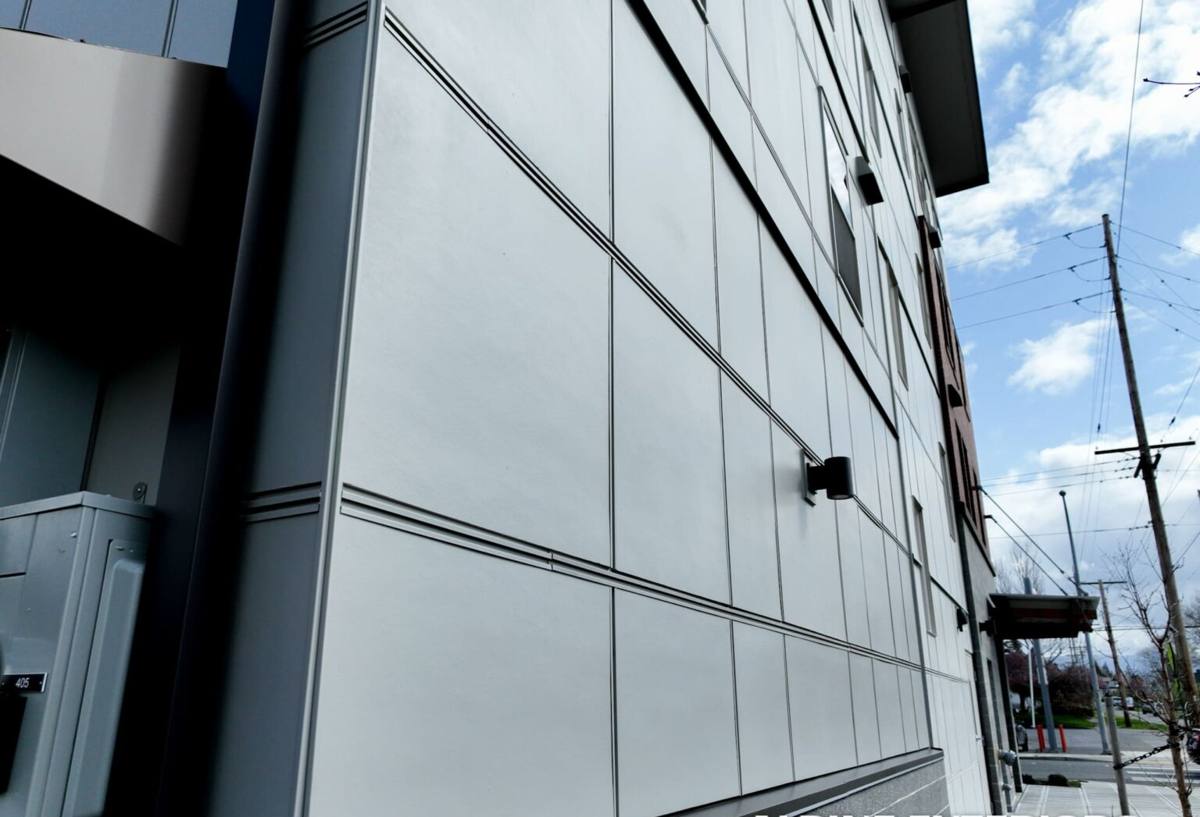
When a repair uncovers damage extensive enough to warrant replacing full sections — or an entire elevation — we install James Hardie fiber cement, and only James Hardie. We don't patch in vinyl, LP SmartSide, cedar, or other fiber cement brands, even when it would be the faster or cheaper fix in the moment. In a climate that cycles between soaking rain and dry spells, with salt air and a long moss season on top of it, fiber cement handles moisture without the swelling, warping, and edge failures that wood-based and engineered wood products are prone to. Hardie's ColorPlus factory finish also holds color and resists the fading and repainting cycle that repeated moisture exposure accelerates on field-painted siding. For homes in this neighborhood, we typically recommend Hardie's HZ5 product line, engineered specifically for climates with significant moisture exposure. It's backed by a strong transferable warranty, which matters on a home that will likely change hands at some point. Mixing in a different material during a repair might solve today's problem while quietly setting up the next one — we'd rather do the replacement section right the first time.
Why a Crew That Already Works Riverside Matters
Every neighborhood in Everett has its own siding failure patterns, and Riverside's are shaped by its closeness to the water. A crew that's already worked on homes here recognizes the difference between cosmetic algae staining and a moisture problem that's been building for years, knows which wall orientations take the worst of the wind-driven rain, and understands how salt air affects fastener and flashing choices over time. That kind of familiarity shortens the diagnostic process and reduces the chance of a repair that looks fine for a season and then fails again. It also means less guesswork for you as a homeowner — you're working with a crew that has already seen this exact climate do this exact kind of damage to homes like yours.
Get a Straight Answer About Your Siding
If you're seeing warning signs on your Riverside home — soft spots, recurring moss stains, gaps at the seams, or paint that won't stop peeling — it's worth having someone look before the damage spreads further behind the wall. We offer free, no-pressure estimates for siding repair in Riverside and throughout Everett, and we'll give you an honest read on whether your home needs a targeted repair or something more. Fill out the form below to get started.