 Everett
 Exterior Work on Port Gardner Bay
Port Gardner sits right where Everett meets the water, and that location shapes everything about how a house ages here. Homes along and near Port Gardner Bay take on a mix of conditions that inland Snohomish County neighborhoods simply don't deal with in the same combination: salt-laden air coming off the bay, wind-driven rain that hits siding at an angle instead of falling straight down, and long stretches of gray, damp weather that keep exterior surfaces wet for days at a time. Add in the shade from mature trees common in older Everett neighborhoods, and you get a near-permanent moss season that runs from fall through spring.
None of this is unusual for western Washington. But it is a lot to ask of exterior materials that weren't built with coastal exposure in mind. We work on homes throughout Port Gardner and the rest of Everett, and the patterns we see here are consistent: siding that's failed from the inside out, roofs carrying more moss than they should, window frames showing early corrosion or rot, and decks that never quite dry out between storms.
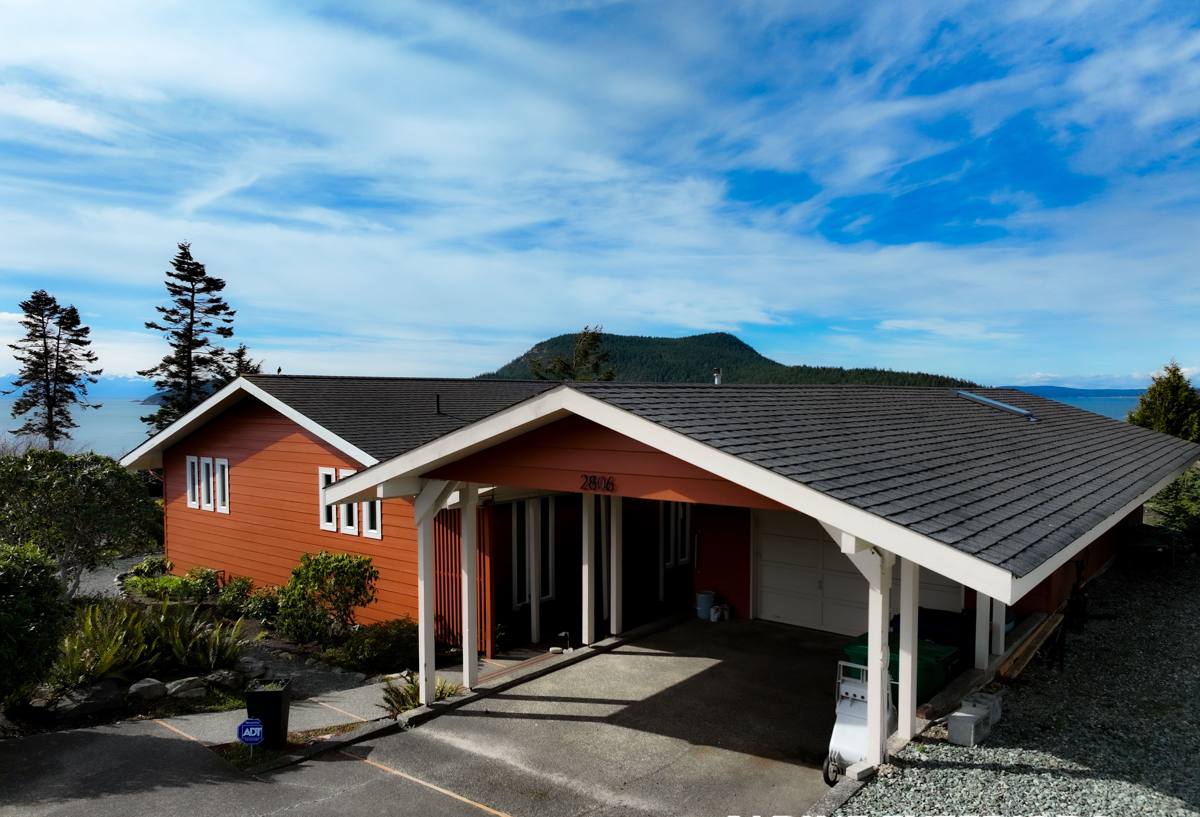
Siding That Can Actually Handle Salt Air and Rain
Siding is the first line of defense against everything the bay throws at a house, and it's also the material most likely to fail quietly. A lot of exterior damage in this area doesn't show up as an obvious problem — it shows up as soft spots, bubbling paint, or a slightly swollen bottom edge that's easy to miss until it's expensive to fix.
Why We Only Install James Hardie
We install James Hardie fiber cement siding exclusively. We don't install vinyl, LP SmartSide, cedar, primed spruce, or other fiber cement brands like Cemplank or Allura. That's not a marketing position — it's a standard we've held to because of what we've seen happen to other materials in exactly this kind of climate.
Wood-based siding products, including engineered wood like LP SmartSide, rely on a factory treatment and careful field sealing to keep moisture out. In a climate with this much sustained dampness, any gap in that protection — a poorly caulked seam, a nail driven wrong, a cut edge left unsealed — becomes an entry point for water. Once moisture gets into the substrate of an engineered wood product, it can swell, soften, and eventually rot from the inside, often before it's visible from the outside. Vinyl siding handles moisture differently but has its own coastal weak point: it expands and contracts with temperature swings and can become brittle over time, and salt air accelerates the fading and chalking of its color, which can't be restored once it happens.
James Hardie fiber cement is cement, sand, and cellulose fiber — it doesn't rot, it isn't a food source for moss or mildew, and it's rated non-combustible. The ColorPlus factory finish is baked on and warrantied against fading and peeling, which matters in a spot where the color is going to get tested by driving rain year-round. Hardie's HZ5 product line is specifically engineered for climates with more moisture exposure, which fits Port Gardner's conditions well. We've standardized on it because it's the one exterior material we're comfortable putting our name behind here.
What Correct Installation Looks Like
Fiber cement siding is only as good as its installation. Proper flashing, correct fastener placement, appropriate gaps at trim and butt joints, and factory-cut or properly sealed field cuts all matter — skipping these steps is what causes the moisture problems that give any siding product a bad reputation. We install to manufacturer spec because in a wet, salty climate, the margin for installation error is smaller than it is elsewhere.
Roofing for a Long Moss Season
Roofs near Port Gardner deal with two compounding problems: near-constant rain and, in shaded or tree-covered lots, moss and algae growth that doesn't fully stop even in summer. Moss holds moisture against roofing material, and over time it can lift shingle edges, degrade granule coatings, and shorten the life of a roof that would otherwise perform fine.
- Regular moss and debris removal, especially on north-facing slopes and under tree cover
- Flashing checks around chimneys, vents, and valleys, where wind-driven rain finds its way in first
- Gutter and downspout function — clogged gutters back water up under the roof edge
- Attic ventilation, which affects how well a roof dries out between storms
We handle roof replacement and repair as part of full exterior projects, and we pay particular attention to how a new roof will shed water and resist moss given a home's specific sun exposure and tree cover.
Windows: Sealing Out Wind-Driven Rain
Windows on homes exposed to Port Gardner Bay take a different kind of beating than windows on a sheltered inland lot. Wind off the water pushes rain sideways into gaps that would never be a problem in calmer conditions, and salt in the air can accelerate corrosion on hardware and metal components over the years. Older single-pane or poorly sealed windows in this area often show it through drafts, fogging between panes, visible frame deterioration, or water staining on interior sills after a hard storm.
When we replace windows as part of an exterior project, we're paying attention to flashing integration with the siding system, not just the window unit itself — a well-sealed, well-flashed window opening is what actually keeps water out over the long run, more than the window product alone.
Decks: Built to Dry Out Between Storms
A deck near the water spends more of the year wet than dry. That constant moisture cycle, combined with shade and organic debris from nearby trees, makes decks in this area prone to moss buildup, slick surfaces, and accelerated rot in ledger boards, joists, and any wood-to-wood contact points that don't drain well. We build and repair decks with attention to drainage, proper flashing at the house connection, and material choices that hold up to sustained dampness rather than just looking good on a dry install day.
Comparing Exterior Options for a Coastal Climate
| Factor | James Hardie Fiber Cement | Vinyl Siding | Wood / Engineered Wood |
|---|---|---|---|
| Moisture resistance | Does not rot or absorb water into the substrate | Sheds water but can trap moisture behind panels | Vulnerable if any seal or coating fails |
| Salt air / fading | Factory ColorPlus finish warrantied against fading | Color can chalk and fade with prolonged UV and salt exposure | Paint or stain needs more frequent recoating near the water |
| Moss / organic growth | Non-organic material, doesn't feed growth | Resistant but seams and J-channel can trap debris | Susceptible, especially in shaded, damp spots |
| Fire rating | Non-combustible | Combustible | Combustible |
| Long-term maintenance | Low — periodic cleaning and caulk checks | Low but limited repair options once damaged or faded | Higher — ongoing sealing, painting, and rot monitoring |
Signs Your Port Gardner Home's Exterior Needs Attention
- Soft, spongy, or discolored spots on siding, especially near the ground or window trim
- Heavy moss coverage on roof slopes, particularly on the north or shaded side
- Drafts, fogging, or visible frame damage around older windows
- Standing water or slow drainage on deck surfaces after rain
- Paint or finish that's chalking, peeling, or fading unevenly
- Rust streaks near fasteners, flashing, or hardware
Why a Local Everett Crew Matters Here
Exterior work in a bay-adjacent neighborhood isn't identical to exterior work ten miles inland. Flashing details, material choices, and even the sequencing of a project need to account for wind direction off the water and how long surfaces stay wet after a storm. A crew that works across Snohomish County regularly, rather than one flown in for a single job, has a better feel for how Port Gardner's specific mix of salt air, rain, and shade actually plays out on a roof or wall over several winters — not just on installation day.
We also know the practical side of working in this neighborhood: navigating tighter lots near the waterfront, coordinating around weather windows that can close quickly, and communicating clearly with homeowners throughout a project rather than disappearing between the estimate and the finish work.
How We Approach a Port Gardner Project
Every project starts with an honest look at what's actually happening with your siding, roof, windows, or deck — not just what's visible from the street. We'll walk the exterior with you, point out any moisture, moss, or wear issues we find, and explain the trade-offs of your options in plain terms. If siding replacement makes sense, we'll explain why we recommend James Hardie for a property in this location specifically, based on its exposure to the bay, tree cover, and sun.
If you're noticing wear on your home's exterior, or it's simply been a long time since anyone looked closely at your siding, roof, windows, or deck, we're happy to come take a look. Reach out for a free, no-pressure estimate using the form below.