 Everett
 Exterior Work Built for Marysville's Climate
Marysville sits where the Snohomish River delta meets Puget Sound, and that location shapes what happens to a house over time. Homes here deal with salt-tinged air rolling in off the water, long stretches of driving rain from fall through spring, and a moss season that can run eight or nine months out of the year on shaded roof slopes and north-facing walls. None of that is unusual for Snohomish County, but it adds up differently depending on how a house was built and what it's covered in.
Everett Exterior works throughout Marysville on siding, roofing, windows, and decks. We're not a national outfit dispatching a different crew every visit — we're based nearby, we know which streets sit low and collect standing moisture, which neighborhoods get the worst wind-driven rain off the Sound, and which older homes were built before local code caught up with the way this climate actually treats a building envelope.
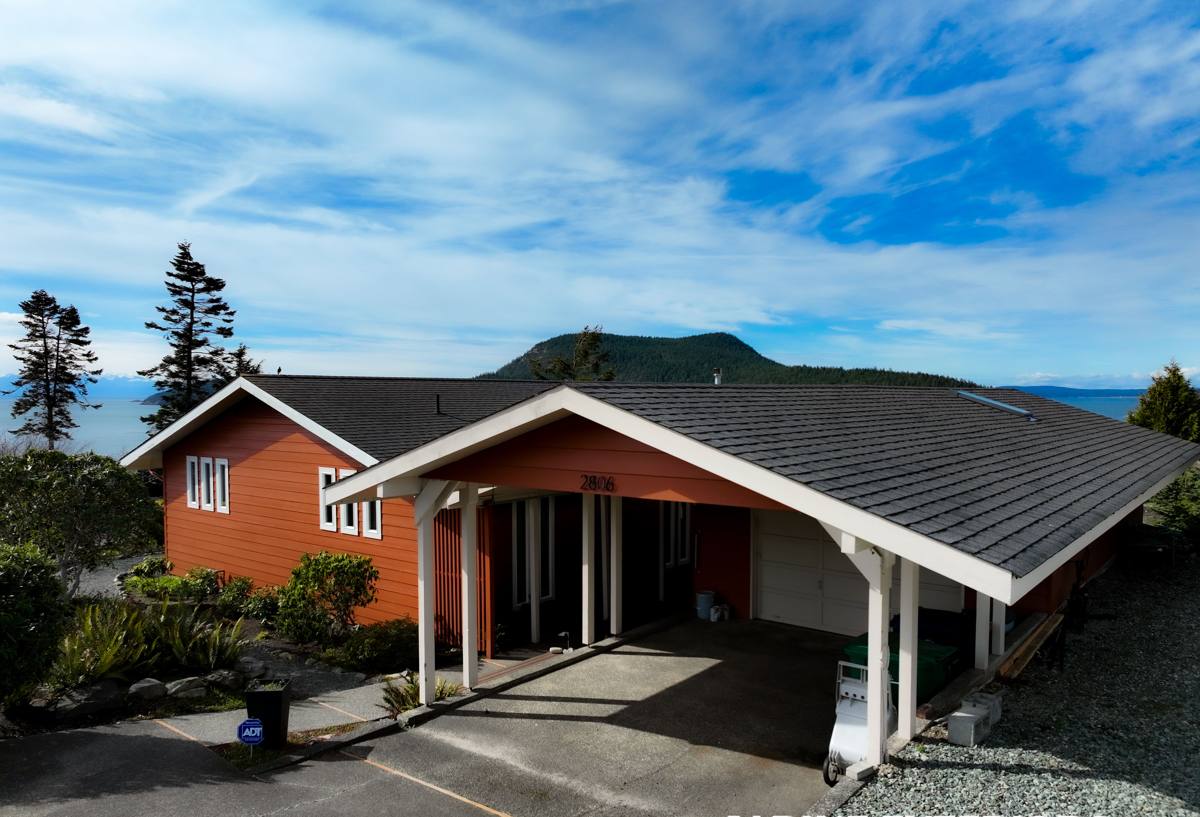
What the Climate Does to a House Here
Salt Air and Moisture
Marysville isn't oceanfront, but it's close enough to tidal water that airborne salt and moisture reach siding, trim, and fasteners over the years. Salt-laden air accelerates corrosion on unprotected metal and speeds up the breakdown of materials that weren't engineered to handle repeated wet-dry cycling. It's a slow process, which is exactly why it gets ignored until a homeowner is looking at soft trim boards or rust bleeding through paint.
Driving Rain
Storms coming off the Sound don't just fall straight down — wind pushes rain sideways into wall assemblies, especially on the west and south exposures of a house. That means siding seams, window flashing, and butt joints take on real water pressure, not just incidental moisture. A house can look fine from the curb and still have water finding its way behind the cladding if the flashing details were never done right.
Moss and Shade
Marysville has plenty of mature tree cover, and shaded roofs and north walls stay damp far longer after a storm than sun-exposed ones. Moss doesn't just look bad — on roofing it lifts shingle edges and holds moisture against the substrate, and on siding or decking it accelerates rot in wood-based products. Homes tucked under fir and cedar canopy see this the worst.
Signs Your Exterior Is Losing the Battle
- Soft or spongy spots on siding, trim, or fascia boards
- Moss buildup on north-facing roof slopes or wall sections
- Paint that's bubbling, peeling, or needs repainting more often than it used to
- Rust streaks below nail heads or metal flashing
- Windows that fog between panes or feel drafty near the frame
- Deck boards that feel spongy, cup, or have visible fungal staining
Siding: Why We Only Install James Hardie
Everett Exterior installs James Hardie fiber cement siding exclusively. We don't offer vinyl, LP SmartSide, cedar, primed spruce, or other fiber cement brands like Cemplank or Allura — not because there's no market for them, but because after years of doing exterior work in this exact climate, we don't think they hold up as well against what Snohomish County throws at a house, and we'd rather stand behind one product we trust fully than offer several we have reservations about.
Where Other Products Fall Short Here
Vinyl siding is affordable and low-maintenance in mild climates, but it expands and contracts with temperature swings, can warp under sustained heat reflection, and its seams are a known path for wind-driven rain intrusion — a real concern given how much sideways rain this area sees. Wood-based siding, whether cedar or engineered products like LP SmartSide, depends heavily on an intact factory coating and diligent caulking to keep moisture out; once that seal is compromised, wood-based substrates are vulnerable to the same rot and moss issues that plague decks and fascia boards in shaded, damp yards. These aren't failures of the products themselves — they're trade-offs that matter more in a marine climate with heavy tree cover than they would somewhere dry.
What James Hardie Gets Right
James Hardie fiber cement is non-combustible, doesn't support moss growth the way wood does, and holds up to repeated wet-dry cycling without the warping or swelling that plagues wood-based products. It comes factory-finished with ColorPlus technology, so the color coat is baked on and cured before it ever reaches a job site — far more consistent than field-applied paint, and backed by its own finish warranty separate from the substrate warranty. Hardie also engineers specific product lines (HZ5, HZ10) for different climate zones, which matters in a region that sees both coastal moisture and, occasionally, real cold snaps.
| Factor | Vinyl | Wood / Engineered Wood | James Hardie Fiber Cement |
|---|---|---|---|
| Moisture resistance | Seam-dependent | Coating-dependent | Engineered for wet climates |
| Moss/rot resistance | Doesn't rot, but algae grows on surface | Vulnerable once coating fails | Doesn't support rot |
| Fire rating | Combustible | Combustible | Non-combustible |
| Finish | Color molded in, can fade | Field or factory paint | Factory-cured ColorPlus finish |
| Typical lifespan installed to spec | 20-30 years | 15-25 years | 30-50+ years |
Roofing for Marysville's Wet, Mossy Conditions
Roofing here has to deal with sustained rain, wind, and moss all at once. We look at more than just shingle condition when we're on a roof — we check flashing around chimneys and valleys, ventilation (a poorly ventilated attic traps moisture and accelerates deck rot from underneath), and how much shade and moss exposure the roof gets. On heavily shaded lots, we'll talk through moss prevention options as part of the job, not as an upsell after the fact.
Roof replacement or repair timing matters too — this is not a climate where you want to wait through another wet season on a roof that's already showing granule loss or lifted shingles at the edges.
Windows That Actually Seal Out Driving Rain
A lot of window failures in this area aren't really window failures — they're installation failures. Wind-driven rain finds gaps in flashing and sealant long before it defeats a properly rated window unit. When we replace windows, we treat the flashing and water management detailing around the opening as equally important as the window unit itself. We also talk with homeowners about energy performance, since Snohomish County's damp cold means single-pane and older double-pane windows are both a comfort problem and a moisture problem, with condensation forming on cold glass and dripping into sills over time.
Decks Built to Handle Shade and Moisture
Decks in Marysville's tree-covered lots take a beating from moisture that never fully dries between rain events. Wood decking is workable if it's maintained on a real schedule — sealing, cleaning, and prompt repair of any soft boards. Composite decking trades that maintenance burden for a higher upfront cost but handles sustained dampness and shade far better over the long run, without the rot risk that wood carries in a low-sun, high-moisture spot. We'll walk through both honestly based on where your deck sits and how much sun it actually gets.
Cost Factors to Expect
| Project | What Drives the Price |
|---|---|
| Siding replacement | Square footage, number of stories, trim detail, existing siding removal |
| Roofing | Roof pitch and complexity, layers to remove, decking condition underneath |
| Window replacement | Number of openings, window size/type, flashing and trim work needed |
| Decking | Square footage, material choice (wood vs. composite), structural condition of framing |
Every property is different, and the only way to get real numbers is to have someone look at the actual house — which is what a free estimate is for.
Why a Local Crew Matters
Anyone can drive in from out of the area and quote a job. What's harder to fake is knowing that a Marysville lot near the flats behaves differently than one up on higher ground, or that a north-facing wall under mature trees is going to need different attention than a sun-exposed south wall three streets over. We work this area regularly enough to have a feel for it, and we're around after the job is done if a warranty question or follow-up comes up — not just for the install, but for the years after.
Getting Started
If you're noticing moss creeping onto your roof, siding that's holding moisture longer than it should, windows that fog or draft, or a deck that's starting to feel soft underfoot, it's worth having someone take a look before the next wet season makes the problem worse. We offer free, no-pressure estimates for siding, roofing, window, and deck projects throughout Marysville — fill out the form below and we'll get you scheduled.