 Everett
 Ask three different homeowners in Everett what they paid for a roof replacement and you'll get three numbers that don't seem to line up, even for houses of similar size. That's not because someone got a bad deal or a great one — it's because a roof replacement estimate is built from a long list of variables, and most online "average cost" figures only account for one or two of them. Roof size gets the most attention, but pitch, tear-off complexity, decking condition, material, and a handful of details specific to Snohomish County's climate all move the final number just as much.
This guide walks through what actually goes into a roofing estimate so that when you're comparing bids, you're comparing what's really being done to your house — not just a bottom-line total.
Roof Size Sets the Floor, Not the Final Number
Roofers price in "squares" — one square is 100 square feet of roof surface. A modest single-story rambler in Everett's older neighborhoods might come in around 20-25 squares; a larger two-story home with a cut-up roofline can run 40 squares or more. Material and labor are typically quoted per square, so size determines the starting point of a bid. But two homes with the same square footage can land on very different numbers once the factors below get added in — which is why "cost per square foot" comparisons between bids are often misleading.
Pitch and Roof Complexity
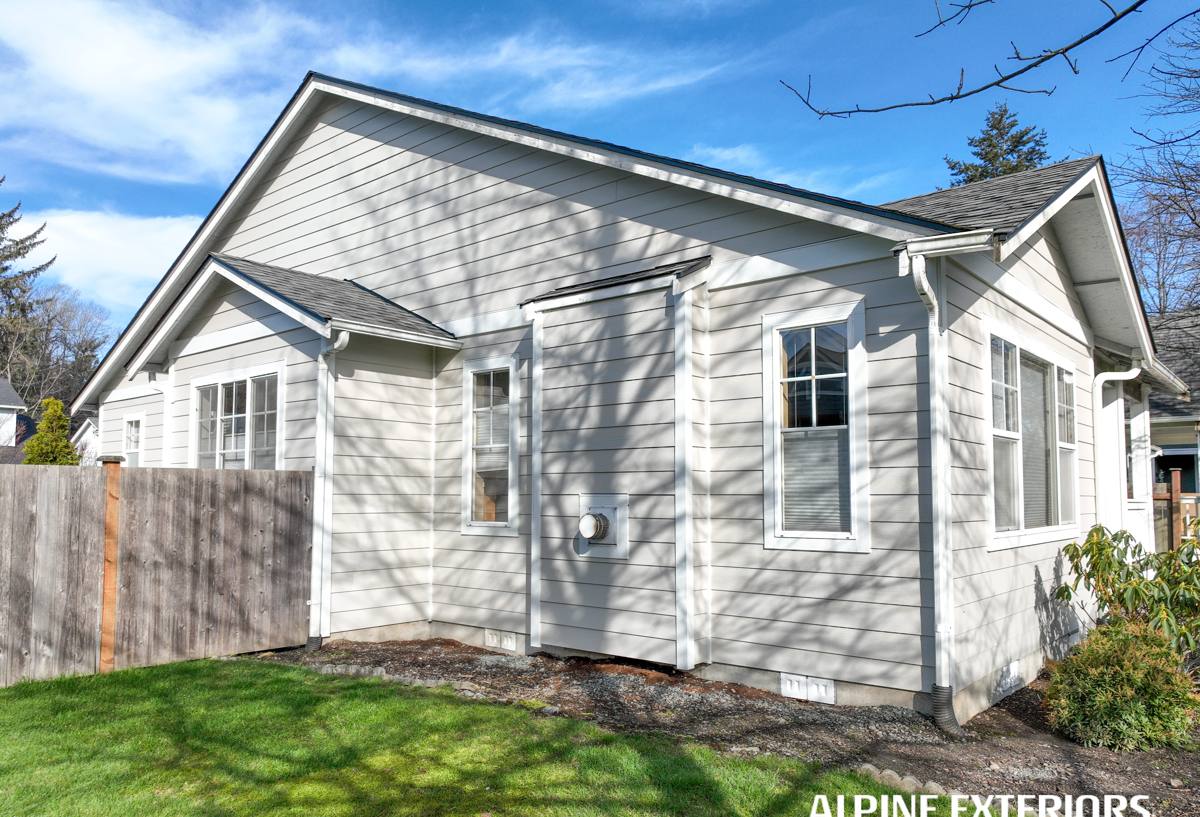
A steep roof takes longer to work safely — more time rigging fall protection, more time moving material by hand instead of by machine, more time on every single step of the job. Complexity compounds that: a simple roof with one ridge and a couple of straight rooflines is quick work compared to a roof with several valleys, dormers, hips, and roof-to-wall transitions, each of which needs its own flashing detail cut and installed by hand.
Why this shows up on Everett bids
Neighborhoods built up around Rucker Hill and the view lots overlooking Port Gardner Bay tend to have more roof planes and steeper pitches than a standard tract layout, because the roofline was designed around the view rather than around ease of construction. That's a legitimate driver of cost, and it's worth knowing before you're comparing a bid on a view-lot home against a bid for a simple rectangular roof elsewhere in the county.
Tear-Off: What Comes Off Before Anything Goes On
A single layer of shingles tears off relatively fast. Two layers — common on older Everett homes where a previous roof was installed over the existing one instead of stripped first — takes meaningfully longer to remove and produces meaningfully more debris to haul away. Washington's building code generally caps roofs at two layers of asphalt shingles, so if your roof already has two, this replacement means a full tear-off to bare decking regardless of what goes back on, and that labor and disposal time belongs in the estimate.
Decking Condition — the Line Item No One Can Quote Up Front
What's under the shingles can't be fully assessed until the old roofing is stripped off. A solid estimate includes an allowance for a reasonable amount of decking replacement, priced per sheet if more turns out to be needed once tear-off is underway. Given how many months a year this region stays wet, it's common to find soft or delaminated decking around valleys, chimney flashings, and old vent boots — spots where a small gap has been letting water in slowly, long before it ever showed up as a stain on a ceiling. A straightforward contractor shows you the damaged sheets before replacing them and prices that work per sheet rather than folding a padded guess into the original number.
Material Choice: What Moves and What Doesn't
Material is what most homeowners fixate on, and it does affect price — but the gap between the cheapest option and a premium one is usually smaller than people expect once labor, tear-off, and detail work are counted.
| Material | Relative Cost | Notes for Snohomish County |
|---|---|---|
| 3-tab asphalt shingles | Lowest | Shortest realistic service life under sustained moss pressure and driving rain; least wind resistance |
| Architectural (laminate) asphalt shingles | Moderate | Best value for most homes; look for algae-resistant granules given how long moss season runs here |
| Standing seam metal | Highest upfront | Long service life if fasteners and flashing are specified for salt-air exposure near the water; low long-run maintenance |
| Composite/synthetic shingle | Moderate to high | Solid moisture and impact resistance; warranty terms vary a lot between manufacturers, so read them closely |
The right choice usually isn't "the cheapest option" or "the top-tier option" — it's whichever material matches how long you plan to stay in the house and how much roof maintenance you actually want to keep up with.
Climate-Driven Line Items — and Why They're Worth Paying For
A few items on an Everett roofing estimate exist specifically because of where this county sits, and cutting them to save money tends to cost more within a few years.
Corrosion-resistant fasteners and flashing
Salt air off Port Gardner Bay and the Sound accelerates corrosion on standard fasteners and flashing metal faster than it would inland. Higher-grade coated or stainless fasteners cost more per box, but on a home within a few miles of the water, standard galvanized hardware can start losing holding strength well before the shingles themselves are due for replacement.
Upgraded underlayment
Driving, wind-blown rain is a regular feature of a Puget Sound winter, and it pushes water sideways and upward under shingle tabs in a way calmer climates rarely deal with. Self-adhered ice-and-water shield at eaves, valleys, and penetrations, plus a full synthetic underlayment instead of a bare-minimum felt layer, cost more upfront but function as the roof's actual backup layer of protection.
Attic ventilation upgrades
A lot of older Everett homes were built with less attic ventilation than current practice calls for. Adding proper intake and exhaust venting during a re-roof adds cost but reduces the trapped moisture that leads to early decking rot — a real concern in a climate where the wet season runs a good chunk of the year.
Moss-resistant products
Copper or zinc strips at the ridge, along with shingles that use algae-resistant granules, add a modest amount to the bid but meaningfully slow moss regrowth on shaded, north-facing slopes — which describes a large share of tree-covered lots around Everett and unincorporated Snohomish County.
Labor, Access, and Site Conditions
Beyond the roof surface itself, a handful of site factors move labor cost up or down:
- Steep or narrow driveways that slow material staging and dumpster placement
- Limited roof access requiring extra fall protection or crane-assisted material delivery
- Multiple stories, which slow tear-off and every material handoff
- Landscaping or hardscaping that needs protecting during tear-off and disposal
- Skylights, solar panels, or satellite equipment that need to be worked around or temporarily pulled
Permits and Code Requirements
Roof replacements in Everett and Snohomish County typically require a building permit, and permit fees are a modest but genuine line item in a complete estimate. Depending on the scope of the job, code may also call for ventilation upgrades or other items to be brought current as part of the replacement. A contractor who pulls the permit and prices any required code items into the original bid is doing you a favor — those items showing up later as a change order is a sign the estimate wasn't done carefully the first time.
Costs Homeowners Often Forget to Ask About
| Item | Why It Gets Missed |
|---|---|
| Dump fees and disposal weight | Heavier tear-offs — multiple layers, wood shake, heavy tile — cost more to haul and dispose of than a single layer of asphalt |
| Gutter and downspout work | Old gutters often get damaged during tear-off or no longer fit correctly with new drip edge detail |
| Skylight replacement vs. reflash | Older skylights may need full replacement rather than just reflashing to hold a warranty |
| Paint or trim touch-up | Fascia and trim board damage sometimes only becomes visible once old roofing is off |
| Warranty registration | Manufacturer warranties often require certified installer registration to be valid — worth confirming in writing |
How to Read an Estimate Instead of Just Comparing Totals
A single bottom-line number tells you almost nothing about whether two bids are actually comparable. Before deciding, it helps to check for a few specifics in writing:
- Is the tear-off scope the same — full tear-off to decking, or roof-over?
- Does the bid specify underlayment type and ice-and-water shield coverage, or just say "standard underlayment"?
- Is there a stated per-sheet price for decking replacement, or is it a vague allowance?
- Are fasteners and flashing specified as corrosion-resistant, especially for homes near the water?
- Does the bid include permit costs, or are they billed separately later?
- What's the manufacturer warranty term, and does it require a certified installer to be valid?
A lower number that's vague on these points isn't necessarily a better deal — it may just be missing scope that shows up later as an add-on.
What This Means for Planning Your Budget
Rather than anchoring on a single average price, it's more useful to think in terms of a realistic range for your specific roof once size, pitch, complexity, material, and the climate-driven items above are all accounted for. A written, itemized estimate that spells out these factors gives you something to actually compare between contractors — and gives you a much better sense of what you're paying for than a one-line total ever will.
If you'd like a clear, no-pressure look at what these factors mean for your specific roof, we're happy to walk your property and put together a written estimate that spells out exactly what's included — no guesswork, no surprise change orders.