 Everett
 Living in Bayside: A Different Kind of Weather to Build For
Bayside sits close enough to the water that homeowners here deal with a version of Everett's climate that's a notch harder on a house than what you'd see further inland in Snohomish County. Proximity to Port Gardner Bay and Possession Sound means salt-laden air moves through the neighborhood regularly, wind-driven rain comes in sideways during winter storms, and the long gray stretch between fall and spring gives moss, algae, and mildew months to get established on anything that stays damp. None of that is unusual for a Puget Sound waterfront-adjacent community, but it does mean the exterior of a Bayside home is working harder than the brochure photos of Pacific Northwest living usually suggest.
We work on homes throughout Everett and Snohomish County, and Bayside is one of the areas where the difference between a generic install and one that accounts for local conditions shows up fastest — sometimes within a single wet season.
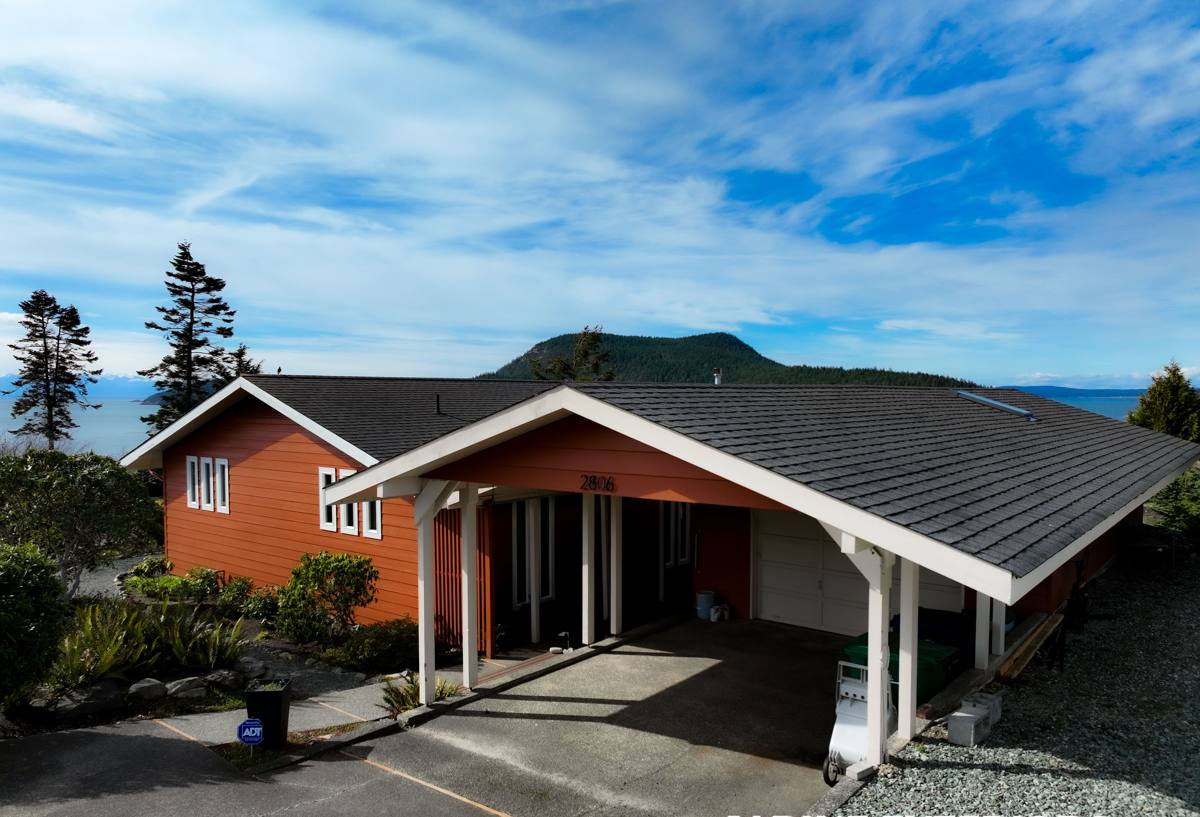
Siding That Can Handle Salt Air and Moss
Salt air is corrosive to fasteners and hard on finishes, and it accelerates the breakdown of anything that isn't built to resist moisture intrusion. Combine that with the region's moss season — long stretches of damp, low-sun conditions, especially on north- and west-facing walls that don't dry out between rain events — and you get a climate that punishes siding materials with weak points at the seams, the finish, or the substrate itself.
Why We Only Install James Hardie Fiber Cement
We made a decision a while back to install only James Hardie fiber cement siding, and we don't install LP SmartSide, vinyl, Cemplank, Allura, primed spruce, or cedar. That's not a knock on every homeowner who has one of those products on their house today — plenty of them perform fine for years under the right conditions and maintenance. But when we weigh what holds up best against sustained coastal moisture, freeze-thaw cycles, and the maintenance reality of Western Washington, fiber cement wins on the trade-offs that matter most:
- Hardie's fiber cement is non-combustible, which matters for insurance and for peace of mind, and it doesn't rot, delaminate, or attract insects the way wood-based products can.
- The ColorPlus factory finish is baked on under controlled conditions, so it resists fading and chipping far better than field-applied paint, which means fewer repaint cycles over the life of the siding.
- Hardie's HZ5 product line is engineered specifically for climates like ours — freeze-thaw cycling, sustained damp exposure, and coastal air — rather than a one-size-fits-all formulation.
- The warranty is transferable and backed by a manufacturer with decades of track record, which adds real value if you sell the home down the road.
Vinyl siding is inexpensive and low-maintenance in the sense that it doesn't need painting, but it can warp under heat, become brittle in cold snaps, and its seams give moisture a path inward over time — a real concern with the volume of driving rain Bayside sees. Wood products like cedar and primed spruce look great when new, but they demand a maintenance schedule most homeowners underestimate, and in a climate this wet, gaps in that maintenance show up as rot faster than people expect. Engineered wood products like LP SmartSide have improved over the years, but they're still wood-based at the core, which means the same moisture vulnerability if the factory treatment and field-applied caulking aren't kept up perfectly. We'd rather put a product on your house that we're confident will still look right and perform well fifteen and twenty years from now, with less upkeep in between.
Roofing for Driving Rain and Wind
Roofs in Bayside take a beating from the same weather that's hard on siding — wind-driven rain that gets pushed up under poorly sealed shingles or flashing, and moss growth that, left unaddressed, holds moisture against the roof deck and shortens the life of even a well-installed roof. Good roofing work here isn't just about the shingle or membrane itself; it's about flashing details around chimneys, vents, and valleys, proper underlayment, and ventilation that keeps moisture from building up in the attic space. We install and repair roofing systems with those local realities in mind, not a generic checklist built for a drier climate.
Windows: Comfort, Condensation, and Water Intrusion
Older or poorly sealed windows in a home like the ones common around Bayside tend to show two problems: condensation between panes or on interior glass during cold, damp stretches, and slow water intrusion around frames that isn't obvious until there's damage to the wall behind it. Replacement windows sized and flashed correctly for the opening, with proper weatherproofing at the sill and jambs, solve both issues and typically cut down on drafts and energy loss as a side benefit. Window work is also a natural pairing with a siding project, since both involve getting the water management at wall penetrations right at the same time.
Decks: Built for a Wet Climate
A deck in this climate spends most of the year exposed to moisture, and the details that get skipped on a budget build — proper ledger flashing, gapped decking for drainage, corrosion-resistant fasteners — are exactly the ones that determine whether it's still solid in ten years or starting to soften at the ledger and posts. We build and repair decks with materials and fastening hardware suited to sustained damp exposure, not just what looks good on install day.
Material Comparison for Coastal Everett Conditions
Homeowners comparing siding options often ask us to lay out the trade-offs plainly. Here's a general comparison based on how these materials tend to perform under the moisture, salt air, and moss exposure common in Bayside and similar Everett neighborhoods:
| Material | Moisture Resistance | Maintenance | Typical Longevity |
|---|---|---|---|
| James Hardie Fiber Cement | Strong — non-combustible, engineered for damp climates | Low — factory finish, occasional wash | Multi-decade, warranty-backed |
| Vinyl | Moderate — seams can allow moisture intrusion over time | Low, but limited repair options | Varies; can warp or crack with age |
| Cedar | Weak without diligent upkeep | High — regular sealing/painting required | Shorter without consistent maintenance |
| Engineered Wood (e.g. LP SmartSide) | Moderate — dependent on factory treatment and sealed edges | Moderate | Good if maintained; vulnerable if not |
This is a general guide, not a guarantee — actual performance always depends on installation quality and how consistently a homeowner keeps up with basic maintenance.
A Homeowner's Seasonal Exterior Checklist
Whether or not you're planning a project soon, these are worth checking on a Bayside home a couple of times a year, especially heading into and out of the wet season:
- Look for moss or algae buildup on north-facing siding, roof valleys, and shaded areas of the deck.
- Check caulking and sealant around windows and doors for cracking or gaps.
- Inspect roof flashing around chimneys, vents, and skylights for lifted or deteriorated material.
- Look at deck ledger boards and support posts for soft spots or discoloration.
- Clear gutters and downspouts before the fall rains pick up, and confirm water is draining away from the foundation.
- Note any siding seams, corners, or trim where paint or finish looks worn or where you can see daylight or gaps.
Why a Local Crew Matters in Bayside
A crew that works Everett and Snohomish County regularly knows which details actually matter here — how far wind-driven rain travels up a wall, which orientations grow moss fastest, how the local permitting and inspection process works, and how coastal exposure differs even within a few miles of shoreline. That's different from a crew that installs the same way everywhere they go and hopes the product covers for regional gaps in the workmanship. Being local also means we're around to stand behind the work after the trucks leave — not just during the install.
What to Expect When You Work With Us
For a Bayside project, we start by looking at the actual exposure your home faces — orientation to the water, shading, drainage around the foundation, and the condition of what's currently on the house. From there we walk through options honestly, including why we'd recommend James Hardie siding if that's part of the scope, what a roofing or window replacement would involve, and a realistic timeline. We don't oversell scope you don't need, and we don't cut corners on the flashing and water-management details that determine whether the work still looks good in fifteen years.
If you're noticing moss buildup, drafty windows, a deck that's starting to feel soft, or siding that's showing its age, we're happy to take a look and give you a straightforward, no-pressure estimate — just fill out the form below to get started.