 Everett
 Edmonds Sits Right Where Puget Sound Weather Gets Serious
Edmonds occupies a stretch of Snohomish County shoreline that takes exterior wear seriously. Homes here aren't just dealing with generic Pacific Northwest rain — they're dealing with the combined effect of marine air pulling salt and moisture inland off the Sound, prevailing weather systems driving rain sideways into west- and south-facing walls, and a long, damp shoulder season that gives moss and algae months to get established on anything that stays wet. It's a different exposure profile than homes further inland around Everett proper, and it changes what actually holds up on a house.
We're an Everett-based exterior crew, and Edmonds is solidly within our regular service area. We don't treat it as an afterthought stop between bigger jobs — the material choices, flashing details, and maintenance conversations we have with Edmonds homeowners are shaped specifically by what this stretch of coastline does to a house over time.
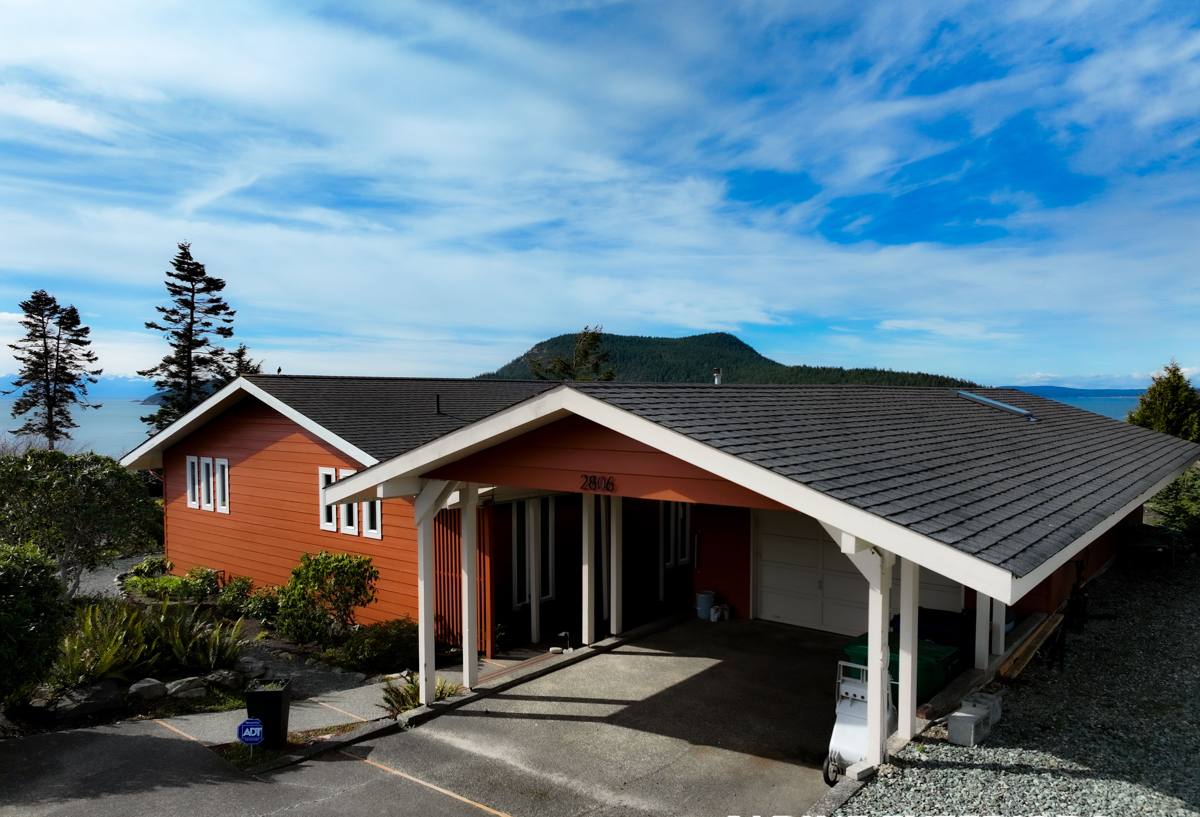
What Salt Air, Driving Rain, and Moss Actually Do to a House
Salt Air
Airborne salt is corrosive to exposed metal — fasteners, flashing, gutter hardware, deck hardware — and it accelerates the breakdown of finishes that aren't rated for coastal exposure. It doesn't take a beachfront lot to feel this; homes a mile or more inland from the Sound still get measurable salt deposition, especially on windward walls.
Driving Rain
Edmonds gets wind-driven rain off the water more often than sheltered inland neighborhoods. That matters because driving rain doesn't just wet a surface — it forces water sideways and upward into laps, seams, and penetrations that a straight-down rain would never reach. Siding systems, window flashing, and roof details all have to account for this, not just handle vertical rainfall.
Moss and Algae
Snohomish County's damp, mild winters give moss and algae a long runway to colonize roofs, north-facing siding, and shaded decking. Moss holds moisture against the surface underneath it, which is the real problem — it's not just cosmetic, it's a moisture-retention mechanism sitting directly on your building materials for months at a time.
Siding in Edmonds: Why We Install Only James Hardie Fiber Cement
We made a decision years ago to standardize on James Hardie fiber cement siding and stop installing everything else — no vinyl, no LP SmartSide, no Cemplank, no Allura, no primed spruce or cedar. That's a deliberate stance, not a brand loyalty thing, and it matters even more in a climate like this one.
Vinyl siding is affordable and low-maintenance in the sense that it doesn't need paint, but it's a thin plastic product that expands, contracts, and can warp or crack under UV and temperature swings — and in coastal wind exposure, panel performance at the laps and fastening points becomes a real consideration. Wood products like cedar or primed spruce look great when new but require an ongoing maintenance commitment — recoating, caulking, and moisture monitoring — that's especially demanding in a climate that stays damp for much of the year. Engineered wood products like LP SmartSide are wood-based at their core, which means moisture management at every cut edge and seam is non-negotiable; get it wrong and you're dealing with swelling or degradation down the line.
James Hardie fiber cement is cement, sand, and cellulose fiber — it doesn't feed moss the way wood-based siding can, it's non-combustible, and it holds up to sustained damp exposure without the swelling behavior of wood or wood-composite products. The ColorPlus factory finish is baked on under controlled conditions and holds color and adhesion far better over time than field-applied paint, which matters in a place where UV, salt, and moisture are all working on that finish simultaneously. Hardie's HZ5 product line is specifically engineered for climate zones like ours, and the warranty is transferable if you sell the home — a real consideration on the Edmonds market, where buyers pay attention to exterior condition.
Material Comparison for This Climate
| Material | Salt air exposure | Moss/moisture behavior | Maintenance burden |
|---|---|---|---|
| James Hardie fiber cement | Stable, non-corrosive substrate | Doesn't feed moss; holds up to sustained damp | Low — factory finish, no recoating cycle |
| Vinyl | Can degrade/warp under UV and temperature swings | Doesn't feed moss, but traps moisture behind panels if installed poorly | Low, but limited lifespan in harsh exposure |
| Cedar / primed spruce | Vulnerable to salt-accelerated weathering | Organic material — can feed moss/mildew growth | High — recoating, caulking, ongoing monitoring |
| LP SmartSide / engineered wood | Moderate — depends on edge/seam sealing | Wood-based core requires strict moisture control | Moderate to high — edge sealing is critical |
Roofing for Edmonds Homes
Roofs in Edmonds fight the same moss battle every roof in this region fights, but the salt air and wind-driven rain add two more variables. Flashing details around chimneys, valleys, and roof-to-wall transitions matter more here because driving rain finds the weak points that vertical rain never tests. Metal components — flashing, vents, fasteners — need to be rated for coastal exposure, and roof ventilation matters too, since trapped moisture under a damp roof surface in a long wet season is exactly the setup that shortens a roof's life.
Moss removal and prevention is a recurring conversation with Edmonds homeowners specifically because of how much shade and dampness the area's tree cover and marine air combine to produce. We look at roof orientation, tree canopy, and drainage as part of any roofing assessment here, not just shingle condition.
Windows: Managing Moisture and Drafts in a Marine Climate
Older windows in coastal Snohomish County homes tend to show their age through two symptoms: seal failure (fogging between panes) and air infiltration around frames that have shifted or whose weatherstripping has broken down under constant damp cycling. Wind-driven rain also stress-tests window flashing in a way drier inland climates don't — a window that's marginally flashed can handle years of light rain and still leak the first time a real coastal storm drives water sideways into the wall.
When we replace windows in Edmonds, flashing integration with the surrounding wall assembly gets as much attention as the window unit itself. A well-built window installed with poor flashing will leak; a modest window installed with correct flashing usually won't.
Decks: Built for Salt, Shade, and Standing Water
Decks take a direct hit from every one of Edmonds' climate factors at once — salt air on hardware and fasteners, driving rain on any exposed surface, and moss/algae wherever shade and moisture combine. Fastener and hardware selection matters a lot here; the wrong metal corrodes faster in coastal air, and corroding fasteners are a structural issue over time, not just a cosmetic one. Drainage and slope also matter more in a wet climate — a deck surface that holds standing water is a deck that grows moss and degrades faster, regardless of what it's built from.
Deck Exposure Checklist for Edmonds Homeowners
- Check fastener and hardware condition annually, especially on decks facing the water or prevailing wind
- Keep decking clear of debris that traps moisture, particularly in shaded corners
- Confirm proper drainage slope away from the house — pooling water accelerates every failure mode
- Inspect ledger board flashing where the deck attaches to the house; this is a common hidden moisture entry point
- Address moss growth early — it holds moisture against the surface long before it looks like a problem
Why a Local Everett Crew Matters for Edmonds Work
Exterior work in a coastal Snohomish County climate isn't something you can spec the same way you would for a dry inland market. A crew that works this area regularly knows which walls take the worst of the driving rain, where moss problems tend to start, and what flashing details actually hold up here versus what looks fine on paper. Being based in Everett means we're not driving in from out of the region to handle an Edmonds job — we know the microclimate, we're accountable to the community, and we're not far away if a warranty question or a follow-up visit comes up down the line.
What to Expect When You Call Us
Every Edmonds project starts with an honest look at the specific exposure your home faces — orientation, shade, proximity to the water, existing material condition — before we talk about products or scope. We'll tell you plainly if a repair makes more sense than a full replacement, and we'll explain the trade-offs behind our material recommendations rather than just pushing a single product line. For siding, that recommendation is James Hardie fiber cement, for the reasons laid out above — but the conversation always starts with your house, not our preferred material.
If you're dealing with moss buildup, aging siding, a leak you can't pin down, or a deck that's starting to show its age, we're glad to come take a look. Reach out for a free, no-pressure estimate — we'll walk the exterior with you and give you a straight assessment of what's going on and what your options are.