 Everett
 Exterior Work for Lynnwood, Built Around the Climate You Actually Live In
Lynnwood sits in the thick of Snohomish County's marine climate — close enough to Puget Sound to catch salt-laden air, squarely inside the Interstate 5 corridor's wet season, and shaded enough in older, tree-lined neighborhoods that moss and mildew get a long runway every year. Homes here don't fail because owners neglect them. They fail because the exterior materials weren't chosen with this specific climate in mind, or because the installation cut corners that only show up two or three winters later.
We do siding, roofing, windows, and decks for homeowners throughout the Everett and Lynnwood area, and we approach all four the same way: understand what the Pacific Northwest actually does to a house, then build and install accordingly. That's also why we standardized on James Hardie fiber cement siding and don't install vinyl, LP SmartSide, cedar, or other fiber cement brands — more on that below.
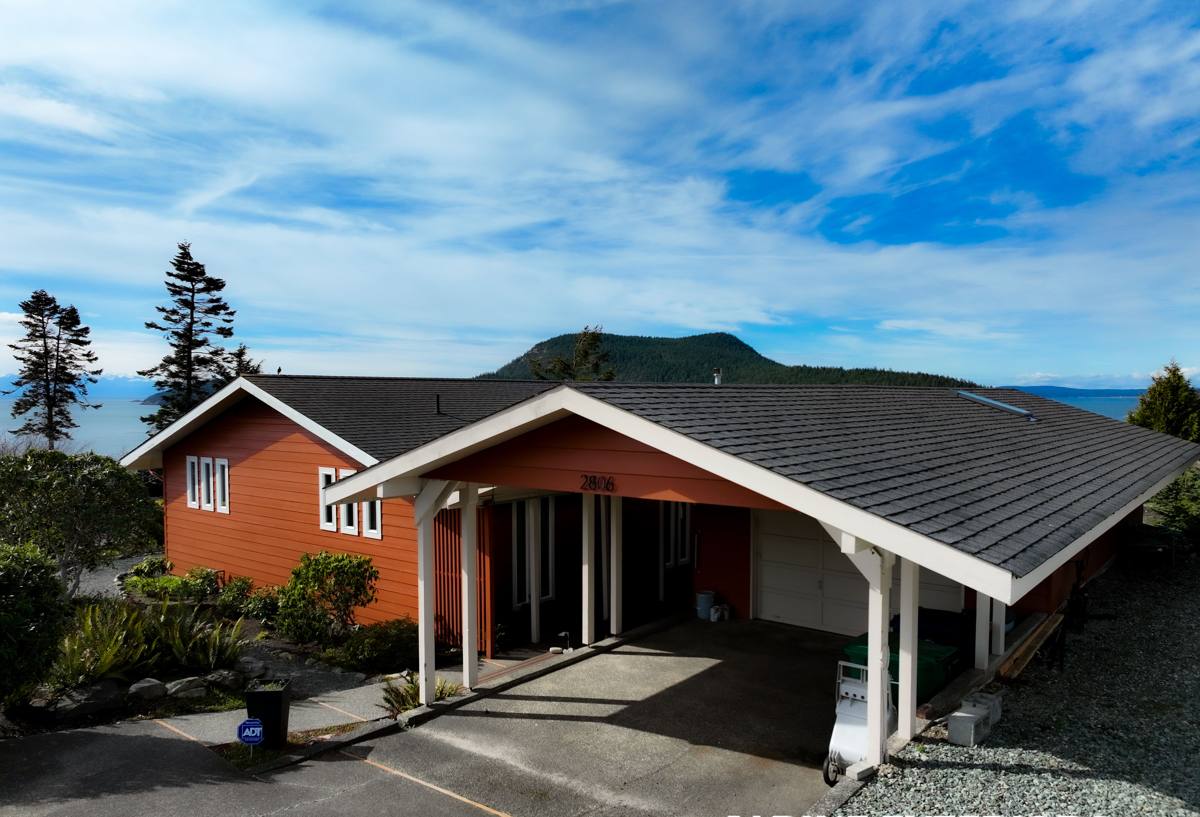
What Driving Rain, Salt Air, and Moss Season Do to a Lynnwood Home
Western Washington weather is rarely dramatic, and that's exactly the problem. It's not one big storm that damages a house here — it's months of low-grade exposure that compounds year after year.
Driving Rain and Wind-Driven Moisture
Lynnwood gets rain that doesn't just fall straight down. Storms off the Sound push moisture sideways into siding, window frames, and any gap or seam that wasn't sealed correctly. Materials that swell, warp, or absorb water at the surface start showing problems at butt joints and trim first — long before a homeowner notices anything from the street.
Salt Air and Corrosion
Proximity to Puget Sound means airborne salt is a real factor for fasteners, flashing, and any exposed metal on a roof or siding system. Untreated or under-spec hardware corrodes faster here than it would inland, and that corrosion is often the first point of failure in an otherwise sound exterior.
Moss, Algae, and Extended Shade
Snohomish County's tree cover and long gray season give moss and algae months of damp, low-light conditions to work with. Roofs are the most visible casualty, but moss and mildew also take hold on siding, especially on north-facing walls and anywhere water sits instead of shedding cleanly.
Freeze-Thaw Cycling
Lynnwood doesn't see brutal winters, but it does see repeated cycles of near-freezing nights and wet days. Water that gets into a crack, seam, or unsealed edge and then freezes will expand that damage a little more with every cycle.
Siding in Lynnwood: Why We Only Install James Hardie
We get asked fairly often why we don't offer vinyl or one of the lower-cost fiber cement alternatives. The honest answer is that we made a standard-of-practice decision, not a marketing decision.
What We Don't Install, and Why
Vinyl siding is inexpensive and easy to install, but it expands and contracts with temperature swings, can crack in impacts, and doesn't hold paint if a homeowner ever wants to change the color. In a climate with this much moisture cycling, those seams and expansion gaps are exactly where water finds a way in over time.
Engineered wood products like LP SmartSide use a treated wood-strand core, which performs well in many climates but depends heavily on unbroken caulking, flashing, and paint film to keep moisture out of that core. In a region with Lynnwood's rain totals, that's a maintenance burden we're not comfortable asking homeowners to carry for the life of the product.
Other fiber cement brands — Cemplank, Allura, and similar products — are legitimate materials on paper. Our decision to standardize on one manufacturer isn't a claim that the others are bad; it's that we wanted one supply chain, one factory-finish system, one warranty structure, and one set of installation details that our crews know cold, rather than switching specs job to job.
We also don't install primed spruce or cedar siding. Both are attractive, traditional materials, but both are organic wood products that need consistent refinishing to resist rot, and in a climate this wet, that refinishing schedule gets expensive and easy to fall behind on.
Why James Hardie
James Hardie fiber cement is non-combustible, doesn't support moss and mildew growth the way wood does, and holds its shape and paint line in wet-dry cycling far better than vinyl. Hardie's ColorPlus factory-applied finish is baked on under controlled conditions, which gives a more consistent, longer-lasting finish than field-applied paint. Hardie also engineers specific product lines (HZ5, for example) for climate zones like ours, and backs the material with a strong, transferable warranty. When it's installed to Hardie's published specifications — correct clearances, fastening, and flashing — it's a siding system built for exactly the conditions Lynnwood throws at it.
Siding Material Comparison for Snohomish County Conditions
| Material | Moisture Behavior | Maintenance | Fire Resistance | Typical Lifespan |
|---|---|---|---|---|
| James Hardie Fiber Cement | Dimensionally stable, resists moisture damage when installed to spec | Low — factory finish, occasional wash | Non-combustible | 30+ years |
| Vinyl | Expands/contracts, seams can allow water intrusion | Low, but color fades and can't be repainted | Combustible, can warp near heat | 20-30 years |
| Engineered Wood (LP SmartSide) | Wood-strand core vulnerable if seals fail | Moderate — caulk and paint upkeep required | Combustible | 20-30 years with upkeep |
| Cedar / Primed Spruce | Absorbs moisture, prone to rot without upkeep | High — regular refinishing needed | Combustible | Varies widely with maintenance |
Roofing for a Long Moss Season
A roof in this part of Snohomish County works harder than the same roof would in a drier climate. It's not just shedding rain — it's resisting moss colonization, holding up under wind off the water, and dealing with more freeze-thaw cycling on the flashing and fasteners.
Our roofing work focuses on the details that actually matter in this climate: proper underlayment for wind-driven rain, flashing detail at every valley and penetration, ventilation that keeps the attic from trapping moisture, and material choices that don't turn into a moss farm within a few seasons. A roof replacement is also the right time to correct any ventilation or flashing mistakes from a prior install — problems that often aren't visible until a roof is opened up.
Windows: Where Moisture Problems Usually Start
Old or poorly installed windows are one of the most common sources of water intrusion we find on Lynnwood homes, and it's rarely the glass itself. It's failed flashing, degraded sealant, or a frame that was never properly integrated with the siding around it. Window replacement done right means correct flashing and integration with the surrounding wall assembly, not just swapping the sash and calling it done. Done wrong, a new window can actually make water intrusion worse by concealing a bad flashing detail behind fresh trim.
Newer window systems also bring real energy performance gains — tighter seals and better glazing make a noticeable difference in a climate where homes run the furnace or heat pump for a good chunk of the year.
Decks: Built to Handle Rain, Not Just Sun
Decks in this area take a different kind of abuse than decks in drier climates. They're wet more often than they're dry, which means fastener corrosion, ledger board moisture intrusion, and slick, moss-prone surfaces are the real risks — not sun fading. Proper ledger flashing where the deck meets the house is one of the most important, least visible details in deck construction, and it's the detail most likely to be skipped on a low-bid job. We build and repair decks with drainage, fastener corrosion resistance, and ledger flashing treated as non-negotiable, not optional upgrades.
What Working With a Local Crew Looks Like
A crew based in the Everett area and working Snohomish County regularly sees the same climate patterns repeat house after house — which siding walls take the worst weather, which roof valleys collect moss first, which older neighborhoods have window flashing issues from a particular era of construction. That pattern recognition is hard to get from a crew that's just passing through the area for one job.
Questions worth asking any contractor before you hire them for exterior work in Lynnwood:
- Are you licensed and insured to work in Washington, and can you provide proof?
- Who will actually be on the crew doing the work — subcontractors or your own employees?
- What's your specific plan for flashing and moisture management at seams, ledgers, and penetrations?
- What manufacturer warranty applies, and is it transferable if the home sells?
- Can you walk me through why you recommend one material over another for this specific home?
A Simple Maintenance Checklist for Lynnwood Homeowners
Whatever your exterior is made of, a few habits go a long way in this climate:
- Clean gutters at least twice a year — clogged gutters back water up under roofing and siding edges
- Have moss treated on roofing before it spreads into shingle layers, not after
- Rinse siding annually, especially on shaded, north-facing walls
- Check caulking and sealant around windows and doors each fall before the wet season sets in
- Inspect deck ledger boards and fasteners yearly for corrosion or softening wood
Cost Factors Homeowners Should Expect to Discuss
| Project | Main Cost Drivers | Climate-Specific Consideration |
|---|---|---|
| Siding Replacement | Home size, trim complexity, tear-off vs. overlay | Correct flashing and clearance details for wet-season durability |
| Roofing | Roof pitch, square footage, material tier | Ventilation and moss-resistant material choices |
| Window Replacement | Number of openings, frame material, glazing package | Flashing integration with existing wall assembly |
| Deck Construction/Repair | Size, framing material, railing style | Ledger flashing and fastener corrosion resistance |
Exact numbers depend on the specifics of your home, so we'd rather walk the property and give you a real figure than quote a range that doesn't mean much.
Let's Take a Look at Your Home
If you're in Lynnwood or elsewhere in Snohomish County and dealing with moss buildup, a leak you can't pin down, drafty windows, or a deck that's starting to feel soft underfoot, we're happy to come take a look. We'll give you a straightforward, no-pressure estimate and an honest read on what your exterior actually needs — use the form below to get started.