 Everett
 Exterior Work Built for Snohomish's Climate
Snohomish sits close enough to the water and low enough in the valley that homes here take a specific kind of beating year-round. It's not one dramatic storm that does the damage — it's the steady combination of salt-tinged air moving in off Puget Sound, months of driving rain that hits siding and trim at an angle instead of straight down, and a moss and algae season that can run from October through May in a wet year. Add the humidity that settles into low-lying areas near the river valley, and you've got conditions that are hard on every exterior surface: siding, roofing, window seals, and any wood left exposed to the weather.
We work throughout Snohomish County, and Snohomish itself is a good example of why exterior materials and installation methods that work fine in a drier climate don't always hold up here. This page covers how we approach siding, roofing, windows, and decks for homes in this area, and why we've standardized on James Hardie fiber cement siding rather than the wood-based or vinyl products still common on older homes in the neighborhood.
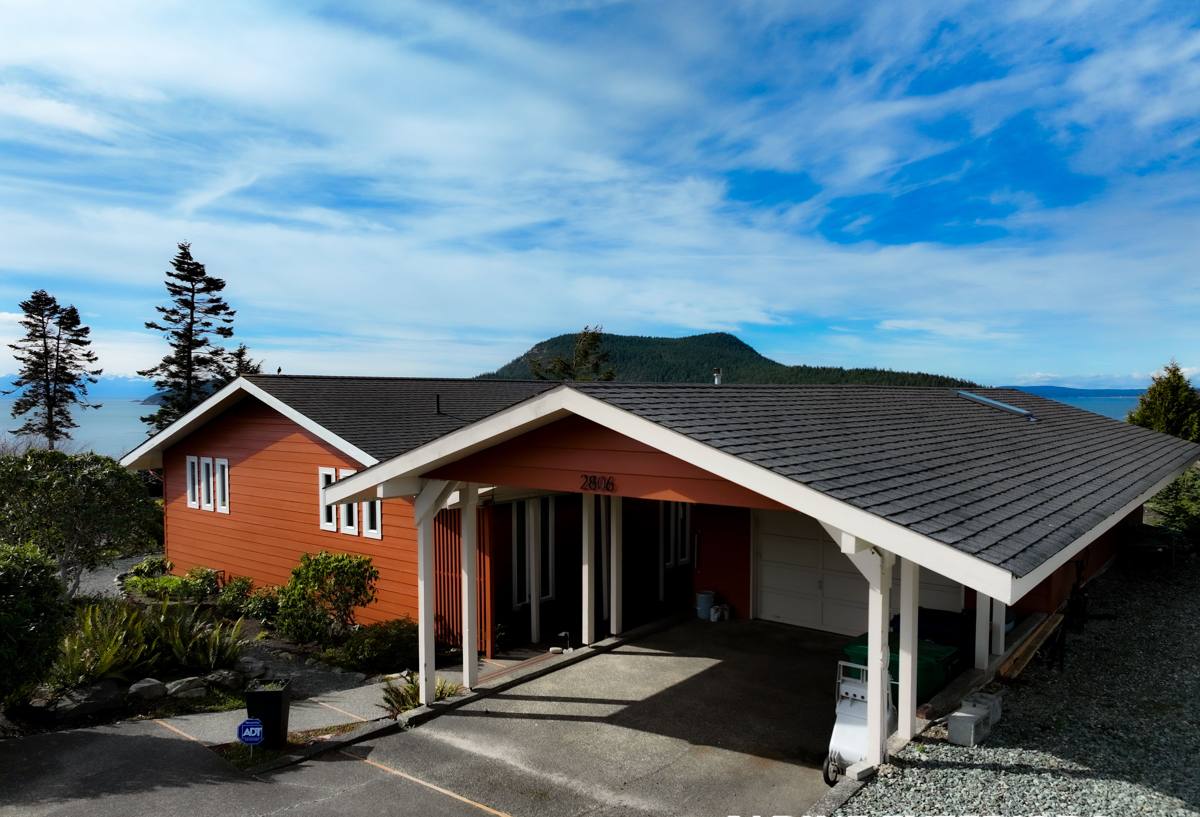
What Snohomish Homes Are Actually Up Against
Moisture That Doesn't Let Up
Western Washington's rain isn't just frequent — it's often wind-driven, which means it gets pushed into seams, laps, and trim joints that would stay dry in a calmer climate. Siding materials that rely on paint film or a factory primer coat to keep water out are under constant pressure here. Once moisture gets behind or into a panel, it doesn't dry out quickly, especially on shaded north- and west-facing walls that don't get much direct sun.
Salt Air and Corrosion
Snohomish isn't right on the shoreline, but proximity to Puget Sound means salt-laden air still reaches inland on windier days. Over years, that air accelerates corrosion on fasteners, flashing, and any metal components on the exterior, and it can degrade lower-quality paint finishes faster than a manufacturer's warranty accounts for.
Moss, Algae, and Shade
Mature trees and long wet seasons mean a lot of homes here have roof and siding surfaces that stay damp for extended stretches. Moss doesn't just look bad — on roofing it lifts shingles and traps moisture against the deck, and on siding it holds water against the surface long after a rain has passed, which is exactly the kind of sustained dampness that wood-based products and lower-grade finishes struggle with.
Siding in Snohomish: Why We Only Install James Hardie
We install James Hardie fiber cement siding exclusively. We don't install LP SmartSide, vinyl, Cemplank, Allura, primed spruce, or cedar. That's not a marketing position — it's a decision based on what actually holds up under the conditions described above, and what we're willing to stand behind long-term.
The Problem with Wood-Based and Engineered-Wood Siding
Products like LP SmartSide and traditional cedar or primed spruce are wood-based, which means their long-term performance depends heavily on an intact factory or field-applied coating. In a climate with this much sustained moisture, any breach in that coating — a nail pop, a cut edge left unsealed, a caulk joint that fails — gives water a path into the substrate. Wood-based products can swell, delaminate at the edges, or develop soft spots faster in the Pacific Northwest than they would in a drier region, and repairs often mean replacing whole boards rather than a simple touch-up.
Where Vinyl Falls Short Here
Vinyl siding is inexpensive and low-maintenance in the sense that it doesn't need repainting, but it's a thin plastic product that expands and contracts with temperature swings, can crack in impact or cold snaps, and fades unevenly over time — especially on sun-exposed elevations. It also doesn't offer the same fire resistance or rigidity as fiber cement, and in wind-driven rain it relies entirely on lap geometry and house wrap behind it, since the panels themselves aren't a water barrier at the seams.
What James Hardie Does Differently
James Hardie siding is fiber cement — a mix of cement, sand, and cellulose fibers that's non-combustible and dimensionally stable, meaning it doesn't expand and contract the way wood or vinyl does. Hardie's HZ5 product line is engineered specifically for climates with freeze-thaw cycles and high moisture exposure, which describes Snohomish's winters well. The ColorPlus factory finish is baked on under controlled conditions rather than field-applied, which gives it better adhesion and UV resistance than a job-site paint job, and it comes with a longer, transferable warranty on both the substrate and the finish. It's also simply a harder, denser material — it holds up to impact, doesn't feed pests, and doesn't need the recoating cycle that wood siding does.
We're not saying every other product is unusable everywhere. We're saying that for the specific combination of rain, humidity, salt air, and moss exposure that Snohomish homes deal with, fiber cement is the material we're comfortable installing and warrantying.
Roofing for Snohomish Conditions
Moss and Algae Management
A roof in Snohomish that sits under tree cover or on a shaded slope needs more than a good shingle — it needs proper ventilation, correctly installed underlayment, and often algae-resistant shingle granules to slow the growth that thrives in this climate. Moss that's allowed to establish itself will work its way under shingle tabs over time, and by the time it's visible from the ground, it's often already affecting the roof deck underneath.
Ventilation Matters More Than People Think
A poorly ventilated attic traps humid air against the underside of the roof deck, which accelerates deterioration from the inside out — a problem that's easy to miss because it doesn't show up as a visible leak right away. We look at intake and exhaust ventilation as part of any roofing job, not just the shingles themselves.
Windows: Keeping Driving Rain Out
Because so much of the region's rain comes in at an angle rather than straight down, window flashing and sealing details matter more here than they would in a calmer climate. Poorly flashed windows are one of the most common sources of hidden water intrusion we find behind siding during replacement projects — the leak often isn't from the window itself failing, but from flashing that was never integrated correctly with the water-resistive barrier behind the siding. When we replace windows, we treat the flashing and integration with the wall assembly as seriously as the window unit itself.
Decks: Built for Wet Winters, Not Just Dry Summers
A deck in Snohomish spends most of the year wet, not dry, which changes what matters in its construction. Proper ledger flashing, joist protection, gapped decking for drainage, and fasteners rated for exterior and coastal-adjacent exposure all matter more here than in a drier climate where a deck might only see heavy rain a few weeks a year. We build and repair decks with those long wet stretches in mind, not just for how they'll look on a sunny day.
Comparing Siding Options for This Climate
| Material | Moisture Behavior in Wet Climates | Maintenance | Typical Lifespan |
|---|---|---|---|
| James Hardie fiber cement | Dimensionally stable; resists swelling and moisture-driven damage when installed to spec | Occasional wash; factory finish reduces repainting needs | Multi-decade, backed by transferable warranty |
| Wood / engineered wood (cedar, primed spruce, LP SmartSide) | Coating-dependent; vulnerable at cut edges, seams, and nail penetrations | Regular repainting/resealing; edge sealing after any cut | Shorter in sustained wet climates without diligent upkeep |
| Vinyl | Doesn't absorb water but relies on lap fit and house wrap; can crack in cold | Low; occasional washing | Variable; UV fading and impact damage over time |
This is a general comparison, not a guarantee of performance for any specific product line or installation — proper installation detailing matters as much as the material choice itself.
What to Expect When You Call Us
We keep the process straightforward, whether it's a siding replacement, a roof, new windows, or a deck rebuild:
- An in-person walk-around of the exterior to assess current condition — siding, trim, flashing, roof, and any visible moisture issues
- An honest conversation about what actually needs attention now versus what can wait
- A written estimate with clear scope — no vague line items
- For siding jobs, a discussion of James Hardie product lines, colors, and why we're recommending the specific one for your home's exposure
- A realistic project timeline that accounts for typical Pacific Northwest weather windows
- Cleanup and a final walkthrough before we consider the job done
Why a Local Crew Matters
Exterior work in Snohomish isn't the same job as exterior work in a drier inland climate, and crews who don't work this region regularly can miss the details that matter most here — flashing laps, ventilation, drainage planes, and the extra attention wet-climate installation requires. A crew that works Snohomish County regularly also has a better read on how a given elevation, tree cover, or lot orientation will affect moss growth, sun exposure, and wind-driven rain on a specific home, which shapes decisions like ventilation, siding line, and trim detailing.
Get a Free, No-Pressure Estimate
If you're dealing with siding that's showing its age, a roof that's picking up moss faster than it should, windows that let in drafts or water, or a deck that needs more than a quick patch, we're happy to take a look. Fill out the form below for a free estimate — no pressure, just an honest assessment of what your home actually needs.