 Everett
 Forest Park: A Neighborhood Shaped by Its Trees
Forest Park sits among some of the most mature tree canopy in Everett, Washington. It's one of the reasons people love living there — big conifers, established landscaping, and a quieter, greener feel than a lot of newer Snohomish County subdivisions. But that same canopy has a direct effect on how a house ages. Shade means slower drying after every rain. Overhanging branches mean more debris on roofs and in gutters. Root systems close to foundations mean grading and drainage issues show up sooner than they would on an open lot. If you own a home in or near Forest Park, your exterior is working against a different set of pressures than a home out in the sun on the east side of the county, even though it's only a few miles away.
We've worked on enough homes in this part of Everett to know that "it's just a little moss" or "the trim's a little soft" often turns into a bigger repair if it sits one more wet season. This page walks through what we actually see on Forest Park homes, how our siding, roofing, window, and deck work is suited to it, and why we standardized on one siding product instead of offering several.
The Regional Climate Factors That Matter Here
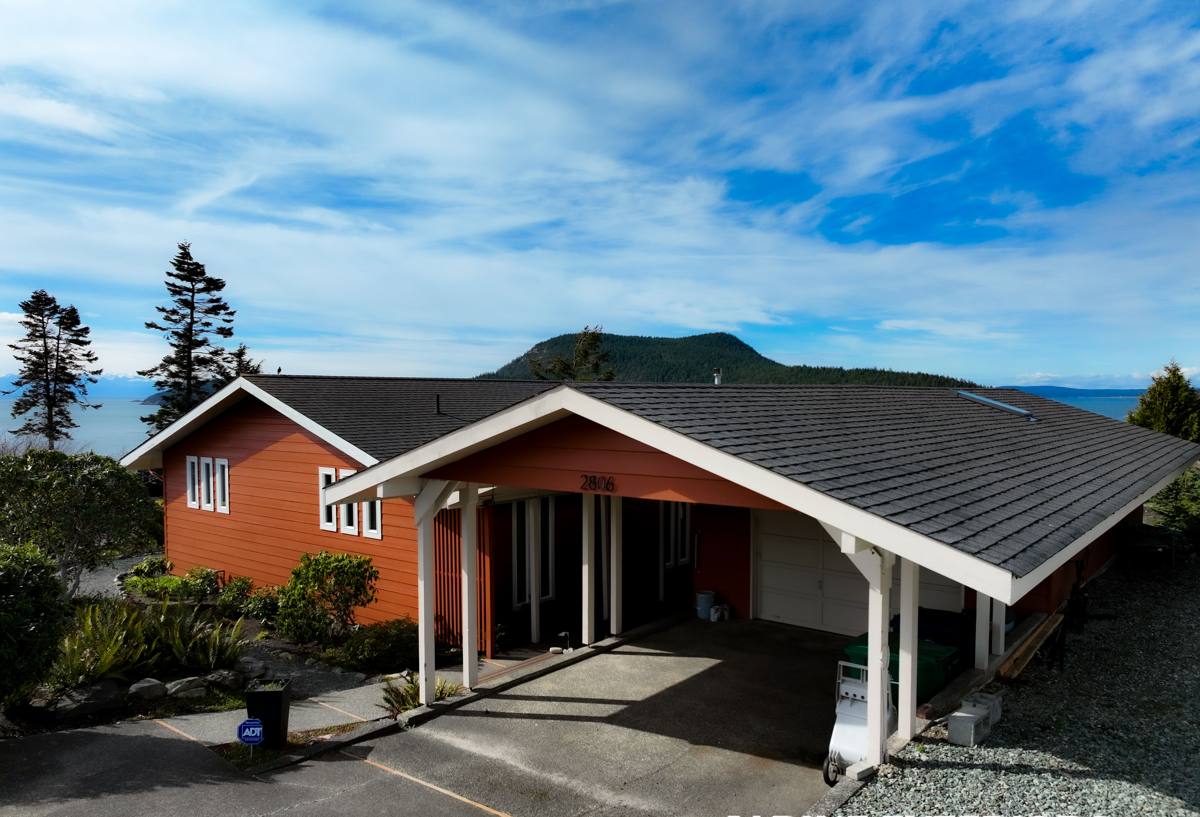
Everett sits on Puget Sound in Snohomish County, and three climate factors combine to put real stress on exterior materials year-round:
- Salt air: Proximity to the Sound means airborne salt and moisture, which accelerates corrosion on fasteners, flashing, and any metal exterior components that aren't rated for it.
- Driving rain: Pacific storms off the Sound frequently come in sideways rather than straight down, which pushes water into laps, seams, and window edges that a purely vertical rain would never reach.
- A long moss and algae season: Between the marine humidity and, in Forest Park's case, heavy tree shade, surfaces often stay damp for days after a storm passes. That's exactly the environment moss, algae, and mildew need to establish themselves on roofing, siding, and decking.
None of these factors are unique to Forest Park, but the neighborhood's tree cover intensifies all three. Less direct sun means slower evaporation, so whatever moisture blows in during a storm sticks around longer than it would on a home a few blocks over with more open exposure.
Siding: Why We Only Install James Hardie
We install James Hardie fiber cement siding exclusively. We don't install vinyl, LP SmartSide, Cemplank, Allura, or primed wood species like spruce or cedar. That's a deliberate standard, not a limitation of what we're capable of installing, and it's worth explaining why — especially in a neighborhood like Forest Park where shade and moisture make siding choice matter more than it does elsewhere.
What we're avoiding
Vinyl siding is affordable and low-maintenance in the sense that it doesn't need painting, but it's a thin plastic product that expands, contracts, and can warp with temperature swings, and it doesn't hold up well to physical impact. Engineered wood products like LP SmartSide use wood strand technology with a resin binder — reasonable performance when installed and maintained correctly, but they're still wood-based, which means edge and cut-end sealing is critical, and any lapse in maintenance in a wet, shaded environment shortens their service life. Primed cedar or spruce is a real wood product with real wood problems: it needs repainting on a cycle, it's attractive to moisture and insects, and in a neighborhood with heavy tree cover and prolonged dampness, that maintenance clock runs faster than the marketing suggests.
What Hardie does differently
James Hardie siding is fiber cement — sand, cement, and cellulose fiber, cured into a rigid board. It doesn't feed mold or moss the way wood does, it's non-combustible, and it holds paint far longer than wood substrates because of how the material accepts and retains factory-applied finish. Hardie's ColorPlus finish is baked on at the factory under controlled conditions, which gives more consistent, longer-lasting color than field-applied paint — a real advantage in a marine climate where UV and moisture both work against a finish. Hardie also engineers regional product lines (HZ5 for the Pacific Northwest) specifically for climates like ours, and backs the product with a strong transferable warranty.
None of that means Hardie is maintenance-free — it isn't a synthetic material, and it still needs to be installed correctly, caulked correctly, and painted eventually if you choose an unfinished profile. But for a neighborhood where shade and moisture do the most damage over time, we think it's the product that gives homeowners the best long-run outcome, which is why it's the only siding we put on a house.
Siding Product Comparison
| Factor | James Hardie Fiber Cement | Vinyl | Engineered Wood / Primed Cedar |
|---|---|---|---|
| Moisture/moss resistance | High — doesn't feed organic growth | Moderate — surface growth still occurs | Lower — wood-based, needs sealed edges |
| Fire resistance | Non-combustible | Combustible | Combustible |
| Finish longevity | Factory-baked ColorPlus, long cycle | Color molded in, can fade/chalk | Field-applied paint, shorter repaint cycle |
| Impact/warp resistance | Rigid, holds shape | Can warp with heat, dents on impact | Good rigidity, vulnerable to moisture swelling |
| Typical warranty structure | Long-term, transferable | Varies widely by manufacturer | Varies, often shorter on finish |
Roofing in a Shaded, Moss-Prone Neighborhood
Roofs in Forest Park deal with more debris and moisture retention than roofs in open, sunnier parts of Everett. Needles and leaf litter collect in valleys and behind chimneys, gutters clog faster, and moss gets a foothold on north-facing slopes that rarely see direct sun. Left alone, moss doesn't just look bad — it lifts shingle edges and holds water against the roof deck, which is how a moss problem turns into a leak.
When we work on roofs in this part of Everett, we're paying attention to a few things specific to the tree-heavy setting: ventilation (a well-ventilated attic dries out faster after wet weather), valley and flashing detail (where driving rain concentrates), and gutter sizing and placement relative to overhanging branches. Whether it's a full replacement or a repair, the goal is the same — reduce how long water and organic debris sit on the roof surface.
Windows: Sealing Out Wind-Driven Rain
Because storms here often push rain sideways rather than straight down, window installation quality matters as much as the window unit itself. A well-built window with poor flashing will still leak in a Puget Sound storm. We pay close attention to head flashing, sill pans, and integration with the surrounding siding so that wind-driven rain is directed back out rather than finding its way behind the window frame. In a shaded neighborhood like Forest Park, a slow window leak can go unnoticed for a while, since the surrounding wall assembly stays damp longer anyway — which makes correct installation up front more important, not less.
Old, single-pane or poorly sealed windows are also a source of real energy loss and condensation issues in a humid climate. Replacing them is often paired with siding work, since both jobs open up the wall assembly and it's more efficient — and less disruptive to your home — to address them together.
Decks: Built for a Wet, Wood-Adjacent Lot
Decks in Forest Park tend to sit under or near tree cover, which means more standing debris, slower drying, and more exposure to the same moss and algae growth affecting roofs and siding. Ledger board attachment and flashing are the details that matter most for long-term deck health — that's the connection point where a poorly flashed deck lets water into the house structure itself, not just into the deck framing. We build and repair decks with attention to drainage, proper spacing between boards for airflow, and flashing details that keep water moving away from the house rather than pooling against it.
Our Process for Forest Park Homeowners
Every property in this neighborhood is a little different depending on tree cover, lot slope, and the home's age, so we start with a walk-around, not a generic bid. That includes looking at:
- Current siding condition — soft spots, failed caulking, paint failure, or signs of moisture intrusion at trim and corners
- Roof condition — moss coverage, valley and flashing wear, gutter and downspout function relative to nearby trees
- Window seals and flashing, especially on walls that take the brunt of storm-driven rain
- Deck framing, ledger attachment, and drainage if a deck is part of the scope
- Overall drainage and grading around the foundation, since shaded, wooded lots often hold water longer
From there we put together a scope and a straightforward estimate — what needs to happen now, what can reasonably wait, and what it costs. We don't upsell scope that isn't needed, and we don't quote siding, roofing, or window work without actually looking at the specific conditions on your property first.
Why a Local Crew Matters in a Neighborhood Like This
Exterior work in Forest Park benefits from a crew that already understands how Snohomish County's marine climate behaves — not a traveling crew working from a generic playbook. That shows up in small decisions: how much lap and caulk detail a siding job gets in a shaded wall assembly, how gutters get sized relative to a mature tree canopy, how flashing gets detailed on a roof valley that stays damp longer than most. We're an Everett-based exterior contractor, and Forest Park is part of the area we know firsthand — not a territory we drive into once and never see again. If something needs a warranty follow-up or a maintenance check a few years down the road, we're still local.
Maintenance Checklist for Forest Park Homes
Between full replacements, a few habits go a long way toward protecting a home's exterior in this kind of setting:
- Clear gutters and downspouts at least twice a year, more often if you have heavy overhanging trees
- Trim back branches that keep siding or roofing in constant shade or direct contact
- Rinse moss and algae off roofing and siding surfaces before it has a chance to establish and spread
- Check caulking around windows, doors, and trim annually — gaps are where wind-driven rain gets in
- Inspect deck ledger boards and flashing yearly, since that's the most common point of hidden water damage
- Watch for standing water near the foundation after storms, especially on shaded, slower-draining lots
None of these replace a professional inspection, but they buy time between the bigger jobs and help you catch small problems before they become expensive ones.
Get a Free, No-Pressure Estimate
If you're dealing with moss buildup, a siding issue, a window that's letting in more than light, or a deck that needs attention, we're happy to take a look and give you an honest read on what your Forest Park home actually needs. Use the form below to request a free estimate — no pressure, no obligation.