 Everett
 Building Decks for Glenhaven's Snohomish County Weather
Glenhaven sits inside Everett, close enough to Puget Sound and the broader Snohomish County waterways that salt-tinged air, long stretches of steady rain, and shaded, slow-drying yards are just part of the picture. A deck built the same way it would be in a drier inland climate tends to show its age fast here — cupped boards, rust-streaked fasteners, soft spots where water collects, and that dull green-black moss film that keeps coming back no matter how many times it gets pressure washed off. Building correctly for this specific corner of Western Washington isn't a premium add-on. It's what separates a deck that still looks and performs well in fifteen years from one that needs major repair in five.
This page covers what that means in real terms for a Glenhaven property: what the climate demands, what a correctly built deck actually involves underneath the surface, how our process works from first call to final walkthrough, and what to ask any contractor before they touch your yard.
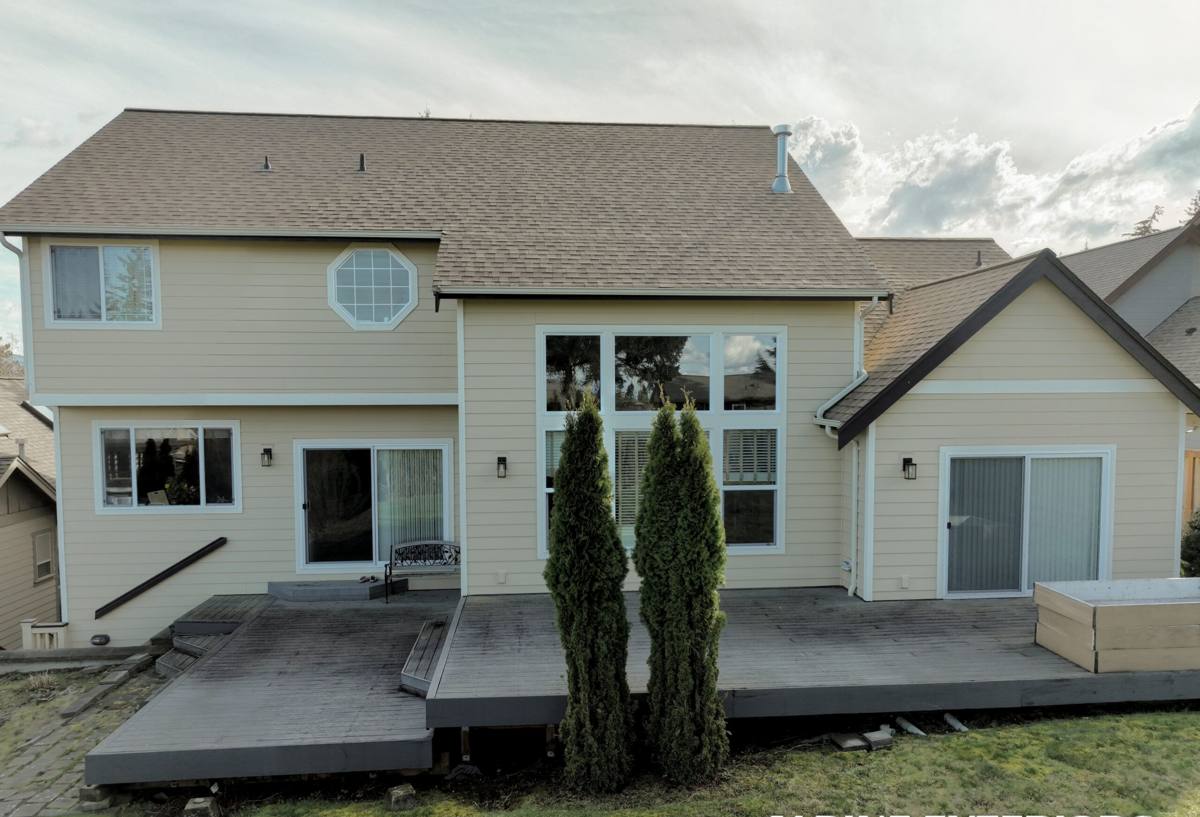
What Glenhaven's Setting Asks of a Deck
Glenhaven's combination of mature tree cover, established residential lots, and its location within Snohomish County's marine-influenced climate creates a specific set of stresses on outdoor structures:
- Shade and tree cover. Mature landscaping is one of the neighborhood's strengths, but it keeps decking damp longer after every rain — exactly the condition moss and algae need to establish themselves.
- Salt-influenced air. Proximity to Puget Sound means airborne salt reaches inland further than most homeowners assume, and it accelerates corrosion on any fastener or hardware that isn't rated for it.
- Sustained rainy seasons. This area doesn't get dramatic downpours as often as it gets weeks of steady, low-intensity rain — the kind that finds every gap in flashing and every unsealed cut end over time, rather than all at once.
- Freeze-thaw cycling. Winters here aren't severe, but they're cold enough, often enough, that moisture trapped in end grain or under a poorly bedded fastener can split boards after a few seasons.
None of this makes deck-building in Glenhaven unusually difficult. It just means the steps that get skipped in easier climates can't be skipped here without consequences.
Choosing the Right Decking Material
There's no single "correct" decking material for every Glenhaven home — the right choice depends on budget, how much shade the site gets, and how much upkeep you're realistically willing to do. Here's how the common options compare for this specific climate:
| Material | Upfront Cost | Maintenance in Shade/Moisture | Moss & Mildew Behavior | Typical Lifespan Here |
|---|---|---|---|---|
| Pressure-treated wood | Lowest | Annual cleaning and periodic re-sealing needed | Grows moss readily without regular treatment | 15-20 years with upkeep |
| Cedar | Mid-range | Periodic oiling or sealing to hold color and resist decay | Naturally more rot-resistant, but still grows moss in shaded, damp spots | 15-25 years with upkeep |
| Composite | Highest | Occasional washing; no staining or sealing required | Resists rot, but surface moss and algae can still develop in deep shade | 25-30+ years under typical manufacturer warranties |
One point homeowners often miss: composite decking doesn't rot, but the wood framing underneath it still can. Choosing composite for the surface doesn't remove the need for correct flashing, ventilation, and fastener protection in the structure below — that part of the job matters just as much, regardless of what's on top.
Railings and Fascia
Railings and fascia boards take direct weather exposure and are usually the first place a deck starts to look tired. Metal railing components should carry a corrosion rating suited to coastal-influenced air, and any wood fascia should be back-primed or sealed on all sides before installation, not just the visible face — the side against the framing holds moisture the longest.
Structural Details That Matter More in This Climate
Footings Below Frost Depth
Footings need to be poured to the depth required by local code, not just deep enough to hold the post in place. Undersized or shallow footings can shift slightly with seasonal ground moisture changes, which shows up years later as a deck that feels bouncy or slightly out of level.
Ledger Board Flashing
Where a deck attaches to the house, the ledger board and its flashing are the single most common source of hidden rot. Water that gets behind an improperly flashed ledger doesn't just damage the deck — it can work its way into the home's rim joist and framing. Correct flashing, with proper overlap and a water-resistant barrier behind the ledger itself, is not optional in a climate that sees this much sustained rainfall.
Joist Protection
Joist tape or an equivalent moisture barrier over the top of every joist keeps rain from sitting directly on cut, exposed wood grain — one of the fastest paths to rot in a shaded, damp yard. It's inexpensive relative to the whole project and one of the easiest things for a rushed builder to skip.
Fastener and Hardware Selection
Every screw, bracket, and hanger should be rated for exterior, corrosion-prone use — stainless steel or hot-dip galvanized, matched to the metal type of the hardware it contacts. Mixing incompatible metals accelerates corrosion in both. This detail is invisible once the deck is finished, which is exactly why it's worth confirming before the work starts.
Our Deck-Building Process
1. Design and Estimate
We walk the site, talk through how you actually plan to use the space, and account for the specific conditions of your lot — sun exposure, tree cover, drainage patterns, and how the deck ties into the house. You get a clear, itemized estimate before anything is scheduled.
2. Permitting
We handle the permit application and inspection scheduling required for the project, based on your deck's size, height, and attachment to the structure. This keeps the project compliant and avoids problems later when you go to sell the home.
3. Framing and Flashing
This is the stage that determines how the deck holds up over time, even though it's the least visible once finished. Footings, ledger flashing, joist protection, and hardware selection all happen here, built to the standards outlined above rather than the minimum needed to pass inspection.
4. Decking, Railings, and Finish Work
Decking boards, railings, stairs, and fascia go on with attention to fastener spacing, drainage gaps between boards, and clean, sealed cut ends — every cut end is a place water can enter end grain if it's left untreated.
5. Final Walkthrough
We walk the finished deck with you, cover basic care for whatever material you chose, and make sure everything meets what was quoted before we consider the job done.
Moss, Mildew, and Long-Term Maintenance
Moss isn't a sign of a bad deck — it's a normal part of living in this part of Snohomish County, especially under tree cover. What determines whether it becomes a real problem is how much of a foothold it gets. A few habits go a long way:
- Sweep debris and fallen leaves off the deck regularly, especially in fall — trapped organic matter holds moisture and feeds moss growth directly.
- Rinse or lightly wash the surface a few times a year, more often in heavily shaded areas.
- Keep gaps between boards clear so water can drain through rather than pool on the surface.
- Re-seal wood decking on the schedule appropriate to the product — skipping a season lets moisture get further into the grain than a single re-application can fully address.
- Trim back overhanging branches where practical to let more light and air reach the deck surface.
A deck built with correct drainage, gapping, and fastener choices from the start needs far less aggressive maintenance to stay ahead of moss than one that was built without those details.
Permits and Code Considerations
Deck projects in Everett generally require a permit once they exceed a certain size or height, or when they attach directly to the house. Requirements can vary depending on your exact lot and whether you fall under city or county jurisdiction, so we confirm the specifics for your property as part of the estimate rather than assuming a one-size-fits-all answer. Skipping the permit step might save time upfront, but it creates real problems later — at resale, at insurance claim time, or if the work needs to be inspected for any reason.
Why a Crew Already Working in Glenhaven Matters
A contractor who already works in this neighborhood has seen how homes here actually hold up over a few winters — which yards drain slowly, where tree cover creates persistent shade, and which older decks in the area were built before flashing and fastener standards caught up to what this climate demands. That's different from general deck-building experience. It means fewer surprises during the estimate, a more accurate sense of what your specific lot will need, and a crew that isn't learning the neighborhood's quirks on your project.
Before You Hire: A Practical Checklist
Whether you work with us or another contractor, these are worth confirming before signing anything:
- Are footings specified to the correct depth for local code, not just "deep enough"?
- Will the ledger board get proper flashing and a water-resistant barrier, in writing on the quote?
- Is joist tape or an equivalent moisture barrier included over the framing?
- What grade of fastener and hardware is being used — is it rated for corrosion-prone, coastal-influenced air?
- Is a permit being pulled, and who is responsible for scheduling inspections?
- Does the quote clearly separate materials, labor, and any site-specific work like drainage correction?
- What does the warranty cover, and for how long — on labor as well as materials?
If a contractor can't answer these clearly, that's worth knowing before the project starts, not after.
If you're planning a new deck or replacing an aging one in Glenhaven, we're happy to take a look and put together a straightforward, no-pressure estimate — just fill out the form below and we'll go from there.