 Everett
 Why Riverside Decks Wear Out Faster Than People Expect
If you live in the Riverside area of Everett, you already know your deck takes more punishment than one sitting in a drier inland neighborhood. The combination of salt-tinged air moving up off Puget Sound, long stretches of driving rain through the fall and winter, and a moss season that can run from October well into spring adds up to a lot of moisture exposure on wood, fasteners, and structural framing. None of that is unusual for Snohomish County — it's just the climate we build in — but it does mean a deck here ages differently than the same deck would in Spokane or Yakima.
Most decks don't fail all at once. They fail in stages: the boards cup and split first, then the ledger connection and joists start absorbing water they can't shed fast enough, and by the time moss has taken hold on the walking surface, the framing underneath is often further along than it looks from the top. Replacement, done right, isn't just swapping old boards for new ones — it's addressing the whole system so the next deck doesn't follow the same timeline.
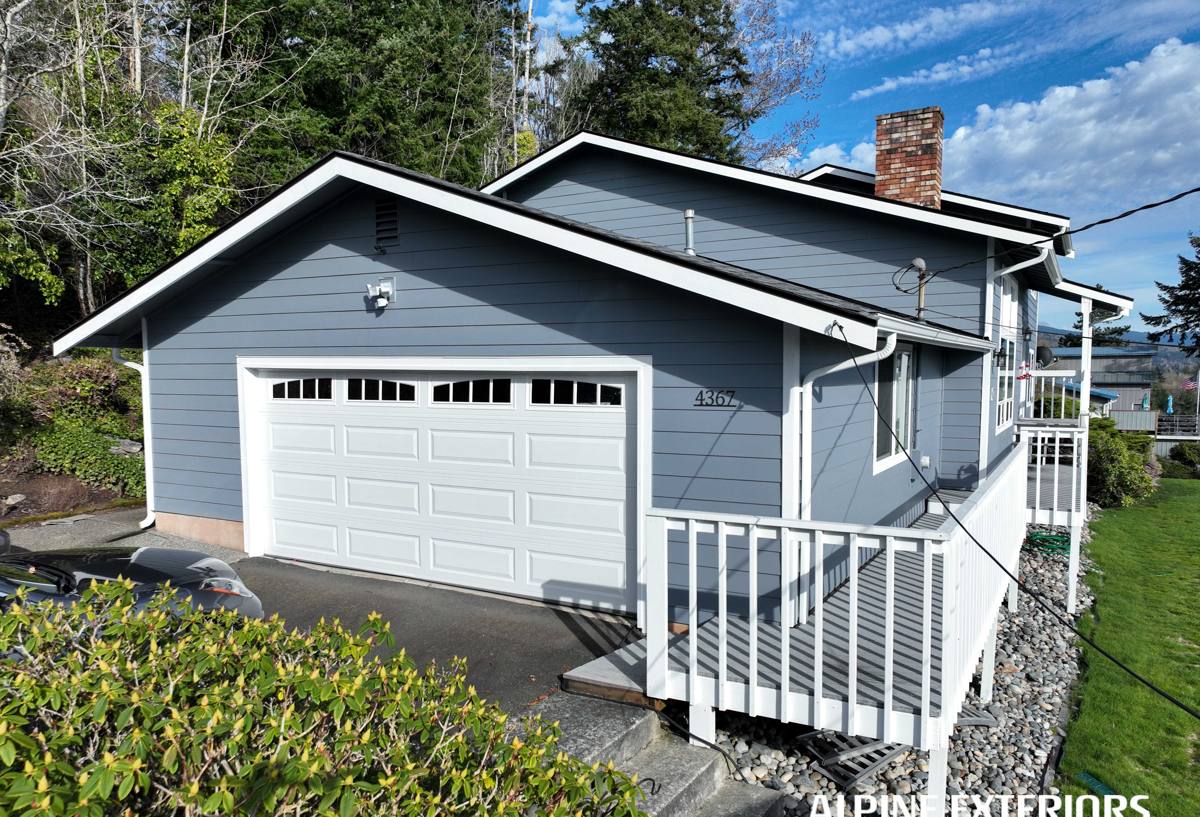
Signs a Riverside Deck Needs Replacement, Not Just Repair
Repair makes sense when the problem is isolated — a few damaged boards, a loose railing, a fastener that popped. Replacement becomes the honest recommendation when the damage is systemic. Here's how we tell the difference on a typical visit:
- Soft or spongy spots when you walk the deck, especially near the house or in low corners where water pools
- Persistent moss or green-black staining that returns within weeks of cleaning, even after a scrub
- Visible gaps, cupping, or splitting across multiple boards rather than just one or two
- Rust streaking or corrosion around fasteners and joist hangers
- Rot at the ledger board where the deck attaches to the house — often the most serious of these signs
- A deck older than 15-20 years that has never had the substructure inspected
Any one of these on its own might still be a repair. Two or three together, especially anything involving the ledger or joists, usually means the structure has been losing the moisture fight for a while and a full replacement is the more honest path — both for safety and for your budget over the next decade.
What a Correct Deck Replacement Actually Involves
A deck replacement that's built for this climate is more than a new surface. It's a rebuild of everything moisture touches, done in the right order so water has somewhere to go instead of somewhere to sit.
Demolition and Assessment
We remove the old decking and railing first, which lets us actually see the framing — the ledger, joists, beams, and posts — instead of guessing at their condition from the top. This is also when we check the foundation connections (posts, footings, hardware) for movement or rot that wasn't visible before.
Ledger and Flashing
The ledger board — where the deck bolts into the house — is the single most common point of failure on decks in wet climates like ours. A correct replacement includes proper flashing that directs water away from the house framing rather than letting it wick in behind the ledger. This is one of the areas where cutting corners causes hidden damage that doesn't show up for years.
Framing and Fasteners
We use fasteners and hardware rated for the moisture and, where relevant, the salt-air exposure typical of areas near the Sound — standard interior-grade hardware corrodes faster here than it would further inland. Joist spacing and beam sizing follow current code for the actual loads the deck will carry, not just whatever the old deck happened to have.
Drainage and Airflow
Water needs to leave the deck, not linger under it. That means correct board spacing, slope away from the house, and enough clearance and airflow underneath to let the substructure dry out between storms instead of staying damp through an entire wet season.
Choosing a Decking Material for Everett's Climate
There's no single "best" decking material — there's a best fit for how you use the deck, how much upkeep you want to do, and what you're willing to spend now versus over time. Here's how the common options actually compare under Everett's rain-and-moss conditions:
| Material | Moisture Behavior | Maintenance | Typical Lifespan Here |
|---|---|---|---|
| Pressure-treated wood | Absorbs water; needs sealing to resist cupping and splitting | Annual cleaning and re-sealing recommended | 10-15 years with upkeep |
| Cedar | Naturally moisture- and insect-resistant, but still needs sealing | Cleaning plus periodic sealing/staining | 15-20 years with upkeep |
| Composite decking | Doesn't absorb water like wood; can still develop surface mold if not cleaned | Periodic washing; no sealing or staining | 25-30 years, varies by product warranty |
| PVC/capped polymer | Fully moisture-resistant surface; best resistance to staining and mold | Occasional washing | 25-30+ years, varies by product warranty |
We don't push one material on every homeowner. Wood costs less up front and has a warm, traditional look many people want, but it demands real annual maintenance to hold up against our wet season — skip a year of sealing and moss gets a foothold fast. Composite and PVC cost more initially but shed water and resist moss growth with far less ongoing work, which is why we see more homeowners in wetter neighborhoods like Riverside leaning that direction for their next deck. The right call depends on your budget and how much maintenance you actually want to keep up with.
Our Replacement Process, Step by Step
- On-site assessment — we walk the existing deck, check the substructure where accessible, and talk through what you want from the new one (size, material, railing style, any add-ons).
- Written estimate — a clear breakdown of scope, material choice, and cost factors, no surprise line items added later.
- Permitting — most deck replacements in Snohomish County require a permit, particularly for structural work at the ledger or when square footage changes. We handle that process rather than leaving it to you.
- Demolition — full removal of old decking, railing, and any framing that doesn't meet current standards.
- Framing and flashing — new or reinforced substructure with proper ledger flashing and corrosion-resistant hardware.
- Decking and railing installation — your chosen material installed with correct spacing and slope for drainage.
- Final walkthrough — we go over the finished deck with you, including basic care guidance for whatever material you chose.
Permits and Code Considerations in Snohomish County
Deck work is one of the more commonly permitted exterior projects, and for good reason — a deck attached to your home is a structural element, and the ledger connection in particular is a known failure point when it's done without inspection. Requirements vary by project size, height, and whether the deck is attached or freestanding, so we handle the permit application and inspection scheduling as part of the job rather than treating it as your problem to sort out. Skipping permitting on a deck replacement isn't a shortcut worth taking — it can complicate a home sale later and, more importantly, it removes the inspection step that catches ledger and framing mistakes before they're covered up.
Living With a New Deck Through Moss Season
A correctly built deck still needs some care from you — the difference is how much. Here's a basic checklist for keeping a new deck ahead of Everett's wet months instead of fighting them every spring:
- Sweep leaves and debris off the deck regularly through fall — trapped organic material is what feeds moss growth
- Keep gutters and downspouts clear so runoff isn't dumping extra water onto or under the deck
- Trim back overhanging branches to let sunlight and air reach the surface, which slows moss and mildew
- Wash the deck surface once or twice a year with a deck-safe cleaner, more often in shaded, damp spots
- For wood decks, reseal on the schedule recommended for your product — don't wait until boards look gray
- Check railing and stair connections annually for looseness, which shows up faster with repeated wet-dry cycling
None of this is complicated, but it's the difference between a deck that looks and performs well at year 15 and one that's back to needing repair by year 8.
Why a Crew That Already Works Riverside Makes a Difference
Deck-building fundamentals don't change from neighborhood to neighborhood, but local conditions shape the details that actually matter — how much shade a given lot gets and how that affects moss buildup, how exposed a property is to wind-driven rain, and what the ground and drainage tend to do around homes in this part of Everett. A crew that's worked Riverside before has already seen how decks in this specific area age, which informs decisions like fastener choice, flashing detail, and where extra drainage attention pays off. That's not something you can fully substitute with a generic install job, no matter how skilled the crew is in general.
We also know the Snohomish County permitting process for deck work because we go through it regularly, which keeps the paperwork side from slowing down your project.
Getting Started
If your deck in Riverside is showing soft spots, persistent moss, or damage at the ledger, it's worth having someone look at it before another wet season adds to the problem. We offer free, no-pressure estimates — you'll get a straight assessment of whether you're looking at a repair or a full replacement, and honest options for materials and budget either way. Use the form below to get in touch and we'll set up a time to take a look.