 Everett
 Building a Deck That Holds Up in North Everett
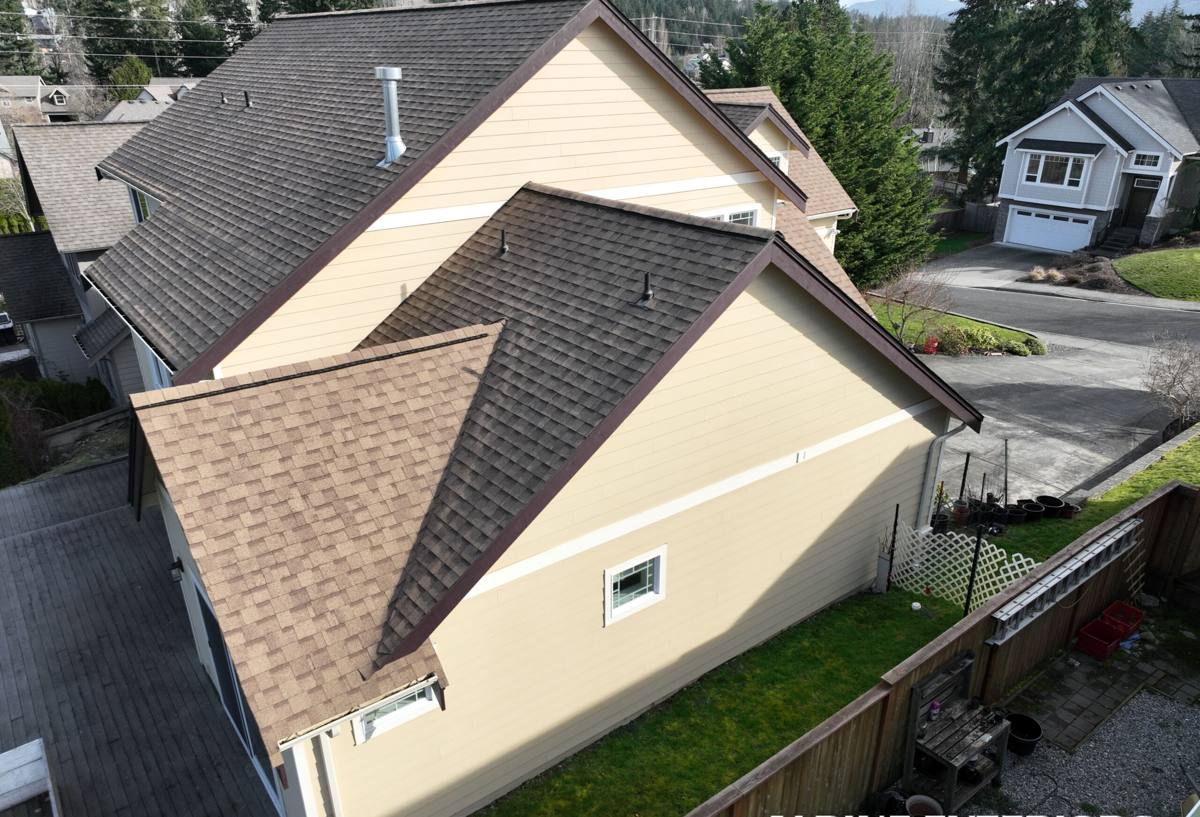
North Everett sits close enough to Port Gardner Bay and the Snohomish River delta that salt-laden air, near-constant fall and winter rain, and a moss season that can run seven or eight months a year all show up in how a deck ages. A deck design that works fine in a drier inland climate can start showing problems here within a few seasons — soft spots at the ledger board, black streaking on rails, moss creeping across boards that never fully dry out between storms. Building a custom deck for this neighborhood means designing for that reality from the first framing decision, not patching it after the fact.
We build and repair decks throughout Everett and Snohomish County, and North Everett's mix of older homes near the waterfront and newer construction on the hill above it gives us a good sense of what actually holds up here versus what looks good on install day and struggles by year three.
What This Climate Actually Does to a Deck
It helps to be specific about the mechanisms, because they drive real design decisions:
- Salt air accelerates corrosion on fasteners, joist hangers, and any exposed metal hardware — especially closer to the water, where airborne salt travels farther than most homeowners expect.
- Driving rain off Puget Sound doesn't just fall straight down; wind-driven rain gets pushed sideways into ledger connections, rail posts, and any gap where water can collect instead of shed.
- Extended moss season means shaded or north-facing deck surfaces can stay damp for days after a storm, which is exactly the condition moss, algae, and eventually wood rot need to take hold.
None of this means a deck can't be built to last here — it means the details that get skipped on a rushed job are the ones that matter most in this specific climate.
The Details That Separate a Correct Job From a Quick One
Ledger Board Flashing
The ledger board — where the deck attaches to the house — is the single most common failure point we see on older decks in this area. Proper flashing (typically a metal drip cap plus a self-adhering waterproof membrane) keeps water from running behind the siding and into the rim joist. Skipping or under-sizing this flashing is invisible on install day and can take years to show up as rot — by which point the fix is much bigger than the deck itself.
Hardware and Fasteners
In a coastal-influenced climate, standard galvanized hardware corrodes faster than it does inland. We spec hot-dip galvanized or stainless connectors and coated deck screws rated for ground contact and salt exposure, particularly for any home within a mile or two of the water.
Drainage and Airflow Under the Deck
Decks built low to grade, or in shaded side yards common in North Everett's older lots, need enough airflow underneath to let framing dry out between rain events. That means correct joist spacing, gapping between boards, and grading the ground below away from the house — not just downhill toward it.
Surface Material and Slope
A deck surface should have a slight slope (roughly 1/8 inch per foot) away from the house so water doesn't pond. On a resurfaced or older deck, we check this before assuming the existing framing is worth building on top of.
Decking Material Options for This Climate
There's no single "best" decking material — the right choice depends on budget, how much upkeep the homeowner wants to do, and how shaded or exposed the deck site is. Here's how the common options actually compare for a North Everett property:
| Material | Moisture & Moss Resistance | Maintenance | Typical Lifespan Here |
|---|---|---|---|
| Pressure-treated wood | Fair — needs sealing to perform well | Annual cleaning and re-sealing recommended | 10–15 years with upkeep |
| Cedar | Good natural rot resistance, but surface still needs care | Periodic oiling/staining to prevent graying and moss | 15–20 years with upkeep |
| Composite decking | Very good — doesn't absorb water like wood | Occasional washing; no sealing or staining | 25+ years, varies by brand/warranty |
| PVC/capped polymer | Excellent — fully sealed surface | Lowest maintenance; periodic washing only | 25+ years, varies by brand/warranty |
Composite and capped polymer boards have become popular in this area specifically because they don't wick moisture the way wood does, which matters on shaded lots where boards stay damp longer. That said, we still install and repair wood decks regularly — some homeowners want the look and are fine with the maintenance schedule, and a well-built, properly maintained wood deck can look great for decades here too. The honest trade-off is time and upkeep versus upfront cost, not one material being "correct" and the other not.
Structure, Permits, and Code
Everett follows Washington state building code for deck construction, and most new or substantially rebuilt decks over a certain height or size require a permit and inspection. This isn't paperwork for its own sake — it covers footing depth and sizing (important on the area's variable soil), ledger attachment method, joist spans, and guardrail and stair requirements. We handle permitting as part of the project so homeowners aren't navigating that process solo, and we build to pass inspection the first time rather than treating code minimums as optional.
Guardrails and Stairs
Any deck walking surface more than 30 inches above grade needs a compliant guardrail, and stair rise/run consistency is one of the most commonly failed inspection items on decks we've been called in to fix after another contractor's work. These aren't areas to cut corners — they're safety items with real consequences.
Our Process for a North Everett Deck Project
- On-site assessment — we look at the site's sun/shade exposure, drainage, existing structure (if there is one), and how the deck will actually be used before recommending materials.
- Design and material selection — sized to the home, the budget, and the maintenance level the homeowner actually wants to keep up with.
- Permitting — we pull the required permits and schedule inspections as part of the project timeline.
- Demolition (if replacing an existing deck) — including an honest look at whether any of the existing substructure is worth reusing, versus starting clean.
- Framing and flashing — ledger attachment, joist layout, and moisture protection done correctly the first time.
- Decking, rails, and finish work — installed per manufacturer spec, which matters for material warranties.
- Final walkthrough — inspection sign-off and a walk through of basic care for whatever material was installed.
Living With a Deck in a Marine Climate
Even a well-built deck needs some seasonal attention here. A few habits go a long way toward keeping moss and mildew from getting a foothold:
- Sweep leaves and debris off the deck surface regularly in fall — trapped organic matter holds moisture and speeds up moss growth.
- Rinse the surface periodically, especially shaded areas, rather than letting grime and pollen build up into a film that traps water.
- Check gaps between boards each spring and clear out any debris that's collected, so water and air can move through as designed.
- For wood decking, keep to the sealing/staining schedule recommended for the specific product — skipping a year in this climate matters more than it would somewhere drier.
- Watch the area right where the deck meets the house siding — it's the first place a moisture problem tends to show up.
Why Local Experience Matters for This Job
A deck built by a crew that mostly works drier inland climates can still be structurally sound and still under-perform here, simply because the flashing detail, hardware spec, or drainage plan wasn't built for sustained coastal moisture. Working North Everett regularly means we're not guessing at how a given material or detail holds up under this area's rain patterns and moss pressure — we're seeing it firsthand on the decks we maintain and repair year after year, including ones we didn't originally build.
Before you hire anyone for a deck project, it's worth asking a few direct questions:
- Do you pull permits and handle inspections, or is that on the homeowner?
- What hardware and fastener grade do you use, and is it rated for coastal/salt exposure?
- How do you flash the ledger board, specifically?
- Can you walk me through drainage and airflow under the deck for my specific site?
- What's the manufacturer warranty on the decking material, and does your installation meet its requirements?
A contractor who can answer those clearly and specifically — not with a generic "we do it right" — is one who's actually thought through what this climate requires.
Get a Free Estimate
If you're planning a new deck or looking at whether an existing one in North Everett needs repair or replacement, we're happy to come take a look and give you a straightforward, no-pressure estimate. Use the form below to get started.