 Everett
 Why West Everett Decks Wear Out Faster Than the Owner's Manual Says
A deck in West Everett doesn't fail the way a deck fails in a dry inland climate. Here, the enemy isn't one hard freeze or one bad storm — it's the steady combination of salt-tinged air off the water, driving rain that comes in sideways more often than straight down, and a moss season that can stretch from October well into spring. Individually, none of these are dramatic. Together, over years, they work into every joint, fastener, and board edge on a structure that was never sealed as well as it should have been on day one.
Snohomish County's marine climate means wood decking, hardware, and even some composite products age differently here than they do in the manufacturer's catalog photos taken somewhere dry. Salt-laden moisture accelerates corrosion in fasteners and connectors. Persistent dampness feeds moss and algae growth on horizontal surfaces that don't get much direct sun. And repeated wet-dry cycling — rain, then a few dry days, then rain again — is what actually breaks down wood fibers and finishes, more than any single downpour ever could.
That's the backdrop for every deck replacement we do in this neighborhood. It's not a cosmetic upgrade — it's a structure that has to be built to shed water, resist corrosion, and stay ahead of moss, not just look good the day it's finished.
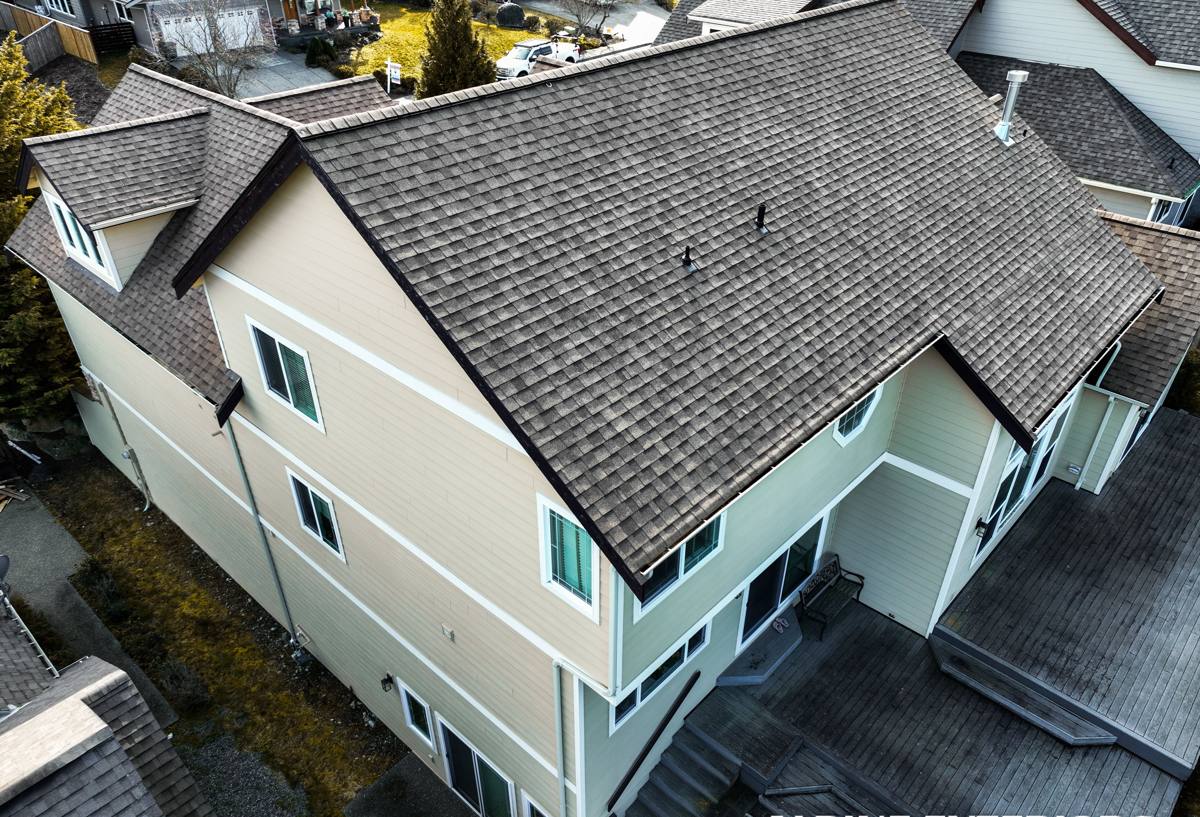
Repair or Replace? Reading the Real Warning Signs
Not every tired-looking deck needs to come out. Sometimes a deck just needs new boards, a cleaning, or hardware upgrades. But there's a point where patching becomes a waste of money because the structure underneath is the actual problem. The honest way to tell the difference is to look past the surface and check the framing, connections, and ground contact points — the parts most homeowners never inspect.
- Soft, spongy, or spring-loaded spots when you walk across the deck, especially near the house or stair landings
- Visible rot, dark staining, or crumbling wood at the ledger board where the deck meets the house
- Rusted, corroded, or missing joist hangers, bolts, or post connectors
- Posts that have shifted, or footings that look cracked, heaved, or undersized for the deck's span
- Persistent green or black growth on the decking or framing that comes back within weeks of cleaning
- A deck that was built without permits, flashing, or proper ledger attachment — common on older homes that changed hands more than once
- Railings that flex or wiggle under normal hand pressure
If you're only seeing worn boards and faded finish, repair or resurfacing may be enough. If you're seeing two or more items from that list, especially anything involving the ledger, framing, or footings, replacement is almost always the more honest recommendation — and the safer one.
What a Correct Deck Replacement Actually Involves
A deck replacement done right is a structural project first and a finish carpentry project second. The parts nobody sees when the deck is finished are the parts that determine whether it lasts eight years or twenty-five in this climate.
The Substructure Comes First
Framing lumber, joist spacing, and beam sizing all get evaluated against the actual load and span of the new deck — not just rebuilt to match whatever was there before. A lot of older decks in this region were framed lighter than current standards call for, and simply reusing that layout carries the same weaknesses forward into the new structure.
The Ledger Board and Flashing
The ledger — the board that bolts the deck to the house — is the single most common point of failure we find on decks that fail early in wet climates. Water gets behind an improperly flashed ledger and rots both the ledger and the house rim joist behind it, often silently for years. A correct replacement includes proper flashing, a water-resistant barrier behind the ledger, and structural bolts sized and spaced to code — not just nailed on and caulked over.
Footings and Posts
Footings need to sit below frost depth and bear on undisturbed, properly compacted soil. In a region with heavy seasonal rain, drainage around footings matters as much as their depth — standing water at the base of a post accelerates rot in wood posts and can undermine concrete footings over time. Post bases should hold the post up off the concrete, not bury the end grain in a puddle.
Choosing Decking Material for a Marine Climate
There's no single "best" decking material for every home — there's a best material for your budget, your maintenance appetite, and how much direct exposure your deck gets to rain and salt air. Here's how the common options actually perform in conditions like West Everett's, honestly compared.
| Material | Upfront Cost | Maintenance in This Climate | Typical Lifespan Here | Moss Resistance |
|---|---|---|---|---|
| Pressure-treated wood | Lowest | Annual cleaning and re-sealing recommended | 10–15 years with upkeep | Low — needs regular cleaning |
| Cedar | Moderate | Periodic sealing to maintain color and resist moisture | 12–18 years with upkeep | Low to moderate |
| Capped composite | Higher | Occasional washing, no sealing or staining | 25+ years, backed by manufacturer warranty | Moderate — surface still needs periodic cleaning |
| PVC decking | Highest | Lowest — periodic washing only | 25+ years, backed by manufacturer warranty | Good — dense, low-absorption surface |
Wood costs less to install but asks more of the homeowner every year in a climate that punishes anything left unsealed. Composite and PVC cost more upfront but shift the long-term burden away from annual maintenance — which matters when moss season is nearly half the year. We'll walk through the real trade-offs for your specific deck rather than pushing one product line, because the right call depends on how much time you actually want to spend on upkeep versus what you're comfortable spending up front.
Hardware and Fasteners: The Detail Most Homeowners Never See
Salt air off the water accelerates galvanic corrosion in fasteners, and it's rarely obvious from above — the deck board looks fine while the nail or screw holding it is quietly rusting away underneath. A correct replacement uses hardware rated for the decking material and the coastal-influenced environment: stainless steel or heavy-duty coated fasteners at minimum, and connectors — joist hangers, post bases, hurricane ties — rated for exterior, corrosive-resistant use, not the cheapest box on the shelf. Mixing incompatible metals (certain fastener coatings against certain hardware alloys) can actually speed up corrosion rather than prevent it, which is a detail that's easy to get wrong if hardware selection isn't taken seriously.
Drainage and Moss Prevention Built Into the Design
Moss doesn't grow because a deck is dirty — it grows because a surface stays damp longer than it should. The most effective way to fight it isn't more cleaning after the fact; it's designing the deck to dry out faster in the first place.
That means proper board spacing for drainage and air flow, joist tape over framing to shed water instead of letting it wick into end grain, a slight slope away from the house so water doesn't pool against the ledger, and keeping vegetation and debris from building up underneath where shade and moisture combine. On covered or partially shaded decks — common in this area — these details matter even more, since natural sun exposure that would otherwise dry the surface is limited for much of the year.
Our Deck Replacement Process, Start to Finish
- On-site assessment — we inspect the existing structure, ledger, footings, and framing to determine the real scope, not just the visible surface.
- Written scope and estimate — an itemized quote covering demolition, framing, decking material, hardware, and any permit work, so there are no surprises mid-project.
- Permitting — where required, we handle the permit application and inspections rather than leaving that to you.
- Demolition and disposal — full removal of the old deck, including footings or posts that don't meet current standards.
- Framing and structural work — new or reinforced substructure, properly flashed ledger, and corrosion-resistant hardware throughout.
- Decking installation — your chosen material installed with drainage and moss prevention built into the layout, not added as an afterthought.
- Final walkthrough — we go over the finished deck together before calling the job done.
Permits and Code in Everett and Snohomish County
Most deck replacement work in Everett and unincorporated Snohomish County requires a permit once the deck exceeds a certain height or footprint, and any work touching the structural connection to the house typically falls under permit requirements regardless of size. Setback rules, guardrail height, and stair requirements also come into play depending on your lot and the deck's design. This isn't a step worth skipping — unpermitted deck work can complicate a home sale later and, more importantly, means nobody with authority ever verified the structure was actually built safely. We pull permits as part of the job rather than treating it as optional paperwork.
Why a Crew That Already Works West Everett Matters
A contractor who already works in this neighborhood has seen how these specific conditions — the salt air, the rain patterns, the moss timeline — actually play out on real decks over real years, not just in a materials brochure. That translates into practical judgment: which fastener grades hold up, which decking products handle shaded, damp exposure without turning slick, how much slope and drainage a given roofline and yard layout actually needs. It also means a crew that understands the local permitting process and inspection expectations, so the project moves without avoidable delays.
Deck replacement is a big enough investment that it deserves a contractor who treats the framing and flashing with the same care as the finished surface — because in this climate, that's exactly where decks either last for decades or fail early.
If your deck is showing soft spots, rust, persistent moss, or you're just not sure whether repair or full replacement is the right call, we're happy to take a look. Fill out the form below for a free, no-pressure estimate — we'll give you a straight answer, not a sales pitch.