 Everett
 Windows Built for Riverside's Particular Climate
Riverside sits close enough to the water and the river corridor that its homes take a different kind of weather beating than houses further inland in Everett. Salt-tinged air moves through the neighborhood, wind-driven rain hits window walls at an angle instead of straight down, and the long gray stretch from fall through spring means surfaces stay damp for months at a time. Windows here don't fail because of one bad storm. They fail slowly, from years of moisture finding its way into places it shouldn't be.
When we replace or install custom windows in Riverside, we're not just matching a homeowner's style preferences. We're accounting for a specific set of conditions: corrosion-prone hardware near the water, moss and algae growth on north-facing frames, and the flexing that comes from Snohomish County's freeze-thaw swings in the colder months. A window that's correctly sized, correctly flashed, and correctly finished for this environment will outlast one installed the same way you'd install it in a drier part of the state.
What "Custom" Actually Means Here
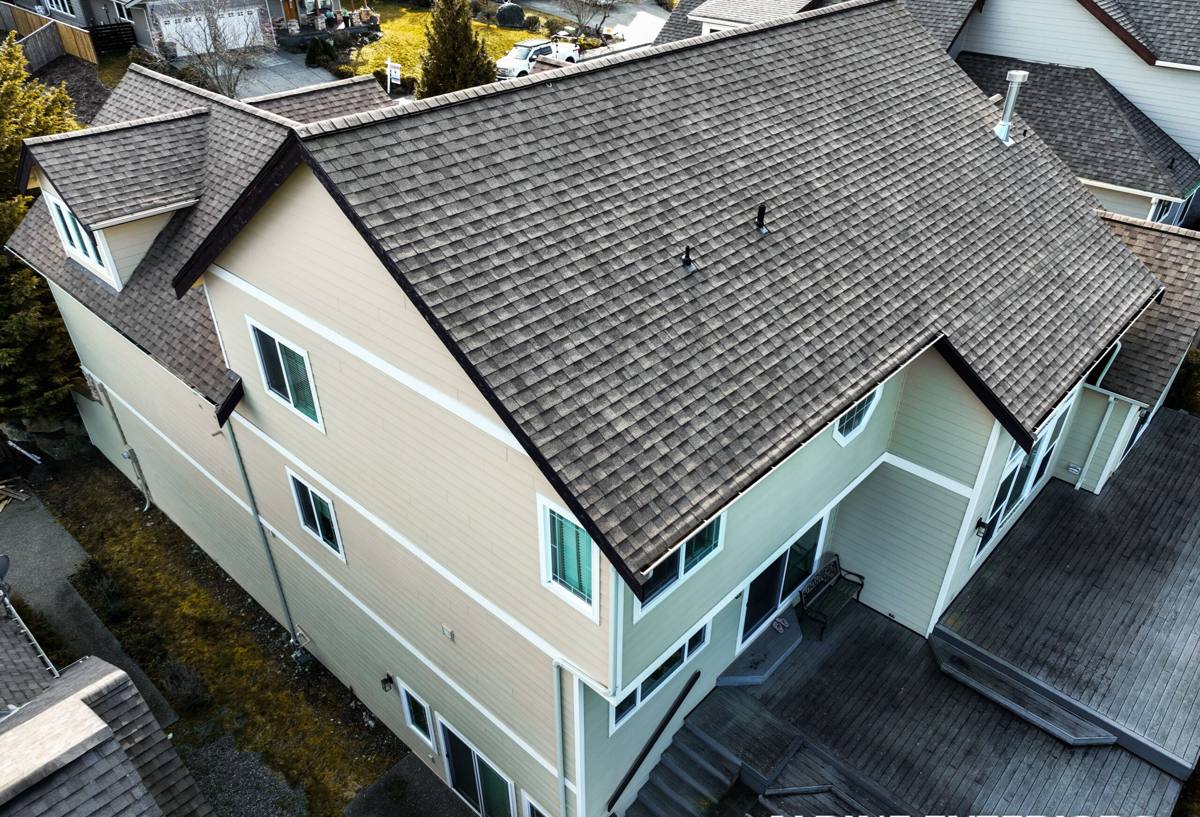
Custom windows aren't necessarily unusual shapes or oversized glass, though we do plenty of that. More often in Riverside it means windows built to fit openings that aren't quite standard anymore — older homes settle, framing shifts, and off-the-shelf sizes stop lining up cleanly. It also means matching sightlines and trim profiles across a house so a replacement window doesn't look like an obvious retrofit next to the originals.
Common Custom Window Needs in Riverside
- Non-standard openings in older homes where framing has shifted slightly over time
- Larger view windows facing the river or greenbelt that need higher wind and structural ratings
- Matching muntin patterns, trim, and exterior color across additions built in different eras
- Coastal-grade hardware and finishes on any window with regular salt air exposure
- Taller or narrower units for homes with unique architectural details worth preserving
Why Moisture Management Matters More Than the Glass
Homeowners often focus on glass — double pane versus triple pane, low-E coatings, argon fill. Those choices matter, but in a neighborhood like Riverside the bigger factor in whether a window lasts is how well it's flashed and sealed into the wall. A high-end window installed with poor flashing will let water behind the siding within a few seasons. A modest window installed correctly, with proper flashing tape, sill pans, and sealant sequencing, can hold up for decades.
We treat every window opening as a water management problem first and a glass selection problem second. That means sill pans that direct any incidental moisture back outside instead of into the wall cavity, head flashing that overlaps correctly with the weather-resistive barrier, and sealants chosen for actual adhesion in damp, cool install conditions rather than whatever's fastest to apply.
Signs Your Current Windows Are Losing the Fight
- Fogging or moisture between panes on double or triple glazed units — the seal has failed
- Soft or discolored trim and siding around the window frame
- Visible moss or dark streaking on the frame or sill, especially on shaded sides of the house
- Drafts or a noticeable temperature difference near the window in winter
- Hardware that's corroded, sticky, or hard to lock fully
- Condensation forming on the inside of the glass regularly, even with normal ventilation
Frame Materials: What Holds Up in This Environment
Frame material choice matters more in Riverside than it would in a drier, inland part of the county. Here's how the common options generally perform under salt air, sustained damp, and moss exposure.
| Material | How It Handles Salt Air & Moisture | Maintenance | General Notes |
|---|---|---|---|
| Vinyl | Good — won't corrode or rot, holds up well to damp conditions | Low — occasional cleaning | Most common choice for straightforward replacements; wide color range now available |
| Fiberglass | Very good — dimensionally stable, resists warping in temperature swings | Low | Higher upfront cost, strong long-term option for exposed elevations |
| Wood (clad exterior) | Fair to good if the cladding is intact — vulnerable where cladding is damaged or missing | Higher — exterior cladding needs monitoring, interior wood needs periodic finish care | We use this selectively, and lean on it more for interior character than raw exterior exposure |
| Aluminum (uncoated or poorly coated) | Poor — prone to corrosion and pitting near salt air without a quality finish | Moderate to high | We only recommend this with a marine-grade finish; otherwise we steer clients elsewhere |
We don't push one material on every job. The right call depends on the wall's sun and wind exposure, how close the elevation sits to prevailing weather, and what the homeowner wants to maintain over time. We'll walk through the honest trade-offs for your specific walls rather than a one-size answer.
Our Installation Process
1. On-Site Assessment
We start by looking at the existing openings, the condition of the framing and any existing flashing, and how each elevation of the house is exposed to weather. A window on a covered porch faces a very different set of conditions than one on an open, water-facing wall, and the install approach should reflect that.
2. Measuring and Ordering
Custom or near-custom openings get measured precisely rather than rounded to the nearest standard size. We account for any settling or slight out-of-square conditions common in older Riverside homes so the finished window sits properly without shims doing all the work.
3. Removal Without Damage
Old windows come out carefully to protect surrounding siding and interior trim. This step matters more than it sounds — rushed removal is one of the most common ways a job ends up with wall damage that costs more to fix than the window itself.
4. Flashing and Sealing
This is the step that determines whether a window lasts 10 years or 40. Sill pans, flashing tape, and sealant go in following a sequence that keeps water moving out and down, never trapped behind the window or siding.
5. Setting, Shimming, and Finishing
The window is set plumb, level, and square, shimmed at the correct load points, and insulated around the frame without over-packing, which can bow the frame and cause operational problems. Exterior trim and caulking are finished to match the surrounding siding.
6. Final Walkthrough
We check operation, seal integrity, and cleanup with the homeowner before calling the job done.
Cost Factors for Riverside Window Projects
We won't quote a number without seeing the openings, but these are the main variables that move the price up or down on a typical Riverside job.
| Factor | How It Affects Cost |
|---|---|
| Standard vs. custom-sized opening | Custom sizing and non-standard shapes cost more than stock sizes |
| Frame material | Vinyl is typically the most economical; fiberglass and clad wood cost more upfront |
| Number of window panes and glass upgrades | Triple pane and specialty coatings add cost over standard double pane |
| Condition of existing framing | Rot or water damage found during removal adds repair work before the new window goes in |
| Elevation and access | Upper-story or hard-to-access windows take more labor time |
| Trim and exterior matching | Matching existing trim profiles and colors on an older home can add finish work |
Why Local Experience in Riverside Matters
A lot of window problems we get called out to fix weren't caused by bad windows — they were caused by an install crew that didn't understand what this specific area does to a house. Flashing details that would be fine in a dry inland neighborhood aren't sufficient here. Sealant that cures fine in summer can fail if applied during a damp cold snap without the right prep. And moss growth patterns on north- and west-facing walls in Riverside tell us things about drainage and shading that inform how we detail an install.
Working regularly in this part of Everett and across Snohomish County means we're not guessing at how a wall will behave through a wet winter — we've seen it, and we build the install to handle it. That local pattern recognition is worth more than any single product spec sheet.
Maintenance That Actually Extends Window Life
A well-installed window in Riverside still benefits from basic upkeep, given the salt air and long moss season:
- Rinse frames and sills periodically to clear salt residue and organic buildup before it stains or holds moisture
- Check and clear weep holes so water can drain out of the frame system rather than pooling
- Inspect exterior caulking annually and touch up any cracked or separated sections before wet season
- Keep gutters and downspouts clear so roof runoff isn't sheeting down over window heads
- Trim back vegetation or trees that keep a wall shaded and damp, which encourages moss and slows drying
Getting Started
If your Riverside home has windows showing fog, drafts, moss staining, or soft trim, or if you're planning a larger custom window project, we're happy to take a look and give you an honest read on what's going on and what it would take to fix it right. We offer free, no-pressure estimates — fill out the form below and we'll get in touch to schedule a visit.