 Everett
 Riverside Decks Take More Punishment Than People Expect
Riverside sits close enough to the water and the tree cover that a deck here ages differently than one built inland. Salt-tinged air off the Sound works into fastener heads and metal connectors year-round. Driving rain during the fall and winter months finds every gap in a ledger board or a poorly flashed post base. And the shade from mature trees along the river corridor means moss and algae get a long, uninterrupted season to establish themselves on boards, stairs, and railings. None of that means a deck in this part of Everett is doomed — it means the repair work has to account for how the neighborhood actually behaves, not just what a generic checklist says.
We've repaired enough decks in this pocket of Snohomish County to know the failure pattern is consistent: moisture gets trapped somewhere it shouldn't, wood or fasteners degrade quietly underneath a deck that still looks fine on top, and the homeowner finds out when a board flexes, a rail wiggles, or a stair tread gives more than it should. Catching that early is cheaper and safer than waiting for it to become obvious.
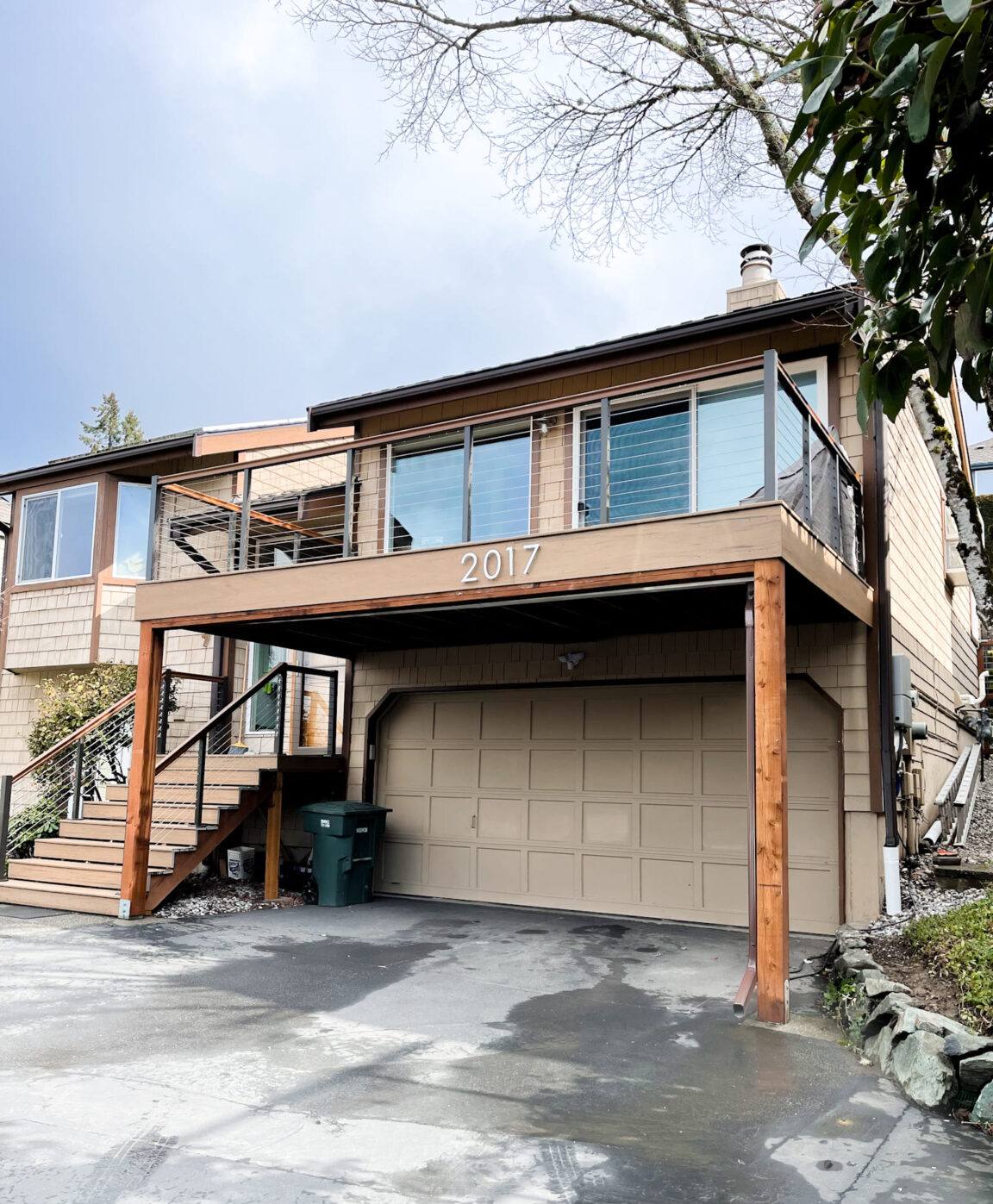
Signs Your Riverside Deck Needs Attention
Most deck problems don't announce themselves with a dramatic failure — they show up as small, easy-to-ignore signals first. If you're seeing any of the following, it's worth having a repair specialist take a look before the next wet season:
- Boards that feel spongy, bounce, or have visible cupping and splintering
- Railings or guardposts that wiggle when you lean on them
- Green or black staining on boards, stair treads, or the underside of railings that keeps returning after cleaning
- Gaps opening up around the ledger board where the deck meets the house
- Rust streaks bleeding from fastener heads or metal joist hangers
- Stair stringers that feel soft, or steps that have started to shift or squeak
- Standing water or slow drainage on the deck surface after a normal rain
- Visible daylight or gaps between decking boards and the framing below
Any one of these on its own might be minor. Several together usually mean moisture has been getting in for a while and the repair needs to address the cause, not just the symptom.
What a Correct Deck Repair Actually Involves
A repair that only replaces the board or rail you can see, without checking what's underneath it, tends to fail again within a couple of seasons in this climate. A repair done right starts below the surface.
Framing and Structural Members
Joists, beams, and posts are the part of the deck nobody sees, which is exactly why they're where problems hide longest. We check for soft spots, checking (splitting along the grain), and any place where a joist hanger has started to pull away or rust through. Structural repairs get sistered or replaced with lumber rated for ground contact or exposure, matched to what the rest of the frame is doing — patching one bad joist while ignoring a neighboring one that's headed the same direction just delays the next repair.
Decking Boards and Fasteners
Individual board replacement is the most common repair we do, and it's also the easiest one to do poorly. Swapping in a board without checking the joist underneath, or reusing old fastener holes that have already enlarged from moisture cycling, sets that board up to fail again. We replace fasteners with corrosion-resistant hardware rated for exterior and coastal-influenced conditions, since standard fasteners are one of the first things salt-tinged air attacks.
Railings, Guardposts, and Stairs
A wiggling railing is a safety issue, not a cosmetic one. Most loose railings trace back to a post base that's rotted at the point where it meets the framing, or to fasteners that were never through-bolted properly in the first place. We rebuild the connection at the source rather than just tightening what's there, and we check stair stringers the same way — they carry concentrated weight and take the brunt of foot traffic in wet conditions.
Ledger Board and Flashing
The ledger board — where the deck attaches to the house — is the single most common source of hidden water damage on any deck, and it's especially relevant here given how much driving rain Everett sees in the fall and winter. If flashing is missing, undersized, or was installed without proper spacing behind it, water tracks straight into the house rim joist. We inspect and correct ledger flashing as part of any repair that touches the area where the deck meets the structure, even if that wasn't the original complaint.
Repair or Replace? How We Help You Decide
Not every deck problem needs a full rebuild, and not every deck is worth patching indefinitely. The honest answer depends on how much of the structure is still sound. Here's how we generally think about it:
| Factor | Leans Toward Repair | Leans Toward Replacement |
|---|---|---|
| Framing condition | Solid, isolated soft spots | Widespread rot or repeated hanger failures |
| Age of structure | Under 12-15 years, built to code | Older, or original build quality was marginal |
| Extent of surface damage | A handful of boards or one rail section | Most boards showing the same wear pattern |
| Ledger and flashing | Intact, properly installed | Missing, undersized, or actively leaking |
| Footings and posts | Stable, no movement or heaving | Settling, shifting, or undersized for current code |
When a deck falls into a mix of both columns, we'll walk you through it in plain terms and let you decide what makes sense for your budget and timeline — including a phased approach where structural repairs happen now and cosmetic work waits.
Materials That Actually Hold Up in This Environment
Wood Decking
Cedar and pressure-treated lumber both have a place in Riverside repairs, and both need the same thing to last: consistent airflow underneath, proper fastening, and a maintenance schedule that doesn't get skipped. Wood is a reasonable, cost-effective choice for matching an existing deck's look, as long as the homeowner understands the upkeep commitment that comes with it in a shaded, damp environment.
Composite and PVC Decking
For sections that see constant moss pressure or deep shade, composite or PVC boards cut down on the moss and algae battle significantly, since they don't absorb water the way wood does. They're not maintenance-free — pollen, moss spores, and organic debris still build up on the surface and need periodic cleaning — but they remove rot as a failure mode for the decking itself. The tradeoff is upfront cost and, on some product lines, a longer lead time for matching colors to an existing deck.
Fasteners and Hardware
This is where we don't cut corners regardless of what decking material is used. Standard zinc-coated screws and connectors corrode faster in a coastal-influenced, high-moisture area like this. We use stainless or heavy-duty coated hardware rated for exterior exposure, because a repair is only as good as the fasteners holding it together, and replacing a rusted-out screw is a lot cheaper than replacing the board it was supposed to hold.
Our Repair Process
We keep the process straightforward because deck repair shouldn't feel like a mystery:
- On-site inspection. We check the surface, framing, ledger connection, posts, and footings — not just the area you called about — since problems in one spot often point to a cause elsewhere.
- Plain-language assessment. You get a clear picture of what's failing, why, and what it'll take to fix — including whether repair or partial replacement makes more sense.
- Written scope and estimate. No guesswork on what's included; you know what's being repaired and what materials and hardware we're using before work starts.
- Repair work. Structural fixes first, then decking, railings, and stairs, with attention to drainage and airflow so water doesn't just find a new place to sit.
- Final walkthrough. We check the repair together and go over any maintenance steps that will help it last through the next wet season.
Keeping Moss and Algae From Coming Back
Riverside's tree cover and river-adjacent humidity mean moss isn't a one-time cleanup — it's an ongoing condition to manage. A repair that ignores drainage and airflow will grow moss again within a season, no matter how clean the new boards look on day one. As part of a repair, we look at whether boards are spaced properly, whether the deck surface sheds water the way it should, and whether nearby vegetation is keeping the deck damp longer than necessary. Simple habits — periodic sweeping, keeping gutters and nearby drainage clear, and an occasional gentle wash rather than aggressive pressure washing that can drive water into seams — go a long way between visits.
Why a Crew That Already Works Riverside Matters
A contractor who repairs decks across a wide mix of climates will get the basics right. A contractor who works this specific stretch of Everett regularly already knows which materials and fastener grades hold up against this air, how the local moss and algae cycle behaves through the seasons, and which framing and flashing issues show up again and again in homes built to similar standards in this area. That familiarity means fewer surprises mid-repair and a more accurate first estimate, because we're not guessing at how Snohomish County's climate treats a deck — we've seen it firsthand, repeatedly, in this neighborhood.
If your deck has soft boards, a loose rail, moss that won't quit, or you're just not sure whether it needs a patch or a bigger fix, we're happy to take a look. Reach out for a free, no-pressure estimate using the form below and we'll give you a straight answer about what your deck actually needs.