 Everett
 Window Installation Built for Forest Park's Weather, Not Just Its Openings
Forest Park sits close enough to the water and the tree canopy that its homes take a specific kind of weather beating: salt-laden air drifting in off Puget Sound, long stretches of driving rain through the fall and winter, and shaded, damp conditions that keep moss and mildew active most of the year. Windows in this neighborhood aren't just letting in light — they're the single largest set of penetrations in your exterior wall, and every one of them is a potential path for water if it isn't installed correctly. We install windows for homes in this part of Everett regularly, and the failures we get called out to fix almost never come from a bad window. They come from a window that was set without proper flashing, sealed with the wrong material, or fastened in a way that let the wall behind it stay wet.
This page is about doing that job right for a Forest Park home specifically — what the local climate demands, what correct installation actually looks like, and how our process protects the wall assembly, not just the glass.
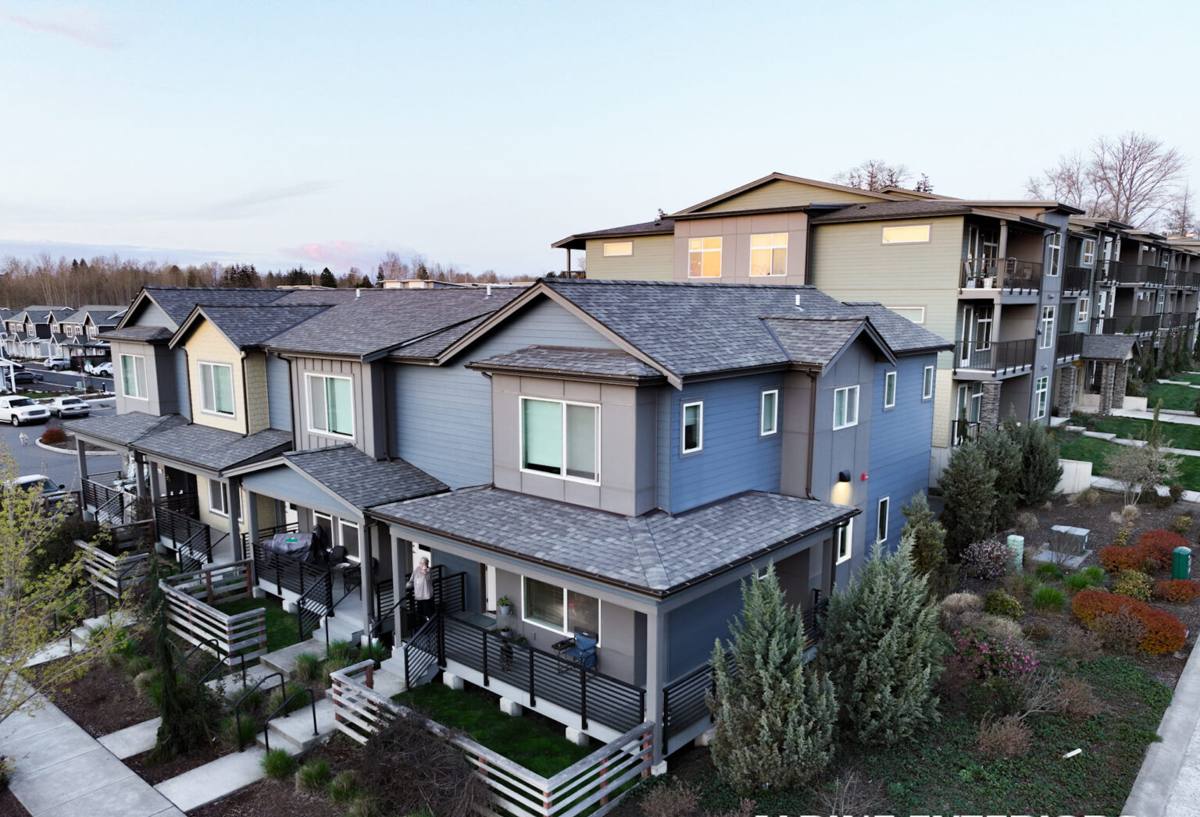
What Everett's Marine Climate Does to Windows Over Time
Snohomish County sits in a marine climate zone, and Forest Park's mix of mature tree cover and proximity to the water compounds the usual issues. A few things happen to windows here that don't happen the same way in drier parts of the country:
- Driving rain finds gaps horizontally, not just vertically. Wind off the Sound pushes rain sideways into wall assemblies, so a flashing detail that would be fine in a calmer climate can still leak here.
- Salt-influenced air accelerates corrosion on hardware, screws, and unprotected metal flashing, especially on windows facing open exposure.
- Shade and moisture grow moss and algae on sills, frames, and the siding around window openings — not just on roofs — which holds dampness against the window longer.
- Long wet seasons mean wood trim and sills rarely get a full dry-out period, so any small gap in the water management layer stays wet for months instead of drying between storms.
None of this means windows fail faster in Forest Park than anywhere else. It means the installation details that manage water — flashing, sealant, and the building paper integration — matter more here, and there's less margin for a shortcut.
Signs a Forest Park Home Needs Window Replacement or Re-Installation
Some of these are obvious; some show up gradually and get written off as "just an old house."
- Visible moss or dark staining on the exterior trim directly around a window, especially on north- or west-facing walls
- Soft or spongy trim when pressed near the bottom corners of a window frame
- Condensation forming between panes on a double- or triple-glazed window (a sign the seal has failed)
- Drafts you can feel even when the window is fully latched
- Difficulty opening, closing, or latching windows that used to operate smoothly
- Peeling paint or bubbling drywall on the interior wall below or beside a window
- A noticeably colder room near certain windows compared to the rest of the house
Any one of these can be minor. Several together, especially paired with visible exterior moss growth, usually mean water has been getting behind the window for a while.
What a Correct Window Installation Actually Involves
A window installation is judged on what you can't see once the trim goes back on. The window itself is largely the same product whether it's installed well or poorly — the difference is entirely in the details around it.
Flashing and Water Management
Every opening needs a flashing sequence that sheds water down and out, layered correctly with the house wrap or building paper so water draining down the wall passes over the flashing, not behind it. Sill pan flashing at the bottom of the opening is what catches and directs out any water that does get past the window itself — skipping this is one of the most common shortcuts we see in older installations.
Sealing and Insulation
The gap between the window frame and the rough opening needs to be sealed for air and insulated for temperature — but not packed so tight with expanding foam that it bows the frame and affects operation. Exterior sealant joints need to be sized and placed to move with the building without breaking their bond, since a cracked sealant joint is an open invitation for wind-driven rain.
Fastening and Structural Fit
The window has to be shimmed level, plumb, and square before it's fastened, or it will operate poorly and stress the seals over time. Fasteners need to be the right type and long enough to reach solid framing — and in a salt-air-influenced area, corrosion-resistant fasteners are worth the small extra cost.
Choosing the Right Window for a Forest Park Home
There's no single "correct" window material — the right choice depends on how much maintenance you want to take on and what part of the house the window is in. Here's how the common options compare for this climate:
| Frame Material | Moisture Performance | Maintenance | Typical Lifespan |
|---|---|---|---|
| Vinyl | Very good — won't rot, resists corrosion | Low — occasional cleaning | 20-30+ years |
| Fiberglass | Excellent — dimensionally stable in wet/dry cycles | Low | 30-40+ years |
| Wood (unclad) | Requires diligent upkeep in this climate | High — repainting, sealing | Varies widely with upkeep |
| Wood-clad (vinyl or aluminum exterior) | Good if cladding and flashing are done correctly | Moderate | 25-35+ years |
Our standard for a Forest Park install leans toward vinyl or fiberglass frames for most exposures, because they hold up against the salt air and constant damp without the ongoing paint and sealant maintenance that unclad wood demands. We'll still install wood-clad windows where a homeowner wants the interior wood look, but we're upfront that it comes with more long-term upkeep in this climate — that's a maintenance trade-off, not a knock on the product.
Our Installation Process
- On-site assessment — we look at each opening individually, since sun exposure, wind direction, and existing water damage can vary window to window on the same house.
- Removal and inspection of the rough opening — we check the sheathing and framing behind the old window for rot or moisture damage before anything new goes in.
- Repair of any damaged framing or sheathing — a new window installed over compromised wood just delays the same problem.
- Flashing and sill pan installation — built to shed water outward, integrated with the existing water-resistive barrier.
- Window setting — leveled, plumbed, squared, and shimmed before fastening.
- Insulation and air sealing around the frame, sized to allow normal expansion and contraction.
- Exterior trim and sealant finished with a bead sized and placed for long-term flexibility, not just a cosmetic caulk line.
- Final operation check on every window before we consider the job done.
Why Hiring a Crew That Already Works in Forest Park Matters
A window installer who mostly works inland or in drier climates isn't necessarily doing anything wrong — they just haven't had to build the habit of treating every flashing detail as non-negotiable, because their local weather is more forgiving of small gaps. In a neighborhood like Forest Park, with regular driving rain and salt-influenced air, those habits show up in whether a window is still watertight in ten years or leaking in two.
Working this area regularly also means we're used to the housing stock common in Everett and greater Snohomish County — older single-pane and early dual-pane installs that need the surrounding wall assembly checked for hidden water damage, alongside newer construction where the main issue is often a builder-grade installation that skipped a step to save time. Knowing which one you're dealing with before the first window comes out saves surprises mid-project.
Maintaining New Windows in a Wet, Shaded Climate
A correct installation gets you most of the way to a long-lasting window. A little seasonal upkeep gets you the rest of the way, especially with moss season as long as it is here.
- Clear moss and debris from sills and tracks at least once or twice a year, more often on shaded, north-facing windows
- Check exterior sealant joints annually for cracking or separation, especially after a hard winter
- Keep gutters and downspouts clear so overflow doesn't run down the wall directly above a window
- Trim back vegetation that keeps a window in constant shade and dampness
- Operate every window a few times through the year, even ones you rarely open, to keep hardware and weatherstripping from sticking or failing unnoticed
- Watch for condensation between panes, which signals a failed seal rather than a maintenance issue you can fix yourself
Get a Straight Answer on Your Windows
If you're dealing with drafts, visible moss around the trim, or windows that just feel like they're past their working life, we're glad to come take a look. We'll give you a clear, honest read on whether you need full replacement, a repair, or just some maintenance — no pressure either way. Reach out for a free estimate and we'll walk your Forest Park home window by window.