 Everett
 Why Riverside's Climate Puts Extra Demand on Windows
Riverside sits close enough to open water and tree cover that its windows work harder than windows in drier, more sheltered parts of Snohomish County. Everett's marine climate means homes here deal with salt-laden air moving in off the Sound, wind-driven rain that hits siding and window assemblies at an angle instead of straight down, and long stretches of the year where shade and moisture combine to grow moss on anything that stays damp too long. None of that is unusual for this part of Washington, but it changes what "correct" window installation actually looks like. A window that would hold up fine in a dry climate can fail here in a fraction of the time if it wasn't sealed, flashed, and fitted with this environment in mind.
That's the lens we bring to every Riverside window replacement: not just swapping old glass for new, but building an assembly that's meant to survive years of Pacific Northwest weather without trapping water behind it.
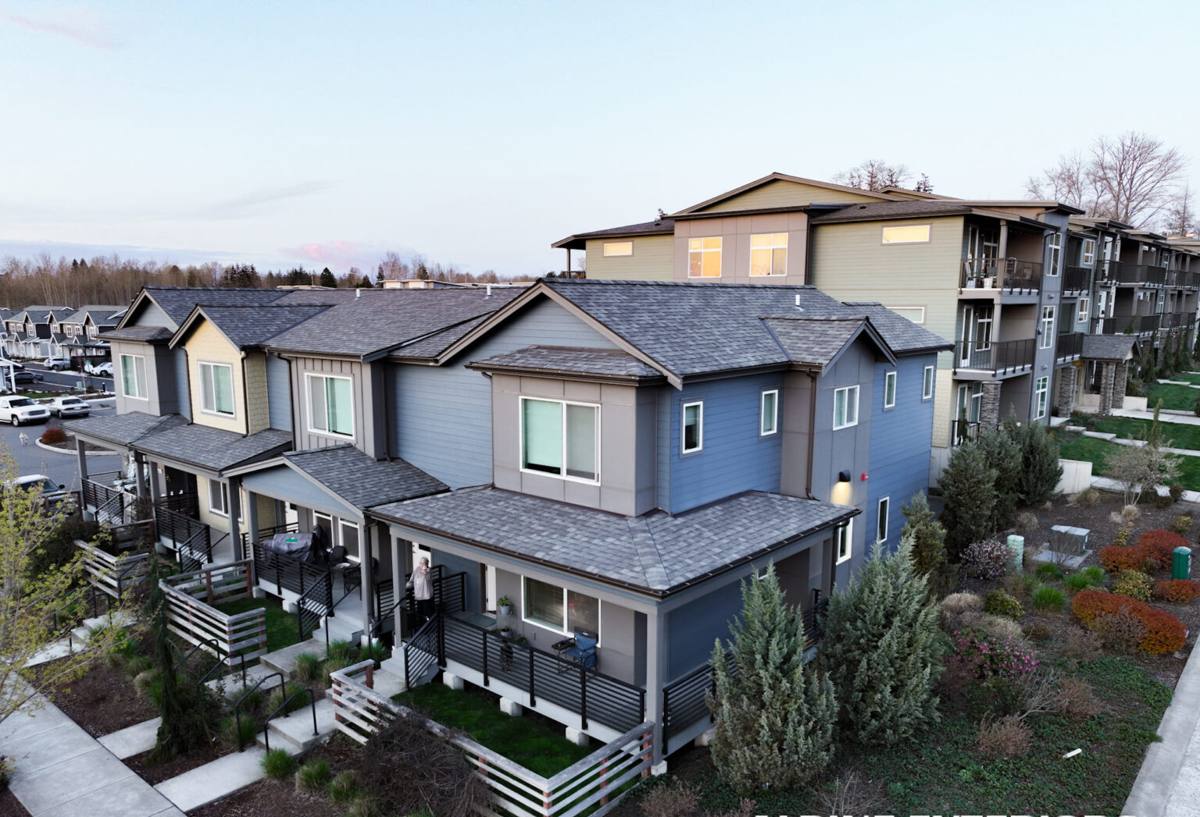
How Salt Air, Driving Rain, and Moss Season Wear Windows Down
Salt Air and Hardware Corrosion
Salt in the air accelerates corrosion on window hardware — hinges, locks, balance mechanisms, and especially older aluminum frames. Once corrosion sets in, windows get harder to open and close, seals start to fail at the moving parts, and the frame itself can pit or discolor. This is a slow process, which is why a lot of homeowners don't notice it until a window is already stiff, stuck, or leaking.
Driving Rain and Water Intrusion
Wind-driven rain doesn't just land on a window — it gets pushed sideways and upward into any gap in the flashing or seal. Over time, water that gets behind the trim or into the wall cavity causes rot, mold, and damage that's far more expensive than the window itself. This is the single biggest reason a poorly installed window fails long before a well-installed one does; the glass and frame quality matter less than the seal around them.
Moss and Trapped Moisture
Shaded exteriors, north-facing walls, and areas with limited direct sun stay damp longer after every rain. That's exactly the kind of condition moss and mildew need to take hold on sills, trim, and caulk lines. Once moss establishes itself along a window's edge, it holds moisture directly against the frame and finish, which shortens the life of both.
Signs Your Riverside Home's Windows Need Replacing
Most window failures give warning signs well before glass cracks or a frame collapses. Homeowners in this area should watch for:
- Fogging or condensation between panes — a sign the seal has failed and insulating gas has escaped
- Windows that stick, won't latch fully, or feel loose in the frame
- Soft or discolored wood trim around the window, especially at the bottom sill
- Visible moss, algae, or persistent black staining on the frame or sill
- A noticeable draft or cold spot near the window even when it's closed
- Paint that's bubbling, peeling, or cracking specifically around the window opening
- Rising heating bills without another clear explanation
- Noise from outside that seems louder than it used to be
Any one of these on its own might just mean routine maintenance. Several at once, especially soft trim combined with fogged glass, usually means water has already gotten past the seal and it's time for a real assessment.
What a Correct Window Replacement Actually Involves
Frame Prep and Flashing
The window unit itself is only part of the job. What happens around it — how the opening is prepped, how flashing is layered, and how it ties into the existing weather-resistive barrier — determines whether water stays out for the next twenty years or finds its way in within two. In a climate that gets driving rain from multiple directions, flashing has to be installed in the correct shingle-lap order so water is always directed outward and down, never trapped behind trim.
Sealing and Weatherproofing
Sealant is not a substitute for correct flashing — it's a backup layer, not the primary defense. We use it to close the small gaps that flashing alone can't cover, not to paper over a shortcut in the install. Every window also needs proper shimming so it's square and level in the opening; a window that's slightly racked will never seal evenly no matter how much caulk goes around it.
Choosing Window Materials and Glass for a Marine Climate
Material choice matters more here than in drier regions, because whatever you pick will spend years dealing with humidity, salt air, and repeated wet-dry cycles.
| Frame Material | How It Handles This Climate | Maintenance |
|---|---|---|
| Vinyl | Doesn't rot or corrode; handles moisture well; can expand/contract with temperature swings | Low — occasional cleaning, no painting or sealing needed |
| Fiberglass | Very stable in wet climates, resists warping and doesn't corrode | Low — durable finish, minimal upkeep |
| Wood-clad | Attractive but the exterior cladding must stay sealed; any breach exposes wood to rot | Higher — regular inspection of seals and finish |
| Aluminum | Prone to corrosion and condensation in salt-influenced, humid air over time | Higher — hardware and finish need monitoring |
We don't install every material on the market, and that's a deliberate call, not a knock on any manufacturer. In an area with this much sustained moisture exposure, we'd rather steer homeowners toward frame materials and glass packages that hold up with minimal upkeep than sell something that looks good on day one but demands constant maintenance to keep performing. For glass, a dual-pane unit with a low-E coating and argon fill is a solid baseline for this climate; homeowners on busier streets or closer to open water sometimes step up to triple-pane for the added sound and thermal benefit.
What Drives Window Replacement Cost in Riverside
Pricing depends on more than the number of windows. The main variables we walk through with homeowners are:
| Factor | Why It Matters |
|---|---|
| Window size and count | Larger openings and full-house replacements involve more material and labor |
| Frame material | Vinyl, fiberglass, and wood-clad carry different unit costs |
| Glass package | Dual-pane vs. triple-pane, low-E coatings, and gas fills affect price and performance |
| Condition of the existing opening | Rot or water damage found during removal adds repair work before a new window can go in |
| Access and site conditions | Second-story windows, tight side yards, or landscaping obstacles affect labor time |
| Trim and finish work | Matching existing exterior trim or upgrading it adds to the scope |
We won't quote a firm number without seeing the actual openings — anyone who does is guessing. What we can say is that a broad range for a straightforward, quality vinyl or fiberglass window replacement typically falls somewhere in the low-to-mid hundreds per window installed, with wood-clad, larger openings, or repair work pushing that higher. A written estimate after an on-site look is the only way to get an accurate number for your home.
Our Window Replacement Process, Start to Finish
- On-site assessment — we look at every window being replaced, check for hidden water damage around the openings, and measure for an accurate order
- Material and glass selection — we walk through frame and glass options suited to this climate and your budget, no upselling
- Ordering and lead time — custom-sized windows take time to manufacture; we give you a realistic timeline up front
- Removal and opening prep — old units come out carefully, and any rot or damage found in the opening gets addressed before the new window goes in
- Installation, flashing, and sealing — done in the correct order so water is directed out, not trapped in
- Final inspection and cleanup — we check operation, seals, and finish work before we consider the job done
We don't skip the prep and inspection steps to move faster. Given how much damage a bad seal can cause behind the scenes in this climate, those steps are where the long-term performance of the window actually gets decided.
Why Hiring a Crew That Already Works in Riverside Matters
A lot of window problems in this area trace back to installation shortcuts, not bad products. Crews unfamiliar with Everett's weather patterns — or with the age and construction style of homes in neighborhoods like Riverside — sometimes treat flashing and sealing as an afterthought because it's a step that doesn't show once the trim goes back on. We work in this area regularly, which means we've seen how older homes here were originally built, where water tends to find its way in, and what it takes to make a replacement window actually outperform the one it's replacing rather than just look newer.
Local experience also means fewer surprises during the job itself. We know what to expect from Snohomish County permitting when it applies, how to plan around this area's weather for install timing, and how to work efficiently on the kinds of window openings common in this part of Everett.
If your windows are showing any of the signs above, or you're simply ready to stop dealing with drafts, stuck sashes, or fogged glass, we're happy to take a look. Reach out for a free, no-pressure estimate — we'll assess your windows, answer your questions honestly, and give you a clear picture of your options before you decide anything.