 Everett
 Why Silver Lake Roofs Take a Different Kind of Beating
The Silver Lake area sits under heavy tree canopy — fir, cedar, and big-leaf maple line most of the older lots around the lake — and that canopy changes how storms hit a roof. It's not usually a whole roof torn off in one event. It's a broken branch through a valley, a row of shingles lifted along a windward edge, or flashing that worked loose during a wind-driven rain and let water track into the attic for weeks before anyone noticed a stain on the ceiling. Storm damage here tends to be partial, hidden, and easy to underestimate until it's already caused interior damage.
We work roofs in this neighborhood regularly, which means we're not guessing at how Silver Lake homes behave in weather. We know which roof pitches shed a windstorm cleanly and which ones catch debris in a valley. That local pattern recognition is most of what separates a fast, correct repair from a callback six months later.
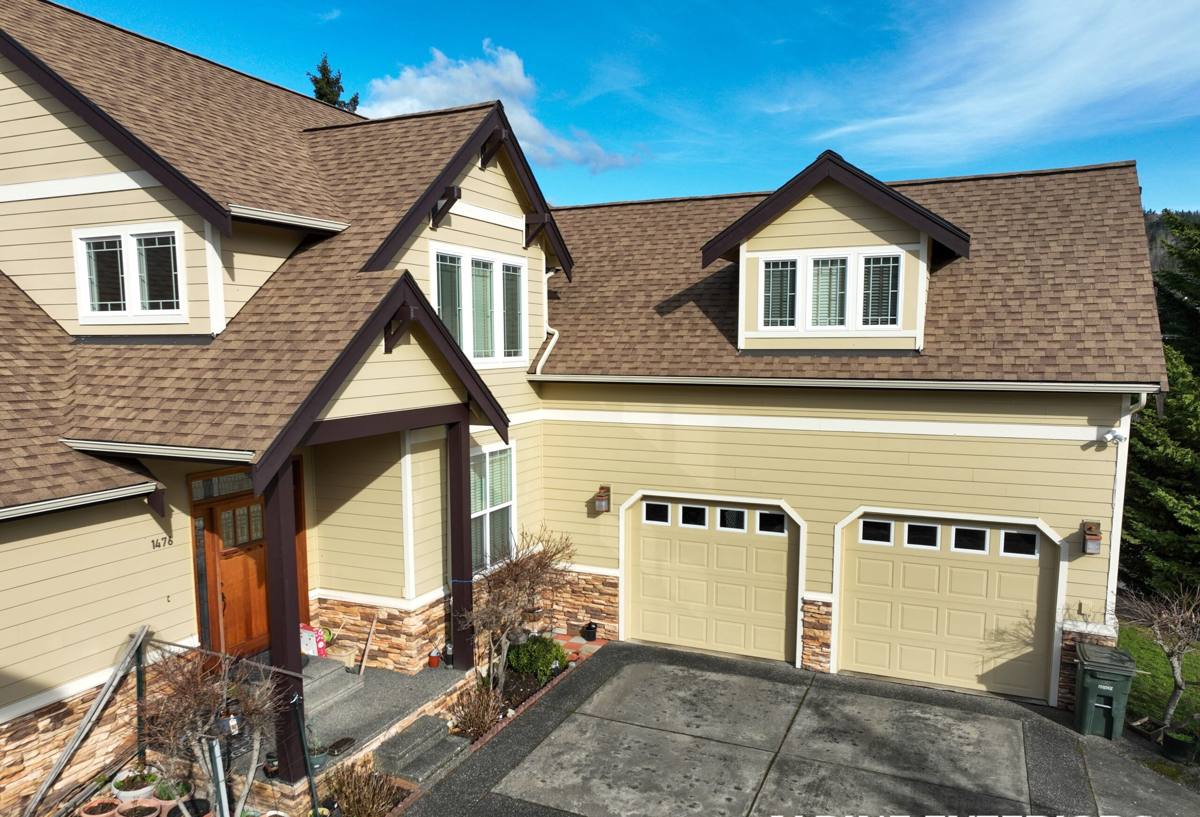
What Storm Damage Actually Looks Like Here
Wind and Tree Limb Impact
Snohomish County gets its share of fall and winter windstorms, and around Silver Lake that wind is moving through mature trees before it ever reaches a roof. The result is a mix of straight wind damage — lifted or missing shingle tabs along ridges and rake edges — and impact damage from limbs and debris. A limb strike can crack shingles, punch through underlayment, or dent metal flashing without leaving an obvious hole, which is exactly why it gets missed in a quick look from the ground.
Wind-Driven Rain Intrusion
A shingle roof is built to shed water moving straight down. Wind-driven rain moves sideways and can force water up under shingle tabs, through nail penetrations, and around flashing at chimneys, skylights, and wall-to-roof transitions. This is a slower kind of storm damage — it doesn't announce itself with a missing shingle, it shows up later as a soft spot in the decking or a water stain that seems to have "just appeared."
Moss-Related Weakening
Storm damage and moss damage aren't the same thing, but they compound each other. A roof that's already carrying a moss mat holds moisture longer, which softens shingle edges and loosens the granule surface. When a windstorm hits that same roof, shingles that would normally flex and hold tear or lift instead. We see this combination constantly on shaded lots near the lake.
Salt Air, Rain, and a Long Moss Season
Everett sits close enough to Puget Sound that salt-laden air is part of the regional climate, and it's harder on roofing metal than most homeowners expect. Flashing, roofing nails, gutter fasteners, and vent boots corrode faster here than they would further inland, and corroded flashing is one of the most common places we find storm-related leaks starting — not because the storm caused the corrosion, but because it exploited a fastener or seam that salt air had already weakened.
Layer on the driving rain that comes with Pacific storm systems and a moss season that can run from early fall through late spring under tree cover, and you've got a roof that's rarely getting a real chance to dry out between weather events. That's the local reality any storm damage repair has to account for — a patch that would hold up fine in a drier climate can fail here within a season if it doesn't address moisture retention as well as the physical damage.
What a Correct Storm Damage Repair Involves
A storm damage repair is not just replacing what's visibly broken. Done right, it includes:
- A full roof inspection, not just the section that looks damaged — wind and impact damage often shows up in more than one spot
- Checking the decking underneath removed shingles for soft spots or water staining before anything new goes down
- Replacing damaged underlayment, not just shingles, if water intrusion is suspected
- Inspecting and resealing or replacing flashing at chimneys, vents, and valleys — the spots most likely to have failed first
- Matching shingle type, weight, and color as closely as possible so the repair doesn't stand out or create an uneven wear pattern
- Checking gutters and downspouts for debris or damage that could send water back up under the roof edge
- Clearing overhanging limbs that contributed to the damage, where that's practical and the homeowner wants it addressed
Skipping any of these steps is how a "quick patch" turns into a second call within a year.
Repair vs. Replace: How We Make the Call
Not every storm-damaged roof needs a full replacement, and not every roof that looks fine from the ground is actually a good repair candidate. We base the recommendation on a few honest factors rather than defaulting to whichever job is bigger.
| Factor | Favors Repair | Favors Replacement |
|---|---|---|
| Roof age | Under 10-12 years, shingles still flexible | Nearing or past expected lifespan |
| Extent of damage | Localized to one section or slope | Damage scattered across multiple slopes |
| Decking condition | Dry, solid decking under the damage | Soft, stained, or delaminating decking found |
| Moss/algae history | Minimal buildup, roof has been maintained | Heavy moss mat with granule loss roof-wide |
| Shingle availability | Matching shingles still obtainable | Discontinued product, visible patch mismatch |
When a roof is a genuine repair candidate, we say so — a repair that solves the actual problem is a better outcome for the homeowner than an unnecessary replacement, and it's also the kind of job that earns repeat calls from neighbors.
Our Process, Start to Finish
1. Emergency Assessment
If water is actively getting in, the first priority is stopping it — tarping exposed decking or securing loose material so the damage doesn't get worse while a full repair is scheduled.
2. Full Inspection and Documentation
We walk the roof (weather permitting) or use a close visual and photo-based inspection to document every area of damage, including anything found while checking flashing, valleys, and decking. This documentation matters for step three.
3. Insurance Coordination
Most storm damage repairs involve a homeowner's insurance claim. We provide clear, itemized documentation of the damage and the scope of work needed, which helps keep the claims process straightforward rather than becoming a back-and-forth over what's covered.
4. The Repair
Work is scheduled around weather windows — you don't want shingles or flashing installed in active rain — and we keep the work area contained so debris and old materials aren't left scattered around the property.
5. Final Walkthrough
Before we consider the job done, we walk the completed repair with the homeowner so you can see exactly what was done and ask questions on the spot.
Why a Crew That Already Works Silver Lake Matters
After a widespread windstorm, roofing crews get busy fast, and homeowners across Snohomish County are often competing for the same limited number of qualified crews. A contractor who already works this neighborhood knows the tree cover, the typical roof ages and styles in the area, and — practically speaking — can often get to a Silver Lake property faster because we're not routing across the county for every call.
There's also a quality-of-repair reason to hire local. A crew unfamiliar with how salt air and shaded, moss-prone roofs behave here may treat a storm repair as a simple patch job and miss the underlying moisture or corrosion issue that made the storm damage worse in the first place. We've seen enough of these roofs to know what to check, not just what to fix.
Signs You Should Have Your Roof Inspected After a Storm
- Shingles or granules in the yard or gutters after a windstorm
- A new water stain on a ceiling or in the attic, especially near a chimney, skylight, or wall line
- Visible bent, missing, or lifted flashing around roof penetrations
- A tree limb that made contact with the roof, even if it didn't seem to break through
- Sagging or uneven areas along a roof slope
- Gutters pulling away from the fascia or overflowing during rain
- Daylight visible through the roof deck from inside the attic
Any one of these is worth a professional look. Waiting until a leak shows up inside the house usually means the repair — and the cost — has grown larger than it needed to be.
If a recent storm has left you with damage, or you're just not sure whether what you're seeing is worth worrying about, we're happy to take a look. Reach out for a free, no-pressure estimate using the form below — we'll tell you honestly what we find and what it would take to fix it right.