 Everett
 Building a Deck That Actually Suits Riverside's Weather
Riverside sits close to the Snohomish River on Everett's north side, which means the homes here deal with a particular mix of moisture problems: humid air off the river, driving rain blowing in off Puget Sound, salt-tinged coastal air, and tree cover that keeps shaded stretches of yard damp for most of the year. A deck built for a dry inland lot doesn't automatically hold up the same way here. The framing underneath, the fasteners holding it together, and the board material itself all need to be chosen and installed with this specific combination of conditions in mind.
Composite decking has become the default choice for a lot of Everett homeowners precisely because it's engineered to shrug off moisture cycling in a way that solid wood struggles to match over time. But "composite" isn't one product — it's a category that spans a wide range of quality, cap systems, and installation requirements, and a deck's long-term performance depends as much on how it's built as on what it's built with. This page walks through what a Riverside composite deck actually needs, what a correctly done job involves, and how our process is built around this neighborhood's conditions specifically.
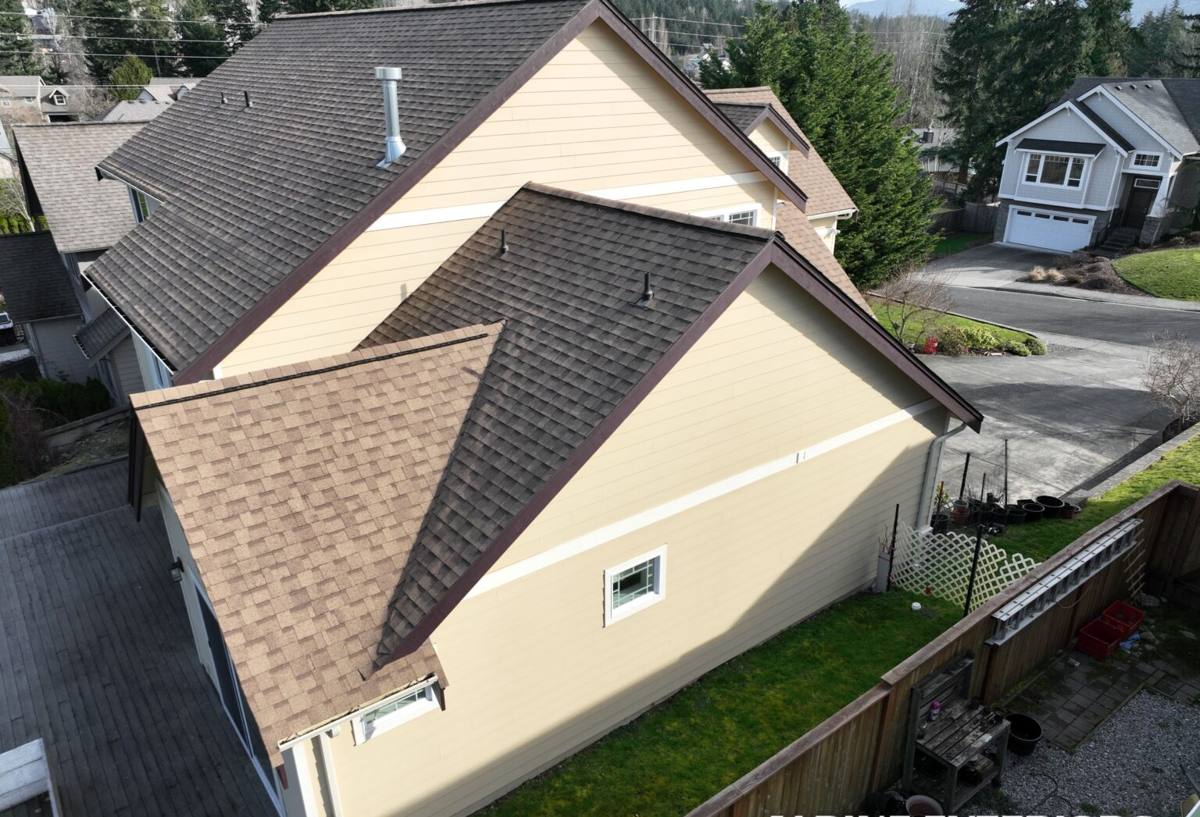
What Everett's Weather Actually Does to a Deck Over Time
Moisture Cycling and Framing Rot
The visible boards on top of a deck get most of the attention, but the substructure underneath — the joists, beams, posts, and ledger board — is where most real deck failures start. Snohomish County's wet season means that framing lumber goes through repeated cycles of getting soaked and drying out, sometimes multiple times a week for months at a stretch. Untreated cuts, missed flashing, or fasteners that trap moisture against wood all become entry points for rot, and because that damage happens underneath the deck surface, it's often invisible until a board feels soft or a railing post wobbles.
Moss, Algae, and Shaded Yards
Riverside's mature tree cover and proximity to the water mean a lot of yards here stay damp and shaded longer than homes on more open, south-facing lots elsewhere in Everett. Moss and algae growth on deck surfaces isn't just cosmetic — it holds moisture against the board and makes the surface genuinely slippery, which matters on stairs and near doorways. Board spacing, airflow underneath the deck, and surface texture all affect how much moss takes hold and how easy it is to keep clean.
Salt Air and Fastener Corrosion
Homes closer to the water pick up more salt-laden air moving across every exposed surface, including metal hardware. Fasteners, brackets, and structural connectors that aren't rated for coastal exposure can corrode well before the decking material itself shows any wear, which is a common reason an otherwise sound-looking deck develops loose boards or failing railings years before it should.
Composite vs. Other Decking Materials in This Climate
There's no single "best" decking material for every situation, but the trade-offs look different once you factor in Riverside's specific mix of rain, shade, and salt air. The table below lays out how the common options compare on the issues that actually matter here.
| Material | Moisture Behavior | Maintenance Burden | Typical Lifespan Here |
|---|---|---|---|
| Pressure-treated wood | Absorbs and releases moisture constantly; prone to warping, checking, and splintering in wet-dry cycles | Annual sealing/staining if you want to slow the cycle | Shorter, especially on shaded lots |
| Cedar | Naturally rot-resistant but still absorbs moisture over time; graying and softening in constant damp shade | Regular sealing to preserve color and resist moss | Moderate, weather-dependent |
| Uncapped composite | Better than wood but the exposed composite surface can still absorb some moisture and is more prone to staining and mold in shaded, damp spots | Low, but surface can need occasional cleaning to prevent mold sitting in the fibers | Long, with some surface aging in shade |
| Capped composite / PVC | A polymer shell resists moisture absorption at the surface, which matters most on shaded, damp lots | Lowest; no sealing or staining required | Longest of the group, best fit for this climate |
Capped composite tends to be the strongest fit for Riverside specifically, because the protective shell is doing the most work exactly where this climate is hardest on a deck — shaded, damp, moss-prone areas. That doesn't mean it's automatically the right call for every budget or every project, but it's the baseline we start most conversations from here.
What a Correctly Built Composite Deck Involves
The Substructure Comes First
Composite boards are only as good as what's underneath them. Joists need to be sized and spaced correctly for the specific composite product being installed — composite has different span ratings than wood, and using wood-spec spacing on composite boards is a common shortcut that leads to bounce and premature sagging. The ledger board, where the deck attaches to the house, needs proper flashing to keep water from working its way behind the siding and into the wall framing — this is one of the most common failure points we find when repairing older decks in this area.
Drainage and Ventilation Underneath
A deck built low to the ground or over a shaded, damp yard needs enough airflow underneath to let the space dry out between rain events. That means correct joist height off grade, sometimes a membrane or drainage system if the deck sits over living space below, and thought given to how water sheds off the property rather than pooling under the structure.
Fastening Systems
Most composite decking today is installed with a hidden fastener system that clips boards from the side rather than screwing through the face — this avoids the moisture-trapping screw holes that used to be a weak point in older wood-style installs, and it gives a cleaner finished look. Whatever fastener and bracket hardware goes into the build should be rated for coastal, corrosion-prone environments, not standard interior-grade hardware.
Cut-Edge Sealing and Picture-Framing
Every time a composite board gets cut to length, that exposed edge needs proper treatment — capped composite in particular can be more vulnerable to moisture at a raw cut edge than across its factory-finished face. A picture-frame border (a perimeter board that hides the end grain of the field boards) is both a finish detail and a practical way to protect exposed cuts around the deck's edge.
Choosing the Right Board for a Riverside Lot
Capped vs. Uncapped
Capped composite boards have a polymer shell wrapped around a wood-plastic composite core, while uncapped composite is a single homogenous material through and through. For shaded, damp lots — which describes a lot of Riverside — the capped shell's resistance to moisture absorption and staining is usually worth the difference in price over the life of the deck.
Color and Heat Considerations
Darker composite colors show less dirt and moss buildup in the grain but absorb more heat on the rare sunny stretches Everett does get, which matters for bare feet more than structure. Lighter colors show shade-and-moss discoloration more visibly on the boards that sit under tree canopy. Neither is wrong, but it's worth thinking through given how much of Riverside sits under mature trees.
Our Process for a Riverside Composite Decking Project
- Site walk and assessment: we look at grade, drainage, tree cover, and sun/shade exposure on the specific lot, not a generic template.
- Framing evaluation: on a rebuild, we check existing ledger, joists, and posts for rot or corrosion before deciding what can be reused versus what needs replacing.
- Material selection: we walk through capped vs. uncapped, color, and railing options based on how the space is actually used and how much shade it sits in.
- Permitting: most deck work in Everett requires a permit, and we handle that submission as part of the project rather than leaving it to the homeowner.
- Build: proper flashing at the ledger, correctly spaced and rated framing, hidden fasteners, and sealed cut edges throughout.
- Final walkthrough: we go over the finished deck with you, including basic care specific to the board you chose.
Maintaining a Composite Deck in This Climate
Composite decking is lower-maintenance than wood, not maintenance-free, especially in a climate that stays damp as much of the year as ours does. A little seasonal attention goes a long way toward keeping a deck looking and performing the way it should.
- Sweep debris and fallen leaves off regularly — trapped organic matter holds moisture against the board and feeds moss and mold
- Rinse or gently wash the surface a few times a year, more often on heavily shaded sections
- Keep gutters and downspouts near the deck clear so runoff isn't dumping extra water onto or under the structure
- Check railing posts and stair connections annually for looseness, which can signal hardware corrosion underneath
- Trim back overhanging branches where practical to let more light and air reach shaded sections
- Avoid pressure-washing at close range or high pressure, which can damage the cap layer on capped composite boards
Cost Factors on a Riverside Composite Deck
Every project is different, but a few factors tend to move the price the most on jobs in this neighborhood specifically.
| Factor | Why It Matters Here |
|---|---|
| Framing condition | Rebuilds on older decks often uncover ledger or joist rot from years of moisture cycling, which adds cost but shouldn't be skipped |
| Deck height and grade | Taller decks or sloped, damp lots near the river sometimes need additional footings or drainage work |
| Capped vs. uncapped board | Capped composite costs more upfront but tends to be the better long-term fit for shaded, damp sections of a lot |
| Railing and hardware | Coastal-rated hardware costs more than standard-grade but resists salt-air corrosion far better over time |
| Permit and inspection | Most Everett deck permits involve at least one inspection tied to structural framing and railing height, which is built into project timelines |
Why Hiring a Crew That Already Works Riverside Matters
A lot of what makes a deck last in this neighborhood isn't exotic — it's getting the ordinary things right consistently: correct flashing at the ledger, framing spec matched to the actual composite product, hardware rated for salt air, and enough airflow underneath to handle a wet climate. A crew that already works in Riverside and the surrounding Everett neighborhoods has usually already seen how older decks in this specific area tend to fail, which shapes how we build the new ones. That includes knowing which parts of a lot near the river typically hold moisture longest, being familiar with Everett's permitting process so inspections don't stall a project, and having a working relationship with suppliers who stock the composite lines that actually perform well in Snohomish County's climate rather than whatever's cheapest to order.
It also means fewer surprises mid-project. A contractor unfamiliar with this area might spec framing or hardware that's technically code-compliant but undersized for how much moisture this specific stretch of Everett deals with over a full year. That's the kind of gap that doesn't show up on day one — it shows up three or four winters later.
Signs an Existing Deck Needs Attention Before It Gets Worse
- Soft or spongy spots underfoot, especially near the house connection or stair landings
- Visible rust staining around fasteners or brackets
- Persistent moss or algae that returns quickly after cleaning
- Railing posts that flex or wobble under light pressure
- Gaps or separation where the deck meets the house at the ledger board
- Boards that have visibly cupped, warped, or delaminated at the surface
Any of these on an existing deck is worth a look before it turns into a larger structural repair, particularly heading into another wet Pacific Northwest winter.
If you're weighing a new composite deck or wondering whether an existing one in Riverside needs repair versus replacement, we're glad to take a look and put together a free, no-pressure estimate based on your actual lot and how it's used.