 Everett
 Riverside's Siding Challenge: Salt Air, Driving Rain, and a Long Moss Season
Riverside sits close enough to Puget Sound and the Snohomish River corridor that homes here take on a specific combination of punishment most siding products were never engineered for. Salt-laden air corrodes fasteners and finishes faster than inland neighborhoods see. Driving rain off the water pushes moisture sideways into laps and seams instead of simply running down a wall. And the marine layer that sits over Everett for much of the year keeps north- and west-facing walls damp long enough for moss and algae to take hold and stay there for months at a time.
None of this is unusual for western Snohomish County, but it matters enormously when you're choosing exterior siding. A product that performs fine in a dry climate can fail early here — not catastrophically, but through slow, steady problems: swelling seams, peeling paint, soft trim, and moss staining that never fully washes off. We install James Hardie fiber cement siding exclusively, and Riverside is one of the neighborhoods where that decision shows its value most clearly.
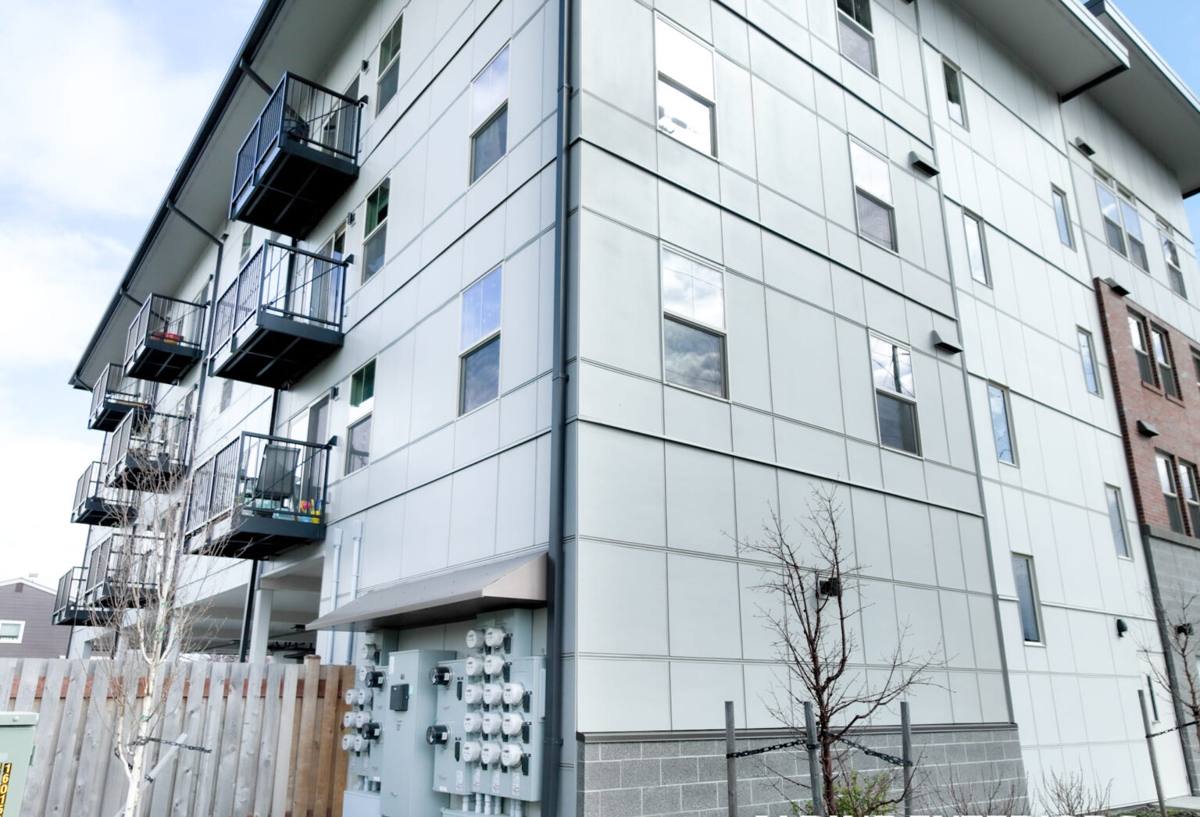
Why Fiber Cement Specifically Suits This Neighborhood
James Hardie siding is fiber cement — a mix of cellulose fiber, sand, and portland cement that is dimensionally stable and doesn't absorb water the way wood-based or wood-fiber products can. That matters directly for Riverside's climate profile:
Moisture Behavior
Fiber cement doesn't swell, warp, or rot when it gets wet repeatedly. Wood siding and wood-fiber composite products can hold moisture inside the board itself, which leads to soft spots and delamination over years of exposure to driving rain. Hardie board sheds water and dries out without the material breaking down.
Salt Air Resistance
Salt air is hardest on fasteners, finishes, and any product with metal components close to the surface. Hardie's ColorPlus factory finish is baked on and formulated to resist fading and chalking better than field-applied paint, which is one reason we don't recommend homeowners rely on site-painted alternatives in this kind of exposure.
Moss and Algae
Nothing is fully moss-proof in a climate this damp, but a hard, non-porous fiber cement surface gives moss and algae far less to grip and root into compared to porous wood grain or textured composite panels. Combined with correct clearances (more on that below), it dramatically cuts down how much moss actually establishes on the wall itself.
What a Correct James Hardie Installation Involves
The product is only half the equation. James Hardie siding installed without attention to detail can still trap moisture and fail early — and in a climate like Riverside's, sloppy installation shows up faster than it would somewhere drier.
Product Line for This Climate
We spec Hardie's engineered HZ product lines, which are formulated by region for moisture and temperature exposure. For a marine climate like Everett's, that means selecting the correct HZ configuration rather than a generic all-climate board — this is a manufacturer-level engineering decision, not a cosmetic one.
Moisture Management Behind the Siding
- Correct weather-resistive barrier and flashing details at every window, door, and penetration
- Proper rain-screen or drainage gap where the wall assembly calls for it, so water that gets behind the cladding can drain and the wall can dry
- Kick-out flashing at roof-to-wall intersections so runoff doesn't dump directly behind the siding
- Sealed and back-primed cut edges, since a factory finish only protects the face and edges cut on site need to be treated correctly
Fastening and Clearances
James Hardie publishes specific fastener spacing, nailing patterns, and minimum clearances from grade, roofing, and decks. Skipping these is the single most common cause of early siding failure we see when we inspect other contractors' work — not a defect in the product, but a shortcut in the install. Clearance from grade and hard surfaces also directly affects how much moisture and moss pressure the bottom courses see over time.
Joint and Seam Treatment
Butt joints, corners, and trim intersections are where water intrusion actually starts on most sidewalls. We follow Hardie's specified joint treatment and use compatible sealants and trim components rather than mixing in whatever happens to be on the truck.
How Our Process Works on Riverside Homes
Assessment
We start with a walk-around that looks at wall orientation (which sides take the most driving rain and stay shaded and damp longest), existing moisture damage, current flashing conditions, and grade clearances — not just a measurement for material quantity.
Removal and Sheathing Check
Old siding comes off far enough to inspect the sheathing underneath. In a climate this wet, hidden moisture damage behind old siding is common enough that we treat this step as mandatory, not optional. Any soft or damaged sheathing gets addressed before new siding goes on — installing over a compromised wall defeats the purpose of upgrading the cladding at all.
Weather Barrier and Flashing
This is the step that determines how the wall performs for the next 30-plus years, and it's also the step that's invisible once the siding is up. We install the weather-resistive barrier, flashing, and drainage details to spec before a single piece of Hardie board goes on.
Installation
Hardie board and trim go on per manufacturer fastening and clearance specifications, with attention to the joints, corners, and penetrations that matter most for a marine climate.
Final Walkthrough
We review the finished wall with the homeowner, including where the maintenance-relevant details are — grade clearance, any areas that will see more moss pressure, and what to watch over the first year.
Hardie vs. Other Siding Options in a Riverside Climate
| Factor | James Hardie Fiber Cement | Vinyl | Wood / Wood-Composite |
|---|---|---|---|
| Moisture absorption | Does not absorb or swell | Doesn't absorb, but seams and gaps can trap water behind it | Can absorb and hold moisture, leading to rot over time |
| Salt air / coastal exposure | Factory finish holds up well; non-combustible core | Can become brittle and discolor faster in salt exposure | Finish and fasteners degrade faster near salt air |
| Moss and algae resistance | Hard, low-porosity surface resists growth | Moderate — smooth but can trap grime in seams | Porous surface holds moisture, encourages growth |
| Finish longevity | Factory-baked ColorPlus finish, long warranty | Color molded through material but can fade/chalk | Requires repainting/restaining on a recurring cycle |
| Fire resistance | Non-combustible fiber cement | Can melt/deform under heat | Combustible |
This isn't a knock on every other product on the market — vinyl and wood both have legitimate uses and plenty of homes wear them fine. It's why, for the specific combination of salt air, driving rain, and moss pressure that Riverside sees, we standardized on James Hardie and don't install the alternatives.
Cost Factors for a Riverside Siding Project
| Factor | What Drives the Cost |
|---|---|
| Wall condition | Hidden moisture damage or soft sheathing found during tear-off adds repair scope |
| Home size and wall complexity | Dormers, multiple gables, and cut-up wall planes take more labor and trim detail |
| Product selection | Lap profile, panel style, and factory-finish color line affect material cost |
| Trim and accessories | Corner boards, fascia, and soffit work done alongside siding add scope |
| Access and site conditions | Grade, landscaping, and proximity to neighboring structures affect labor time |
We won't quote a number without seeing the house, but we can tell you honestly during the walk-around whether we expect the job to run toward the low or high end of a realistic range, and why.
Maintenance in a Marine Climate
James Hardie siding is genuinely low-maintenance compared to wood, but "low-maintenance" doesn't mean "no maintenance" in a climate like Everett's. A short annual routine keeps a correctly installed wall performing for decades:
- Rinse the siding annually, focusing on north- and west-facing walls where moss and grime build up fastest
- Keep gutters clear so overflow doesn't run down the wall face repeatedly
- Trim back landscaping and tree cover that keeps a wall shaded and damp longer than it needs to be
- Check caulking at trim and penetrations every year or two and refresh where it's cracked or pulled away
- Watch grade and mulch buildup — soil or bark should never creep up to touch the bottom of the siding
Why a Crew That Already Works Riverside Matters
Fiber cement siding installed correctly on a house three neighborhoods away doesn't automatically translate into knowing how a specific wall in Riverside will actually perform. A crew that regularly works this part of Everett has already seen which orientations take the worst of the driving rain off the water, where moss pressure tends to concentrate, and which older homes in the area commonly have grade or drainage issues that need addressing before new siding goes on. That local pattern recognition is the difference between a siding job that looks right on installation day and one that's actually built for what this specific stretch of Snohomish County throws at it year-round.
If you're weighing a siding replacement or repair in Riverside, we're happy to walk the house with you, look at what your walls are actually dealing with, and give you a straight answer on scope and approach. Reach out for a free, no-pressure estimate using the form below.