 Everett
 Window Installation Built for Riverside's Weather, Not Just Any Weather
Riverside sits close to the water on the edge of Everett, and that proximity shapes what a window has to survive here. This isn't a generic "replace old windows" job. Homes in this part of Snohomish County deal with a specific combination of driving rain off Puget Sound, salt-laden air moving up from the water, and a long, damp moss season that keeps exterior surfaces wet for months at a time. A window that would hold up fine in a drier inland climate can fail early here if it wasn't installed with this environment in mind.
When we talk about window installation in Riverside, we mean the whole system — the window unit itself, the flashing that directs water away from the wall, the sealants that hold up under repeated wet-dry cycles, and the trim and siding tie-in that keeps water from ever reaching the framing. Get any one of those wrong and you end up with a window that looks fine for a year or two, then starts showing soft trim, fogged glass, or a musty smell in the wall cavity below it.
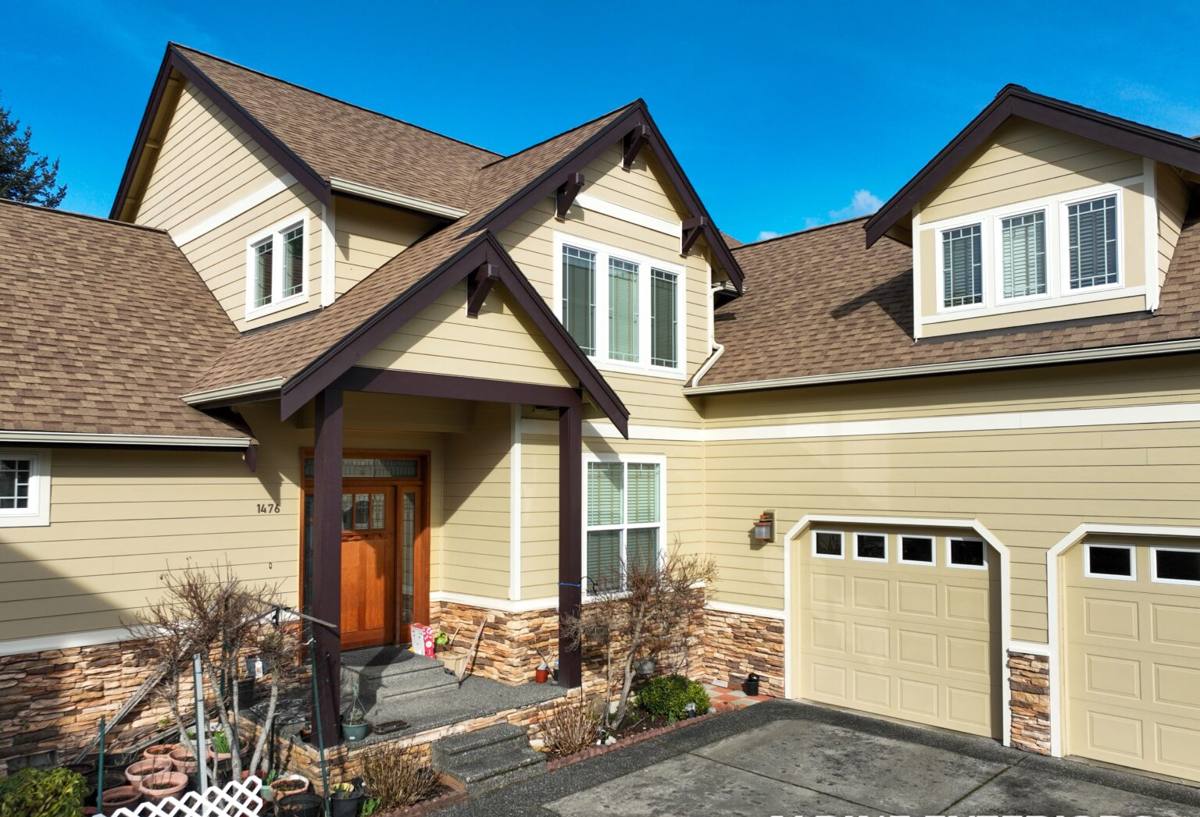
What Driving Rain and Salt Air Actually Do to a Window Over Time
It helps to understand the failure pattern before you're staring at it in your own wall.
Driving Rain
Everett doesn't just get rain — it gets wind-driven rain that hits windows at an angle instead of falling straight down. That means water gets pushed sideways and upward under sills, around trim, and into any gap that a calmer climate could get away with ignoring. Flashing details that would be optional in a dry region are not optional here. Without proper head flashing and a sloped sill pan, wind-driven rain will eventually find its way behind the window frame.
Salt Air
Homes closer to the water pick up airborne salt, and salt is hard on exposed metal — fasteners, hardware, and some window frame components corrode faster than they would further inland. This doesn't mean every window needs marine-grade everything, but it does mean we pay attention to fastener material and hardware finish when we're specifying a window for a Riverside home, rather than defaulting to whatever is cheapest.
Moss Season
Snohomish County's moss season can run half the year. Moss holds moisture against siding and trim long after a storm has passed, which means the wood and sealants around a window stay wet longer than they would in a sunnier climate. Old, unmaintained trim around a window is exactly where moss tends to take hold, and once it does, it accelerates rot underneath it.
Signs a Riverside Home Needs Replacement, Not Another Repair
- Wood trim or sill that's soft, spongy, or visibly rotted when pressed
- Fogging or a permanent haze between the panes of a double-pane window (seal failure)
- Visible daylight or a draft you can feel around the frame when it's windy
- Paint that keeps peeling or bubbling around the window no matter how often it's redone
- Windows that are difficult to open, close, or lock — a sign the frame has shifted or swollen
- A musty smell near the window that shows up mainly during wet months
- Visible moss or dark staining building up on the trim or sill
Any one of these on its own might be a minor repair. Two or three together, especially on an older window, usually means the moisture has already gotten past the surface and into the assembly. At that point, replacement is the more honest recommendation — patching a failing seal doesn't fix what's happening behind it.
What a Correct Installation Actually Involves
The window product matters, but installation is where most long-term problems get created or prevented. A correct job, done for this climate, includes:
- Removing old trim and inspecting the rough opening before anything new goes in — you can't flash over rot and expect it to hold
- Repairing or replacing any soft framing found once the old window is out, not covering it up
- Installing a sloped sill pan so any water that does get past the window drains back outside instead of pooling
- Proper flashing sequencing — sill, jambs, then head flashing, layered so water always sheds downward and outward, never trapped behind a layer
- Sealing with products rated for this climate's wet-dry cycling, not a bead of whatever caulk is on the truck
- Shimming and leveling the unit correctly so it operates smoothly and doesn't stress the seals over time
- Insulating the gap around the frame without overpacking it, which can bow the frame and cause operational problems
- Re-trimming and re-sealing the exterior so the window ties back into the siding cleanly, with no gaps for wind-driven rain to exploit
Skip the sill pan or rush the flashing sequence, and the window can look perfect from the curb while quietly letting water into the wall. This is the part of the job that doesn't show up in a sales brochure but is the actual difference between a window that lasts and one that doesn't.
Choosing Materials That Make Sense for This Climate
There's no single "best" window material — the right choice depends on the home, the budget, and how exposed the window is to wind and rain. Here's how the common options generally compare for a wet, salt-air-influenced climate like Riverside's:
| Frame Material | Moisture Behavior | Maintenance | Typical Trade-Offs |
|---|---|---|---|
| Vinyl | Doesn't rot or corrode; won't absorb moisture | Low — occasional cleaning | Good value; frame color and structural options are more limited than other materials |
| Fiberglass | Very stable in wet/dry cycling; low expansion and contraction | Low | Higher upfront cost than vinyl; strong long-term performance for coastal-adjacent climates |
| Aluminum | Won't rot, but conducts cold and can promote condensation without a thermal break | Low, but check fastener corrosion near salt air | Often used for larger or commercial-style openings; less common for standard residential replacements here |
| Wood / Wood-clad | Attractive but vulnerable to moisture if the exterior cladding or finish is ever breached | Higher — finish and caulk lines need periodic attention | Best warmth and interior appearance; requires more diligence in a wet climate like this one |
We don't push a single brand or material on every job. What we do insist on is picking a product whose warranty and construction actually match how it will be used — a window installed on a rain-exposed west or south wall in Riverside deserves a different level of moisture management than one tucked under deep eaves on a sheltered side of the house.
How Our Process Works
- On-site assessment. We look at the existing windows, the condition of the trim and framing around them, and how exposed each opening is to wind-driven rain.
- Honest scope and estimate. We tell you what we can see and what we might find once the old window is out — no surprise change orders sprung on you mid-job.
- Material selection. We walk through frame material, glass package, and hardware options that fit the home and the budget, with the climate factored in rather than treated as an afterthought.
- Removal and inspection. Old units come out carefully, and we check the rough opening for hidden rot or moisture damage before anything new goes in.
- Correct flashing and installation. Sill pan, flashing sequence, shimming, and sealing done in the right order — the part described above.
- Exterior finish work. Trim, caulking, and paint or stain lines are finished cleanly so the new window matches the home and sheds water properly from day one.
- Final walkthrough. We check operation, sightlines, and seals with you before calling the job done.
What Affects the Cost
Every Riverside home is different, so we won't quote a number without seeing the job — but these are the factors that typically move the price up or down:
| Factor | Why It Matters |
|---|---|
| Number and size of windows | Larger openings and whole-house projects have better per-unit efficiency than single replacements |
| Frame material chosen | Vinyl, fiberglass, and wood-clad carry different material costs and long-term maintenance |
| Condition of the existing opening | Hidden rot or framing damage found during removal adds repair time before installation can proceed |
| Exposure of the wall | Rain- and wind-exposed elevations often warrant more robust flashing and sealant detailing |
| Glass package | Upgraded glazing for energy performance or sound dampening adds cost but can be worth it depending on the room |
| Trim and siding tie-in | Matching existing trim profiles or repairing surrounding siding adds labor beyond the window itself |
A Quick Checklist Before You Hire Anyone
- Do they inspect the rough opening for rot before quoting a firm price, or promise an exact number sight unseen?
- Do they explain their flashing and sill pan approach, or just talk about the window brand?
- Are they licensed and insured to work in Washington, and will they show you proof without hesitation?
- Do they give you a written scope of work, not just a verbal estimate?
- Can they explain the warranty on both the product and their labor separately?
- Do they have experience with homes in this specific part of Everett, near the water and river?
Why Local Experience in Riverside Matters
A crew that regularly works in Riverside and similar Everett neighborhoods has already seen how these homes hold up — where moss tends to build up first, which walls take the worst of the wind-driven rain, and what kind of hidden rot shows up most often once old trim comes off. That's not something you can get from a general contractor who mostly works in drier, inland parts of Snohomish County. It shows up in small decisions: how much flashing overlap to use, which sealant actually stays flexible through a wet Pacific Northwest winter, and where to spend a little more on hardware because of the salt air coming off the water.
It also matters for follow-through. Window installation done right the first time shouldn't need a callback, but if a question comes up six months or two years later, working with a crew that's local and easy to reach beats chasing down a company that only does one job in your area and moves on.
Get a Free, No-Pressure Estimate
If your Riverside home has windows showing any of the wear signs above, or you're just planning ahead, we're happy to take a look and give you an honest read on what's going on — no pressure, no obligation. Use the form below to request a free estimate.