 Everett
 Why Lynnwood Siding Has to Work Harder Than the Brochure Suggests
Lynnwood sits in that Snohomish County band where Puget Sound humidity, marine air, and heavy fall-through-spring rain all overlap. Homes here don't get one kind of weather stress — they get several at once, year-round. Siding takes the brunt of it: wind-driven rain forced sideways against exterior walls, salt-tinged air off the Sound working on fasteners and finishes, and long stretches of shade and dampness that never let north- and west-facing walls fully dry out.
That last part matters more than most homeowners realize. Moss and algae don't need a flood to take hold — they need consistent moisture and a surface that holds it. Lynnwood's tree cover and grey-sky stretches give both. Add in the freeze-thaw cycles that show up most winters, and you've got a climate that finds every weak seam, every gap in flashing, and every material that wasn't built for sustained water exposure.
Siding here isn't a cosmetic upgrade. It's the water management system for the whole house. Get it wrong and you're not just looking at faded paint — you're looking at trapped moisture behind the cladding, rot in the sheathing, and repairs that cost far more than the siding itself.
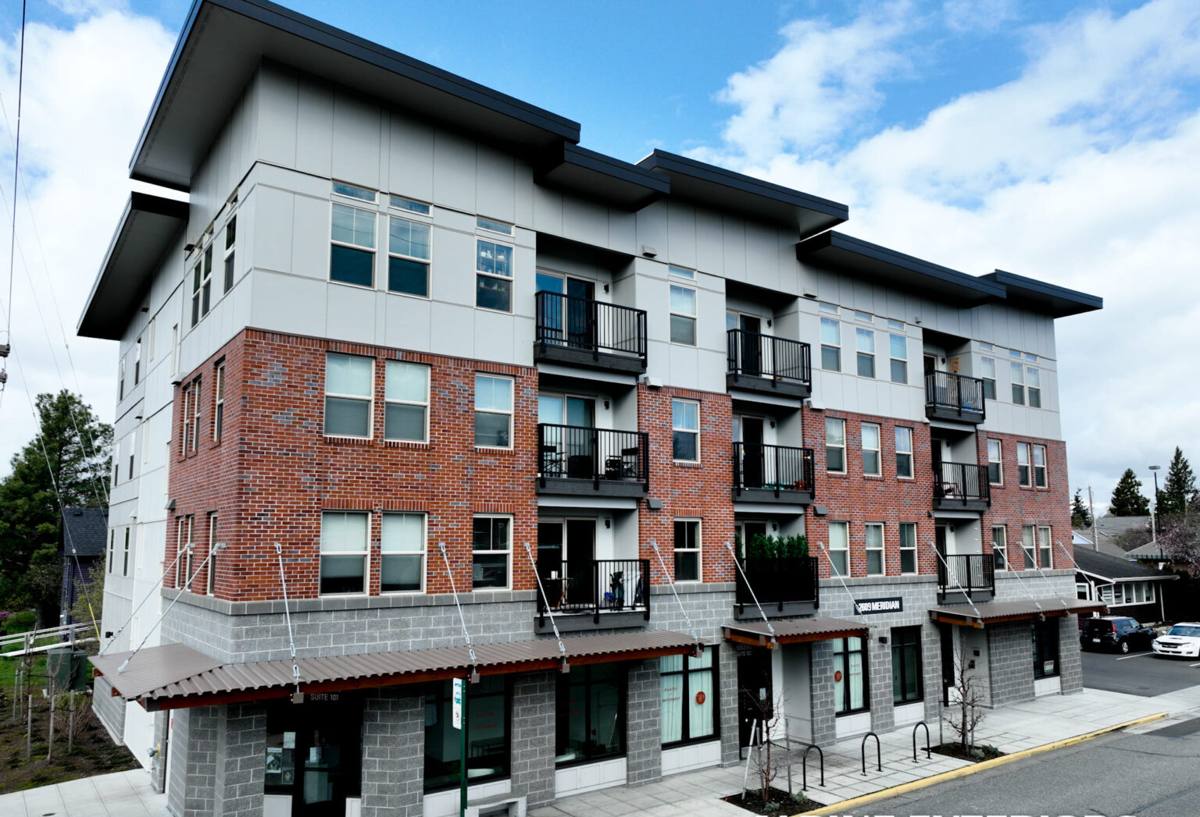
What Actually Fails on Local Homes
Walking a typical older home in this area, the failure points are consistent:
- Caulked butt joints that were never properly flashed, letting water track behind the siding at every seam
- Bottom courses too close to grade or hardscape, wicking moisture up from the ground
- Panel or plank material — wood, vinyl, or lower-grade composite — that's cupped, delaminated, or gone soft after years of damp exposure
- Moss and black algae streaking on north walls and under eaves where sun never reaches
- Nail heads and trim edges rusting or bleeding through paint, a sign fasteners weren't rated for the exposure
None of these are exotic problems. They're what happens when siding material or installation wasn't matched to a wet marine climate in the first place. It's also why we don't treat every siding job the same way we would in a drier region — the details that matter here are different.
What We Install: James Hardie, and Only James Hardie
We install James Hardie fiber cement exclusively. We don't offer LP SmartSide, vinyl, Cemplank, Allura, or primed wood, and we won't quote them for a Lynnwood home. That's not a marketing position — it's a standard we hold because we've seen what each of those alternatives does over time in exactly this climate, and we'd rather turn down a job than install something we don't believe will hold up.
Fiber cement itself — the category — resists what does the most damage here: it doesn't rot, it isn't a food source for moss and mildew the way wood-based products can be, and it holds paint and factory finish far longer than vinyl or engineered wood in sustained damp conditions. Within that category, we standardized on Hardie specifically for three reasons:
Climate-Engineered Product Lines
Hardie manufactures its siding in different formulations for different climate zones — HZ5 for regions with freeze-thaw cycles, HZ10 for consistently milder, wetter conditions. Western Washington, including Lynnwood and Everett, falls into the zone Hardie engineers for damp, temperate exposure. That's not a detail we can get from a generic fiber cement product — it's specific to how Hardie manufactures and warranties its boards for this exact climate.
ColorPlus Factory Finish
Field-painted siding is only as good as the paint job and the weather conditions the day it was applied. ColorPlus is baked on at the factory under controlled conditions, which means better adhesion and color retention through the kind of prolonged damp cycles that cause field-applied paint to peel and chalk early. In a climate that stays wet for months at a stretch, that difference shows up years down the line.
Warranty That Actually Transfers
Hardie backs its siding with a long non-prorated warranty, and the ColorPlus finish carries its own separate coverage. If you sell the home, that coverage transfers to the next owner — which matters to Lynnwood buyers who are increasingly asking what the siding is and when it was done.
What Correct Installation Actually Involves
Fiber cement siding is only as good as the installation behind it. Hardie's own install specs are detailed for a reason — skip steps and you get the same moisture problems as any other siding, just with a better-looking face on it. On every job we run:
- Weather-resistive barrier and flashing first. House wrap or building paper goes on correctly lapped, and flashing gets installed at every window, door, and horizontal transition before a single plank goes up.
- Proper clearances. Minimum gaps from grade, roof lines, decks, and patios so the bottom edge of the siding isn't sitting in standing water or splash-back.
- Correct fastening. Hardie specifies fastener type, spacing, and depth by product and exposure. Overdriven or underdriven nails are one of the most common causes of early failure, and it's a corner that gets cut when crews are moving too fast.
- Joint treatment that actually sheds water. Butt joints get flashed or treated per spec, not just caulked and hoped for.
- Rain screen detailing where it's called for. On walls with heavy exposure, a small air gap behind the siding lets any moisture that does get through dry out instead of sitting against the sheathing.
Every one of these steps is invisible once the job is done. That's exactly why they get skipped by crews that aren't held to a standard — and exactly why they're the difference between siding that lasts decades and siding that fails in ten years.
Our Process on a Lynnwood Project
Every home gets a walk-around before we quote anything. We're looking at exposure on each wall, current moisture damage, trim and window condition, and where the previous siding failed — that tells us where extra attention is needed this time around.
From there: tear-off down to the sheathing (we don't side over failing material — you can't fix hidden rot by covering it), inspection and repair of any damaged sheathing or framing we find, correct weather barrier and flashing installation, then the Hardie planks or panels themselves, followed by trim, caulking at penetrations only (not as a substitute for flashing), and a final walk-through.
We don't sell a "wrap and go" job. If we open a wall and find rot, we tell you before we close it back up — not after.
What Drives Cost on a Project Like This
| Factor | Why It Matters |
|---|---|
| Tear-off vs. re-side | Removing old siding down to the sheathing costs more up front but is the only way to address hidden rot — common on homes with prior wood or vinyl siding in this climate |
| Sheathing repair | Wall complexity and existing moisture damage found once old siding comes off; can't be accurately priced until tear-off |
| Trim and detail work | Homes with more windows, gables, and architectural trim take longer and require more precise flashing and cutting |
| Product line and profile | Lap siding, shingle-style panels, and board-and-batten all install differently and carry different material costs |
| Wall height and access | Two-story walls and steep or obstructed lots require more scaffolding and labor time |
We give you a written estimate that breaks these out so you can see what you're actually paying for, not a single lump number.
Signs Your Current Siding Is Past Its Prime
- Visible moss or dark streaking that comes back within a season of cleaning
- Soft spots, bubbling, or panels that flex under light pressure
- Paint that's peeling or chalking heavily, especially on north- and west-facing walls
- Gaps opening at seams, corners, or trim boards
- A musty smell near exterior walls inside the home — often a sign moisture has already gotten behind the siding
- Visible warping or cupping on individual boards or panels
Any one of these on its own might just mean a cleaning or a repaint. Two or more together, particularly with any softness or smell, usually means moisture has already worked its way behind the cladding and it's worth having someone look before it spreads.
Maintenance Once Hardie Is On
Fiber cement is low-maintenance, not no-maintenance. A yearly rinse to keep moss and algae from establishing, prompt caulk touch-ups at penetrations, and keeping gutters clear so water isn't running down the wall face will keep a correctly installed Hardie system performing for decades. That's a fraction of the upkeep wood or lower-grade composite siding demands in this climate.
Why It Matters That We Already Work in Lynnwood
A crew that only shows up in this area occasionally is guessing at exposure, drainage, and moss patterns from a manual. A crew that works Lynnwood and Everett regularly has already seen how a given wall orientation behaves through a full wet season, knows which older homes in the area tend to have hidden sheathing damage under their original siding, and isn't learning the local permitting and inspection process on your project. That familiarity shows up in fewer surprises during tear-off and a faster, more accurate estimate up front.
If your siding is showing its age, or you're planning ahead of a sale, we're happy to take a look and give you a straight assessment — no pressure, no upsell to a product we wouldn't put on our own homes. Request a free estimate using the form below and we'll get a crew out to walk the property with you.