 Everett
 Why Decks in Marysville Wear Out Faster Than Homeowners Expect
Marysville sits close enough to Puget Sound and the Snohomish River delta that salt-laden air, high humidity, and long stretches of standing moisture are simply part of the building environment. Add in Western Washington's wet season, which can run seven or eight months with only short breaks, and you have a climate that is genuinely hard on exterior wood and fasteners. A deck built with average materials and average attention to detail in this area does not fail because it was built badly in an obvious way — it fails slowly, underneath, where nobody is looking until a board flexes or a post feels soft.
The three biggest local stressors we see on Marysville decks are consistent: moisture that never fully dries between rain events, moss and algae that hold water against wood and decking surfaces for weeks at a time, and corrosion on fasteners and hardware that were never rated for a coastal-influenced, high-humidity zone. None of these are dramatic on their own. Together, over ten or fifteen years, they're the reason a deck that looks fine from the yard can have a compromised ledger board, rotted joist ends, or rusted-through hangers underneath.
Repair or Replace? How to Tell the Difference
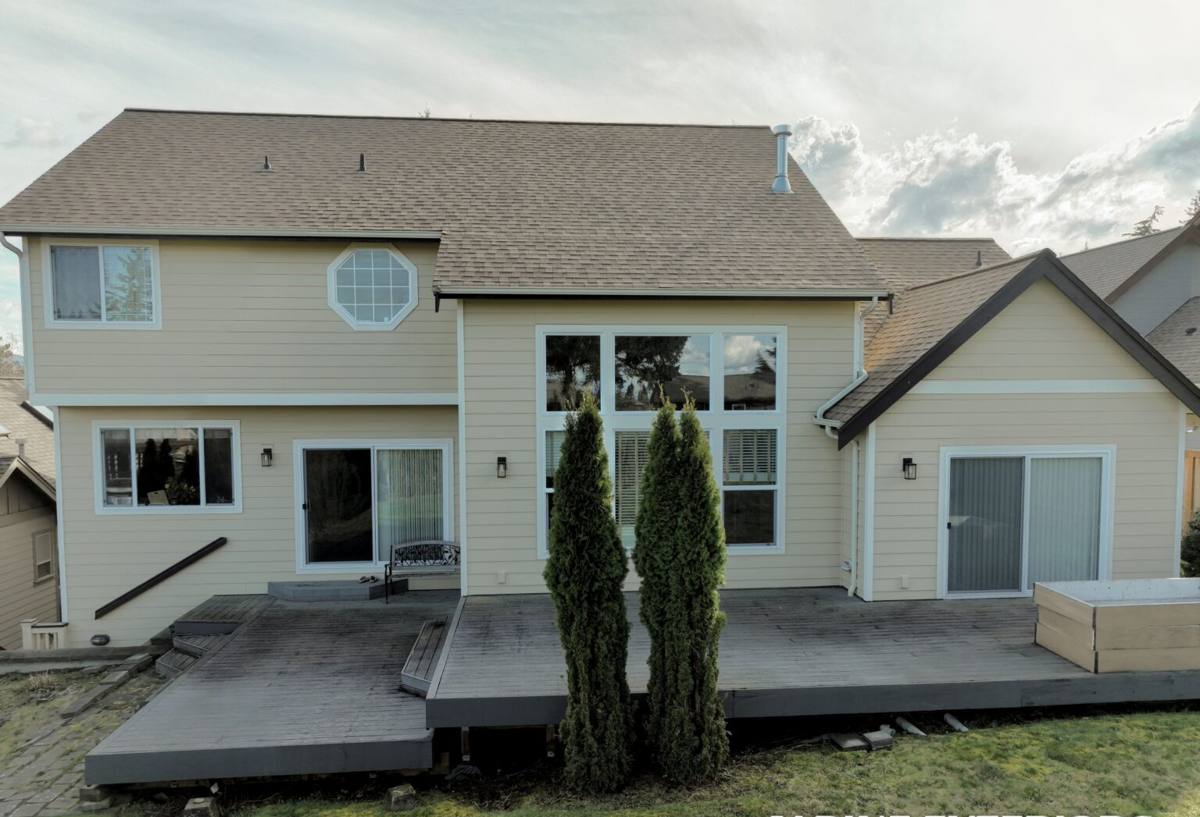
Not every tired-looking deck needs a full tear-off. But in this climate, cosmetic wear is often a late symptom of structural problems that started well before the surface showed it. Here's how we sort it out on a walk-through.
- Soft or spongy spots underfoot, especially near the house or at board ends — usually means rot has already reached the framing.
- Persistent green or black staining that comes back within weeks of cleaning — a sign moisture isn't drying out between rain events.
- Visible rust streaks below joist hangers, screws, or bolts — the hardware is corroding faster than it should.
- Gaps or movement where the deck ledger meets the house — a flashing or fastening failure, and a real safety issue.
- Railings that flex or posts that wiggle at the base — often rot at the post base or a connection that was never properly engineered.
- A deck original to a home built before the mid-2000s, when local code and flashing standards for ledger attachment were less strict.
If it's one board or a localized soft spot, repair can make sense. If it's the framing, the ledger connection, or multiple posts, patching it just delays a bigger problem and puts good money into a structure that's still failing underneath. We'll tell you plainly which situation you're in — we don't sell replacements to people who only need a repair.
What a Correct Deck Replacement Actually Involves
A deck is a structure, not a surface. The parts nobody sees are what determine whether it lasts 10 years or 30 in this climate.
Ledger and Flashing
The ledger board — where the deck attaches to the house — is the single most common point of failure on older Pacific Northwest decks. It needs proper flashing that sheds water away from the house wall, correct fastening into structural framing (not just siding), and a gap or drainage path so water doesn't get trapped between the deck and the house. This is the detail that, done wrong, causes hidden rot behind siding that homeowners don't discover for years.
Footings and Posts
Footings need to sit below frost depth and bear on undisturbed, properly compacted soil — not fill dirt or a shortcut poured against an old footing. Post bases should keep the wood post off the concrete itself, using a standoff hardware connection so the post end isn't sitting in the exact spot where water collects after rain.
Framing and Fasteners
Joists, beams, and hangers should all be rated for exterior, high-moisture use — stainless steel or heavy hot-dip galvanized, not standard coated fasteners that will corrode faster near the Sound. Joist spacing and beam sizing follow current code for your specific deck height and span, which matters more than most homeowners realize for long-term stiffness and safety.
Decking Surface and Drainage
Board spacing needs to allow airflow and drying, not just look tight and clean on installation day. Under-deck drainage, where applicable, keeps the space below usable and keeps moisture from pooling against framing long-term.
Decking Material Options for This Climate
| Material | How It Handles Our Climate | Maintenance | Typical Lifespan |
|---|---|---|---|
| Pressure-treated wood | Reliable if properly sealed and re-sealed; can hold moss/mildew if neglected | Annual cleaning, re-staining every 2-3 years | 15-20 years with upkeep |
| Cedar | Naturally rot-resistant, but softer and can gray/weather quickly in wet shade | Regular cleaning and sealing to keep color and resist moss | 15-20 years with upkeep |
| Composite decking | Doesn't rot or absorb water like wood; still needs cleaning where moss/algae can grow on the surface | Periodic washing, no staining/sealing | 25-30+ years, manufacturer-dependent |
| PVC decking | Fully synthetic, very resistant to moisture and staining | Occasional washing | 25-30+ years, manufacturer-dependent |
There's no universally "correct" choice — it depends on your budget, how much upkeep you want to do, and the look you're after. What we won't do is install a decking product in a way that ignores its manufacturer's ventilation, fastening, or spacing requirements just to save time, because in a wet climate those shortcuts show up as warping, staining, or warranty denial within a few years.
Our Deck Replacement Process
- On-site assessment — we look at the framing, ledger, footings, and drainage, not just the visible boards, and tell you honestly whether you need a replacement or a repair.
- Plan and permit — Snohomish County and local jurisdictions require permits for most deck rebuilds, especially if attached to the house or above a certain height. We handle that process.
- Demo and haul-away — full removal of the old structure, including hidden framing, not just surface boards.
- Rebuild — new footings, framing, ledger flashing, and decking, built to current code and sized for actual local snow and live-load requirements.
- Final walkthrough — we go over the finished deck with you, including what maintenance it needs and on what schedule.
Local Considerations Specific to Marysville
Marysville properties vary a lot — some sit on newer subdivisions with straightforward lot conditions, others are older parcels closer to the water table or with mature tree cover that keeps a deck shaded and slow to dry. Both situations change how we build. A deck in heavy shade near mature trees needs more attention to airflow and moss-resistant material choices, since it may never get a full dry-out between rain events even in summer. A deck closer to the water or on lower ground may need extra attention to footing drainage and post-base standoffs so standing water isn't sitting against the structure after a heavy rain event.
We also see a fair number of older decks in Marysville built to code standards from decades ago, before current ledger-flashing and hardware requirements were tightened up. Replacing one of these isn't just cosmetic — it's bringing an aging structure up to a standard that actually holds up to what this specific area's weather does to it year after year.
What Drives the Cost of a Deck Replacement
| Factor | Why It Matters |
|---|---|
| Size and footprint | Square footage is the base driver of material and labor cost |
| Decking material | Pressure-treated wood costs less upfront; composite and PVC cost more but need less ongoing upkeep |
| Height and structure | Multi-level decks, stairs, and taller decks need more framing, footings, and railing |
| Site access and demo scope | Tight access, old concrete footings, or extensive rot in framing add labor time |
| Railing and code requirements | Guardrail height, baluster spacing, and stair requirements are set by code, not preference |
| Permitting | Most attached or elevated decks require a permit, which adds time but is not optional |
We give straight, itemized estimates so you can see exactly what's driving the number — not a flat quote that hides whether you're paying for materials, labor, or unnecessary extras.
Why Hiring a Crew That Already Works in Marysville Matters
A deck built to a generic national spec sheet doesn't account for what actually happens to wood and hardware in Snohomish County's wet, salt-tinged air. A crew that regularly works Marysville and the surrounding Everett area already knows which fastener grades hold up locally, how to detail ledger flashing for our rain patterns, and which decking products actually perform in shaded, moss-prone yards versus ones that just look good in a showroom. That local pattern recognition is the difference between a deck that needs attention again in five years and one that's still solid at twenty.
It also means we're accountable close to home — if something needs a follow-up look after the first wet season, we're not a crew that drove in from out of the area and moved on.
Maintaining Your New Deck
- Clean off leaves, needles, and debris regularly — trapped organic material is what feeds moss and holds moisture against the surface.
- Wash the deck surface at least once a year to knock back algae and moss before it takes hold.
- Check and re-seal wood decking on the schedule recommended for your product — don't wait until it looks gray and dry.
- Keep gutters and downspouts clear so water isn't dumping directly onto or near the deck structure.
- Look underneath once a year for soft wood, rust streaks, or standing water near footings.
If your Marysville deck is showing its age, or you just want an honest read on whether it's a repair or a replacement, we're happy to take a look. Fill out the form below for a free, no-pressure estimate from a crew that works this area regularly.