 Everett
 Why Window Installation Works Differently in North Everett
North Everett sits close enough to Port Gardner Bay and the greater Puget Sound that salt-laden air is a constant, low-grade factor in how exterior materials age. Add in Snohomish County's long wet season, wind-driven rain off the water, and months of shade and moisture that feed moss and algae growth, and you have a climate that is genuinely harder on windows than most manufacturers' installation guides assume. A window that's correctly installed in a dry inland climate can still fail here within a few years if the flashing, sealant, and frame material weren't chosen with this specific exposure in mind.
This isn't a scare story — it's just the reality of building on the Sound. Homes in this part of Everett see more sustained moisture contact than homes twenty miles inland, and that changes what "correct installation" actually means.
Salt Air and Marine Exposure
Salt in the air accelerates corrosion on metal hardware, fasteners, and some window frame components. It also breaks down cheaper sealants faster than inland conditions would. Windows installed near the water need corrosion-resistant hardware and sealants rated for coastal exposure, not the standard-grade products that work fine elsewhere in the county.
Driving Rain and Wind-Driven Moisture
Storms coming off the Sound don't just fall straight down — wind pushes rain sideways and up under trim, sills, and poorly lapped flashing. A window opening that would stay dry in a calm rain can still take on water when wind-driven rain hits it at an angle. This is one of the main reasons window leaks in this area trace back to flashing details rather than the window unit itself.
Moss Season and Prolonged Dampness
Snohomish County's moss season can run several months out of the year on shaded, north-facing walls and rooflines that don't get much direct sun. Moss and algae hold moisture against siding, trim, and window frames far longer than open sunny walls do. Over years, that sustained dampness is what rots wood trim, degrades caulk, and slowly works its way into wall assemblies around window openings that weren't properly sealed to begin with.
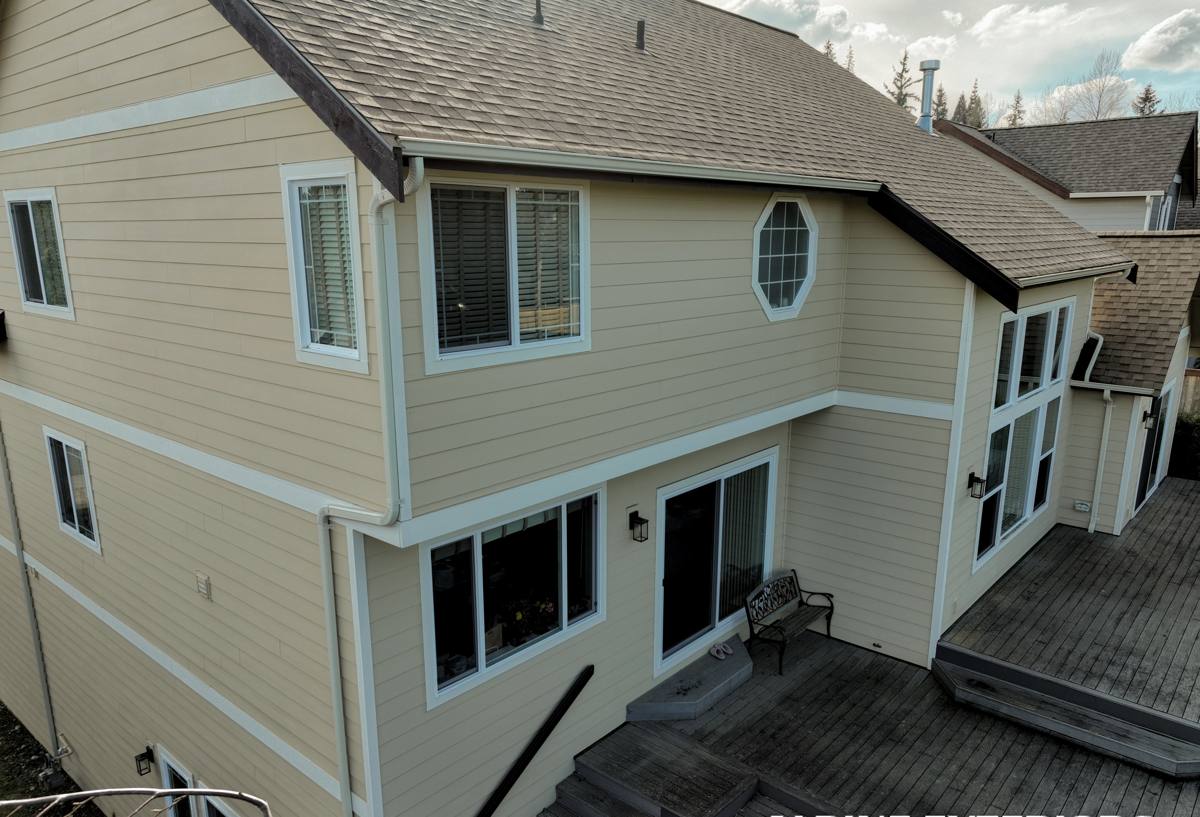
Signs North Everett Homes Need New Windows or Reinstallation
Not every window problem means a full replacement, but these are the signs worth taking seriously in this climate:
- Soft or discolored trim or sill wood around the window frame
- Visible gaps, cracked caulk, or daylight around the window edges
- Condensation building up between panes (a sign the seal has failed)
- Persistent moss, algae, or black staining on or near the window frame
- Drafts or noticeable temperature difference near the window in cold or windy weather
- Windows that are difficult to open, close, or lock properly
- Musty smell or visible mold near the interior window trim
If you're seeing more than one of these, it's worth having the window and the surrounding wall assembly checked, not just the glass.
What Correct Window Installation Actually Requires Here
The window unit itself is only part of the job. Most premature window failures we see in this area come from installation shortcuts, not defective products. A correct install for this climate includes several layers of protection working together.
Flashing and Water Management
Proper installation means flashing tape and pan flashing installed in the correct shingle-lap order — each layer overlapping the one below it so water is directed out and down, never trapped behind the siding. This detail matters more here than in drier climates because wind-driven rain will find any gap in the sequence over time.
Air and Moisture Sealing
A window needs to be sealed on both the exterior (to block bulk water) and the interior (to control air and vapor movement) — and these are not the same seal or the same product. Using the wrong sealant, or sealing only one side, is a common shortcut that looks fine on installation day and fails within a few wet seasons.
Proper Frame Support and Shimming
Windows need to be shimmed level, plumb, and square, with fasteners set correctly so the frame doesn't rack or bind over time. A window that's slightly out of square will stress the seals and hardware every time it's opened or closed, shortening its working life regardless of how good the window itself is.
Insulation Around the Frame
The gap between the window frame and the rough opening needs to be filled with an appropriate low-expansion foam or insulation — not packed too tight (which can bow the frame) and not left with voids (which create cold spots and condensation points).
Choosing Window Materials for Salt Air and Rain
Material choice matters more near the water than it does inland. Here's how the common options hold up under North Everett conditions:
| Material | Salt Air / Moisture Resistance | Maintenance | General Cost Range |
|---|---|---|---|
| Vinyl | Good — won't corrode or rot, handles moisture well | Low — occasional cleaning | Lower |
| Fiberglass | Excellent — very stable in temperature and moisture swings | Low | Mid to higher |
| Wood-clad | Fair — cladding protects the exterior, but any breach exposes wood to rot | Higher — needs monitoring at joints and seals | Higher |
| Aluminum | Fair — prone to corrosion near salt air unless properly coated | Moderate | Varies |
We don't push wood-clad windows in homes with direct water exposure or heavy shade, not because the product is bad, but because the honest trade-off is a higher long-term maintenance burden in exactly the conditions North Everett homes deal with — sustained moisture and slow-drying, shaded walls. Vinyl and fiberglass hold up with far less upkeep in this environment, which is why we lean toward them for most installs in this part of the county.
Glass Packages Worth Considering
Double-pane, low-E glass is the practical standard for this climate and handles the region's mild-but-damp temperature swings well. Triple-pane adds insulation value and can help with street noise or exposed, wind-heavy sites, but it's a bigger investment and not always necessary depending on the home's orientation and exposure.
Our Installation Process, Start to Finish
- On-site assessment — we check the existing window openings, sheathing, and any signs of moisture damage before quoting anything
- Removal — old windows come out carefully, and we inspect the rough opening and framing underneath for rot or damage that needs addressing before a new window goes in
- Prep and repair — any soft framing, damaged sheathing, or old failed flashing gets corrected, not covered up
- Flashing installation — pan flashing and weather-resistant barrier tape go in using proper shingle-lap sequencing
- Window set — the unit is shimmed level, plumb, and square, then fastened per manufacturer spec
- Insulation and sealing — interior and exterior sealing done separately and correctly, with appropriate insulation in the gap
- Trim and finish — exterior trim and caulking finished to shed water, interior trim finished to match the home
- Final walkthrough — we check operation, seals, and finish with you before calling the job done
Common Mistakes We See From Rushed Installs
A lot of the water damage and premature window failure we get called out to inspect traces back to a handful of recurring shortcuts: flashing tape applied out of order so water gets trapped instead of shed, caulk used as the only water management strategy instead of proper flashing, rotted sheathing covered over instead of repaired, and windows set out of square that bind and leak within a few years. None of these show up on installation day — they show up two or three wet seasons later, which is exactly why the installation details matter more than most homeowners realize when they're comparing quotes.
Why Hiring a Crew That Already Works North Everett Matters
A contractor who works this specific area regularly already knows which walls take the worst of the wind-driven rain, which orientations hold moss longest, and which older homes in the neighborhood tend to have outdated or under-flashed window openings. That local pattern recognition means fewer surprises once the old windows come out, and it means the materials and sealing approach are chosen for this climate from the start — not adapted after the fact.
Keeping New Windows Performing Through Moss Season
A correctly installed window doesn't need much upkeep, but a little seasonal attention goes a long way in this climate. Keep nearby moss and algae growth off the frame and trim, check that exterior caulk lines stay intact year to year, and make sure gutters and downspouts near window openings are clear so water isn't sheeting across the wall during heavy rain. Catching a small caulk crack or a bit of trim wear early is a lot cheaper than dealing with water intrusion later.
If your windows are showing wear, drafting, fogging, or you're simply planning ahead for a home in North Everett, we're happy to take a look and give you a straightforward, no-pressure estimate — just fill out the form below.