 Everett
 Why North Everett Windows Wear Out Differently
North Everett sits close enough to Port Gardner Bay and the Sound that salt-laden air is part of daily life here, even a few miles inland. That air finds its way into window tracks, weep holes, and hardware, and over years it accelerates corrosion on anything that isn't built or finished to handle it. Combine that with Snohomish County's long wet season — steady, driving rain for months at a stretch — and you've got two forces working against a window at once: salt attacking metal components and moisture testing every seal and flashing detail.
Then there's moss. It doesn't just grow on roofs. Given enough shade and standing moisture, it colonizes window sills, exterior trim, and the gaps around older frames, holding water against wood and vinyl longer than it would otherwise sit. A window that might last two extra decades in a dry climate can start failing early here if it wasn't installed with proper drainage and flashing, or if the materials weren't chosen with this specific exposure in mind.
None of this means North Everett homes need exotic materials or gimmicks. It means the installation details — flashing sequence, sill pan drainage, sealant choice, hardware finish — matter more here than they do in a drier, calmer climate. That's the difference between a window replacement that holds up and one you're revisiting in eight years.
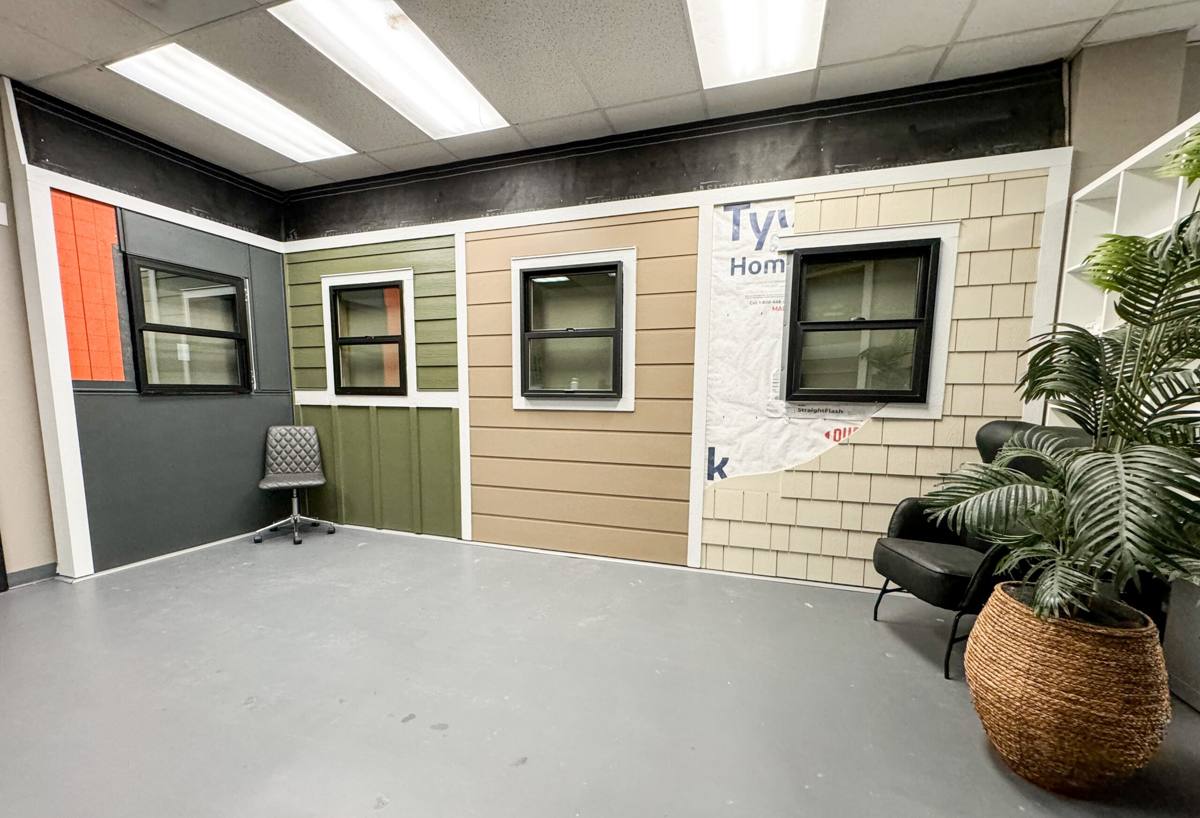
Signs a North Everett Home Actually Needs Replacement
Not every drafty or foggy window needs full replacement. But there are clear signals worth acting on before they turn into bigger repairs:
- Fogging or a visible film between panes — the seal on a double-pane unit has failed and the gas fill is gone
- Wood sills or frames that feel soft, spongy, or show dark staining, especially on north- and west-facing walls that catch the weather
- Visible corrosion or pitting on aluminum or steel hardware, cranks, and locks
- Moss or dark green growth building up in the sill track or exterior trim joints
- Windows that are difficult to open, close, or lock — frames can swell and warp from repeated wetting and drying
- Noticeable draft or cold spot near the window even when it's fully closed
- Rising heating bills without another clear explanation
- Paint that keeps failing on the exterior trim no matter how often it's redone
Any one of these by itself might just call for a repair or a re-caulk. Two or three together, especially on an original window that's twenty-plus years old, usually means replacement is the more honest recommendation.
When Repair Still Makes Sense
A single failed seal on an otherwise sound frame, a stuck sash, or worn weatherstripping can often be fixed for a fraction of replacement cost. We'll tell you when that's the case — a full window replacement isn't the right call for every problem, and we'd rather earn the bigger job later than push it now.
What a Correct Window Replacement Job Actually Involves
There are two basic approaches, and the right one depends on the condition of your existing frame and sill.
| Approach | What It Means | Best For |
|---|---|---|
| Insert (pocket) replacement | New window unit installed inside the existing frame, which stays in place | Frames that are still structurally sound and square, with no rot or water damage |
| Full-frame replacement | Old window and frame removed down to the rough opening; new frame, flashing, and sill pan installed from scratch | Frames with any rot, water damage, out-of-square openings, or homes upgrading siding at the same time |
In a climate like ours, we lean toward recommending full-frame replacement more often than a contractor working in a drier region would. The reason is simple: an insert replacement reuses the old sill and flashing, and if there's already been years of moisture exposure, you're sealing a new window into a frame that may already be compromised. When we open up a wall and find sound framing, insert replacement is a legitimate, less invasive option. When we find soft wood or signs of past leaks, we'll tell you honestly and recommend the full-frame approach even though it costs more — because a window installed over rot is a problem you'll pay for twice.
The Details That Actually Matter
Whichever approach fits your home, the same fundamentals separate a job that lasts from one that doesn't:
- A sloped sill pan that drains water outward, not into the wall cavity
- Flashing installed in the correct shingle-lap order — each layer overlapping the one below it so water sheds down and out
- Proper backer rod and sealant at the perimeter, not just a bead of caulk over gaps
- Shimming and fastening that keeps the frame square and doesn't rack it out of true
- Insulation in the gap between the new frame and the rough opening, not left empty or overstuffed
- Interior and exterior trim reinstalled cleanly, with sealant at joints that face the weather
Materials That Hold Up in This Climate
We install vinyl, fiberglass, and wood-clad windows, and each has real tradeoffs worth understanding rather than just picking whatever's cheapest or most marketed.
| Material | Strengths | Tradeoffs in Our Climate |
|---|---|---|
| Vinyl | Lower cost, no painting needed, good energy performance, won't rust or corrode | Frame can expand and contract with temperature swings; quality varies a lot between manufacturers |
| Fiberglass | Very stable dimensionally, strong, holds paint well, resists moisture damage over the long term | Higher upfront cost than vinyl |
| Wood-clad | Classic look, especially on older or craftsman-style homes | Any breach in the exterior cladding exposes wood underneath to our rain and moss exposure; needs more diligent maintenance |
For hardware — locks, cranks, hinges — we prioritize corrosion-resistant finishes over whatever looks best on a showroom sample. Standard-grade hardware that isn't rated for coastal or marine-influenced air will start showing pitting and stiffness well before the glass unit itself has any problem. That's a maintenance burden we'd rather you avoid than explain later.
Our Process, Start to Finish
- On-site assessment. We look at each window individually — frame condition, sill condition, signs of past water intrusion — rather than quoting off a generic per-window price.
- Honest recommendation. We'll tell you which windows need full replacement, which could get by with insert replacement, and which don't need anything yet.
- Written estimate. Clear line items so you know what you're paying for, not a single lump number.
- Old window removal. Careful removal to protect interior finishes and existing siding.
- Frame and flashing work. Sill pan, flashing, and sealant installed in the correct order before the new window ever goes in.
- New window installation. Shimmed, squared, and fastened to manufacturer spec.
- Interior and exterior finish. Trim, caulk, and touch-up so the job looks finished, not patched.
- Final walkthrough. We check operation on every window with you before we call it done.
What Affects the Cost
Every home is different, but the main variables that move a North Everett window replacement estimate up or down are consistent:
| Factor | Why It Matters |
|---|---|
| Insert vs. full-frame replacement | Full-frame requires more labor, materials, and often exterior trim or siding repair |
| Frame material | Vinyl is typically the most affordable; fiberglass and wood-clad cost more upfront |
| Existing water or rot damage | Damaged sheathing or framing found once the old window is out adds repair scope |
| Window size and type | Large picture windows, bay windows, or custom shapes cost more than standard double-hung or slider sizes |
| Number of windows | Doing a whole home at once is generally more cost-efficient per window than one-off replacements |
| Trim and siding condition | If exterior trim or siding needs repair to properly flash the new window, that's added scope |
We'd rather walk you through these factors on-site than quote a number before we've seen the actual windows. A rough per-window range without seeing the frame condition isn't a real estimate — it's a guess, and guesses are how change orders happen.
Permits and Energy Considerations
Window replacement in Everett and unincorporated Snohomish County can require a permit depending on the scope of work, particularly for full-frame replacements that involve structural framing changes or a change in window size. We handle that conversation with you up front rather than leaving it as a surprise mid-project.
On the energy side, Washington's climate zone requirements mean new windows need to meet minimum U-factor and solar heat gain performance standards. Most quality vinyl and fiberglass windows sold today clear these thresholds without issue, but it's worth confirming the specific product line meets code rather than assuming every window on a showroom floor does.
Why Hire a Crew That Already Works This Area
A window that's technically well-built can still fail early if it's installed without accounting for what North Everett actually throws at a house — sustained rain events, salt-influenced air, and shaded, moss-prone sections of the exterior that stay damp longer than the rest of the wall. Crews who work this specific area regularly learn which details can't be skipped: sill pan slope, flashing sequence, hardware finish, and where moss buildup tends to concentrate on local homes.
That local pattern recognition is different from general installation competence. It's the difference between a crew that follows a manufacturer's install sheet and one that adjusts for the fact that this house sits in a spot that stays wet three days after everything else has dried out.
If you'd like an honest look at your windows and a straightforward, no-pressure estimate, our team is glad to walk your home, point out what actually needs attention, and explain the options in plain terms — no obligation either way.