 Everett
 West Everett Roofs Take a Different Kind of Beating
A roof in West Everett doesn't age the same way a roof fifty miles inland does. Sitting close to Puget Sound and Port Gardner Bay means homes here deal with salt-laden air on top of everything else the Pacific Northwest throws at a roof — driving winter rain, long stretches of shade and dampness, and wind that comes off the water with real force during winter storm systems. None of those things alone would be a big deal. Together, over years, they wear down flashing, fasteners, and shingles faster than most homeowners expect.
Salt air is corrosive to exposed metal — nail heads, flashing seams, gutter hangers — and that corrosion doesn't announce itself. It just quietly weakens the points on a roof that are supposed to keep water out. Add Snohomish County's long moss season, which for a lot of West Everett properties runs from early fall through late spring, and you've got a roof that's fighting on two fronts: mechanical wear from wind and rain, and biological wear from moss holding moisture against the roofing material month after month. When a storm finally does hit, it tends to find whichever of those weak points gives first.
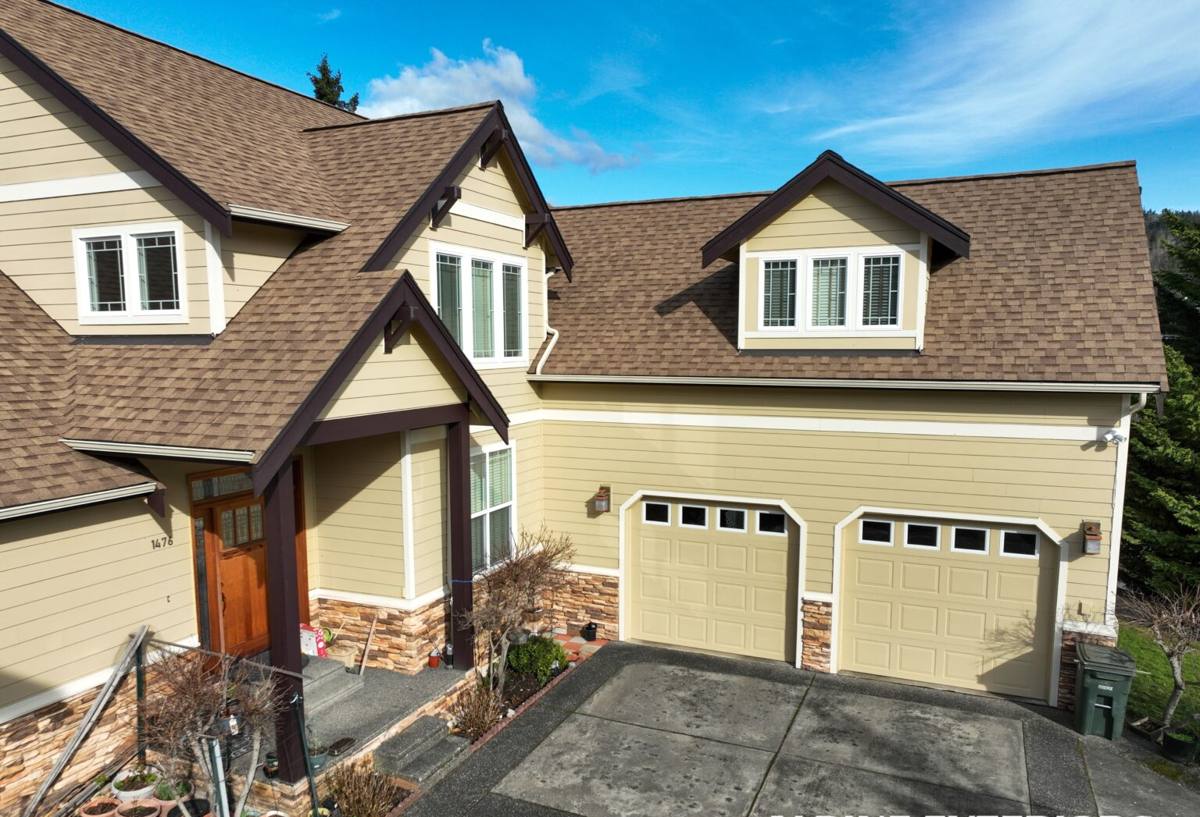
What Actually Counts as Storm Damage
Not every roof problem after a windy night is "storm damage," and it's worth understanding the distinction before you call anyone out. Storm damage is damage caused by a specific weather event — wind, wind-driven rain, falling debris — acting on a roof that was otherwise sound. What often gets mistaken for storm damage is actually gradual deterioration (moss undermining shingles, aging flashing, worn-out sealant) that a storm simply exposed by finding the weak spot.
That distinction matters for two reasons: it affects whether an insurance claim is likely to hold up, and it affects what the right fix actually is. Patching over a leak without addressing the underlying moss or flashing issue that let the storm in just means the same spot fails again next season.
Signs You Can Often Spot From the Ground
- Shingles or shingle pieces in the yard, driveway, or gutters after a windstorm
- Visible gaps, curling, or discoloration on a roof slope
- Sagging or pulling-away gutters and downspouts
- Dented or dislodged roof vents, especially after hail or falling branches
- A sudden increase in granules collecting at downspout outlets
Signs That Need a Roof-Level Look
Wind damage isn't always visible from the driveway. Lifted shingle tabs, creased shingles that haven't fully torn loose, exposed or backed-out nail heads, and flashing that's been pried up at a seam all require someone on the roof — or at minimum a close inspection with the right vantage point — to catch before they turn into an active leak. Interior signs matter too: a water stain on a ceiling or attic sheathing, a musty smell in an upstairs closet, or daylight visible through the roof deck in the attic are all indicators that a storm has already gotten past the roof covering, even if the outside still looks mostly fine.
What a Correct Storm Damage Repair Actually Involves
A repair that's done right starts with a full inspection of the whole roof, not just the spot where the leak showed up inside the house. Storms rarely cause damage in exactly one place — wind that's strong enough to lift one shingle is usually strong enough to stress fasteners and flashing elsewhere on the same slope, and sometimes on slopes facing away from the direct wind too, where turbulence and uplift can be just as damaging as the windward side.
Inspection and Documentation
Every legitimate storm repair should start with photo documentation of the damage before any work begins — this protects the homeowner if there's an insurance claim involved, and it gives an honest record of what was actually storm-related versus what was pre-existing wear. We also check the attic when it's accessible, since water can travel along rafters or sheathing before it shows up as a ceiling stain, meaning the visible damage point isn't always where the water actually entered.
Repair vs. Replacement
Not every storm-damaged roof needs to be replaced, and a contractor who tells every customer they need a full new roof after a windstorm isn't doing them any favors. The right call depends on the roof's age, how much of the covering was affected, whether the deck underneath took on water, and whether the roof was already near the end of its service life before the storm hit. A five-year-old roof with a dozen lifted shingles is a straightforward repair. A twenty-year-old roof with moss-compromised shingles across multiple slopes, where the storm just accelerated damage that was already underway, is a different conversation.
| Damage Scenario | Typical Cause | Usual Scope of Work | Urgency |
|---|---|---|---|
| Isolated lifted or missing shingles | Wind gust on an otherwise sound roof | Localized shingle replacement, re-nailing, sealant at exposed points | Moderate — address before next rain |
| Flashing separation at chimney, valley, or vent | Wind stress on aged or corroded flashing | Flashing removal and reinstallation, sometimes with underlayment repair | High — active leak risk |
| Moss-related shingle lifting | Long-term moisture retention, storm exposes the weak point | Moss removal, damaged shingle replacement, ventilation review | Moderate, but recurs without prevention |
| Gutter or downspout detachment | Wind load or debris impact | Re-hanging or replacing hardware, resealing joints | Moderate — affects water routing off the roof |
| Deck-level water intrusion | Prolonged leak through failed covering | Sheathing repair or replacement, then roofing repair over it | High — structural concern |
Our Process for West Everett Storm Repairs
When a homeowner in West Everett calls after a storm, the process is straightforward and we keep it that way on purpose — a stressful situation doesn't need an overcomplicated fix.
1. Initial Contact and Scheduling
We ask what happened, when, and what the homeowner has noticed — active leak, visible exterior damage, or just concern after a bad windstorm. That helps us prioritize active leaks ahead of cosmetic damage.
2. On-Site Inspection
We walk the whole roof, not just the reported problem area, and check the attic where access allows. Everything gets photographed. If there's a possibility of an insurance claim, we document in a way that's useful for that process.
3. Written Scope and Estimate
The homeowner gets a clear written breakdown of what's damaged, what's recommended, and why — including whether we think it's a repair or something bigger. We'll say so plainly if a full slope or full roof replacement makes more sense than patching, and we'll say so just as plainly when it doesn't.
4. The Repair Itself
Work gets scheduled around weather — there's no point sealing a roof in the middle of another rain event, and rushing storm repair work in bad conditions tends to produce worse results. We use materials suited to this specific climate, covered in more detail below.
5. Final Walkthrough
Before we consider a job finished, we walk it with the homeowner, confirm the repair area, and make sure gutters and downspouts are clear and functioning, since a repaired roof draining into a clogged gutter system just sets up the next problem.
Materials and Methods Suited to Salt Air and Moss
Storm repair in West Everett isn't just about matching shingles — it's about using materials and methods that hold up to the specific conditions here rather than just the conditions a roofing product is rated for in general.
- Corrosion-resistant fasteners and flashing. Given the salt exposure this close to the water, we favor fastener and flashing materials with better corrosion resistance over the cheapest available option, since fastener failure is one of the most common root causes of recurring wind damage in coastal-adjacent homes.
- Algae- and moss-resistant shingle granules where replacement is needed. These won't eliminate moss on their own, but they slow the biological growth that drives so much of the damage we see in this climate.
- Proper underlayment at repair points. A storm repair that skips underlayment to save time is a repair that's likely to leak again under wind-driven rain, which is exactly the condition that caused the original damage.
- Attention to ventilation. Poor attic ventilation traps moisture, which feeds moss growth and shortens shingle life from underneath. A repair is a natural point to flag ventilation issues if we see them, even though it's a separate scope of work.
What Homeowners Should Know About Insurance Claims
Wind and storm damage is often covered under standard homeowner's insurance, but coverage typically applies to sudden damage from a specific event — not to gradual deterioration from moss, age, or deferred maintenance. That's part of why an honest, well-documented inspection matters so much: insurers scrutinize storm claims specifically to separate genuine storm damage from pre-existing wear, and a repair estimate that blurs that line can actually hurt a homeowner's claim rather than help it.
We're not the ones who approve or deny a claim — that's between the homeowner and their insurer — but we can provide a clear, photographed, dated assessment that describes what we found and our professional read on what caused it. Filing promptly after a storm, before subsequent weather adds more damage or before an adjuster has trouble distinguishing old wear from new damage, generally works in the homeowner's favor.
Preventing the Next Storm From Doing the Same Damage
Every storm repair is a chance to make the roof less vulnerable next time, not just to put it back the way it was. In a climate with this much moisture and this long a moss season, a few maintenance habits do more to prevent repeat storm damage than almost anything else.
Post-Storm Homeowner Checklist
- Walk the yard and gutters after any significant windstorm and note any shingle granules, pieces of shingle, or flashing debris
- Check attic spaces (if accessible) for new water stains, damp insulation, or daylight through the roof deck
- Look at gutters and downspouts for sagging, separation, or overflow marks on siding
- Note any new moss growth or shaded, damp patches on the roof surface
- Keep dated photos of anything unusual — useful both for tracking changes and for any future insurance conversation
- Have gutters cleared at least twice a year given the tree cover common around West Everett properties
Why Hiring a Crew That Already Works West Everett Matters
Storm damage repair isn't a generic service — the right approach depends on knowing how homes in a specific area actually fail. A crew that regularly works West Everett has already seen how salt air corrodes fasteners on this side of Everett faster than it does further inland, which roof orientations tend to catch the worst of wind off the Sound, and which properties deal with heavier moss load because of tree cover and shade patterns typical to the neighborhood. That local pattern recognition means a faster, more accurate diagnosis instead of a generic assessment.
There's also a practical benefit after regional storm events: when a windstorm moves through Snohomish County, demand for roof repair spikes across the whole area at once. A contractor already established locally, with local scheduling and local material sourcing, is generally able to respond faster than one working from further away or juggling a wider service radius.
Get an Honest Assessment Before Small Damage Becomes a Bigger Repair
If a recent storm left you with missing shingles, a new leak, or just a nagging feeling that something on the roof isn't right, it's worth having it looked at before the next round of West Everett weather finds the same weak spot. We offer free, no-pressure estimates — use the form below to request one, and we'll take an honest look and tell you plainly what we find.