 Everett
 Why Port Gardner Roofs Take a Different Kind of Beating
Homes on the bluff above Port Gardner Bay and the Everett waterfront deal with a roofing environment that's noticeably rougher than what you'd find a few miles inland in Snohomish County. The elevated, open exposure toward Possession Sound means wind-driven rain hits roof planes at an angle instead of falling straight down, which pushes water into laps, valleys, and flashing that a more sheltered roof would never test. Add in salt-laden air off the water, and you've got metal fasteners, flashing, and vent components that corrode faster than the manufacturer's lab testing ever accounts for.
Then there's moss. Everett's long, wet shoulder seasons give moss and algae months at a time to establish on shaded, north-facing, or tree-covered slopes. Once it takes hold, it doesn't just look bad — it holds moisture against the roofing material almost year-round, which is exactly the condition that shortens a roof's life.
None of this means Port Gardner homes need exotic materials or gimmicks. It means the ordinary parts of a roof replacement — deck condition, underlayment choice, flashing detail, ventilation — matter more here than they would in a drier, calmer climate, and cutting corners on any of them shows up sooner rather than later.
Signs It's Replacement Time, Not Another Repair
Repair makes sense when the problem is isolated. Replacement makes sense when the roofing system as a whole has aged out or the damage is spread across multiple areas. Common signs we look for on Port Gardner homes:
- Granule loss heavy enough that you can see bare, shiny patches on shingles, especially on south- and west-facing slopes
- Shingles that are curling, cupping, or cracking rather than lying flat
- Moss mats thick enough to hold visible water after a dry stretch, not just surface staining
- Soft or spongy spots when walking the roof, which usually means the decking underneath has taken on water
- Daylight visible through the roof deck from inside the attic, or damp insulation below a valley or chimney
- Recurring leaks at the same flashing point despite prior patch repairs
- A roof at or past the manufacturer's expected service life, particularly if the original installation used minimal underlayment
If your roof is showing one or two of these in isolation, a targeted repair is often the honest answer, and we'll say so. Replacement gets recommended when the pattern points to the whole system being worn out, not just one section.
What a Correct Replacement Actually Includes
Tear-Off and Deck Inspection
We remove the old roofing down to the deck rather than layering over it. That's the only way to actually see what's underneath — soft plywood, delaminated sheathing, or rot around plumbing boots and chimneys doesn't show up until the old material is off. Any damaged decking gets replaced before anything new goes down; installing new roofing over a compromised deck just hides the problem for another owner to find later.
Underlayment and Water Barrier
In a climate with this much driving rain, underlayment isn't a formality — it's the roof's real second line of defense. We use a synthetic underlayment across the field and add a self-adhered ice-and-water membrane at the vulnerable points: eaves, valleys, and around any roof penetration. Those are the spots where wind-driven rain is most likely to find a way in, and it's cheap insurance compared to a callback.
Flashing Details
Flashing failure is the single most common cause of roof leaks we see on older Port Gardner homes, more often than the shingles themselves wearing out. Chimneys, skylights, sidewalls, and valleys all get new flashing as part of a replacement, cut and formed to the specific roof rather than reusing bent or rusted pieces from the old installation.
Ventilation Corrections
We check intake and exhaust ventilation as part of every replacement. A roof can be installed perfectly and still fail early if the attic underneath can't breathe — more on that below.
Choosing a Roofing Material for a Marine Climate
There's no single "best" material — the right choice depends on your budget, how long you plan to stay in the home, and how much maintenance you're willing to do. Here's how the common options actually compare for a salt-air, high-moss environment like Port Gardner:
| Material | Moss & Moisture Resistance | Wind / Salt Exposure | Typical Lifespan | Maintenance |
|---|---|---|---|---|
| Asphalt composition shingle (architectural) | Good with proper ventilation; algae-resistant granules help | Rated for high wind when properly nailed and sealed | 25–30 years | Periodic moss treatment on shaded slopes |
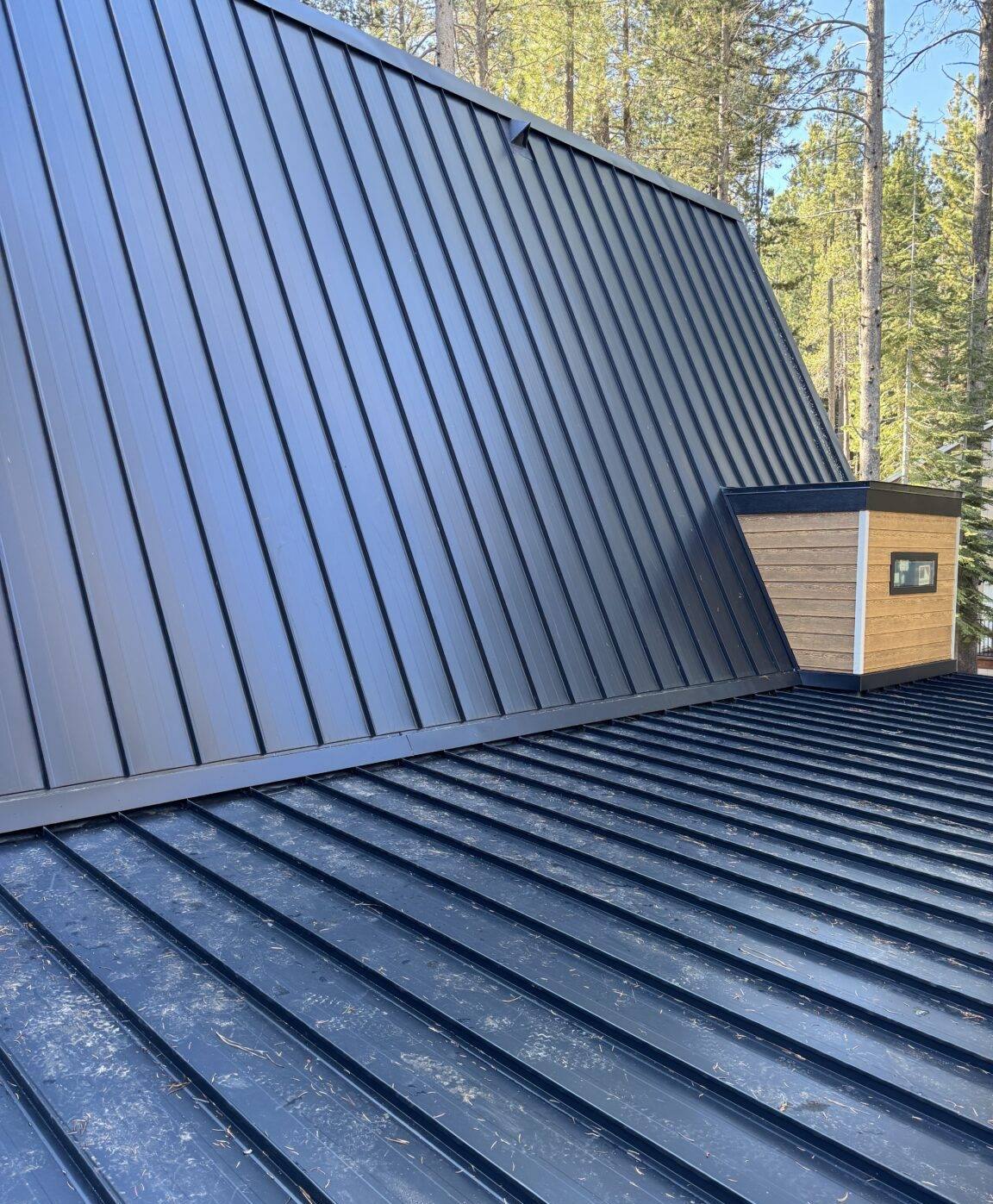
| Standing seam metal | Excellent — sheds moisture, resists moss growth | Very good; fasteners and finish should be corrosion-rated for coastal exposure | 40–50+ years | Low; occasional fastener/sealant check |
| Cedar shake | Requires diligent upkeep to resist moss and rot in this climate | Vulnerable to wind-driven rain intrusion if not properly detailed | 20–30 years with upkeep | High — regular treatment and inspection |
For most Port Gardner homes, we recommend a quality architectural asphalt shingle with algae-resistant granules as the balance of cost and performance, or standing seam metal for owners who want to minimize long-term maintenance and don't mind the higher upfront cost. We generally steer clients away from cedar shake in this specific microclimate — not because it's a bad product everywhere, but because the moisture and moss exposure here demands a maintenance schedule most homeowners underestimate, and falling behind on it shortens the roof's real-world life well below its rated potential.
Our Port Gardner Replacement Process
- On-site inspection of the current roof, deck, attic ventilation, and flashing points — we walk the roof, not just look at it from the ground
- A written estimate that lays out material options, scope, and price ranges honestly, with no pressure to decide on the spot
- Permit handling through the City of Everett or Snohomish County as required for the property
- Scheduling built around realistic weather windows rather than promising a date we can't guarantee in a wet season
- Full tear-off, deck repair as needed, and installation of underlayment, flashing, and the chosen roofing material
- Daily site cleanup, including magnetic sweep for nails and debris
- Final walkthrough where we go over the finished roof and ventilation with you before calling the job done
Ventilation and Moisture: The Detail Most Roofs Get Wrong
A roof replacement isn't just about the shingles or panels on top — it's about how the whole assembly manages moisture, and that starts with attic airflow. Without balanced intake (usually at the eaves) and exhaust (at the ridge or through roof vents), warm, moist air gets trapped in the attic. In a climate as damp as Everett's, that trapped moisture condenses on the underside of the deck, which rots sheathing from the inside and can void a shingle manufacturer's warranty even when the roofing itself was installed correctly.
We check existing ventilation on every replacement and correct it when it's inadequate — adding intake vents, correcting blocked soffits, or upgrading ridge ventilation as needed. It's not an upsell; it's the difference between a roof that reaches its full rated lifespan and one that fails from underneath years early.
Keeping Moss and Salt Buildup From Cutting a New Roof Short
A properly installed roof still needs some basic upkeep in this environment. A short list of what actually protects your investment over time:
- Keep overhanging branches trimmed back so shaded roof sections get more sun and airflow, which slows moss growth
- Have gutters cleared at least twice a year — clogged gutters back water up under the eave line, which is one of the most vulnerable spots on the roof
- Rinse or gently treat moss growth on shaded slopes before it builds into thick mats; don't pressure-wash shingles, which strips granules and shortens their life
- Have metal flashing, fasteners, and vents inspected periodically for salt-driven corrosion, especially on homes with direct exposure toward the bay
- After major windstorms, do a visual check (or have us check) for lifted or displaced shingles before a leak develops
Why a Crew That Already Works Port Gardner Matters
Roofing crews that mostly work inland don't always account for the wind exposure that comes with the bluff position overlooking the bay, or for how much faster salt air ages exposed metal compared to a roof a few miles east. We've worked enough Everett-area roofs in this specific setting to know which details — flashing metal choice, fastener corrosion resistance, ventilation sizing — actually matter here versus which ones are boilerplate from a manufacturer's install guide written for a different climate.
Local also means practical things: familiarity with Everett and Snohomish County permitting requirements, realistic scheduling around the region's rain patterns instead of overpromising a weather-dependent timeline, and being reachable afterward if a question comes up rather than having moved on to a job three counties away.
If your roof is showing its age or you're just trying to plan ahead, we're happy to take a look and give you a straight answer — whether that's a repair, a replacement, or just a heads-up on what to watch for. Reach out for a free, no-pressure estimate using the form below.