 Everett
 Building New in Mukilteo: Why Window Installation Deserves Extra Attention
Mukilteo sits right on Possession Sound, which means new-construction homes here take a different kind of weather than builds a few miles inland in Everett or up toward Silver Lake. Salt-laden air off the water, wind-driven rain that hits walls at an angle instead of falling straight down, and a moss season that can run eight or nine months out of the year all put extra stress on window openings. When you're building new, you get exactly one chance to flash and seal those openings correctly before siding, trim, and interior finish close everything up. Get it right and the windows should perform for decades. Get it wrong and the mistakes hide behind drywall until a leak shows up years later.
New-construction window work is different from a retrofit or replacement job in one important way: you're not working around existing finish materials. That's an advantage — it means the flashing and water management can be built in layers, the way window manufacturers actually design them to work, instead of compromised around what's already there.
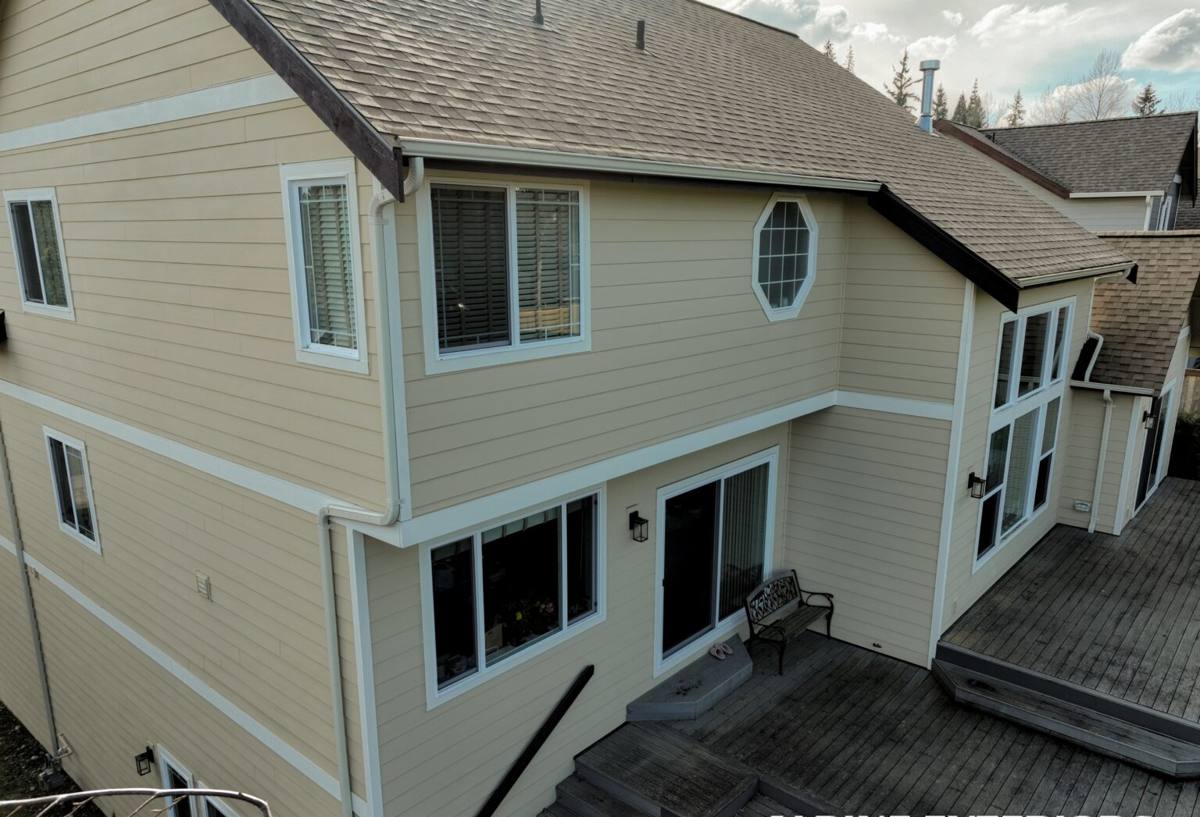
What Mukilteo's Climate Actually Does to a Window Opening
Snohomish County gets a lot of rain, but the specific combination Mukilteo deals with — sound-facing exposure, wind, and salt air — is what separates it from a purely rainy climate.
Wind-driven rain
On exposed or elevated lots with a water view, rain doesn't just fall on a window, it gets pushed sideways and upward against the head and jambs during storms. Standard shingle-style flashing that only accounts for gravity can let water track backward into the wall assembly at the top of the window.
Salt air corrosion
Homes closer to the water are exposed to airborne salt that accelerates corrosion on unprotected fasteners, cheap flashing metals, and lower-grade hardware. This doesn't ruin a window overnight, but it shortens the life of anything that wasn't specified with coastal exposure in mind.
Moss and constant moisture
Long wet seasons keep sills, trim, and any horizontal surface near a window damp for months at a time. Wood trim and sills that aren't properly primed, back-primed, and flashed will hold moisture, and that's where rot and moss growth start — usually at the sill first.
What a Correct New-Construction Window Installation Includes
There's a sequence to this, and skipping steps or doing them out of order is where most future leaks come from.
- Rough opening checked for square, level, and correct size before the window ever arrives on site
- Weather-resistive barrier (house wrap) integrated with the opening before flashing begins
- Sill pan flashing installed first, sloped to drain outward, so any water that gets past the window has somewhere to go
- Window set, shimmed, and fastened per the manufacturer's specific installation instructions — not a generic method
- Jamb flashing applied in proper shingle-lap order (sides before top)
- Head flashing installed last, integrated with the house wrap above it so water sheds over the top, not behind it
- Backer rod and appropriate sealant at the exterior trim joint, sized and installed correctly rather than just caulked over gaps
- Interior air sealing at the rough opening, separate from exterior weatherproofing, to control condensation and drafts
Every one of those steps matters on its own, but the order matters just as much. Flashing is a layered system — each piece has to shed water onto the layer below it, like shingles on a roof. Installed out of sequence, the same materials that should keep water out can actually direct it into the wall.
Product Choices That Make Sense for a Sound-Facing Build
New construction gives you the freedom to spec windows and materials for the site instead of matching what's already there. For Mukilteo builds, especially anything with direct or partial water exposure, that usually means paying attention to a few specific things.
| Factor | Why it matters here |
|---|---|
| Fastener and hardware material | Stainless or coated corrosion-resistant fasteners hold up far better under salt air exposure than standard galvanized |
| Frame material | Vinyl and fiberglass resist moisture absorption better than raw wood in a high-moisture climate; clad-wood options combine wood interior appeal with a protected exterior face |
| Glazing package | Double-pane low-E glass is standard for our climate; homes with more direct wind or noise exposure near the water sometimes benefit from a heavier glass package |
| Flashing material | Self-adhered flexible flashing membranes rated for the temperature range and UV exposure during construction perform more consistently than housewrap tape alone |
| Sill design | A sloped, pre-formed sill pan sheds water outward instead of letting it pool against the bottom of the frame |
We don't push one brand as the only answer. What matters more than the label on the window is whether the installation crew is actually following that manufacturer's written flashing and fastening instructions — most warranty claims that get denied are denied because the install didn't match the manufacturer's own specs, not because the product failed.
Our Process for New-Construction Window Work in Mukilteo
1. Plan review and window schedule
We start with the plans and the window schedule to confirm sizes, egress requirements, and rough opening dimensions line up before framing is finalized. Catching a mismatch here is far cheaper than catching it after walls are up.
2. Rough opening inspection
Before any window goes in, we check that openings are square, level, and correctly sized. This is also when we look at how the house wrap and sheathing are set up around each opening.
3. Flashing and installation
Sill pan, window set, jamb flashing, head flashing, in that order — built as a layered water management system, not a one-step caulk-and-go install.
4. Exterior trim and sealant
Trim gets installed and sealed at the joints with appropriate backer rod and sealant, sized for the gap rather than just filled with caulk.
5. Interior air sealing
We seal the interior side of the rough opening separately from the exterior weatherproofing, which helps control drafts and reduces the chance of condensation forming inside the wall cavity.
6. Final check
Before we consider the job done, we walk every opening again — operation, seals, trim lines — while it's still easy to correct anything, rather than after siding and interior finish are complete.
Why Local Experience on Mukilteo and Everett Builds Matters
A crew that's worked new construction across Snohomish County knows which details actually matter for this specific stretch of coastline versus a more sheltered inland lot. That shows up in small decisions — how much flashing overlap to use on a wind-exposed elevation, which sealant actually cures reliably during our wetter build seasons, when a sill pan needs to be more robust because of the site's exposure. It also means we're not learning the quirks of the Puget Sound climate on your project. We've already seen where standard installation methods fall short here and adjust for it as a matter of course, not as an upcharge.
Working locally also means we're available if a question comes up mid-build or after final inspection — not managing the job from somewhere else.
Common Mistakes We See in New-Construction Window Installs
- Head flashing installed before the house wrap is properly lapped over it, sending water behind the barrier instead of over it
- Sill pans skipped or improvised from leftover flashing tape instead of a proper sloped pan
- Fasteners that don't match the exposure — standard hardware used on a home with direct salt air exposure
- Caulk used as the primary water seal instead of proper backer rod and sealant at trim joints
- Installation methods that don't match what the window manufacturer specifies in writing, which can void warranty coverage even if the window itself never fails
None of these mistakes are visible once the house is finished. That's exactly why they're worth getting right the first time, while the opening is still open and every layer is easy to inspect.
What to Ask Before Hiring a Window Installer for New Construction
If you're a builder, GC, or homeowner managing your own build in Mukilteo, a few direct questions upfront can save a lot of trouble later:
- Do you install according to each manufacturer's written instructions, or a generic method for every brand?
- What's your sill pan and flashing sequence, specifically?
- How do you handle fastener and hardware selection for homes closer to the water?
- Will you be available if an issue comes up after the final inspection?
- Can I see the flashing before it's covered by siding or trim?
A contractor who answers these plainly and specifically, without hedging, is generally one who does this work often enough to have real answers.
If you're building new in Mukilteo or elsewhere around Everett and want the window installation done right the first time, we're happy to walk through your plans and give you a straightforward, no-pressure estimate. Use the form below to get started.