 Everett
 Why Pinehurst Homes Need a Metal Roof Built for This Climate
Pinehurst sits in the kind of Snohomish County terrain that's genuinely hard on a roof: enough open exposure to catch wind and salt-carrying air moving in off the water, and enough mature tree cover to keep shaded slopes damp for months at a stretch. A roofing system that performs fine forty miles inland can start showing problems here in half the time, because it wasn't specified for this particular combination of conditions. Metal roofing, installed correctly, holds up better than most alternatives against salt air, wind-driven rain, and moss — but "installed correctly" is doing real work in that sentence. That's the part that gets shortchanged when a crew treats a Pinehurst roof like any other job on their schedule.
We work in this neighborhood regularly, so we're not guessing at what this climate does to a roof over ten or twenty years — we see it every time we're called out to look at one.
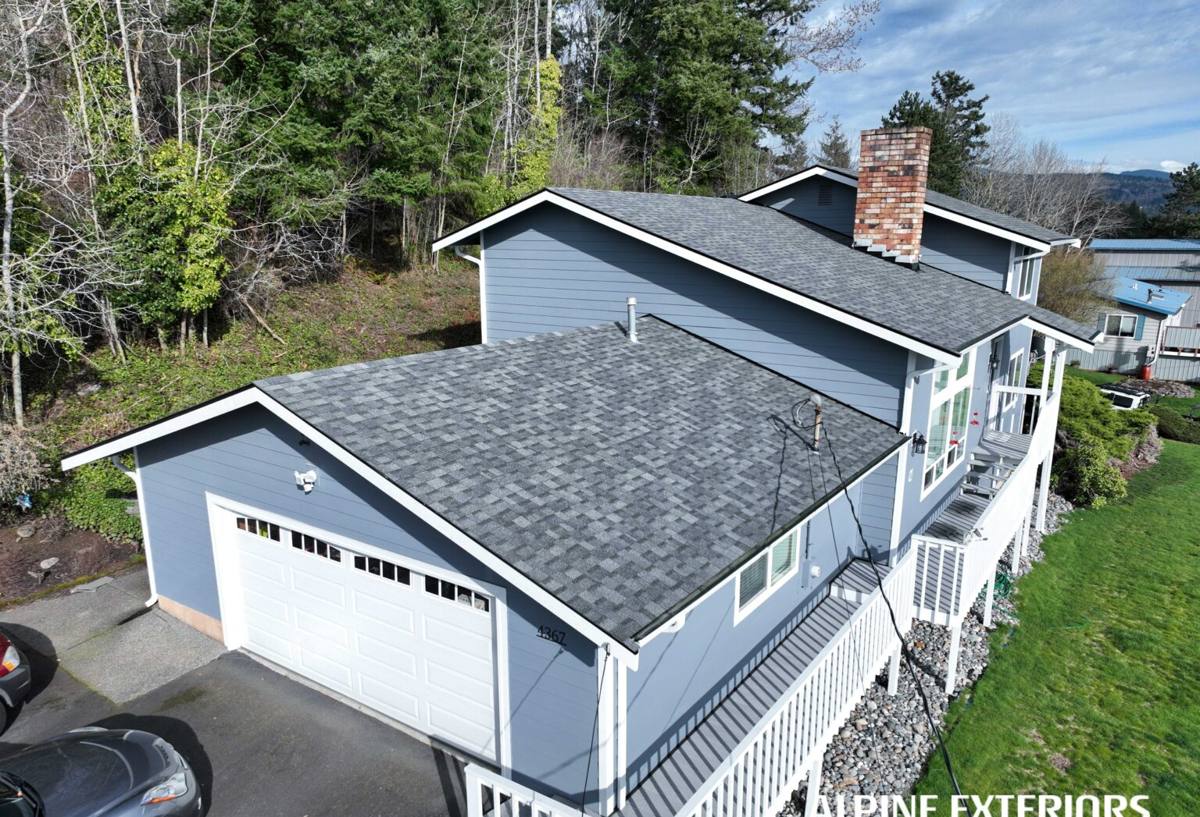
What the Local Climate Actually Does to a Roof
Salt Air and Corrosion
Airborne salt from nearby water doesn't just affect homes right on the shoreline — it travels, settles on metal surfaces, and accelerates corrosion at fasteners, flashing edges, and any spot where a protective coating is thin or scratched during installation. This is why the coating and fastener specification matter as much as the panel material itself. A steel panel with the wrong fastener alloy, or one installed with exposed cut edges facing the weather, will show rust streaking years before it should.
Driving Rain and Wind-Driven Water
Rain here doesn't fall straight down as often as people assume — wind pushes it sideways, up under panel laps, and into any gap that a fair-weather roof detail would get away with elsewhere. Wind-driven rain finds the weak point in a roof system faster than almost anything else, which is why lap direction, sealant placement, and flashing overlap sequencing matter more here than in a calmer climate.
Moss, Shade, and Trapped Moisture
Snohomish County's moss season runs long — shaded, north-facing slopes under tree canopy can stay damp for the better part of the year. Moss itself doesn't attack metal the way it degrades asphalt shingles, but it does trap moisture against seams and fasteners, holds debris that clogs drainage paths, and creates the kind of standing dampness that speeds up corrosion at any weak point in the coating.
What a Correct Metal Roofing Installation Involves
Underlayment Matters More Here Than the Panels Do
A lot of homeowners assume the panel is the product and the underlayment is an afterthought. In this climate it's the opposite. A high-quality synthetic or self-adhered underlayment is the roof's actual water barrier — the metal panel is the first line of defense, but the underlayment is what protects the deck if wind-driven rain gets past a lap or a fastener works loose over time. Skipping to a cheaper underlayment to hit a lower bid is one of the most common corners cut in this trade, and it's invisible until there's a leak.
Fastening and Flashing Are Where Roofs Actually Fail
Very few metal roof failures start in the middle of a panel. They start at penetrations, valleys, wall transitions, and fastener points — the places where two materials meet and someone has to make a judgment call about sequencing and overlap. Correct flashing means water always sheds onto the next surface down, never behind it. This is detail work, not panel-laying, and it's the difference between a roof that's watertight for decades and one that leaks within a few winters.
Ventilation Keeps Moisture From Working Backward
A metal roof installed over an attic or roof deck without adequate ventilation traps warm, moist air against the underside of the panels. Over time that can cause condensation on the deck side — a moisture problem with no connection to the weather outside at all. Proper intake and exhaust ventilation is part of a correct installation, not an optional upgrade, especially on homes with older attic configurations that were never updated when the roofing was replaced.
Choosing the Right Metal System for a Pinehurst Roof
Not every metal roofing system is the right fit for every home, budget, or roof shape. The table below covers the three systems we install most often in this area and how they tend to perform under local conditions.
| System | Typical Lifespan | Maintenance Needs | Best Fit |
|---|---|---|---|
| Standing seam (concealed fastener) | 40-60+ years | Low — few exposed fasteners to fail | Homes prioritizing longevity and clean lines; higher upfront cost |
| Stone-coated steel | 30-50 years | Moderate — coating and seams need periodic checks | Homes wanting a traditional shingle or tile look with metal's durability |
| Exposed-fastener panel | 20-35 years | Higher — fasteners and washers need re-checking over time | Budget-sensitive projects, outbuildings, simpler roof shapes |
The trade-off is usually upfront cost versus long-term maintenance. Exposed-fastener systems cost less to install but ask more of a homeowner over the years, since every fastener is a potential point of water entry once its washer ages. Standing seam costs more up front and largely removes that maintenance burden. We'll walk through which makes sense for your roof's shape, pitch, and exposure rather than defaulting to one system for every job.
How We Approach a Pinehurst Metal Roofing Project
- Inspection and roof assessment — we check the deck condition, existing ventilation, flashing points, and any moisture damage before recommending a system.
- Tear-off or overlay decision — most jobs call for full tear-off so we can inspect and repair the deck; overlay is only appropriate in specific, limited situations.
- Deck prep and underlayment — replacing any compromised sheathing, then installing underlayment sequenced correctly for water shedding.
- Panel installation — laid and fastened according to manufacturer spec and local wind exposure, with attention to lap direction against prevailing wind and rain.
- Flashing and penetration detail work — the slowest, most important part of the job, done before final panel closure.
- Cleanup and walk-through — site cleared of fasteners and debris, with a final review of the finished roof.
Why It Matters That We Already Work in Pinehurst
Roofing crews that don't work a neighborhood regularly tend to specify roofs generically — whatever system and detailing works "well enough" across a wide territory. A crew that's already worked Pinehurst homes has a working sense of which slopes hold moss longest, which roof orientations take the worst of the wind-driven rain, and which older homes in the area have ventilation setups that need attention alongside the roofing itself. That local pattern-recognition doesn't replace a proper inspection, but it does mean fewer surprises once tear-off starts, faster scheduling around the weather windows that actually matter here, and a crew that isn't learning the neighborhood's quirks on your project.
Keeping a Metal Roof Sound Through Moss Season
A correctly installed metal roof needs far less upkeep than shingles, but "far less" isn't "none." A short annual routine keeps small issues from becoming expensive ones.
- Clear gutters and valleys of needles and debris before the fall rains set in
- Rinse or treat moss growth on shaded slopes rather than letting it build up over multiple seasons
- Trim back overhanging branches that keep sections of roof shaded and damp longer than the rest
- Check exposed fasteners and sealant points after any major windstorm
- Have flashing at chimneys, vents, and wall transitions inspected every few years, sooner after severe weather
- Confirm attic ventilation isn't blocked by insulation or debris, especially after other work on the roof or attic
Signs Your Roof Is Telling You It's Time
Homeowners usually notice a problem long before they act on it. Common signals worth taking seriously include persistent moss regrowth no matter how often it's cleaned, granule loss and bald patches on an aging asphalt roof, recurring leaks at the same valley or penetration point after repeated patch repairs, visible rust or corrosion streaking on existing metal flashing, and a roof that's simply reaching the end of its expected service life. Any one of these is worth a proper inspection before it turns into deck damage or an interior leak.
What Drives the Cost of a Metal Roofing Project
Metal roofing costs vary by project, but most of the variation comes down to a handful of factors rather than the brand of panel used.
| Factor | How It Affects Cost |
|---|---|
| Roof pitch and complexity | Steeper roofs and more valleys, dormers, and penetrations mean more labor and flashing detail |
| Panel system chosen | Standing seam costs more upfront than exposed-fastener panels; stone-coated steel falls in between |
| Tear-off vs. overlay | Full tear-off costs more initially but allows deck inspection and repair; overlay is rarely appropriate |
| Deck condition | Rot or damage found during tear-off adds repair cost not visible until the old roofing is removed |
| Site access | Steep lots, limited driveway access, or tall multi-story sections add labor time |
Homeowners can generally expect a broad range from around ten thousand to well over thirty thousand dollars depending on these factors — a wide spread, which is exactly why an in-person estimate matters more than a per-square-foot rule of thumb.
Get a Straight Answer on Your Roof
If you're weighing a metal roof for your Pinehurst home, the most useful next step is a walk-through of your specific roof, not a generic quote over the phone. We'll look at your current roof's condition, talk through which system fits your budget and roof shape, and give you a straightforward estimate with no pressure attached. Use the form below to request a free estimate and we'll get you scheduled.