 Everett
 Windows Work Harder in Lake Stevens Than People Realize
Lake Stevens sits inland from Everett, but it doesn't escape the marine climate that defines this part of Snohomish County. The lake itself adds humidity to the air around it, tree cover holds moisture close to homes for days after a storm, and the long stretch of gray, wet months between fall and spring gives moss, algae, and mildew plenty of time to take hold on anything that stays damp. Windows sit right at the intersection of all of it — they're the thinnest part of your building envelope, the first thing to fog up when humidity climbs, and one of the easiest places for a small installation flaw to turn into a real moisture problem.
"Energy-efficient" gets used as a marketing word a lot. For a Lake Stevens home, it should mean something specific: windows and installation details that keep conditioned air in, keep driving rain and moisture out, and hold up to years of freeze-thaw swings and damp shoulder seasons without the seals failing early.
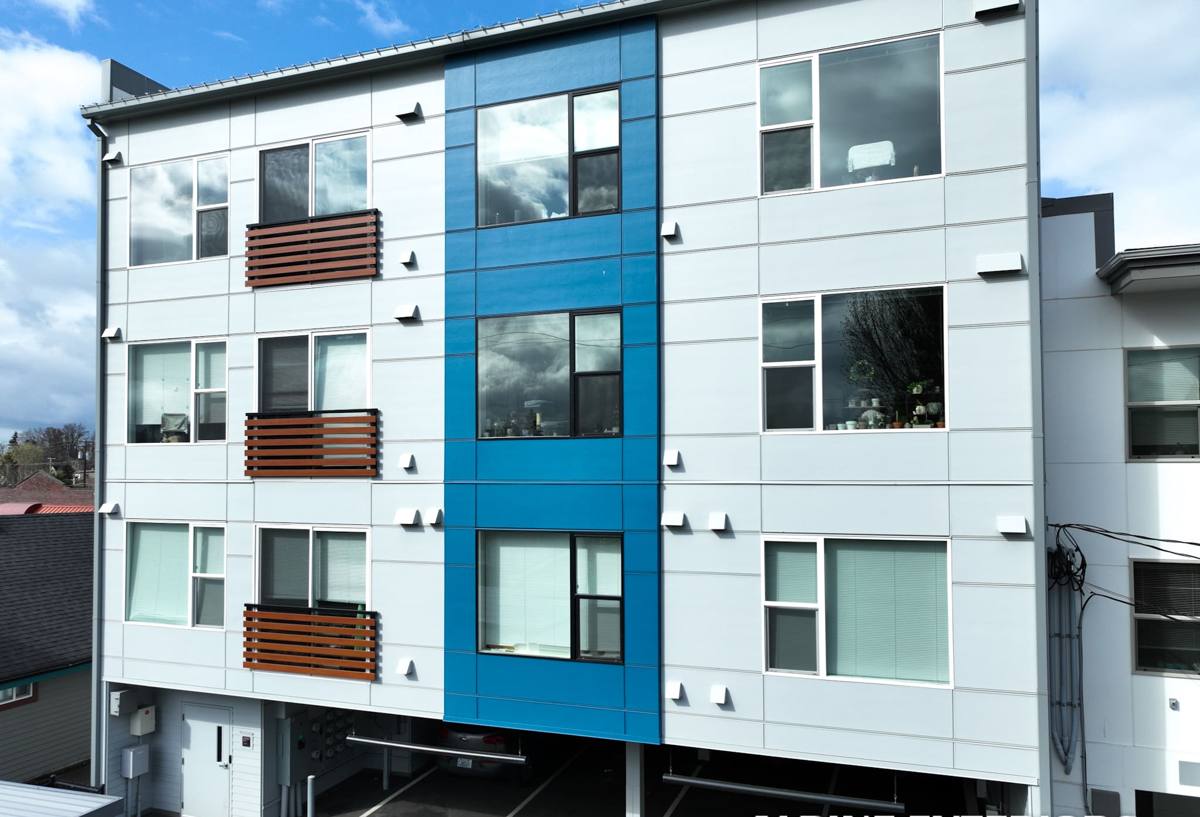
What "Energy-Efficient" Actually Means
A window's energy performance comes down to a handful of measurable factors, not just the glass looking thick or the frame feeling sturdy. When we talk through options with a homeowner, these are the numbers that actually matter:
- U-factor — measures how much heat the window lets escape. Lower is better for our winters.
- Solar Heat Gain Coefficient (SHGC) — how much solar heat passes through the glass. This matters less here than in sunnier climates, but it still affects comfort on the west- and south-facing sides of a house.
- Air leakage rating — how much air moves through the assembly when it's shut. This is where a lot of older or poorly installed windows lose the most energy.
- Glass package — double-pane with a low-E coating and argon or krypton gas fill is the baseline for this climate; triple-pane adds further insulation but at added cost and weight.
- Spacer system — the material separating the panes of glass affects how well the seal resists condensation and failure over time. Warm-edge spacers outperform older aluminum spacers, especially through our temperature swings.
None of these numbers matter on their own — they matter together, and they only deliver on their promise if the window is installed correctly. A high-performance window installed with a bad seal or missing flashing will underperform a mid-grade window installed right.
Signs Your Current Windows Are Costing You Money
Most homeowners don't call about windows until something is visibly wrong. By the time you notice these signs, the window has usually been underperforming for a while:
- Condensation forming between the panes of glass (not on the surface) — this means the seal has failed and the insulating gas fill is gone for good.
- Persistent fogging or a milky look to the glass, even after you wipe it down.
- A noticeable draft near the frame on a windy day, or a room that's harder to keep comfortable than the rest of the house.
- Wood trim or sills that feel soft, discolored, or show early moss or algae growth — a sign moisture is getting past the exterior seal.
- Windows that are difficult to open, close, or lock, which often points to a frame that's swollen, warped, or settled.
- Visibly higher heating bills compared to a similar-sized home nearby, with no other obvious cause.
Any one of these on its own isn't necessarily an emergency, but they're all worth a second look before another wet season sets in.
What a Correct Installation Actually Involves
The window unit itself is maybe half the job. The other half is everything around it — the details most homeowners never see and most lower-cost installers rush through.
Water Management First
In an area that gets driving, wind-blown rain, flashing and sealant details around the window opening matter as much as the window's energy rating. Water has to be directed out and down, never allowed to pool at the sill or track back behind the siding. This means proper flashing tape or pan flashing at the sill, correctly lapped house wrap, and sealant used only where it belongs — not as a substitute for flashing.
Insulation Around the Frame
The gap between the window frame and the rough opening needs to be filled with the right material and the right amount — too little leaves a cold spot and air leak path, too much (packed too tight) can bow the frame and affect how the window operates. Low-expansion foam or backer rod and sealant, applied correctly, closes that gap without distorting the unit.
Interior and Exterior Finish
Trim, caulking, and any interior finish work should be sealed against air and moisture movement, not just cosmetically closed up. This is also where a rushed job shows up years later as peeling paint, soft trim, or a drafty room.
Comparing Frame Materials for This Climate
There's no single "best" window material for every home — it depends on your budget, your home's style, and how much maintenance you want to take on. Here's how the common options generally compare for a wet, marine climate like ours:
| Frame Material | Energy Performance | Moisture Resistance | Maintenance | Typical Cost |
|---|---|---|---|---|
| Vinyl | Good to very good | Very good — won't rot | Low | Lower |
| Fiberglass | Very good | Excellent — stable in temperature swings | Low | Mid to higher |
| Wood | Good, depends on glass package | Requires upkeep to stay ahead of moisture | High | Higher |
| Wood-clad (wood interior, clad exterior) | Good to very good | Good if cladding and flashing are done right | Moderate | Higher |
| Aluminum | Weaker unless thermally broken | Fair — prone to condensation without a thermal break | Low | Varies |
For most Lake Stevens homes, vinyl or fiberglass frames offer the best balance of energy performance and low long-term maintenance given how much rain and humidity the exterior of a house deals with here. Wood and wood-clad options can still be the right call for a specific look or an older home's character, as long as the homeowner understands the maintenance commitment that comes with them.
Our Process for Lake Stevens Homeowners
We keep the process straightforward, because window replacement shouldn't feel like a mystery:
- On-site assessment. We look at your current windows, note any moisture or air-sealing issues around the openings, and talk through what's actually driving the decision — comfort, energy bills, appearance, or a failing seal.
- Product recommendation, not a sales pitch. We'll walk through frame material, glass package, and grille or style options based on your home and budget, and explain the trade-offs plainly.
- Written estimate. You get a clear scope of work and pricing before anything is ordered.
- Installation. Old windows come out, the opening is inspected for hidden rot or moisture damage, flashing and insulation are done correctly, and the new window is set, sealed, and finished — inside and out.
- Cleanup and walkthrough. We clear the work area and walk through the finished windows with you before we consider the job done.
What to Ask Before You Hire a Window Contractor
A window is only as good as its installation, so vetting the installer matters as much as picking the product. Before hiring anyone in Snohomish County to replace windows, it's worth asking:
- Are you licensed and insured to do this work in Washington State?
- Will you inspect the rough opening for rot or moisture damage before installing, not just after a problem shows up?
- What flashing and sealing method do you use, and why?
- What's the manufacturer's warranty on the window itself, and what's your warranty on the installation labor?
- Can you explain the U-factor and glass package you're recommending for my specific home, in plain terms?
- Do you regularly work in this area, or is this a one-off job for you?
A contractor who answers these clearly and without hesitation is usually one who's done the work enough times to know exactly what it takes.
Why Local, Recurring Experience in This Area Matters
A crew that works Lake Stevens and the surrounding Everett area regularly has already seen how homes here age — where moisture tends to collect around older window openings, how much the lake's humidity affects condensation on interior glass, and which details matter most through a long moss season. That's not something you get from a general handbook; it comes from doing the work in this specific climate, house after house, season after season. It also means we're not far away if a question comes up after the job is done.
Living With Your New Windows Through the Wet Season
Even a well-installed, energy-efficient window benefits from a little basic upkeep in this climate:
- Wipe down interior sills periodically during the wettest months to keep condensation from sitting on the frame.
- Clear leaves and debris from exterior sills and tracks so water drains away instead of pooling.
- Check exterior caulking annually and have it touched up if it's cracked or pulling away — this is your first line of defense against driving rain.
- Keep an eye on nearby trees and gutters, since overhanging branches and clogged gutters both send extra water toward window openings.
None of this is a lot of work, but it's the difference between a window that performs well for its full lifespan and one that develops problems early.
If your windows are drafty, fogged, or just older than you'd like to think about, we're happy to take a look and walk you through honest options — no pressure, no sales script. Use the form below to request a free estimate for your Lake Stevens home.