 Everett
 Building a Deck That Actually Holds Up in Lake Stevens
Lake Stevens sits inland from Puget Sound, but it doesn't escape the marine weather pattern that defines this part of Snohomish County. Homes here deal with long stretches of driving rain, heavy tree cover around the lake that keeps decks shaded and damp, and a moss season that can run from fall well into spring. A deck built without those conditions in mind will look fine for a year or two and then start showing problems — soft spots, black staining, loose fasteners, boards that cup or crown. A deck built for the actual climate holds its shape and its finish for decades instead of years.
We frame this page around one job — deck building for Lake Stevens properties — because the right approach here isn't identical to what works in a drier inland climate, or even what works elsewhere in Everett with less tree canopy or lake-effect humidity.
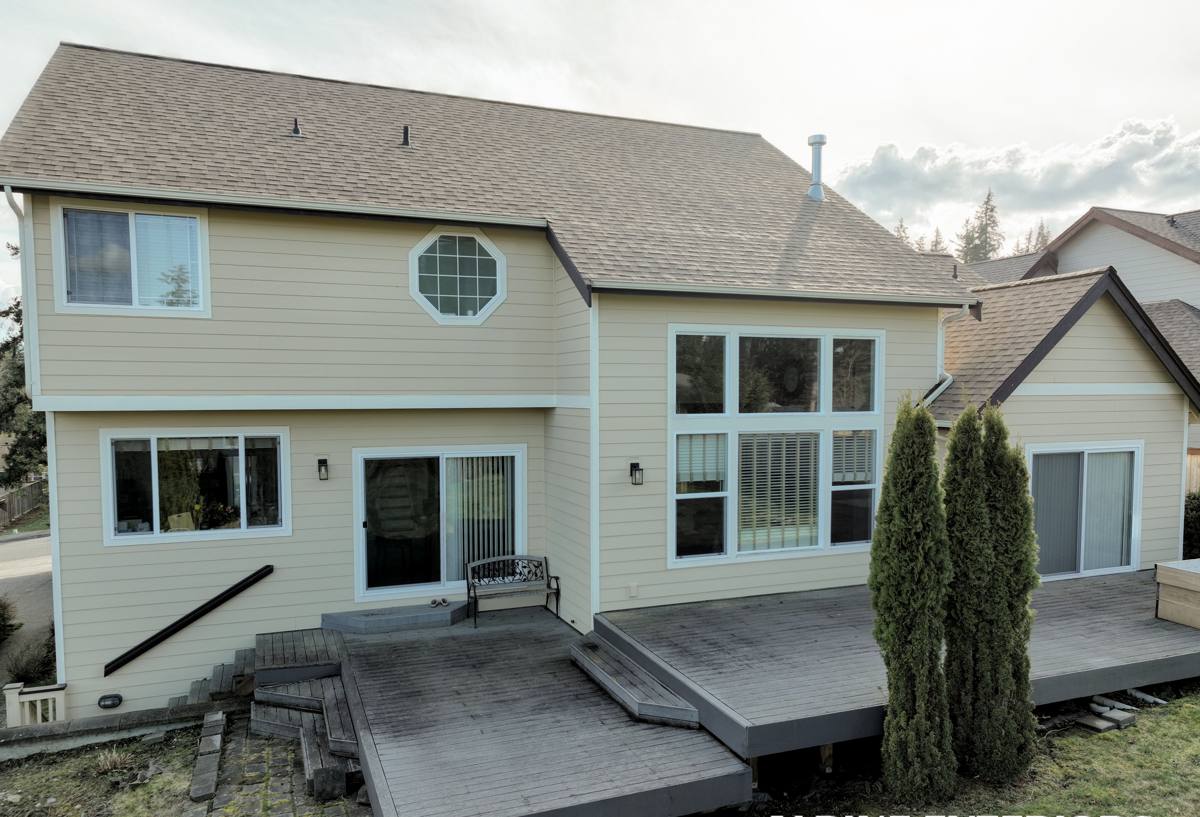
What the Local Climate Actually Does to a Deck
Driving Rain and Standing Water
Wind-driven rain doesn't just fall straight down here — it gets pushed sideways into ledger connections, under railing posts, and into any gap that isn't properly flashed or sloped. Over time, water that isn't shed away from the structure finds its way into end grain, fastener holes, and the ledger-to-house connection, which is the single most common source of rot and structural failure in decks throughout this region.
The Long Moss Season
Shaded, tree-lined lots around Lake Stevens hold moisture longer than open, sun-exposed sites. That means moss and algae get a longer window to establish themselves on decking surfaces, especially on the north side of a house or under mature trees. Moss isn't just cosmetic — it holds water against the board surface, which accelerates wood decay and makes composite surfaces slick and slippery.
Marine Air, Even This Far Inland
Snohomish County's marine air mass reaches well past the immediate shoreline, and it carries enough moisture and salt content to accelerate corrosion on unprotected metal — fasteners, brackets, and railing hardware included. It's a slower effect than you'd see on a waterfront deck, but over 10-15 years it's enough to matter, especially on hardware that was never rated for exterior exposure in the first place.
What a Correctly Built Deck Involves
Footings and Framing
Footings need to be sized and set below frost depth and on undisturbed, well-draining soil — not backfilled or saturated ground, which is common near lake-adjacent lots with heavier clay content. Joists and beams should be rated for the actual span and load, not just "close enough," and every cut end of pressure-treated framing lumber needs to be re-sealed, since factory treatment doesn't penetrate a fresh cut.
Ledger Attachment and Flashing
The ledger board — where the deck attaches to the house — is the single most important detail on the entire structure. It needs correct lag or through-bolt spacing, a code-compliant ledger flashing that directs water out and away from the house sheathing, and a gap or flashing detail that keeps the deck from trapping moisture against the siding. This is the connection most likely to fail quietly, behind the scenes, for years before anyone notices.
Decking Material Selection
Board choice affects how much upkeep a moss-prone, shaded lot actually needs. There isn't one right answer for every property — it depends on how much shade the deck gets, how much maintenance the homeowner wants to do, and budget.
| Material | Moisture/Moss Behavior | Maintenance | Typical Lifespan |
|---|---|---|---|
| Pressure-treated wood | Absorbs moisture; needs sealing to resist moss and staining | Annual cleaning, re-sealing every 2-3 years | 15-20 years with upkeep |
| Cedar | Naturally moisture-resistant but still needs periodic sealing in shade | Cleaning plus re-oiling every 1-2 years | 15-20 years with upkeep |
| Composite decking | Doesn't rot, but surface moss/algae growth still needs washing | Periodic cleaning, no sealing required | 25-30+ years |
| PVC decking | Fully moisture-resistant surface; least prone to holding moss | Occasional washing | 25-30+ years |
Railings, Fasteners, and Hardware
This is where a lot of otherwise well-built decks fail early in this climate. Standard interior-grade or under-rated exterior screws will corrode and stain the surrounding wood or composite within a few seasons. We use fasteners and structural hardware rated for exterior, coastal-influenced exposure — stainless steel or properly coated connectors at critical structural points, not just at the visible surface. Railing posts get the same attention: a post that isn't properly through-bolted and flashed at the base is a moisture entry point and, eventually, a safety issue.
Moss, Algae, and Long-Term Drainage
No deck in a shaded, lake-adjacent setting is going to be permanently moss-free without some ongoing effort — but the amount of effort depends heavily on how the deck was built. Proper board spacing lets air circulate and water drain instead of pooling between boards. Correct joist spacing and blocking underneath prevents the trapped, damp microclimate that lets moss take hold in the first place. We also grade and detail decks so water sheds away from the house and off the surface rather than sitting in low spots, which is often the real root cause behind a deck that seems to "grow moss no matter what."
Our Process for a Lake Stevens Deck Project
- On-site walkthrough to assess sun/shade exposure, drainage, existing structure (if replacing a deck), and how the space will actually be used.
- Design and material discussion based on your maintenance preference, budget, and the specific conditions of your lot.
- Permit application and engineering detail as required for your footing, framing, and ledger connection.
- Demolition of the existing structure (if applicable) and inspection of the ledger area and rim joist for hidden rot.
- Framing, ledger flashing, and structural inspection before any decking goes down.
- Decking, railing, and stair installation with attention to fastener spacing and drainage detailing.
- Final walkthrough and care guidance specific to the material you chose.
Permits and Local Requirements
Most new deck construction and many deck replacements in Snohomish County — including within Lake Stevens city limits — require a building permit, structural review of footings and framing, and inspection before the decking surface is closed in. Requirements vary depending on deck height, attachment to the house, and whether it's new construction or a replacement of an existing footprint. We handle the permit process as part of the job rather than leaving it to the homeowner to sort out separately.
What Drives the Cost
| Factor | Why It Matters |
|---|---|
| Deck size and shape | Larger footprints and multi-level or angled designs require more framing and labor |
| Decking material | Composite and PVC cost more up front than wood but less in maintenance over time |
| Height above grade | Taller decks need more substantial footings, framing, and stair/railing structure |
| Site access and grading | Sloped or hard-to-access lake lots can add labor for excavation and material handling |
| Demolition needs | Removing and disposing of an existing deck adds cost versus building on a clear site |
| Railing and stair details | Custom railing styles and multiple stair runs add material and labor |
Most standalone deck projects in this area run from a modest, straightforward rebuild up into a much larger figure for a large, multi-level composite deck with custom railings — we'll give you a real number after seeing the site, not a guess over the phone.
Why a Local Everett Crew Matters Here
A crew that works Lake Stevens and the surrounding Everett area regularly already knows how the local soil drains, which lots hold shade and moisture longest, and what the Snohomish County permit and inspection process actually requires — not in theory, but from doing it repeatedly. That familiarity shows up in small decisions: where to add extra drainage detail, which fastener spec to use without being asked, and how to sequence a build around the region's rain patterns instead of fighting them. It also means we're a short drive away if a warranty question or a maintenance question comes up later, not a crew that did one job in the area and moved on.
Questions Worth Asking Any Deck Contractor
- Do you pull permits and schedule inspections, or is that left to me?
- What fastener and hardware grade do you use for this climate?
- How do you flash and detail the ledger connection to the house?
- What's your approach to drainage and moss prevention for a shaded lot?
- Can you walk me through the footing and framing spec before work starts?
- What does your warranty actually cover, and for how long?
If you're planning a new deck or replacing one that's showing its age, we're happy to come take a look and give you a straightforward, no-pressure estimate — no obligation, just an honest read on what your property actually needs.