 Everett
 Why Edmonds Siding Takes a Different Kind of Beating
Edmonds sits right on Puget Sound, and that waterfront location cuts both ways. The views are a big part of why people live here, but the same marine exposure that makes Edmonds desirable also makes it tough on exterior building materials. Salt-laden air drifts in off the Sound, wind-driven rain comes at siding sideways during winter storms, and the long wet season — often eight or nine months of the year — keeps north-facing walls, shaded lots, and tree-covered yards damp enough to grow moss and algae on almost anything that will hold moisture. Add in Snohomish County's mix of older homes and newer construction, many built before current moisture-management standards were common, and you get a lot of siding that looks fine from the street but is failing quietly underneath.
None of this is unique to one street or neighborhood — it's the baseline climate reality for any home close to the water in this part of Washington. What it means practically is that siding material and installation quality matter more here than they would in a drier, more sheltered inland location. A product or installation method that holds up fine on the dry side of the state can fail within a decade on a west-facing wall a few blocks from the Sound.
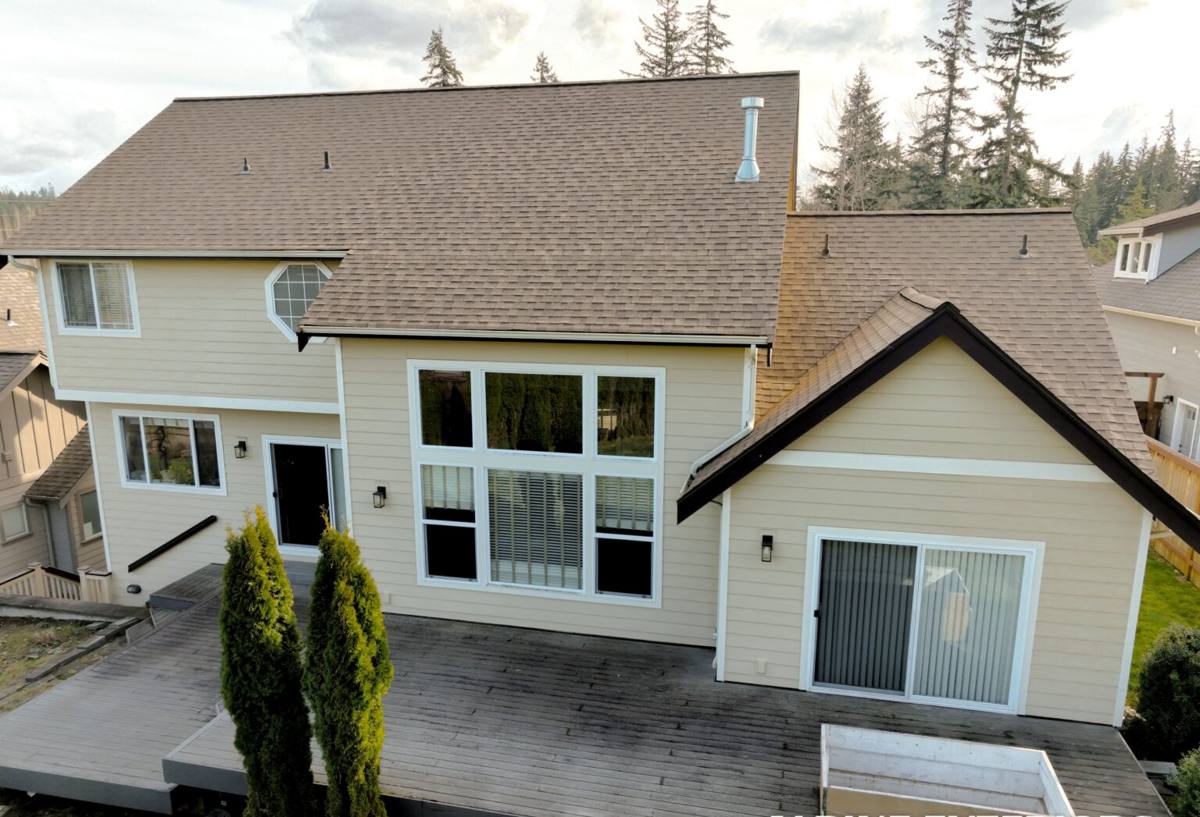
What Salt Air, Driving Rain, and Moss Actually Do to Siding
Salt Air
Airborne salt is corrosive to fasteners, flashing, and any exposed metal trim, and it also breaks down the surface of some siding materials faster than plain moisture alone would. Coatings that aren't formulated to resist it can chalk, fade, or lose adhesion years ahead of schedule.
Driving Rain
Wind off the water doesn't just fall on a wall — it drives horizontally into laps, seams, and any gap in flashing or caulking. Siding systems that rely on tight seams and perfect caulk lines to stay dry are at a real disadvantage in a climate where wind-driven rain is routine rather than occasional.
Moss and Sustained Moisture
Long wet seasons and shaded, tree-lined lots keep siding surfaces damp for extended stretches. Materials that absorb water — or that trap it behind them because of poor drainage detailing — stay wet longer, which is exactly the condition moss, algae, and rot need to take hold.
Why We Install James Hardie Fiber Cement — and Nothing Else
We standardized on James Hardie fiber cement siding for every project we take on, including here in Edmonds, and we don't install vinyl, LP SmartSide, Cemplank, Allura, or wood-based siding products. That's not a marketing position — it's a maintenance and durability call based on what actually holds up in this climate.
Fiber cement is non-combustible and dimensionally stable, meaning it doesn't expand and contract with moisture and temperature the way wood-based products do. James Hardie's ColorPlus finish is baked on at the factory rather than field-applied, which gives it better adhesion and UV resistance than a job-site paint job — a real advantage in a climate that puts a lot of both rain and sun exposure on exterior walls, sometimes in the same week. Hardie also engineers specific product formulations for different climate zones — their HZ5 line is built for the freeze-thaw and moisture conditions common in the Pacific Northwest — which is the kind of climate-specific engineering that generic siding products don't offer.
We're not going to tell you every other siding product is worthless — vinyl and engineered wood both have a place in the market and both perform reasonably in the right conditions. But we've made a professional decision that on homes in this climate, the trade-offs of those materials — seam-dependent water management, coating longevity, moisture sensitivity at cut edges — aren't ones we're willing to install and stand behind. Hardie's system, installed correctly, is what we're comfortable putting our name on.
Warranty Backing
James Hardie backs its siding products with a strong, transferable limited warranty, and the ColorPlus factory finish carries its own separate finish warranty. That coverage is only as good as the installation underneath it, though — Hardie's warranty terms assume installation to their published specifications, which is one more reason installation quality matters as much as the product choice itself.
Choosing the Right Hardie Product Line for an Edmonds Home
James Hardie makes several distinct product lines, and the right choice depends on the home's style, exposure, and the look the owner wants — not just picking whatever is cheapest.
| Product | Best Fit | Notes for This Climate |
|---|---|---|
| HardiePlank lap siding | Most home styles, traditional look | Most common choice; wide range of exposures and textures |
| HardiePanel vertical siding | Modern or mixed-material facades | Works well paired with trim as an accent on gable ends |
| HardieShingle | Craftsman or cottage-style homes | Gives a shingle look without wood's moisture sensitivity |
| Board & Batten | Accent walls, entries, dormers | Popular for a clean vertical look on street-facing sections |
For a home with heavy wind-driven rain exposure — a west- or south-facing wall with a direct sightline to open water, for example — we pay extra attention to lap exposure, flashing details, and caulking joints regardless of which product line is chosen, because those details matter more than the profile itself.
What a Correct Installation Actually Involves
Fiber cement siding performs the way it's designed to only when it's installed to manufacturer spec — and in a climate this wet, the margin for error is smaller than people expect. A correct install includes:
- A weather-resistant barrier installed and lapped correctly behind the siding, not just stapled up as an afterthought
- Proper flashing at every window, door, and roof-to-wall intersection, so water is directed out and away rather than behind the siding
- Correct nail placement and fastener spacing per Hardie's published installation guide — over-driven or misplaced fasteners are one of the most common causes of early failure
- Minimum clearance gaps at the bottom of the siding and at grade, decks, and roof lines so water can't wick up into the board
- Factory-cut or properly sealed field cuts, since an unsealed cut edge is the one part of the board that can absorb water
- Correct caulking at butt joints and trim intersections, using a sealant rated for the exposure
Skipping or rushing any one of these steps can leave a wall that looks correctly sided for years while trapping moisture behind it. That's the failure mode we see most often on re-side jobs: siding that looks intact from the curb but has soft sheathing or framing underneath because water was getting behind it from day one.
Our Process on an Edmonds Job
Every project starts with an on-site assessment, not a phone estimate. We walk the exterior, check the condition of the existing siding and the sheathing underneath where we can access it, and look specifically at the sides of the house that take the most weather — usually whatever faces the prevailing wind and rain off the Sound. From there:
- Assessment and measurement — full exterior walkthrough, moisture check on suspect areas, product and color selection
- Tear-off and inspection — removing the existing siding lets us actually see the sheathing and framing, not guess at their condition
- Repair as needed — any soft or water-damaged sheathing gets replaced before new siding goes on; siding installed over rotten sheathing fails regardless of the product used
- Weather barrier and flashing — installed to current best practice, not just to whatever was there before
- Hardie installation — installed to manufacturer spec, including fastener pattern, clearances, and caulking
- Final walkthrough — reviewing the finished work with the homeowner before we consider the job done
Signs Your Siding May Already Be Struggling, and How to Keep New Siding in Good Shape
Warning Signs
Not every Edmonds home needs new siding, but in this climate a lot of failure happens quietly behind material that still looks acceptable from the curb. It's worth checking for:
- Soft or spongy spots when you press on the siding, especially near the bottom courses or under windows
- Persistent moss or algae growth that comes back within weeks of cleaning
- Visible gaps, cracking, or separation at butt joints and trim corners
- Peeling or bubbling paint, or a chalky residue that rubs off on your hand
- Warping, bowing, or waviness along a wall, particularly on shaded or north-facing sides
- Interior signs like musty odors, staining, or soft drywall near exterior walls
Any one of these on its own isn't necessarily an emergency, but they're worth a professional look before they turn into a sheathing or framing repair on top of a siding replacement.
Ongoing Care
Correctly installed Hardie siding is low-maintenance compared to wood or vinyl, but "low-maintenance" isn't "no-maintenance" in this climate. A few habits go a long way: keep gutters and downspouts clear so water isn't overflowing onto siding below the roofline, trim back vegetation and tree cover that keeps shaded sections of a wall from ever fully drying out, rinse off moss and grime periodically with a soft wash rather than high-pressure spraying (which can force water behind laps and trim), and have caulking at trim joints and penetrations checked every few years, since sealant is the one component that wears out before the siding itself does.
What Siding Replacement Tends to Cost
Every home is different, but the same handful of factors drive cost on most Edmonds projects:
| Factor | Why It Matters |
|---|---|
| Home size and story count | More square footage and multi-story access both add labor time |
| Existing siding removal | Tear-off of old material adds a step before new siding can go up |
| Sheathing repair | Water damage found during tear-off has to be fixed before re-siding |
| Trim and detail complexity | Multiple gables, dormers, and window and door count all add labor |
| Product line and finish | Lap vs. panel vs. shingle profiles and premium ColorPlus colors vary in cost |
We won't quote a number without seeing the house, but we're happy to walk through these factors with you during an estimate so there are no surprises once work starts.
Why Local Experience in Edmonds Matters
A crew that only occasionally works this close to the water can miss the details that matter here — how much lap exposure to use on a wall that takes direct wind-driven rain, where moss is likely to become a maintenance headache, which sides of a house need extra flashing attention. A crew that regularly works Edmonds and the surrounding Snohomish County shoreline has already seen how homes in this specific exposure hold up over time, and builds accordingly instead of relying on a generic installation approach that ignores what the Sound does to a house.
If you're considering new siding, or you're not sure whether your current siding is holding up the way it should, we're glad to take a look. Reach out for a free, no-pressure estimate — there's a form right below to get started.