 Everett
 Window Replacement for Lake Stevens Homes
Lake Stevens sits a bit back from Puget Sound, so homes here don't take the same direct salt spray you'd see right on the Everett waterfront or out toward Mukilteo. But the rest of the Snohomish County climate story still applies in full: long stretches of driving rain off the Sound, short winter days that keep north-facing walls damp for weeks at a time, and a moss season that runs longer here than almost anywhere else in the country. Windows are one of the first places that shows up. Frames swell and stick, seals give out earlier than the warranty says they should, and glass that looked fine in July starts fogging between the panes by the following winter.
Replacing windows in this area isn't just a cosmetic upgrade. Done right, it's a moisture-management job as much as anything else — get the flashing, sealing, and drainage wrong and a brand-new window can leak worse than the old one it replaced. Get it right and you've closed off one of the more common paths water finds into a wall assembly.
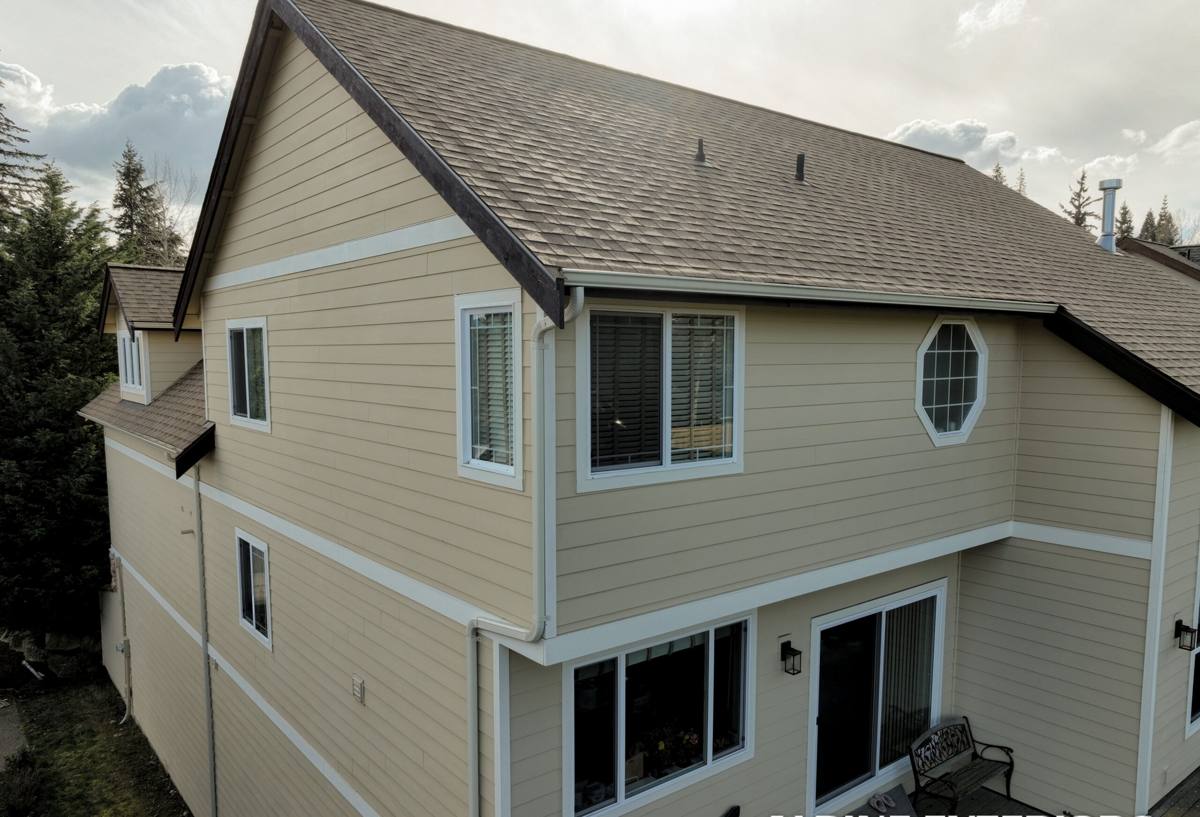
How Local Conditions Wear Down Windows
A few things happen to windows in Lake Stevens and the surrounding Everett area that don't show up the same way in drier climates:
- Wood and composite frames stay damp longer. With rain spread across so many days of the year, frames rarely get a full dry-out cycle, which accelerates rot in anything not properly sealed.
- Seals fail quietly. Double-pane seals break down under repeated wet-dry cycling, and the first sign is usually fog or haze between the panes rather than an obvious leak.
- Moss and algae hold moisture against the glass and sill. On shaded or north-facing walls, that constant dampness works into any gap in the caulk or trim.
- Condensation builds up on older, less-insulated glass. Cold snaps combined with indoor humidity leave single-pane and early dual-pane windows sweating on the inside, which can eventually damage sills and trim.
- Wind-driven rain finds gaps that gravity alone never would. Storms coming off the Sound push water sideways and upward, so a window that would be fine in a calm rain can still leak in a real Pacific Northwest system.
Signs It's Time to Replace, Not Repair
Not every problem window needs full replacement — sometimes new weatherstripping or resealing the exterior trim buys real years. But a few signs usually mean repair is just delaying the inevitable:
- Fog, haze, or visible moisture trapped between the panes of a double-pane window
- Frames that are soft, spongy, or visibly rotting at the corners or sill
- Windows that won't stay open, won't latch, or have warped enough to bind in the track
- Noticeable drafts you can feel with a hand near the frame on a windy day
- Paint that keeps failing on the interior sill no matter how often it's redone — usually a sign of chronic moisture, not just an old paint job
- Energy bills that jump in winter with no other explanation
When Repair Still Makes Sense
If the frame itself is sound and the problem is limited to hardware, weatherstripping, or a single failed seal on an otherwise good window, repair is usually the more honest recommendation. We'll tell you when that's the case — replacing a window that didn't need it is a waste of your money, not ours.
What a Correct Installation Actually Involves
The window unit itself matters less than most homeowners expect. What matters more is what happens around it — the flashing, the sealant, and how the new window ties into the existing wall assembly. This is where a lot of installations in wet climates go wrong, and it's usually invisible until years later when a wall starts showing water damage.
A correct job includes:
- Removing the old window and inspecting the rough opening for rot, soft sheathing, or existing water damage before anything new goes in.
- Repairing any damaged framing or sheathing found during that inspection, rather than sealing a new window over a compromised opening.
- Installing flashing correctly — sill pan flashing at the bottom, with side and head flashing that laps in the right order so water is always directed outward and down, never trapped.
- Setting the window level, plumb, and square so the sash operates smoothly and the seals make even contact all the way around.
- Sealing the interior air barrier separately from the exterior water barrier — these do different jobs, and treating them as one step is a common source of failure.
- Finishing the exterior trim and caulk lines so water sheds away from the window rather than pooling against it.
Skip the flashing details and even a premium window will eventually leak into the wall. This is the step that separates a window replacement that lasts twenty-plus years from one that starts showing problems in three.
Choosing Frame Material and Glass for This Climate
There's no single "best" window for every house — the right choice depends on your home's exposure, your budget, and how much maintenance you're willing to do. Here's how the common options actually compare for a wet, moss-prone climate like ours:
| Frame Material | Moisture Behavior | Maintenance | Typical Fit |
|---|---|---|---|
| Vinyl | Won't rot or corrode; performs well in wet climates | Low — occasional cleaning | Most common choice for Lake Stevens homes on a value-to-durability basis |
| Fiberglass | Excellent moisture and temperature stability, minimal expansion/contraction | Low | Good for larger openings or homes wanting a higher-end feel with low upkeep |
| Wood | Attractive but vulnerable to rot if any seal fails | High — regular painting/sealing required | Best suited to covered or protected elevations, or homeowners committed to upkeep |
| Wood-clad (wood interior, aluminum or vinyl exterior) | Exterior shell resists weather while keeping a wood interior look | Moderate | Popular middle ground when appearance matters as much as performance |
| Aluminum | Durable but conducts cold and can condense heavily in winter | Low | Less common for residential use here due to condensation and heat loss |
For glass, dual-pane with a low-E coating and argon gas fill is the practical standard for this area — it manages both the heat loss from our cool, cloudy stretches and the glare from occasional sharp winter sun off Lake Stevens itself. Triple-pane is worth discussing for north-facing rooms or homes right along the water where wind exposure is higher, but it's not a default upgrade every house needs.
Full-Frame vs. Insert Replacement
Once you've decided a window needs replacing, there's a second decision: replace just the sash and glass within the existing frame (an insert, or "pocket" replacement), or remove everything down to the rough opening (full-frame replacement).
| Factor | Insert Replacement | Full-Frame Replacement |
|---|---|---|
| Best when | Existing frame is sound, dry, and square | Frame shows rot, water damage, or you're changing window size/style |
| Speed | Faster, less disruption to interior trim and siding | Takes longer; involves exterior trim and sometimes siding work |
| Access to hidden damage | Limited — can't see or fix what's behind the old frame | Full — lets us inspect and repair sheathing and framing |
| Long-term outcome on a damaged opening | Risks sealing in existing rot or moisture | Addresses the underlying problem, not just the symptom |
Insert replacements have their place and are a reasonable, cost-conscious option on a sound frame. But given how much rain this area sees, we won't recommend an insert over a frame we haven't been able to inspect. If there's any doubt about what's behind the old window, it's worth opening it up rather than sealing a new unit over a hidden problem.
Our Process for Lake Stevens Homes
We keep the process straightforward because window replacement doesn't need to be complicated to be done well:
- Free on-site estimate. We look at each window's condition, exposure, and framing before recommending repair, insert replacement, or full-frame replacement — not before.
- Honest product recommendations. We'll walk through material and glass options based on your budget and your home's specific exposure to rain, wind, and shade.
- Scheduled installation. Most homes are done in a day or two depending on the number of openings involved.
- Flashing and sealing done to the standard described above, every time, regardless of window brand or price point.
- Final walkthrough so you can see the finished work and ask questions before we consider the job done.
Why It Matters to Hire a Crew That Already Works This Area
Window installation standards from a dry climate don't transfer cleanly to Snohomish County. A crew used to working where it rains twenty inches a year handles flashing and sequencing differently than one that's spent years dealing with our version of driving rain and a moss season that can run from fall through spring. Knowing how water actually moves across a Lake Stevens roofline and wall in a real Pacific Northwest storm — not just in a training manual — is what keeps a new window performing for decades instead of years.
There's also a practical side to hiring local: a crew based in the Everett area can respond quickly if a question comes up after installation, understands local permitting where it applies, and has a reputation in the community that outlasts any single job.
What Affects the Cost
Every home is different, but the main factors that move window replacement pricing are consistent:
| Factor | Why It Matters |
|---|---|
| Frame material | Vinyl is typically the most cost-effective; fiberglass and wood-clad cost more upfront |
| Window size and style | Larger openings, specialty shapes, or operable styles (casement, awning) cost more than standard double-hung |
| Insert vs. full-frame | Full-frame involves more labor and exterior trim work |
| Condition of the existing opening | Rot or damage found during removal adds repair time before the new window goes in |
| Number of windows | Doing a full house at once is typically more efficient per-window than one-off replacements |
| Glass upgrades | Triple-pane or specialty coatings add cost but may make sense for certain exposures |
We won't quote a number without seeing the actual windows and openings — anyone who does is guessing, and guesses are how homeowners end up with surprise costs mid-project.
Get a Straight Answer About Your Windows
If your windows are fogging, drafty, sticking, or just old enough that you're wondering whether it's time, we're happy to take a look and give you an honest read — repair, insert, or full-frame — with no pressure either way. Use the form below to request a free estimate for your Lake Stevens home.