 Everett
 Why Port Gardner's Climate Is a Real Test for Siding
Port Gardner sits right on the water, and that proximity to Puget Sound shapes everything about how exterior materials hold up here. Salt-laden air moves off the bay and settles on every exposed surface, wind-driven rain gets forced sideways into wall assemblies during winter storms, and the long, wet, low-sun stretch from fall through spring gives moss and algae months to establish themselves on anything that stays damp. Siding in this neighborhood isn't just decorative — it's the first and most exposed line of defense against a marine environment that is genuinely harder on a home than most inland parts of Snohomish County.
We've worked on enough homes in and around Everett to know that products which perform fine in a drier climate can fail early here. Swelling at butt joints, soft spots behind trim, chalky or streaked paint film, and moss creeping up from the bottom courses are the visible symptoms of siding that wasn't built — or installed — for this kind of exposure.
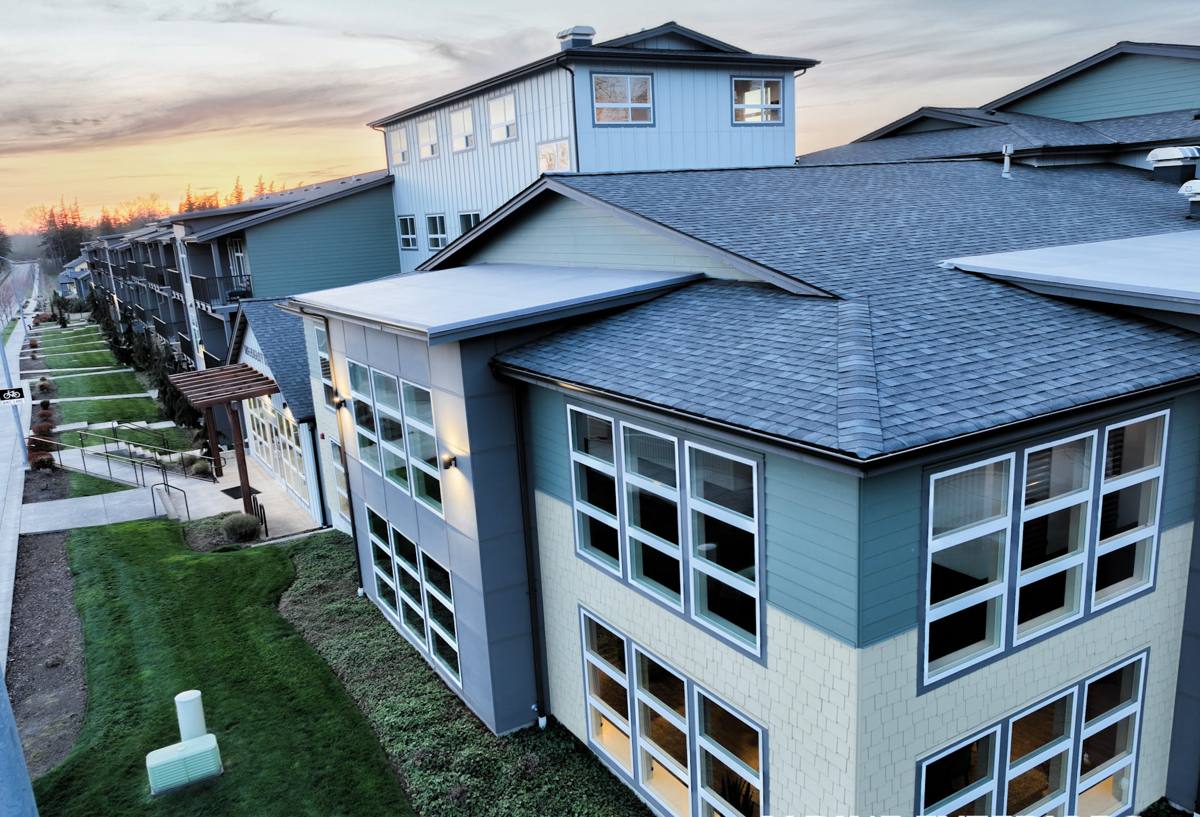
What Port Gardner Homes Actually Need From Their Siding
Moisture Resistance That Doesn't Depend on Paint Alone
A lot of siding failures aren't really material failures — they're moisture management failures. Water gets behind the cladding through a gap, a nail hole, or a poorly lapped joint, and then it has nowhere to go. In a marine climate like Port Gardner's, where the siding rarely gets a long dry stretch to fully release moisture, that trapped water does its damage faster than it would in a drier region.
Resistance to Salt Air and Corrosion
Salt air accelerates corrosion of fasteners, flashing, and any metal component in the wall assembly. It also breaks down some coatings faster than manufacturers' standard testing accounts for, which is why product selection and fastener choice matter more here than in a typical inland installation.
A Surface That Doesn't Feed Moss and Algae
Moss needs moisture, shade, and a rough or porous surface to grip. Homes on north-facing walls, under tree cover, or close to the water see moss and algae growth start earlier in the season and last longer than homes further inland. Siding with a dense, factory-applied finish sheds that growth more easily than field-painted or porous surfaces.
Why We Only Install James Hardie Fiber Cement
We made a deliberate decision to install James Hardie fiber cement exclusively — not vinyl, not LP SmartSide, not competing fiber cement brands. That's not a marketing position, it's a standard we hold because of what we've seen matter most in this climate: a non-combustible product, a factory-cured ColorPlus finish that doesn't rely on a field-applied coat to hold up to years of salt air and rain, and a product line — HZ5 — engineered specifically for wet, moderate-freeze climates like ours. James Hardie also backs its ColorPlus finish and substrate with a strong transferable warranty, which matters to homeowners who plan to sell.
We're not going to tell you every other product on the market is worthless — vinyl and engineered wood sidings have their place and their price point. But for a home exposed to Port Gardner's bay-driven weather, we've decided we won't put our name on an installation using a product that we think is more likely to give a homeowner problems in ten or fifteen years. Hardie is what goes on the homes we work on, full stop.
What a Correct Fiber Cement Installation Involves
Fiber cement is only as good as the installation behind it. Around Port Gardner, where the wall assembly needs to handle real wind-driven rain, a few details separate a correct job from one that will cause problems down the line:
- Proper weather-resistive barrier and flashing at every window, door, and penetration, lapped correctly so water sheds outward and down
- Correct nail placement and fastener spacing per James Hardie's published fastening schedule — not general carpentry practice
- Manufacturer-specified gaps at butt joints, trim, and inside corners so panels can move without trapping water
- A minimum clearance between the bottom edge of the siding and grade, decks, or roof lines to keep splashback and standing water away from the cut edge
- Sealing and caulking limited to the joints James Hardie actually specifies — over-caulking traps moisture just as reliably as gaps let it in
- Field-cut edges primed or sealed before installation so the raw substrate isn't left exposed to bay-driven moisture
Skip any one of these and the product itself stops mattering — even the best fiber cement on the market will fail early if it's installed like a drier-climate product on a home two blocks from the water.
Our Process for Port Gardner Projects
1. On-Site Assessment
We start by walking the exterior and looking specifically at moisture history: staining, soft trim, failed caulk lines, and areas where moss or algae growth suggests a wall that stays wet longer than it should. Homes closer to the bay or with more shaded, north-facing walls get extra attention here.
2. Product and Line Selection
We spec James Hardie's HZ5 line for this climate zone and help homeowners choose a ColorPlus color and profile — lap, shingle, or panel — that fits the home and holds its finish under sustained salt-air exposure.
3. Prep and Moisture Management
Before any siding goes up, we address the weather-resistive barrier, flashing, and any sheathing issues we found during assessment. This is the step that gets skipped on rushed jobs and is the one most responsible for long-term performance.
4. Installation to Spec
Panels go up following James Hardie's fastening and clearance requirements exactly, not a generalized approach. Trim, corners, and joints get the gaps and flashing detail the product actually requires.
5. Final Walkthrough
We walk the finished exterior with the homeowner, checking sightlines, joints, and finish consistency before calling the job done.
Choosing the Right Product Line and Finish for This Neighborhood
| Consideration | Why It Matters in Port Gardner |
|---|---|
| HZ5 climate engineering | Built for repeated wet-freeze cycling and sustained moisture exposure common in Puget Sound winters |
| ColorPlus factory finish | Cured coating resists fading and chalking from salt air better than a field-applied paint job |
| Panel vs. lap profile | Lap siding sheds driving rain well on exposed walls; panel systems can suit modern designs but need extra attention to joint sealing |
| Color selection | Darker tones absorb more heat and can show water spotting sooner; lighter, factory-finished tones often hide moss staining longer between cleanings |
| Trim material pairing | Matching trim system needs the same moisture resistance as the field siding, or it becomes the weak point |
Cost Factors for Port Gardner Homeowners
Every home is different, so we won't quote numbers that don't apply to your project — but the factors that move the estimate are consistent:
| Factor | Impact on Cost |
|---|---|
| Existing siding removal and disposal | Tear-off adds labor and disposal cost, especially if hidden moisture damage is found underneath |
| Sheathing or framing repair | Any rot found during removal has to be repaired before new siding goes on — this is the most common source of a mid-project cost adjustment |
| Home size and wall complexity | More corners, dormers, and trim details mean more cutting, fitting, and labor time |
| Product line and profile | HZ5 panel and shingle profiles vary in material cost per square foot |
| Accessibility | Steep sites, tight lot lines, or waterfront-facing walls can affect staging and labor time |
Living With Fiber Cement Siding in a Marine Climate
Correctly installed Hardie siding is low-maintenance, but "low-maintenance" doesn't mean "no maintenance" — especially this close to the water. A simple seasonal routine keeps it performing the way it's supposed to:
- Rinse the exterior once or twice a year to clear salt residue, especially on walls facing the bay
- Check caulk lines at trim and joints annually for cracking or separation
- Trim back vegetation and tree cover that keeps any wall shaded and damp longer than necessary
- Address moss or algae growth early with a gentle wash rather than letting it establish and stain the finish
- Inspect the bottom clearance near grade and decks after landscaping changes to make sure it hasn't been reduced over time
Why Hiring a Crew That Already Works Port Gardner Matters
A siding installer who mostly works drier, inland jobs can still do competent general carpentry and still get the moisture details wrong for a home exposed to bay weather. Knowing how far wind-driven rain travels up a wall here, which orientations hold onto moss longest, and how salt air affects fastener and flashing choices isn't something you get from a spec sheet — it comes from working houses in this exact neighborhood and in similar conditions around Everett and Snohomish County. That local, repeated experience is what keeps a fiber cement installation performing for decades instead of needing early rework.
If you're considering new siding for a Port Gardner home, we're happy to take a look and walk you through what your specific house needs. There's no pressure and no cost to get an honest assessment and a written estimate — just fill out the form below to get started.