 Everett
 Building a Deck That Actually Holds Up in Lynnwood
A deck in Lynnwood works harder than a deck almost anywhere inland. Between the Puget Sound salt air drifting through Snohomish County, the driving rain that comes in sideways during fall and winter storms, and a moss season that can stretch from October well into spring, an outdoor structure here is under near-constant moisture pressure for most of the year. That doesn't mean deck building is a losing battle — it means the details that get skipped on a "quick and easy" build are exactly the details that determine whether a deck is still solid in ten years or starting to rot, rust, and sag in three.
This page covers what a deck built for this specific area needs, what we actually do differently because of it, and how our process works from first conversation to final walkthrough.
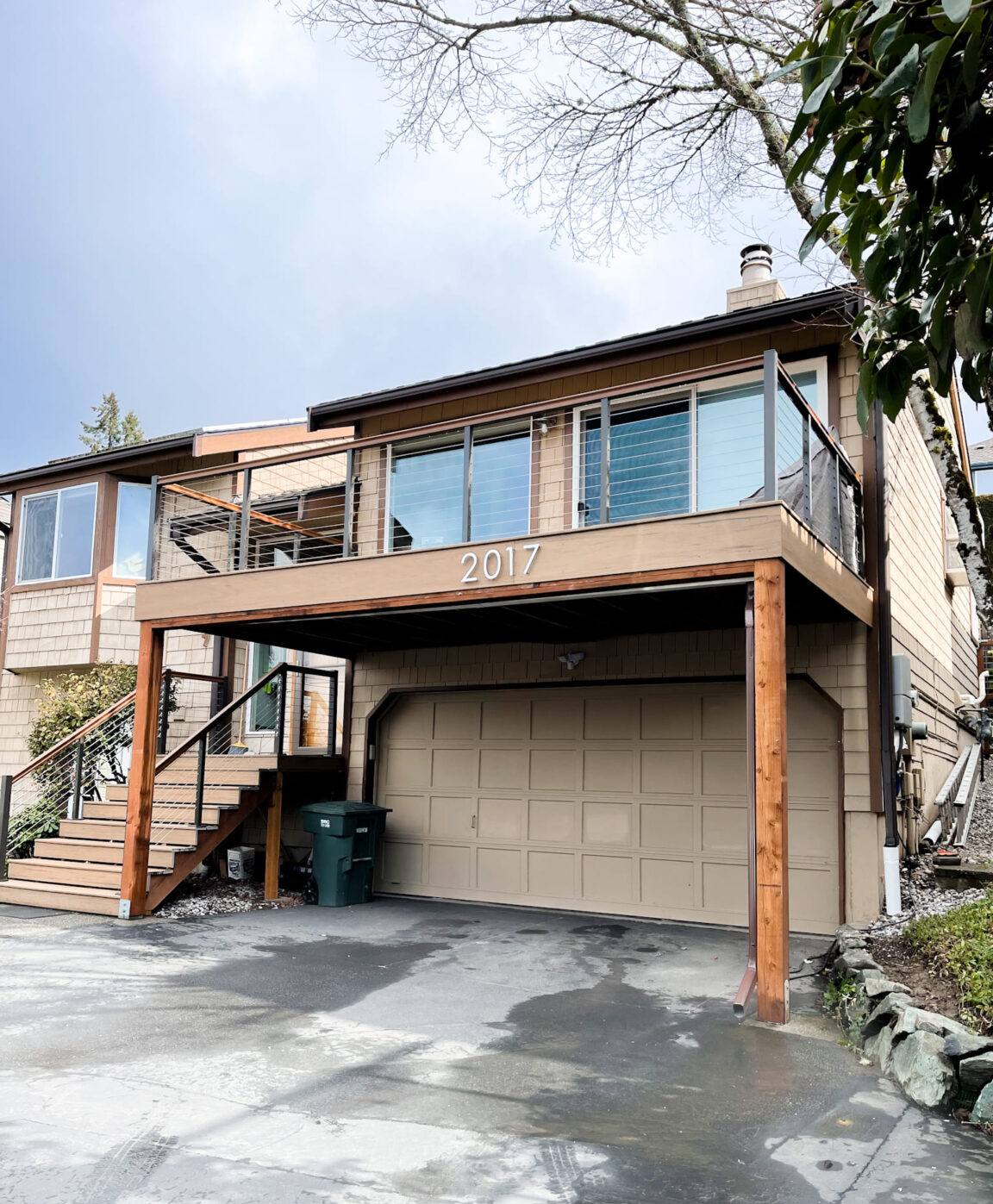
What Local Weather Does to an Improperly Built Deck
Most deck failures we see aren't dramatic structural collapses — they're slow, quiet damage that starts small and gets expensive. Understanding the mechanism helps explain why certain build choices matter more here than they would in a drier climate.
Moisture That Never Fully Dries
Wood and metal fasteners need time to dry out between rain events to stay healthy. In a stretch of Pacific Northwest weather where one wet system rolls into the next, decking boards, joists, and ledger connections can stay damp for days or weeks at a time. Standing water and trapped moisture at joints and fastener heads is where rot and corrosion start.
Salt Air and Metal Fatigue
Proximity to Puget Sound means airborne salt is a real factor for fasteners, brackets, and flashing, not just for boats and vehicles. Standard hardware corrodes faster here than it would further inland, which is why fastener and connector selection is a bigger deal on a Lynnwood deck than a spec sheet might suggest.
Moss, Algae, and Trapped Debris
Shade, moisture, and mild temperatures are ideal conditions for moss and algae growth on horizontal surfaces. Beyond looking bad, a moss layer holds water against the decking material continuously and creates a slick, slippery walking surface — a real safety issue on stairs and landings.
Choosing the Right Decking Material for This Climate
There's no single "correct" material for every deck — it depends on budget, how much upkeep you want to take on, and how the deck will be used. Here's how the common options actually perform under Snohomish County conditions.
| Material | Upfront Cost | Behavior in Wet/Salt Climate | Maintenance Needed |
|---|---|---|---|
| Pressure-treated wood | Lowest | Prone to cupping, splintering, and fastener staining if not sealed regularly | Annual cleaning and re-sealing recommended |
| Cedar | Mid-range | Naturally rot-resistant but still needs protection from prolonged moisture exposure | Periodic cleaning and oil/sealer application |
| Composite decking | Mid to upper | Resists rot and doesn't need sealing, but can host surface mold/moss if not cleaned | Occasional washing, no sealing required |
| Capped composite / PVC | Highest | Best moisture resistance of the group; capped surface sheds water and resists staining | Low — periodic rinsing only |
We don't push one material on every homeowner. A wood deck maintained on a real schedule can look great for decades; a composite deck left completely unmaintained can still grow a moss film. The honest trade-off is upfront cost versus ongoing time — we'll walk through both against your budget and how you actually plan to use the space.
What a Correctly Built Deck Involves
The decking boards get all the attention, but the structure underneath is what actually determines whether the deck survives our weather. This is where corners get cut on lower-quality builds, and it's usually invisible until something fails.
Footings and Framing
Footings need to be sized and set below the frost line and on undisturbed, load-bearing soil — not fill dirt or soft ground that will settle unevenly over time. Framing lumber should be rated for ground contact where it's close to grade, and joist spacing needs to match the decking material's span rating, not just "what's normal."
Ledger Board and Flashing
Where a deck attaches to the house, the ledger board connection is the single most common source of hidden water damage. Proper flashing — installed so water sheds outward and away from the house sheathing rather than behind it — is non-negotiable in a climate that sees this much rain. A poorly flashed ledger board can let water into the house framing for years before anyone notices.
Fasteners and Hardware
Given the salt air factor, we favor stainless steel or heavy hot-dip galvanized fasteners and structural connectors over standard coated hardware, especially for anything load-bearing or close to the house. It costs more upfront and it's the right call for a coastal-influenced climate.
Decking Surface and Drainage
Board spacing needs to allow water to actually drain through rather than pool on the surface, and the substructure needs a way for that water to keep moving instead of sitting against the joists. This is also where moss gets a foothold — a deck that drains poorly stays wet longer and grows moss faster.
Railings and Code Compliance
Railing height, baluster spacing, and stair guard requirements are governed by building code, not preference. We build to code as a baseline, not a suggestion — this matters both for safety and for resale, since a non-compliant deck can become a problem during a future home sale inspection.
Our Deck Building Process
We keep the process straightforward and communicate at each stage so there are no surprises.
- Site assessment — we look at grade, drainage, sun/shade exposure, and how the deck will connect to the house.
- Design and material selection — we talk through layout, size, and material trade-offs based on your budget and how you'll use the space.
- Permitting — we handle the permit application and coordinate required inspections with the local jurisdiction.
- Footings and framing — footings are set and inspected before framing goes up.
- Decking, railings, and stairs — installed with attention to fastening pattern, spacing, and drainage.
- Final walkthrough — we go over the finished deck with you, including care and maintenance guidance specific to the material you chose.
Permits and Code in Snohomish County
Most new deck construction requires a permit, and the requirements can vary depending on deck height, size, and attachment to the house. Rather than guessing or skipping this step, we handle the permit process as part of the job so the work is documented, inspected, and won't create problems if you sell the home later. If you're unsure whether your specific project needs a permit, that's a normal first question to ask during an estimate — we'll tell you straight rather than assume.
Maintaining a Deck Through a Long Moss Season
Even a well-built deck needs some seasonal attention in this climate. None of it is complicated, but skipping it is how small problems become expensive ones.
- Sweep leaves and debris off the surface regularly in fall, especially between boards where they trap moisture
- Clean visible moss or algae growth before it spreads, particularly on shaded sections and stairs
- Check that gaps between boards are clear so water can drain through instead of pooling
- Inspect the ledger board area and flashing once a year for signs of water staining or gaps
- Re-seal or re-stain wood decking on the schedule recommended for the product you have
- Look at fasteners and metal connectors periodically for rust or corrosion, especially near the house
- Clear gutters and downspouts near the deck so runoff isn't draining directly onto it
Why a Crew That Already Works in Lynnwood Matters
Deck building experience from a dry climate doesn't automatically transfer here. A crew that already works throughout Snohomish County understands how local rainfall patterns affect build timing and curing, knows what fastener and flashing choices actually hold up against salt air over years rather than months, and is familiar with the permitting process in this area so the job doesn't stall waiting on paperwork nobody planned for. That local familiarity shows up in fewer surprises during the build and a deck that's built for the conditions it will actually face, not generic conditions from a manufacturer's spec sheet written for a different climate.
Getting Started
If you're considering a new deck or replacing one that's showing its age, we're happy to take a look and talk through what makes sense for your home, your budget, and how you want to use the space. Reach out for a free, no-pressure estimate using the form below — there's no obligation, just a straight answer about what your project would involve.