 Everett
 West Everett Decks Face a Different Kind of Weather
West Everett sits close enough to Puget Sound that the air itself is part of the building problem. Salt-laden marine air, wind-driven rain that comes in sideways off the water, and a moss season that can stretch from October well into spring all put more stress on an outdoor deck here than in a drier inland climate. A deck built the same way you'd build one in Spokane or Yakima will not hold up the same way in Snohomish County.
We work on decks throughout Everett, but West Everett homes in particular tend to sit on lots with more exposure to wind and moisture coming off the Sound, along with mature tree cover that keeps decking shaded and damp longer after a storm. That combination is exactly what shortens the life of a poorly built deck, and it's exactly what we design around.
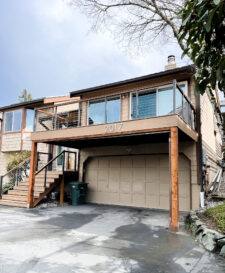
What Marine Air and Moss Actually Do to a Deck
Salt Air and Metal Fasteners
Salt in the air accelerates corrosion on any exposed metal — nails, screws, joist hangers, bolts. Once a fastener starts to rust, it weakens, stains the surrounding wood or composite, and eventually fails well before the decking itself wears out. A deck is only as strong as the hardware holding it together, and that hardware is usually hidden until something goes wrong.
Trapped Moisture and Wood Decay
Driving rain doesn't just fall on a deck, it gets pushed under railings, into end grain, and behind ledger boards where it doesn't dry out quickly. Wood that stays damp for extended periods is where rot starts, almost always at the points builders skip: end cuts that were never sealed, joists sitting flat against a house without a gap to breathe, or a ledger board attached without proper flashing.
Moss, Algae, and Slip Hazards
Everett's long wet season is ideal moss and algae weather. On a deck, that growth isn't just cosmetic — it makes boards slippery, holds moisture against the surface longer, and can work into the grain of wood decking over time. Decks with poor sun exposure or heavy tree cover, common in West Everett's more established neighborhoods, need a design and a maintenance plan that accounts for this from day one.
Picking the Right Decking Material for This Climate
There's no single "best" decking material — there's a best material for your budget, your sun exposure, and how much upkeep you actually want to do. Here's how the common options hold up specifically under West Everett's conditions:
| Material | How It Handles Local Moisture and Moss | Maintenance | Typical Lifespan Here |
|---|---|---|---|
| Cedar | Naturally rot-resistant and handles rain well when sealed; can still stain and grow moss in shaded, damp spots | Needs re-staining or sealing every 2-3 years | 15-20 years with upkeep |
| Pressure-treated fir/pine | Treated for rot resistance but more prone to cupping and checking in wet-dry cycles; moss takes hold if not cleaned | Annual cleaning, sealing every 1-2 years | 10-15 years with upkeep |
| Composite decking | Doesn't absorb water or rot, but can still grow surface algae/moss in shaded areas that needs regular cleaning | Periodic washing, no staining or sealing | 25-30 years, backed by manufacturer warranty |
| PVC/capped polymer | Fully moisture-resistant, most resistant to staining and moss adhesion of the group | Occasional washing only | 25-30+ years, backed by manufacturer warranty |
Composite and PVC decking have become popular in this climate for good reason: they take the wood-rot variable out of the equation entirely. That said, plenty of homeowners still want the look and feel of real wood, and a well-built cedar deck with a good maintenance routine can absolutely earn its keep here — the key word is "well-built."
What's Underneath the Deck Boards Matters More Than the Boards
The decking surface is the part everyone sees, but the framing, flashing, and footings underneath are what determine whether that surface stays flat, dry, and safe for the next few decades. This is where a lot of the region's deck failures actually start.
- Ledger boards attached to the house need proper flashing so wind-driven rain can't work its way behind the board and into the rim joist
- Joists benefit from a protective tape or coating on top before decking goes down, so standing water doesn't sit directly on cut or fastened wood
- Footings need to be sized and set to the depth required for our soil and frost conditions, not just poured to "look deep enough"
- The deck should be sloped slightly away from the house so water sheds off instead of pooling near the foundation
- Any spot where framing meets the ground or sits close to soil needs airflow so moisture doesn't get trapped underneath year-round
None of this is visible once the deck is finished, which is exactly why it's worth asking a contractor how they handle it before the boards ever go on.
Railings, Fasteners, and Hardware Built for Coastal Exposure
Guardrails and stairs are the parts of a deck people actually put their weight on in a hurry — reaching for a rail on a wet morning, for example — so the hardware holding them together isn't a place to cut corners near salt air.
We use stainless steel or hot-dip galvanized fasteners and connectors rated for exterior, coastal-adjacent exposure, and we're careful not to mix incompatible metals in the same connection, since dissimilar metals in contact with each other can actually speed up corrosion rather than prevent it. Guardrail height, baluster spacing, and stair rail requirements also follow the building code that applies to the project, which matters both for safety and for passing inspection.
Permits and Inspections for Decks in Everett
Most new decks and many significant deck rebuilds in Everett and unincorporated Snohomish County require a building permit, particularly once the deck is attached to the house, elevated above a certain height, or involves new footings. Permit requirements can also touch on setbacks from property lines and, depending on the lot, critical areas review if there's a slope or drainage feature nearby.
We handle the permit process as part of the job — pulling the permit, scheduling the required inspections, and building to the plan that was approved — so you're not left guessing whether your new deck is actually legal to have built. Skipping permits on an attached deck can create real problems later, from insurance questions to complications when you go to sell the house.
Our Process for a West Everett Deck Project
Every property is a little different, but the process we follow stays consistent:
- Site visit — we look at sun exposure, drainage patterns, existing structure (if we're replacing a deck), soil, and how the space will actually be used
- Design and material selection — we talk through wood versus composite versus PVC honestly, based on your budget and how much maintenance you want to take on
- Permitting — we prepare and submit what's needed and schedule inspections at the required points in the build
- Demolition and framing — old decking and any compromised framing comes out first; new footings, ledger flashing, and joists go in to code
- Decking, railings, and finish work — boards, rails, stairs, and any lighting or fascia details are installed and finished
- Final walkthrough — we go over the finished deck with you, including how to care for the specific material you chose
Keeping a West Everett Deck Looking Good Year After Year
A correctly built deck still needs some seasonal attention in this climate. The good news is it doesn't take much time if it's done on a regular schedule:
- Sweep leaves and debris off the deck regularly in fall — trapped wet leaves are a leading cause of surface staining and early moss growth
- Wash the surface at least once or twice a year with a deck cleaner appropriate for your material to remove moss, algae, and grime before it builds up
- Check and clear gaps between boards so water and debris don't collect and hold moisture against the framing below
- Inspect railings and stair connections annually for any looseness, rust staining, or movement
- For wood decks, reseal or restain on the schedule recommended for the product — waiting until it "looks bad" usually means damage has already started
- Trim back overhanging branches where practical to reduce shade, debris, and moisture buildup on the deck surface
Why Hire a Deck Crew That Already Works in West Everett
A deck built by a crew that already understands this specific stretch of Snohomish County has an advantage that's hard to replicate from a generic playbook. We know what the driving rain off the Sound does to an unflashed ledger board, we know which fastener choices actually hold up against salt air over time instead of just on paper, and we know the permitting process at the city and county level because we've been through it before, not because we're reading it for the first time on your project.
That local familiarity also matters after the build is done. If a question comes up about maintenance, a warranty item, or how the deck is handling its first wet winter, you're working with a crew that's a short drive away and already knows your property, not a call center reading from a script.
If you're weighing a new deck, a rebuild, or you're not sure whether your current deck can be repaired or needs to be replaced, we're happy to take a look and give you a straightforward, no-pressure estimate. Use the form below to get in touch and we'll set up a time to walk the property with you.