 Everett
 Snohomish's Marine Climate Is Hard on a Roof
Homes in Snohomish sit in one of the wetter, windier corners of Snohomish County, and the roof takes the brunt of it. Salt-tinged air off Puget Sound accelerates corrosion on exposed metal — flashing, fasteners, vent caps — long before it would fail somewhere drier. Driving rain, pushed sideways by fall and winter windstorms, finds every weak seam and undersized lap instead of just running off the field of the roof like it would in a light shower. And the long, wet moss season here does real structural damage over time, not just cosmetic staining, by holding water against shingles and working its way under tabs and flashing.
Storm damage repair in this area isn't just patching a hole. It's understanding how wind, rain, and moss interact with a specific roof system and fixing the problem in a way that holds up through the next storm, not just the next dry week.
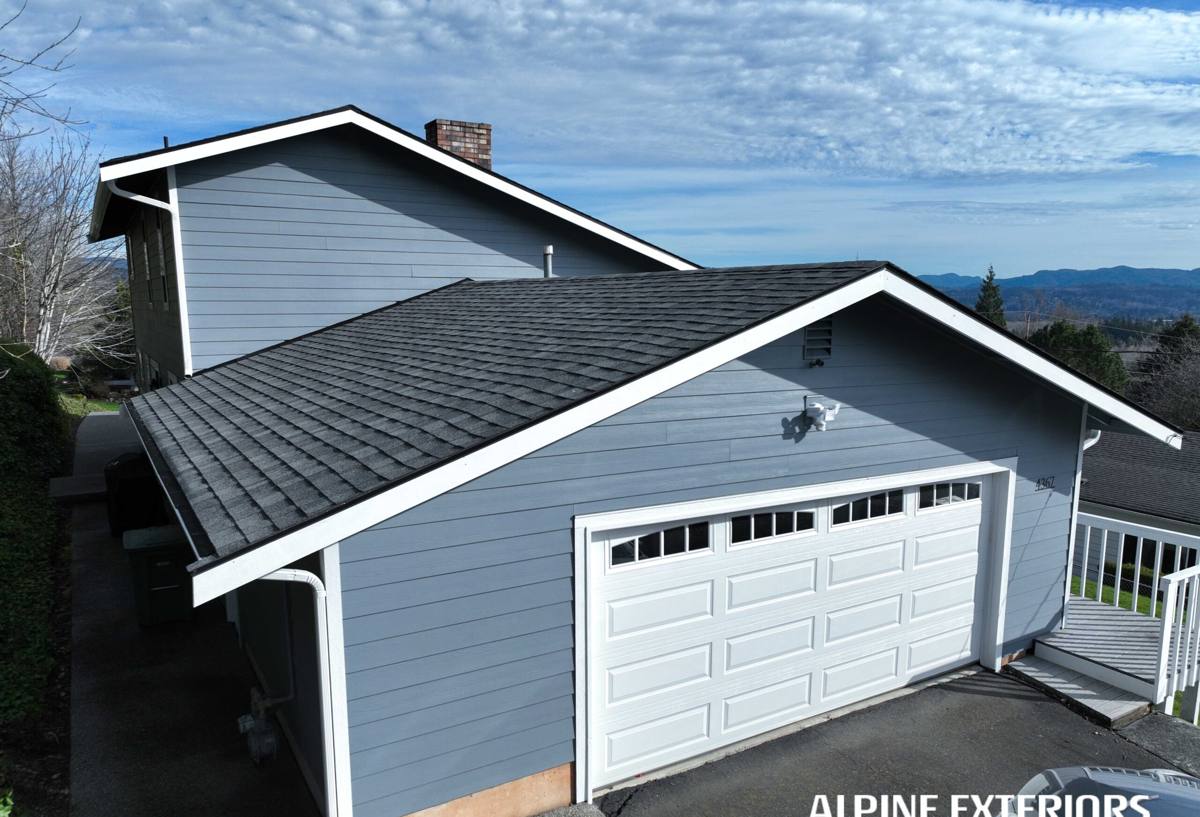
What Counts as Storm Damage on a Snohomish Roof
"Storm damage" covers more than a single dramatic event. Around here it usually shows up as one of these:
- Wind uplift that lifts or cracks shingle tabs, especially along ridges, edges, and any area where the roof catches gusts off open ground or water
- Wind-driven rain forced up and under shingles or through gaps in flashing that would never leak under normal rainfall
- Tree limb strikes or debris impact from windstorms, common where mature conifers overhang a roofline
- Granule loss and mat exposure from repeated wind and rain cycles, which weakens shingles without an obvious single failure point
- Moss and algae intrusion that lifts shingle edges and traps moisture, often mistaken for a separate problem instead of storm-related wear
Hail is uncommon in this part of Western Washington and rarely severe enough to cause the bruising damage seen in the Midwest, but wind and sustained rain do plenty of damage on their own.
Warning Signs Worth Checking After a Storm
Most storm damage isn't visible from the ground, and a lot of homeowners don't know there's a problem until a stain shows up on a ceiling. After any significant wind event, it's worth checking for:
- Shingles that look curled, cracked, or missing along ridges and roof edges
- Granules collecting in gutters or at downspout outlets
- Bent, lifted, or missing flashing around chimneys, vents, and skylights
- New or worsening moss growth along shaded slopes, especially north-facing sections
- Water stains, discoloration, or soft spots on interior ceilings and attic sheathing
- Gutters pulling away from the fascia or sagging under debris weight
- Debris — branches, moss clumps, granule buildup — sitting directly on the roof deck
None of these on their own always means a major problem, but they're the reason a post-storm inspection is worth doing even when nothing looks obviously wrong.
What a Correct Storm Damage Repair Actually Involves
Emergency Tarping and Stabilization
If a storm has opened up the roof deck or torn off a section of shingles, the first job is stopping active water intrusion — a proper tarp-down, not a quick tuck of plastic sheeting that blows loose in the next gust. Getting this right matters more in Snohomish than in drier climates, because a poorly secured temporary cover left through a few more days of rain can turn a repair into a full deck replacement.
Matching Materials and Techniques
A repair is only as good as how well it blends into the existing roof system. That means matching shingle profile, color lot when possible, and nailing pattern, and tying new underlayment into old correctly so water sheds over every seam instead of into it. Mismatched or improperly lapped repairs are a common source of "the roof leaked again" calls a year later — not because the original storm damage wasn't fixed, but because the patch itself created a new weak point.
Flashing, Underlayment, and the Details That Get Skipped
Most roof leaks after a storm repair trace back to flashing and underlayment, not the shingles themselves. Step flashing along walls and chimneys, valley metal, and ice-and-water shield at eaves and valleys all need to be inspected and, where compromised, replaced — not just covered over with new shingles. This is the part of a repair that's invisible once it's done and the first thing a rushed job skips.
How Our Storm Repair Process Works
Inspection and Documentation
We start with a full roof inspection, not just a look at the obvious damage. That includes checking flashing, valleys, vents, and the attic side where accessible, and photographing what we find. Storm damage often has a secondary cause — a marginal flashing detail or an aging underlayment — that made the visible damage worse than it should have been.
Insurance Coordination
If the damage is being handled through a homeowner's insurance claim, we provide documentation that supports the claim and can meet the adjuster on site to walk the roof together. We work for the homeowner, not the insurance company, and our job is to make sure the scope of repair reflects what the roof actually needs.
The Repair Itself
Once scope is agreed on, we do the repair with materials that match the existing roof as closely as possible, tie in flashing and underlayment properly, and clean up debris and displaced granules so they aren't left to clog gutters later.
Follow-Up
We check our own work after the repair has been through at least one real rain event, because a repair that looks dry on a clear day and a repair that's actually watertight in a Snohomish downpour aren't always the same thing.
Repair or Replace? What Actually Drives the Decision
Not every storm-damaged roof needs a full replacement, and not every roof is a good candidate for another patch. The honest answer depends on a few factors:
| Factor | Leans Toward Repair | Leans Toward Replacement |
|---|---|---|
| Roof age | Under 15 years, shingles otherwise in good shape | Near or past expected service life for the material |
| Extent of damage | Isolated to one slope or section | Widespread across multiple slopes or repeated past repairs |
| Underlayment condition | Still intact and properly lapped | Brittle, failing, or original underlayment is undersized for current code |
| Moss/algae history | Minor, surface-level growth | Long-term growth that's degraded the shingle mat underneath |
| Decking condition | Solid, no soft spots | Soft, delaminated, or water-damaged sheathing found during inspection |
We'll give a straight answer either way. A repair that's the right call gets recommended as a repair; we don't upsell a full replacement onto a roof that doesn't need one, and we don't recommend patching a roof that's genuinely at the end of its service life.
Working With Your Insurance Company
Wind and storm damage claims are common enough in this region that most adjusters know what they're looking at, but the scope they initially write doesn't always match what a close inspection turns up — especially damage hidden under existing shingles or in flashing details. Good documentation from the start, including photos of the damage before any temporary repairs are made, makes it much easier to get a fair scope approved. Keep any tarping or emergency repair receipts as well; most policies cover reasonable steps taken to prevent further damage.
Why a Crew That Already Works Snohomish Matters
A roofer who works this area regularly knows which roof styles and ages are common here, how local moss and algae growth typically progresses on shaded northern exposures, and what wind patterns off the Sound tend to do to specific roof orientations. That local pattern recognition speeds up diagnosis — knowing what to check first instead of inspecting a roof cold. It also means faster response after a widespread windstorm, when demand for tarping and emergency repairs spikes across the county and being nearby, not driving in from another region, makes a real difference in how fast a leak gets stopped.
Reducing Future Storm Damage
A storm repair is a good time to address the conditions that make the next storm worse. Overhanging limbs near the roofline are worth trimming back before the next windstorm rather than after. Gutters clear of moss and debris let heavy rain actually drain instead of backing up under the roof edge. And on shaded slopes prone to moss, periodic cleaning — done carefully, without damaging granules — slows the cycle of moisture intrusion that shortens a roof's life in this climate. None of this replaces a proper repair, but it reduces how often you need one.
If a recent storm has left you with damage, or you just want a roof checked over before the next one rolls through, we're happy to take a look. Fill out the form below for a free, no-pressure estimate.