 Everett
 Storm Damage Roof Repair Built for Pinehurst Homes
Pinehurst sits close enough to Puget Sound and the Snohomish County lowlands that its roofs take a specific kind of punishment: salt-tinged air, driving rain that comes in sideways during winter systems, and a moss season that can run eight or nine months out of the year. None of that is dramatic on its own, but stacked together over a few decades, it wears roofs down faster than homeowners expect. When a windstorm or heavy rain event finally exposes a weak spot, the damage is rarely as simple as "one shingle blew off." It's usually the point where years of gradual wear met one bad afternoon of weather.
This page covers what storm damage roof repair actually looks like for a Pinehurst home — what our climate does to roofing materials over time, how a proper repair differs from a quick patch, and what our process looks like when you call us after a storm.
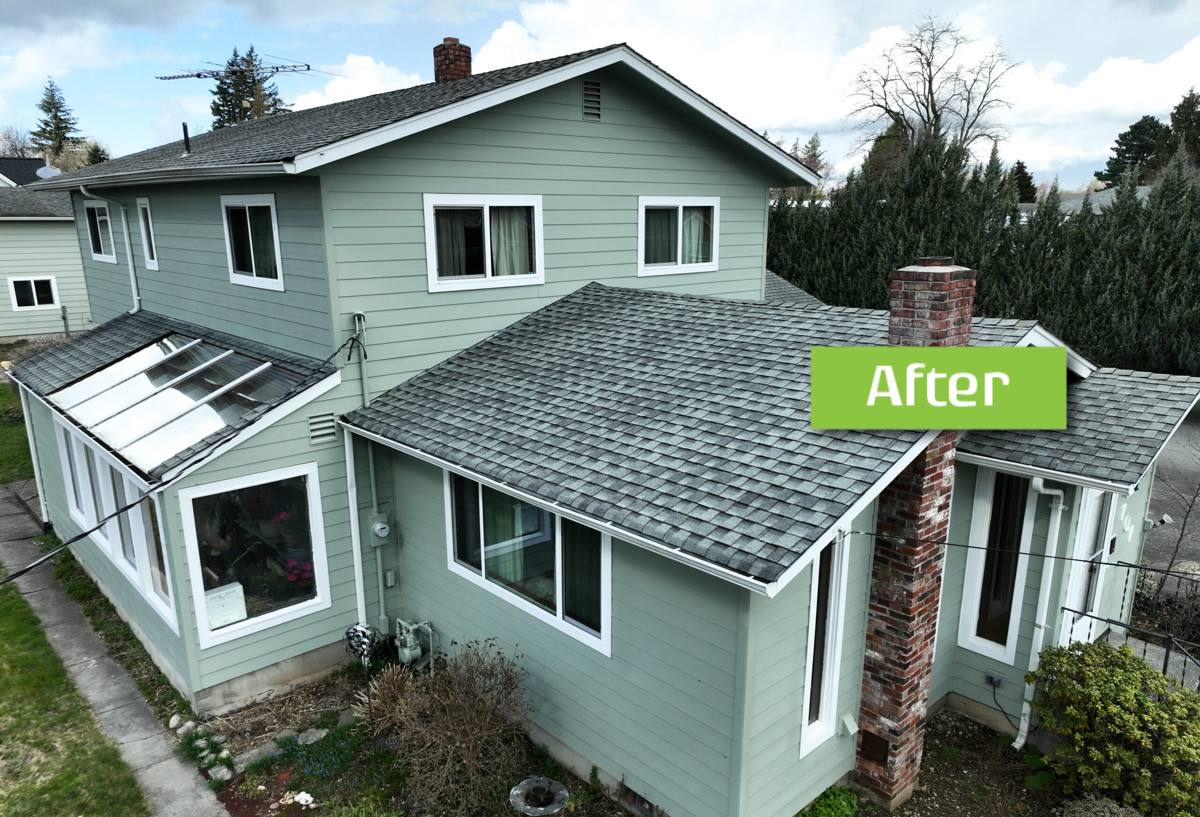
What Actually Counts as Storm Damage
Not everything that shows up after a storm is technically "storm damage," and it matters for both the repair plan and any insurance claim. Being straight about the difference is part of doing this job honestly.
Wind damage
Wind lifts and creases shingles, breaks the adhesive seal along the tab lines, and can tear off ridge caps entirely. Sometimes the shingle is still there but the seal is broken — which looks fine from the ground but leaves an open path for the next rain to get underneath.
Water intrusion
Driving rain finds any gap that wind damage created, but it also exploits problems that were already there — worn flashing, a pipe boot that's cracked from UV exposure, or valleys where moss has been holding moisture against the roof deck. Water damage after a storm is often the storm finishing off a problem that was already forming.
Impact and debris damage
Falling branches and wind-blown debris are common around Everett's tree-heavy residential streets. Impact damage can range from a single cracked shingle to punctured decking, and it's not always obvious from the ground — a branch strike can bruise a shingle's mat without breaking it open, which shows up as a leak weeks later.
Pre-existing wear that gets blamed on the storm
Sometimes a roof was already near the end of its service life, and the storm simply revealed it. We'll tell you plainly when that's the case rather than framing normal wear-and-tear as storm damage — it affects what your insurer will and won't cover, and you deserve an honest answer either way.
Why Pinehurst's Climate Makes This a Different Job
A storm damage repair in a dry inland climate is a different task than one here. Three regional factors change how we approach it:
- Salt air: Proximity to the Sound accelerates corrosion on exposed metal — flashing, fasteners, and gutter hardware age faster here than they would further inland, which affects what we recommend for replacement materials.
- Driving rain: Storms here don't just fall straight down — wind-driven rain gets pushed sideways and upward under shingle edges and around flashing that would be fine in a calmer climate. Repairs need to account for wind-driven water, not just gravity.
- Long moss season: Moss holds moisture against the roof surface for months at a time, softening shingle mat and slowly degrading the granule layer that protects against UV and rain. A roof with active moss growth going into a storm is more vulnerable than a clean one.
These aren't abstract concerns — they're the reason a roof two streets over in a drier microclimate might shrug off the same storm that opened up a leak on a Pinehurst home.
How We Assess Storm Damage
The physical inspection
We walk the roof (or use a lift/drone when pitch or access makes walking unsafe) and check every layer that could have failed: shingle field, ridge and hip caps, valleys, flashing around chimneys and vents, pipe boots, and the gutter line. We're also looking underneath, in the attic when accessible, for water staining or damp insulation that shows a leak has already started even if the roof surface looks okay from above.
Documenting for insurance
If you plan to file a claim, documentation matters as much as the repair itself. We photograph damage in place, note wind direction and likely cause where it's relevant, and provide a written scope that separates storm-caused damage from pre-existing conditions. That distinction protects you — insurers scrutinize claims, and a vague or inflated scope can cost you credibility on a legitimate one.
What we won't do
We won't tell you that you need a full reroof when a targeted repair will hold, and we won't downplay damage that genuinely needs more than a patch. Both directions cost homeowners money and trust.
Patch, Partial Reroof, or Full Replacement
The right scope depends on how much of the roof is affected, how old the existing roofing is, and whether the damage is isolated or symptomatic of broader wear.
| Situation | Typical Approach | What to Expect |
|---|---|---|
| Isolated wind or impact damage, roof otherwise sound and under ~15 years old | Targeted patch repair | Matching shingles installed, flashing resealed or replaced at the damage point, usually completed in a day |
| Damage concentrated in one slope or section, rest of roof aging but intact | Partial reroof of the affected section | New underlayment and shingles on that slope; color/style matched as closely as current products allow |
| Widespread damage, roof already near end of service life, or repeated moss/moisture damage to decking | Full replacement | Larger project, but often the more cost-effective path when a roof is already compromised in multiple spots |
| Storm exposed pre-existing flashing or ventilation issues | Repair plus correction of the underlying issue | Fixing the storm damage without addressing the root cause just invites a repeat |
We'll walk you through which category your roof falls into and why — including the honest trade-offs if a partial repair means an imperfect color match against older, weathered shingles.
Our Repair Process
Once we've assessed the damage and agreed on scope, the work itself follows a consistent sequence:
- Tarping or temporary protection if there's an active leak or exposed decking, so the interior of the home isn't at further risk while repairs are scheduled.
- Removal of damaged material down to sound decking — we don't shingle over compromised or wet decking, since it won't hold fasteners properly and will keep degrading underneath the new material.
- Deck inspection and repair where water has gotten in, replacing any soft or delaminated plywood before anything goes back on top.
- Underlayment and flashing installed or replaced at the repair area, sized to handle wind-driven rain rather than just vertical runoff.
- Shingle or roofing material installation, matched to the existing roof as closely as current product lines allow.
- Final inspection of the repair and surrounding area, including a check of gutters and downspouts that may have taken damage in the same storm.
Materials and Methods We Use in Storm Repairs
Given the salt air and driving rain in this area, we lean toward corrosion-resistant flashing and fasteners over standard-grade hardware, even when it costs a little more up front — replacing rusted flashing again in a few years costs more than doing it right the first time. For underlayment, we use products rated for wind-driven rain rather than basic felt, particularly on repairs near valleys, chimneys, and low-slope sections where water has more opportunity to work its way sideways.
On shingle matching, we're upfront that an exact color match to an older, weathered roof is sometimes not possible — manufacturers change product lines and sun exposure fades shingles over time. We'll show you the closest available match before starting rather than surprising you afterward.
Common Mistakes We See in Rushed Storm Repairs
Right after a storm, homeowners in Snohomish County sometimes get pressured into fast decisions by door-knocking crews working the storm circuit. A few patterns worth knowing about:
- Surface-only patches: Replacing visible damaged shingles without checking the decking underneath, which leaves hidden moisture to keep spreading.
- Ignoring flashing: New shingles installed around old, corroded, or improperly sealed flashing — the shingles look fine, but the leak point never actually got fixed.
- Skipping the moss issue: Repairing storm damage without addressing nearby moss growth means the same conditions that weakened the roof are still in place.
- No documentation: Repairs done before photos are taken can complicate an insurance claim after the fact.
Checklist: After a Storm Hits Your Pinehurst Roof
- Check the attic or top-floor ceilings for new water stains, damp spots, or a musty smell.
- Look at the yard and gutters for shingle granules, torn shingle pieces, or displaced ridge caps.
- Note any large branches or debris that landed on or near the roof.
- Avoid getting on the roof yourself, especially on wet or steep sections — this is where a lot of secondary injuries happen after storms.
- Take photos from the ground of anything visible before cleanup starts.
- Call for an inspection before assuming "no visible damage" means "no damage" — wind-driven rain issues often aren't visible from the ground.
Why It Matters to Hire a Crew That Already Works Pinehurst
A contractor who works this neighborhood regularly already knows which roof styles and ages are common here, how the local tree cover affects debris and moss patterns, and how wind tends to move through this part of Everett during a storm system. That local familiarity shortens the diagnostic part of the job — we're not guessing at how the Sound's weather patterns interact with your roof's exposure, we've seen it on the house down the street. It also means we're a known, reachable local business after the repair is done, not a storm-chasing crew that's left the area by the time a warranty question comes up.
If your roof took damage in a recent storm — or you're just not sure whether what you're seeing is worth worrying about — we're happy to take a look. Reach out for a free, no-pressure estimate using the form below, and we'll give you a straight answer about what your roof actually needs.