 Everett
 Why Storm Damage Hits Bayside Roofs Differently
Bayside sits close enough to the water that roofs here deal with a combination most inland Snohomish County neighborhoods don't see all at once: salt-laden air, wind-driven rain that comes in sideways instead of straight down, and long stretches of shade and dampness that keep moss and moisture active nearly year-round. None of these forces are dramatic on their own, but together they wear a roof faster and hide damage better than homeowners expect.
Salt air is hard on exposed metal — flashing, fasteners, gutter hardware, and vent caps corrode sooner near the water than they would a few miles inland. Driving rain during a windstorm doesn't just test the shingles themselves; it tests every seam, lap, and penetration on the roof, because wind pressure can force water uphill under materials that would otherwise shed a normal rainstorm just fine. And a wet, shaded roof is a roof where moss gets a foothold, which sets up problems long before the next storm even arrives.
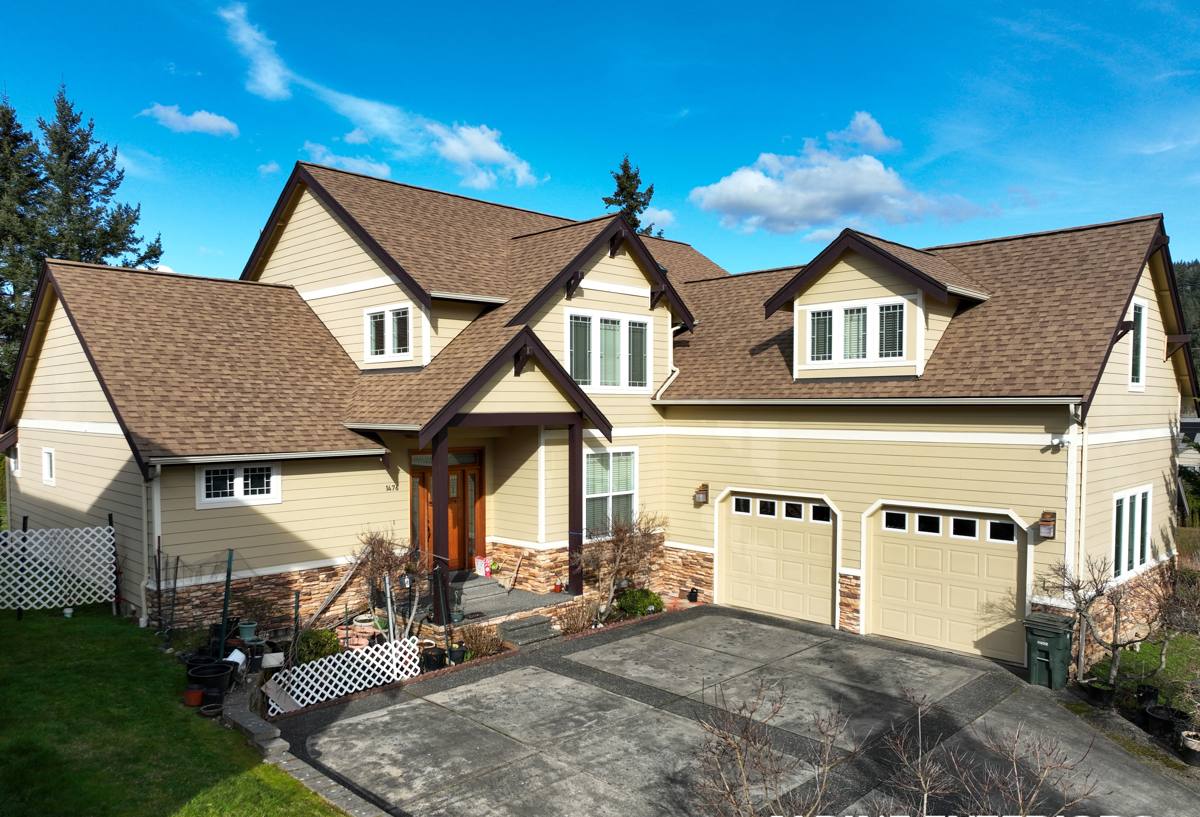
What Actually Counts as Storm Damage
Not every roof problem that shows up after a windy, wet week in Everett is technically "storm damage," and that distinction matters for both the repair scope and, often, for insurance. Storm damage generally means the roof was performing fine before a specific weather event and was compromised by that event — wind uplift, wind-driven rain intrusion, impact from falling limbs, or debris tearing loose materials.
What it usually isn't: gradual wear, aging shingles that were already past their service life, moss damage that built up over seasons, or a roof that was under-built or poorly flashed from the start and simply failed under the first real test. A storm can expose those pre-existing weaknesses, but exposing a problem isn't the same as causing it. A straight answer about which is which — before any repair work starts — is part of doing this job honestly.
Common Storm-Related Findings on Bayside Roofs
- Lifted or missing shingles along ridge lines and roof edges, where wind uplift is strongest
- Flashing pulled loose or bent around chimneys, skylights, and roof-to-wall transitions
- Water staining in the attic or on ceilings with no obvious matching hole in the roofing itself
- Granule loss and bruising from wind-blown debris or hail
- Gutters pulled away from the fascia, redirecting water back under the roof edge
- Punctures or gouges from tree limbs, even small ones that don't look serious from the ground
What a Correct Storm Damage Repair Involves
A storm repair done right is not just patching the spot that's visibly leaking. That approach fixes the symptom and leaves the roof exposed to the same failure the next time weather pushes on it the same way.
A Full Inspection, Not a Spot Check
Wind and driving rain rarely damage just one square foot of roof. A proper inspection covers the whole roof plane, the flashing details, the attic side (where staining and moisture often show up before anything is visible from outside), and the areas immediately around the reported problem — not just the spot the homeowner pointed to.
Emergency Mitigation Comes First
If a roof is actively letting water in, the first job is stopping further damage — tarping, temporary flashing, or sealing an active leak — before any permanent repair is scheduled. Waiting days for a "full fix" while water keeps getting into the deck or attic insulation turns a repair into a much bigger project.
Matching Materials and Rebuilding the Water Path Correctly
Shingles, flashing, and underlayment all work together as a system to shed water. A repair that swaps in mismatched shingle profiles, reuses old flashing that's already thinned or bent, or skips proper underlayment at a repaired section looks fine for a season and then fails again in the next storm. Correct repair means matching materials where possible and rebuilding the actual water path — laps, fasteners, sealant, and flashing — not just covering the hole.
Checking What the Storm Didn't Touch
Part of an honest repair is telling a homeowner what's fine. If the storm damaged one section but the rest of the roof is sound, the right answer is to repair what's damaged — not to recommend replacing a roof that still has useful life left in it.
How We Handle a Storm Repair Call in Bayside
1. Initial Call and Immediate Mitigation
If water is actively coming in, mitigation is the priority — tarping or temporary sealing to stop further interior damage while a full repair is scheduled.
2. On-Site Inspection and Documentation
We walk the full roof, check the attic side where accessible, and document what we find with photos — useful for the homeowner's own records and for any insurance claim.
3. Straight Talk on Scope
We explain what's storm-related, what's pre-existing wear, and what the repair actually requires — in plain terms, before any work is scheduled.
4. The Repair Itself
Proper tear-out of the damaged section, correct flashing and underlayment rebuild, and matched materials brought back to the roof's original water-shedding design.
5. Follow-Up
A finished storm repair should hold through the next windstorm, not just the next dry week. We stand behind the work and are easy to reach if anything comes up.
Repair or Replace? What Actually Drives the Decision
Storm damage doesn't automatically mean a full roof replacement, and it doesn't automatically mean a cheap patch is enough either. The right call depends on a few concrete factors, not guesswork.
| Factor | Points Toward Repair | Points Toward Replacement |
|---|---|---|
| Extent of damage | Isolated to one section or slope | Spread across multiple areas of the roof |
| Roof age | Well within its expected service life | Already near the end of its useful life |
| Underlying deck condition | Solid, dry sheathing under the damaged area | Soft, rotted, or repeatedly wet sheathing |
| Material availability | Existing shingle style/color still matchable | Discontinued material, mismatch would be obvious |
| History of prior repairs | First real issue on an otherwise sound roof | Multiple past patches, recurring leak points |
We'll walk through where a specific roof lands on these factors rather than defaulting to whichever answer is more profitable to sell.
Working With Insurance on a Storm Claim
Many storm repairs in this area do go through homeowner's insurance, since wind and wind-driven rain damage is typically a covered peril. A few things help that process go smoothly: get the roof documented (photos, a written inspection summary) as close to the storm event as possible; understand that insurers distinguish between storm damage and pre-existing wear, so an honest scope of work protects the homeowner as much as it protects us; and know that mitigation — tarping to stop further damage — is generally expected by insurers and shouldn't be delayed while waiting on claim approval.
We're happy to provide documentation homeowners can hand to their adjuster. We don't inflate scopes to chase a bigger claim payout — an accurate repair estimate serves the homeowner better in the long run, including if they sell the house later and a buyer's inspector reviews the roof history.
Moss, Algae, and the Long Wet Season
Everett's wet season runs long, and shaded, north-facing roof sections in Bayside can stay damp for weeks at a time. That's exactly the environment moss needs. Moss itself doesn't cause storm damage, but it compounds it: moss growth lifts shingle edges and holds water against the roofing material, and a roof edge that's already been lifted slightly by moss is easier for wind to get under during the next storm.
Part of a thorough storm repair inspection includes flagging moss buildup nearby, even outside the immediate repair area, so a homeowner can address it on their own timeline rather than being surprised by it during the next major windstorm.
Why It Matters That We Already Work in Bayside
Roofing crews that work a neighborhood repeatedly build a working knowledge of how its roofs actually behave — which roof orientations take the worst of the wind off the water, which older homes in the area tend to have flashing details that need extra attention, and what kind of moss and moisture patterns are typical for the tree cover and shade in this part of Everett. That's different from general roofing knowledge, and it shows up in faster, more accurate diagnosis and fewer surprises once a repair is underway.
It also means being reachable and local when a storm damage call comes in — not a crew dispatched from far outside Snohomish County that shows up once and disappears if a follow-up question comes up later.
What to Do Right After a Storm
- Check the attic and ceilings for staining, dampness, or a musty smell — often the first sign before an outside leak is visible
- Look at the yard and gutters for shingle granules, torn shingle pieces, or bent flashing that blew loose
- Note the date and general weather conditions — useful if an insurance claim is filed later
- Avoid getting on the roof yourself, especially on a wet or storm-damaged surface
- Get a tarp or temporary cover in place quickly if there's active water intrusion, rather than waiting
- Call for an inspection promptly — small storm damage left unaddressed through the next rain event tends to get worse, not stay the same
If a recent storm has left you with a leak, missing shingles, or just some uncertainty about whether your roof took damage, we're glad to come take an honest look. The estimate is free, there's no pressure attached to it, and you'll get a straight answer about what — if anything — actually needs fixing. Just fill out the form below to get started.