 Everett
 Windows Built for South Everett's Weather, Not Just the Showroom
South Everett sits close enough to Puget Sound that salt-laden air, wind-driven rain, and long stretches of gray, damp weather are just part of owning a home here. Windows in this part of Snohomish County don't fail because they're old — they fail because they were installed without accounting for what the climate actually does to a window opening over ten, fifteen, twenty years. Water finds the gaps. Salt air works on hardware and finishes. Moss and mildew take hold anywhere moisture sits too long without airflow or sun.
A window installation job here isn't just "measure, cut, set, caulk." It's flashing detail, drainage planning, and material selection that respects what South Everett throws at a house nine months out of the year. That's the standard we hold every install to, whether it's one window or a whole-house replacement.
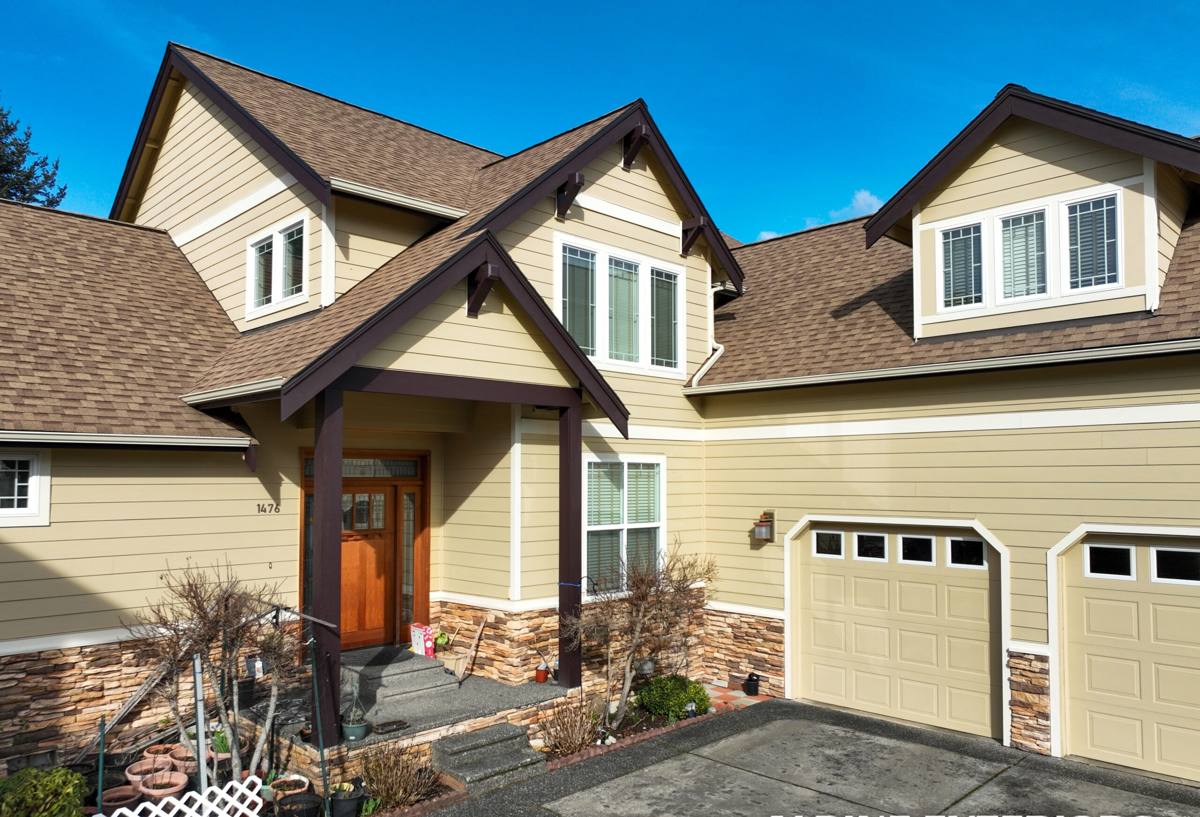
What Driving Rain and Salt Air Actually Do to a Window Opening
Moisture Intrusion
Wind-driven rain doesn't fall straight down — it gets pushed sideways against siding and window trim, especially during the fall and winter storm systems that roll through the Sound. If a window wasn't flashed correctly when it went in, water works its way behind the trim and into the wall cavity. You often don't see it until there's staining on interior sills, soft trim, or a musty smell in the room — by which point the sheathing behind the window may already be compromised.
Hardware and Finish Corrosion
Homes closer to the water deal with salt air in a way that inland Snohomish County properties don't. Cheap or poorly-finished hardware — hinges, locks, cranks, screws — corrodes faster near the coast. Aluminum-clad and lower-grade vinyl components can pit or discolor over time. It's not dramatic, but it shows up as windows that stick, don't latch fully, or start letting in drafts years before they should.
Moss, Mildew, and Organic Growth
South Everett's long moss season isn't limited to roofs and north-facing siding — it affects window sills, tracks, and the caulk lines around frames. Moss and mildew hold moisture against the frame and finish, which accelerates wood rot on traditional wood windows and breaks down sealants faster on any window type. Sills that don't shed water properly, or that sit in shade most of the day, are the first place we look for early failure.
Signs Your Windows Need Attention
Most homeowners don't think about their windows until something's obviously wrong, but there are earlier signs worth acting on:
- Condensation or fogging between the panes of a double-pane window (a failed seal, not a cleaning issue)
- Soft or discolored wood trim around the window, inside or outside
- Windows that are hard to open, close, or lock — especially on the ground floor or facing the weather side of the house
- Visible daylight or a noticeable draft along the frame when it's windy
- Moss or dark staining building up on the sill or lower frame
- A musty smell in a room that wasn't there before, especially near exterior walls
- Noticeably higher heating bills without another clear explanation
None of these mean you need a full house of new windows tomorrow. They do mean it's worth having someone look at the specific opening before the underlying framing takes damage.
What a Correct Installation Actually Involves
Flashing and the Weather Barrier
This is the part that doesn't show once the trim goes back on, and it's also the part that determines whether the window lasts. A correct install ties the window's flashing into the home's existing weather-resistive barrier in the right sequence — so water that gets behind the siding is directed out, not into the wall. Skipping or rushing this step is the single most common cause of hidden rot we find when we're called out to replace a window that's "only" ten or twelve years old.
Sizing and Fit
Older South Everett homes, especially those built before more modern energy codes, often have openings that aren't perfectly square or standard-sized. We measure each opening individually rather than assuming factory dimensions will drop in clean. A window that's shimmed and sealed to fit its actual opening performs and seals far better than one forced into a slightly wrong-sized gap.
Sealing, Insulation, and Drainage
Low-expansion foam and backer rod around the frame — not just caulk — handle the insulation and air-sealing. Equally important is making sure the sill pan and exterior caulking are set up to shed water away from the opening, not let it pool. Every seam that will be exposed to wind-driven rain gets treated like it will eventually be tested by a real storm, because on this side of the state, it will be.
Choosing the Right Window for a South Everett Home
Material and glass choice matter more here than in a drier, inland climate. Here's how the common options generally compare for coastal Snohomish County conditions:
| Frame Material | Moisture & Salt Air Resistance | Maintenance | Typical Lifespan |
|---|---|---|---|
| Vinyl | Strong — won't rot or corrode; hardware quality varies by manufacturer | Low — occasional cleaning | 20-30+ years |
| Fiberglass | Very strong — dimensionally stable, holds up well to temperature and moisture swings | Low | 30+ years |
| Aluminum | Moderate — can be prone to condensation and, near the water, finish wear over time | Moderate | 20-25 years |
| Wood / Wood-Clad | Weakest without diligent upkeep — attractive, but exposed wood needs consistent maintenance in this climate | High — periodic painting/sealing | Varies widely with upkeep |
We don't push one material on every homeowner — a wood-clad window in a covered, protected opening can perform fine for decades. What we won't do is install a wood window on a fully weather-exposed wall without being upfront that it's going to demand more maintenance here than it would somewhere drier. That's a trade-off you should make with full information, not find out about after the finish starts failing.
Glass Considerations
Dual-pane, low-E glass is the practical standard for this area — it cuts down on heat loss during our long cool season and reduces solar gain during the handful of genuinely warm weeks we get. For rooms facing prevailing weather, we'll also talk through gas-fill options and warm-edge spacers, which help reduce the condensation and cold-spot issues that poorly-spec'd glass packages show up with first in a wet climate.
How We Approach a South Everett Installation
- On-site assessment. We look at each opening individually — orientation to weather, existing flashing condition, sill and trim health, and any signs of past water intrusion.
- Honest scope and estimate. You get a clear picture of what's being replaced, what materials fit the opening and your budget, and what to expect — no inflated urgency, no upsell pressure.
- Removal and inspection. Once the old window is out, we check the framing and sheathing underneath. If there's hidden moisture damage, we tell you before proceeding, not after the fact.
- Proper flashing and installation. New window set, shimmed level and square, flashed and sealed to shed water and tie into the existing weather barrier correctly.
- Interior and exterior finish work. Trim, caulking, and touch-up done to match the rest of the home.
- Final walkthrough. We check operation, seals, and finish with you before calling the job done.
Why Local Experience in South Everett Matters
A crew that regularly works South Everett and the greater Everett area already knows the patterns: which house styles and eras tend to have flashing shortcuts from the original build, which orientations take the worst of the weather off the Sound, and how long moss season actually runs here versus the general Pacific Northwest average. That's not something you can fully substitute with a generic install checklist — it's the difference between a window that's technically installed and one that's installed to hold up against this specific climate for the next few decades.
It also means straightforward logistics: permitting through Snohomish County or the City of Everett when a job requires it, realistic scheduling around our wet season rather than promising installation dates that ignore the weather, and a crew that isn't learning the local conditions on your house for the first time.
Maintaining Your Windows After Installation
A correct install is most of the battle, but a little upkeep extends the life of any window in this climate:
- Clear moss and debris from sills and tracks a couple of times a year, especially after fall leaf-drop
- Check exterior caulking annually for cracking or separation and have gaps resealed promptly
- Keep gutters and downspouts clear so water isn't sheeting past windows during heavy rain
- Operate every window at least occasionally, even ones you rarely open, to keep hardware and weatherstripping from seizing up
- Wipe down hardware near the coast periodically if you notice early pitting or stiffness
If you're dealing with drafty, foggy, or hard-to-operate windows in South Everett, or you're planning ahead for a full replacement, we're happy to take a look and walk you through what your home actually needs — no pressure, no inflated quote to scare you into a decision. Use the form below to request a free estimate.