 Everett
 Siding Repair in South Everett: What Local Homes Are Up Against
South Everett sits close enough to Puget Sound and the lowland river valleys that homes here deal with a specific combination of stressors: salt-tinged marine air, long stretches of driving rain off the water, and a moss season that can run most of the year in shaded yards. None of these are dramatic on their own. Together, over a decade or two, they find every weak point in a home's siding system — a gap in caulking, an under-flashed window, a nail that backed out, a seam that was never properly lapped.
Siding repair sounds simple from the outside: find the damaged spot, patch it, move on. Done correctly in this climate, it's more involved than that. A repair that doesn't address why the damage happened in the first place just buys a homeowner a year or two before the same spot fails again — often worse, because water has had more time to work into the wall assembly.
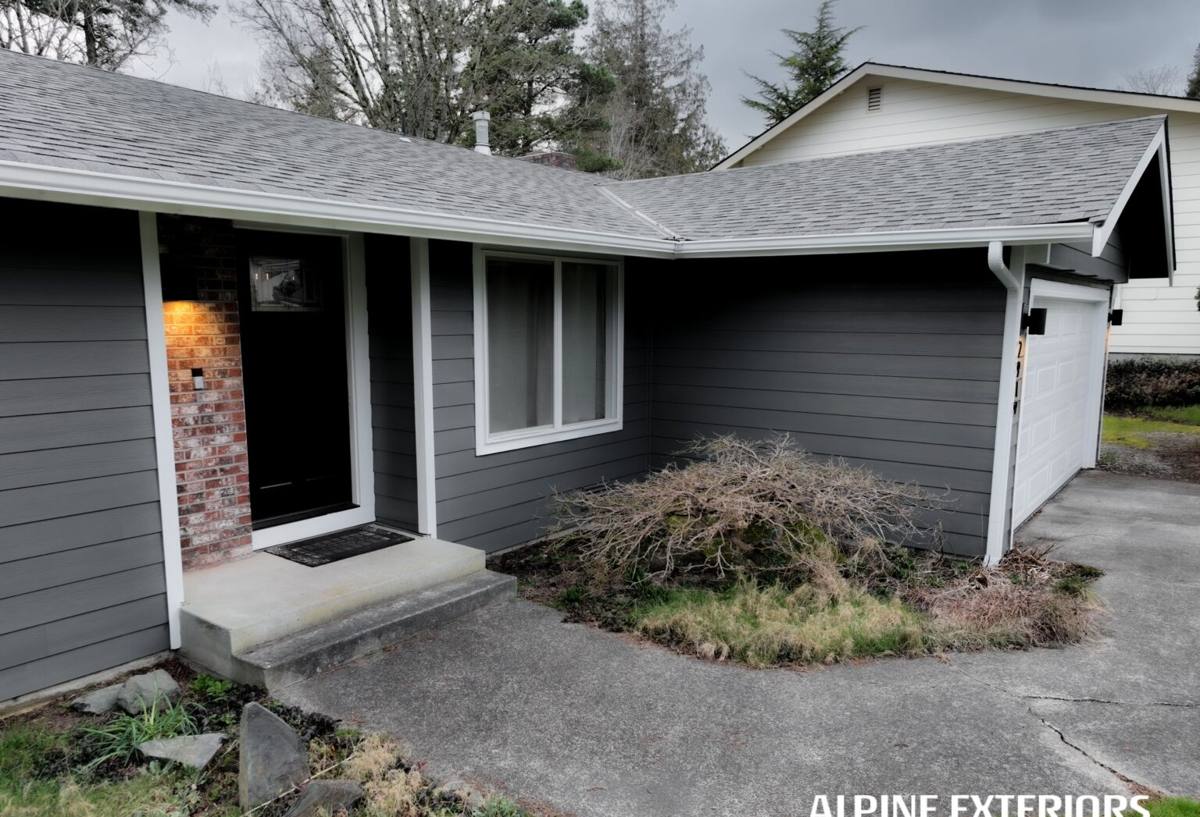
Why Repairs Fail More Often in Snohomish County's Climate
Everett and the surrounding Snohomish County area get a steady, low-intensity kind of wet — not tropical downpours, but weeks of drizzle and wind-driven rain that push moisture sideways into siding laps, corner trim, and anywhere two materials meet. Add proximity to salt air near the water, which accelerates corrosion on fasteners and metal flashing, and you get a set of conditions that punishes any siding product or installation detail that isn't built for sustained moisture exposure.
Moss and algae are the visible symptom homeowners usually notice first. They thrive in the shaded, damp microclimates common on the north and west-facing walls of South Everett homes, especially under trees or close to neighboring structures. Moss itself isn't just cosmetic — it holds moisture against the siding surface far longer than open air would, which speeds up rot in wood-based products and can stain or degrade coatings on others.
The Damage Patterns We See Most in This Area
- Soft, spongy, or delaminating boards at the bottom courses near grade, where splashback and standing moisture concentrate
- Cracked or gapped caulking at trim joints and window/door casings, letting wind-driven rain track behind the siding
- Moss and algae buildup on shaded elevations, holding moisture against the surface and staining the finish
- Rusted or backed-out fasteners, especially on older installations using the wrong nail type for the product
- Warping or buckling on lower-grade wood or engineered wood siding that's absorbed repeated moisture cycles
- Failed or missing flashing above windows, doors, and horizontal trim, often invisible until water damage shows up inside
What a Correct Siding Repair Actually Involves
A repair is only as good as the diagnosis behind it. Before any board comes off, a correct process means figuring out why that section failed — was it a flashing detail, a caulking gap, standing water at grade, or just age and material fatigue — because patching over the symptom without fixing the cause guarantees a repeat visit.
Diagnosis First
This means checking behind the visible damage: is the water-resistive barrier intact, is there evidence of rot in the sheathing, are the fasteners corroded, is the flashing at penetrations (windows, doors, hose bibs, light fixtures) doing its job. Skipping this step is the single biggest reason siding repairs don't last.
Matching Materials and Method
Replacement pieces need to match the existing siding's profile, reveal, and butt-joint spacing closely enough that the repair doesn't stand out, and they need to be installed with correct fastening, proper overlap, and back-primed or sealed cut edges where the product calls for it. Caulking gets used at true joints, not as a substitute for correct flashing and lap technique.
Restoring the Water Management System
Siding is one layer of a larger water management system that includes house wrap, flashing, and drainage details. A repair that only replaces the visible board without restoring the flashing and drainage plane behind it is a cosmetic fix, not a structural one.
| Situation | Repair usually makes sense | Replacement usually makes sense |
|---|---|---|
| Damage extent | Isolated to one or two wall sections | Widespread across multiple elevations |
| Underlying material | Sheathing and framing are sound | Rot has reached structural framing |
| Siding age/condition | Product is otherwise performing well | Product is at or past its practical service life |
| Moisture source | Identified and correctable (flashing, caulk, grading) | Chronic, systemic moisture exposure across the wall |
| Cosmetic match | Original product or a close match is still available | Discontinued profile or badly faded/mismatched color |
Our Repair Process for South Everett Homes
We keep the process straightforward because homeowners deserve to understand what they're paying for and why.
- On-site inspection. We look at the damaged area and the surrounding wall, checking for moisture behind the siding, condition of trim and flashing, and whether the problem is isolated or a sign of a broader issue.
- Honest diagnosis. We tell you what we actually find — including if a "small repair" turns out to need more attention because of hidden rot or a failed flashing detail. We don't upsell repairs that aren't needed, and we don't sugarcoat ones that are.
- Scoped repair plan. You get a clear explanation of what will be removed, what will be replaced, and how the water management details will be restored, not just patched over.
- Correct execution. Damaged material comes out, the underlying assembly gets inspected and corrected as needed, and new material goes in fastened and flashed to spec.
- Final check. We walk the repair with you so you can see the work and ask questions before we consider the job done.
Why We Repair and Replace With James Hardie Fiber Cement
When a repair calls for new material — whether it's a few boards or a full section — we use James Hardie fiber cement, and we don't install vinyl, LP SmartSide, Cemplank, Allura, primed spruce, or cedar as replacements. That's a deliberate standard, not a sales pitch.
Fiber cement is non-combustible and dimensionally stable, which matters directly for repair work: it doesn't expand and contract with moisture the way wood-based products do, so patched sections hold their fit and paint line over time instead of gapping or cupping at the seams. Hardie's ColorPlus factory finish is baked on and warrantied against fading and peeling, which means a repaired section can actually match the surrounding wall in color and sheen instead of standing out as an obvious patch job with a different finish weathering at a different rate. Hardie also builds HZ5 product specifically engineered for wetter, harsher climate zones like ours, which is a meaningful advantage for a region that sees as much driving rain and moss exposure as Snohomish County does.
We've seen enough of the alternatives fail in this climate — engineered wood siding delaminating at cut edges, vinyl cracking and fading, cedar and primed spruce demanding repeated maintenance to stay ahead of rot — that we stopped installing them, full stop. When we repair a Hardie wall, we're extending a system that's already built for this weather. When we replace a failing section of something else, we treat it as an opportunity to move that wall onto a product that won't put the homeowner back in this position in a few years.
Why a Crew That Already Works South Everett Matters
Siding repair is detail work, and the right details change by region. A crew that repairs siding across a wide range of climates has to relearn local conditions on every job. A crew based in and around Everett already knows what South Everett's moss patterns look like on shaded lots, how far wind-driven rain travels under eaves near the water, and which flashing details tend to fail first on homes exposed to that combination. That local pattern recognition shows up in faster, more accurate diagnosis and repairs that are scoped to the actual cause of the damage rather than a generic checklist.
It also matters for follow-through. A local crew is easy to reach if a question comes up after the repair, and has a reputation in the community worth protecting — that's a real incentive to do the job right the first time.
Signs South Everett Homeowners Shouldn't Ignore
- Soft or spongy spots when you press on siding, especially near the bottom of walls
- Persistent moss or dark streaking on north- or west-facing walls that doesn't go away with cleaning
- Cracked, shrunk, or missing caulking at trim joints, corners, and window/door edges
- Visible warping, buckling, or separation at board seams
- Peeling or bubbling paint, which often signals moisture trapped behind the surface
- Musty smells or staining on interior walls near exterior siding that's showing damage
Getting Started
If you're seeing any of these signs on a South Everett home, it's worth having someone look at it before a small repair turns into a bigger one. We offer free, no-pressure estimates — we'll walk the affected area with you, explain honestly what we find, and give you a clear scope for the repair, whether that's a targeted patch or something more. Use the form below to get started.