 Everett
 Why South Everett Roofs Age Differently Than Roofs Inland
A roof in South Everett doesn't wear the same way a roof does forty miles inland. Being close to Puget Sound means homes here deal with a steady mix of moist salt air, wind-driven rain that gets pushed sideways under poorly sealed flashing, and long stretches of overcast, damp weather that never quite lets a roof fully dry out. Add in the tree cover common to Snohomish County neighborhoods and you get near-ideal conditions for moss, algae, and slow moisture damage that can go unnoticed for years.
None of this means South Everett homes need exotic materials or gimmicks. It means the installation details that get skipped on an easier job — proper underlayment coverage, correctly lapped flashing, real attic ventilation — matter more here than they would in a drier climate. A new roof that's installed correctly for this environment will hold up. One that's installed the way it might be in a dry, low-wind region will show problems early.
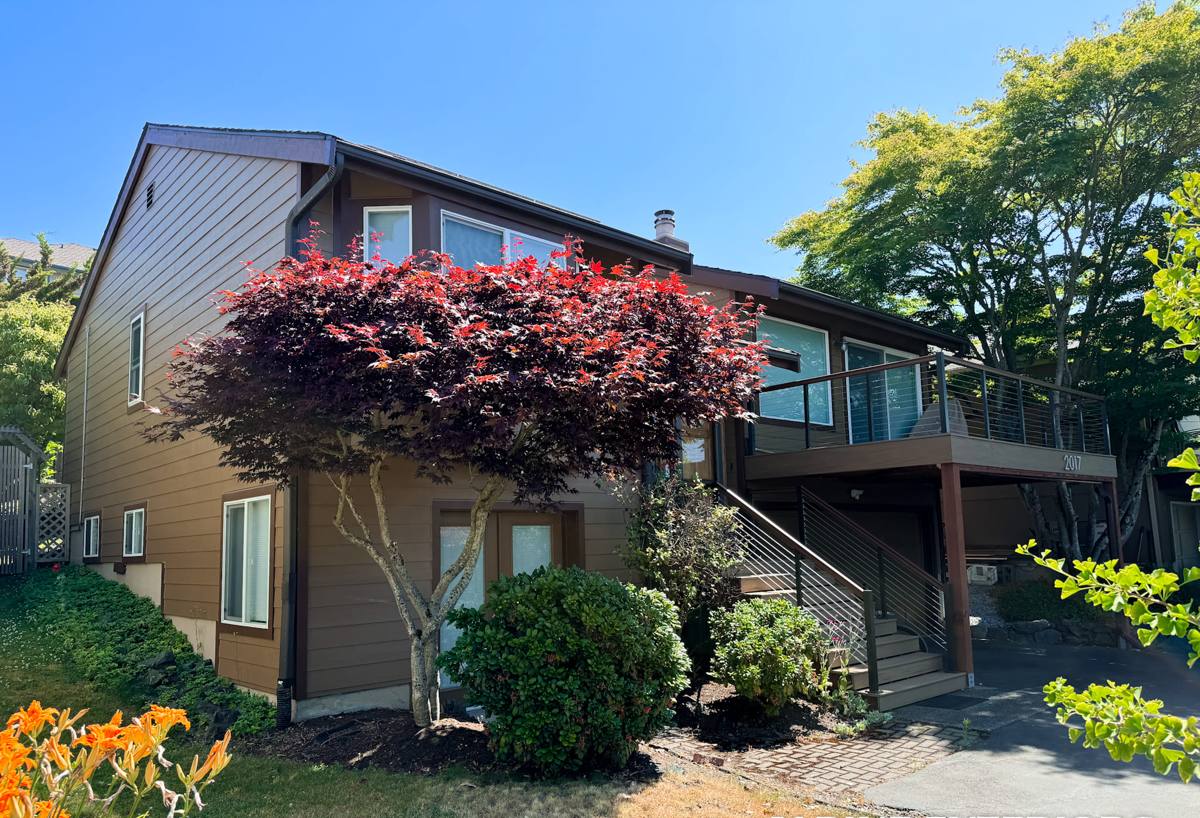
Signs a South Everett Home Is Due for a New Roof
Roofing rarely fails all at once. It shows small signs first, and in this climate those signs are easy to mistake for normal weathering. Before assuming a repair will do, look for:
- Granules collecting in gutters or at the base of downspouts
- Shingles that are cupping, curling at the edges, or visibly cracked
- Moss buildup along the north-facing slopes or anywhere shade keeps the roof damp
- Dark streaking that keeps returning after cleaning
- Soft or discolored ceiling patches, especially near chimneys, skylights, or valleys
- Daylight visible through the attic decking
- A roof that's approaching or past 20–25 years old, even if it "looks fine" from the ground
If several of these are present at once, or if a roof has already had multiple patch repairs, replacement is usually the more honest recommendation than another round of spot fixes.
What a Correct New Roof Installation Actually Involves
Tear-Off and Deck Inspection
A proper installation starts with a full tear-off down to the roof deck, not an overlay. This is the only way to actually see the condition of the sheathing underneath. In a climate with this much sustained moisture, it's common to find sections of decking that have softened from long-term leaks that were never visible from inside the house. Any soft or rotted sheathing gets replaced before anything new goes down — installing new roofing over a compromised deck just hides the problem for a few more years.
Underlayment and Water Protection
Underlayment is where a lot of the real weather protection happens, and it's also where corners get cut on cheaper jobs. Given how much wind-driven rain this area sees, we pay close attention to ice-and-water shield along eaves, valleys, and any roof-to-wall transitions — the spots where water is most likely to find a way in under normal shingle coverage.
Flashing Details
Flashing around chimneys, skylights, vents, and sidewalls is one of the most common failure points on any roof, and it's rarely the shingles themselves that leak first. We install new flashing rather than reusing old pieces, and we make sure step flashing and counter-flashing are layered correctly so water sheds outward instead of working its way behind the material.
Ventilation
An underventilated attic traps moisture, which speeds up deck rot from the inside and shortens the life of the roofing above it. Balanced intake and exhaust ventilation is part of a correct installation, not an upgrade — it protects the investment from both directions.
Choosing a Roofing Material for This Climate
There isn't one "best" roofing material for South Everett — the right choice depends on the home, the budget, and how much moss and moisture resistance matters to the owner. Here's how the common options generally compare in this climate:
| Material | Moss/Moisture Behavior | Wind & Rain Performance | Typical Lifespan |
|---|---|---|---|
| Architectural asphalt shingles | Algae-resistant granule options help; still needs airflow and occasional cleaning | Strong when properly nailed and sealed | 25–30 years |
| Standard three-tab shingles | More prone to moss retention in shaded areas | Adequate, less wind resistance than architectural | 15–20 years |
| Standing seam metal | Sheds moisture quickly, moss struggles to hold on smooth panels | Excellent in wind and heavy rain | 40–50+ years |
| Composite/synthetic shake | Good moisture resistance, low organic content for moss to feed on | Strong | 30–40 years |
For most South Everett homes, a quality architectural asphalt shingle with algae-resistant granules from a manufacturer like GAF or CertainTeed hits the right balance of cost, appearance, and durability. Metal and composite options make sense for homeowners who want to minimize moss maintenance long-term or who have heavily shaded, north-facing roof planes that never fully dry between rains.
Our Installation Process, Start to Finish
- On-site inspection and estimate — we look at the existing roof, attic ventilation, and any problem areas before recommending anything
- Material selection — we walk through the honest trade-offs between options based on your roof's exposure and shading
- Scheduling around weather — timing matters in a climate with this much rain, and we plan tear-off in windows that keep the deck protected
- Tear-off and deck repair — full removal of old roofing, replacement of any damaged sheathing
- Underlayment, flashing, and ventilation installation — the details covered above, done to code and to manufacturer specification
- New roofing installed — following manufacturer nailing and spacing requirements for proper wind rating and warranty coverage
- Final walkthrough and cleanup — magnetic sweep for debris, gutters checked, and a review of the finished work with the homeowner
Ventilation and Moisture: The Part That's Easy to Skip
Homeowners tend to focus on shingles because that's what's visible. But in a climate where the air stays damp for months at a time, what happens underneath the shingles matters just as much. Poor attic ventilation traps warm, moist air against the underside of the roof deck, which accelerates rot, encourages mold, and can quietly shorten the life of an otherwise good roof by years. A correct installation checks intake vents (usually at the eaves) against exhaust ventilation (ridge or roof vents) to make sure air is actually moving, not just present. This is a five-minute check during installation that prevents a much larger problem down the road.
Cost Factors for a New Roof in South Everett
Every roof is different, so we don't quote firm numbers without seeing the job, but the factors that move the price are consistent:
| Factor | Why It Affects Cost |
|---|---|
| Roof size and pitch | Steeper roofs take longer and require more safety setup |
| Number of layers being removed | Tearing off multiple old layers adds labor and disposal cost |
| Deck condition | Rotted sheathing found during tear-off adds material and labor |
| Material choice | Asphalt, metal, and composite options span a wide price range |
| Roof complexity | Valleys, dormers, skylights, and multiple chimneys add flashing work |
| Access | Tight lots, tall trees, or limited driveway access can affect setup and disposal |
As a broad range, a full asphalt shingle replacement on an average South Everett home typically lands somewhere in the mid-to-upper five figures, with metal or composite roofing running higher. The only way to get an accurate number is a real inspection — anyone quoting a firm price over the phone without seeing the roof isn't giving you a serious estimate.
Why Hiring a Crew That Already Works South Everett Matters
A roofing crew that regularly works in South Everett already knows what this specific stretch of Snohomish County throws at a roof — the salt-laden air moving off the Sound, the shaded lots where moss takes hold fastest, and the wind patterns that expose weak flashing that would otherwise go unnoticed for years. That familiarity shows up in small decisions during installation: where to reinforce flashing, which slopes need extra attention to ventilation, and which material options actually hold up here versus which ones look good on paper.
It also matters for the practical side of the job — knowing local permitting requirements, working efficiently around the area's weather windows, and being a known, reachable local business if a warranty question comes up years later rather than a name that only shows up for the sale.
Get a Straightforward Roofing Estimate
If your South Everett roof is showing moss, wear, or age, we're glad to take a look and give you an honest read on repair versus replacement — no pressure, no inflated scare tactics. Use the form below to request a free estimate and we'll walk the roof, explain what we find, and lay out real options for your home and budget.