 Everett
 Windows Take a Different Kind of Beating Here
Snohomish homes sit close enough to Puget Sound and the Snohomish River corridor that windows deal with a combination most manufacturers never design for in their glossy brochures: salt-tinged air, long stretches of driving rain angled sideways by wind, and a moss season that can run eight months out of the year. None of these things destroy a window overnight. What they do is find every weak point in a mediocre install — a gap in the flashing, a bead of sealant that was never really continuous, a sill pan that wasn't sloped right — and turn it into a slow leak that shows up as rot two or three years later.
We install windows across Everett and Snohomish County, but a lot of the work we do in Snohomish specifically is repair-and-replace on installs that were done fast, done cheap, or done by someone from out of the area who didn't build in a margin for this climate. Good window installation here isn't about the window brand as much as it's about the details around the window: how water is directed away from the wall, how the frame is sealed, and how the whole assembly is protected from moss and moisture buildup over time.
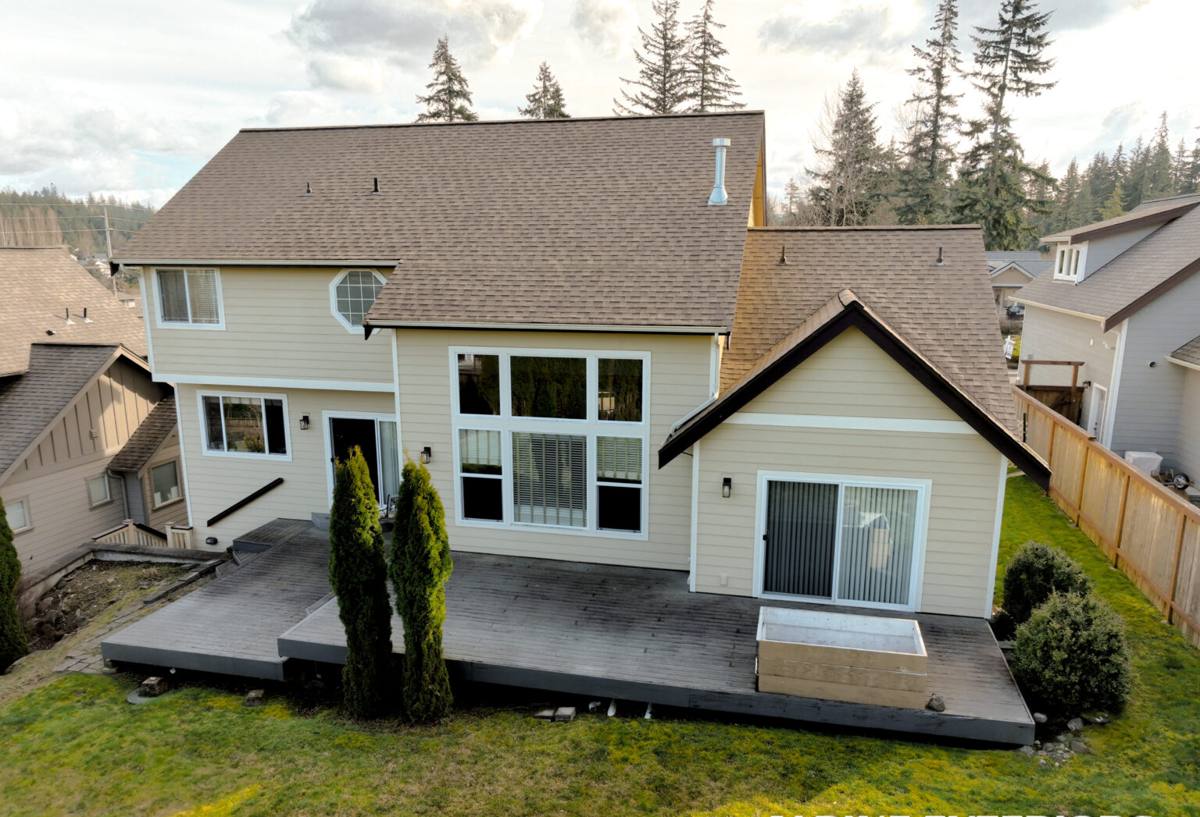
What Snohomish's Climate Actually Does to a Window
Salt Air and Corrosion
Proximity to the Sound means airborne salt settles on exterior surfaces, including window hardware, screens, and metal flashing. Over years, this accelerates corrosion on lower-grade hardware and can pit unprotected aluminum. It's a slow process, but it's real, and it's one reason we pay attention to hardware finish and flashing material, not just glass performance.
Driving Rain
Wind-driven rain doesn't fall straight down — it gets pushed sideways and upward under trim, behind J-channel, and into any gap in the weather barrier. A window that would be fine in a calmer climate can leak here if the flashing isn't lapped correctly or if house wrap isn't integrated with the window's nailing flange the right way.
Moss and Standing Moisture
Moss doesn't just grow on roofs. It takes hold on north-facing sills, in window wells, and anywhere moisture sits without enough sun or airflow to dry out. Moss holds water against wood and paint far longer than bare surfaces do, which speeds up rot and finish failure if sills and trim aren't detailed and maintained with that in mind.
Signs a Snohomish Home's Windows Are Losing the Battle
- Fogging or moisture between panes of double- or triple-glazed glass — the seal has failed
- Soft or discolored wood at the sill, corners, or bottom of the frame
- Visible moss or dark green streaking on sills, trim, or the wall just below a window
- Drafts or noticeable temperature difference near the window even when it's closed
- Paint or finish peeling specifically around the window opening, not the wall in general
- Windows that are hard to open, close, or latch — frames can shift as wood swells and dries repeatedly
Any one of these is worth a look. Several at once usually means water has been getting past the window assembly for a while, and it's worth checking the framing underneath, not just the window itself.
What a Correct Installation Actually Involves
Removal and Prep
We pull the old window and inspect the rough opening before anything new goes in. This is the step that gets skipped when a job is rushed, and it's the one that matters most in this climate — hidden rot or a compromised weather barrier behind the old window won't fix itself just because a new window goes in on top of it.
Flashing and Water Management
Flashing tape and house wrap need to be integrated in the right order — wrapped and lapped so water sheds outward and downward, never trapped behind the frame. A sill pan at the bottom of the opening gives any water that does get past the window a way out instead of a place to collect. This sequence matters more in a driving-rain climate than in a drier one, because wind pushes water where gravity alone wouldn't take it.
Setting, Shimming, and Sealing
The window gets shimmed level and plumb, fastened per the manufacturer's spec, insulated around the frame (not overpacked, which can bow the frame), and sealed with exterior sealant rated for this climate. Interior and exterior sealant beads both matter — one manages air and water, the other manages just water, and skipping either creates a gap that shows up as a leak or a draft later.
Choosing Windows That Hold Up Near Salt Air and Moisture
There's no single "best" window material — the right choice depends on budget, maintenance appetite, and how exposed the home is to wind and salt air. Here's how the common options compare for this climate specifically.
| Frame Material | Salt Air / Moisture Behavior | Maintenance | Typical Lifespan |
|---|---|---|---|
| Vinyl | Doesn't corrode or rot; performs well near salt air | Low — occasional cleaning | 20-30 years |
| Fiberglass | Very stable in moisture and temperature swings; strong corrosion resistance | Low | 30-40+ years |
| Wood (clad exterior) | Good if cladding is intact; interior wood needs protection from any leak | Moderate — finish and seal checks | 20-30 years with upkeep |
| Aluminum | Can corrode over time in salt air unless properly finished; conducts cold | Moderate | 15-25 years |
We're honest with clients about this: aluminum-frame windows can be a fine, budget-friendly choice, but they're not our first recommendation for homes with direct exposure to salt-laden wind, simply because the finish takes more of a beating here and condensation on the frame is more noticeable in cold, damp weather. Vinyl and fiberglass tend to be the lower-maintenance, longer-term fit for most Snohomish homes, and clad-wood is a good option for homeowners who want a wood interior look and are comfortable with periodic upkeep.
Our Process, Start to Finish
Estimate and Assessment
We look at the existing windows and openings, check for signs of past water intrusion, and talk through what matters most to the homeowner — energy performance, noise, maintenance, or matching existing trim. The estimate reflects what we actually see, not a generic per-window price.
Ordering and Prep
Windows are ordered to the exact opening sizes, and we schedule the install around the weather when we can. Installing in a dry window of time makes for a cleaner tie-in with the house wrap and flashing, even though we can and do work through the Pacific Northwest's normal drizzle when the schedule requires it.
Install Day
Old windows come out, openings get inspected and repaired if needed, and new windows go in following the flashing and sealing sequence above. We don't shortcut the water management steps to save time — that's exactly the part of the job that determines whether the window lasts 25 years or leaks in year three.
Cleanup and Walkthrough
We clean up job debris, walk through the finished work with the homeowner, operate each window to confirm smooth function, and explain anything specific to that home's setup — like a sill that needs a bit more attention during moss season.
Why a Crew That Already Works in Snohomish Matters
Window installation isn't exotic work, but doing it well in this specific area means understanding a few things that only come from actually working here regularly: how far wind-driven rain travels up a wall, which orientations collect the most moss, how local permitting and inspection typically go for window replacement, and what kind of flashing detail actually holds up through a full Snohomish winter. A crew that installs windows mostly in drier climates and treats every job the same way is more likely to skip a step that doesn't matter where they usually work but matters a great deal here.
We also stand behind the installation itself, not just the window's manufacturer warranty. If a seal or flashing detail ever needs a look after the fact, we're local and reachable — not a name on a truck that was passing through for a few weeks of work.
Keeping New Windows Performing Through Moss Season
A correct installation is the foundation, but a little seasonal attention keeps windows performing for decades in this climate.
- Clear moss and debris from sills and window wells before it holds moisture against the frame
- Check exterior caulking annually for cracking or separation, especially after a hard winter
- Keep gutters and downspouts clear so overflow doesn't run down the wall past window openings
- Wipe down tracks and weep holes so water has a clear path to drain out
- Watch for condensation between panes, which signals a failed seal rather than a cleaning issue
- Trim back vegetation that keeps a window in constant shade and dampness
If your windows are original to the house, showing wear, or you're just planning ahead for a remodel, we're happy to take a look and give you a straightforward assessment. Reach out below for a free, no-pressure estimate — we'll tell you honestly what your windows need, whether that's full replacement or just some attention to the details around them.