 Everett
 Why Snohomish Siding Wears Out Faster Than the Owner's Manual Says
Snohomish sits close enough to Possession Sound and the broader Puget Sound corridor that homes here deal with a specific combination of punishment: salt-laden air moving in off the water, long stretches of driving rain, and a moss season that can run from fall through spring. None of these factors is dramatic on its own. Together, over ten or fifteen years, they're what separates a house that needs a simple repaint from one that needs the siding pulled off down to the studs.
Salt air is corrosive to exposed fasteners and metal trim, and it accelerates the breakdown of finishes that weren't built to handle it. Driving rain — the kind that comes in sideways during a Snohomish County storm rather than straight down — finds every gap in flashing, every hairline crack in caulk, and every seam where two siding panels meet. And moss doesn't just grow on roofs. It colonizes the north and shaded sides of homes, holding moisture against the siding surface for weeks at a time even when the weather itself has cleared up.
Add in the freeze-thaw cycles that hit Snohomish a handful of times most winters, and you get a climate that's genuinely harder on exterior cladding than it looks from the outside. A siding product that performs fine in a dry climate can fail here in a fraction of the time.
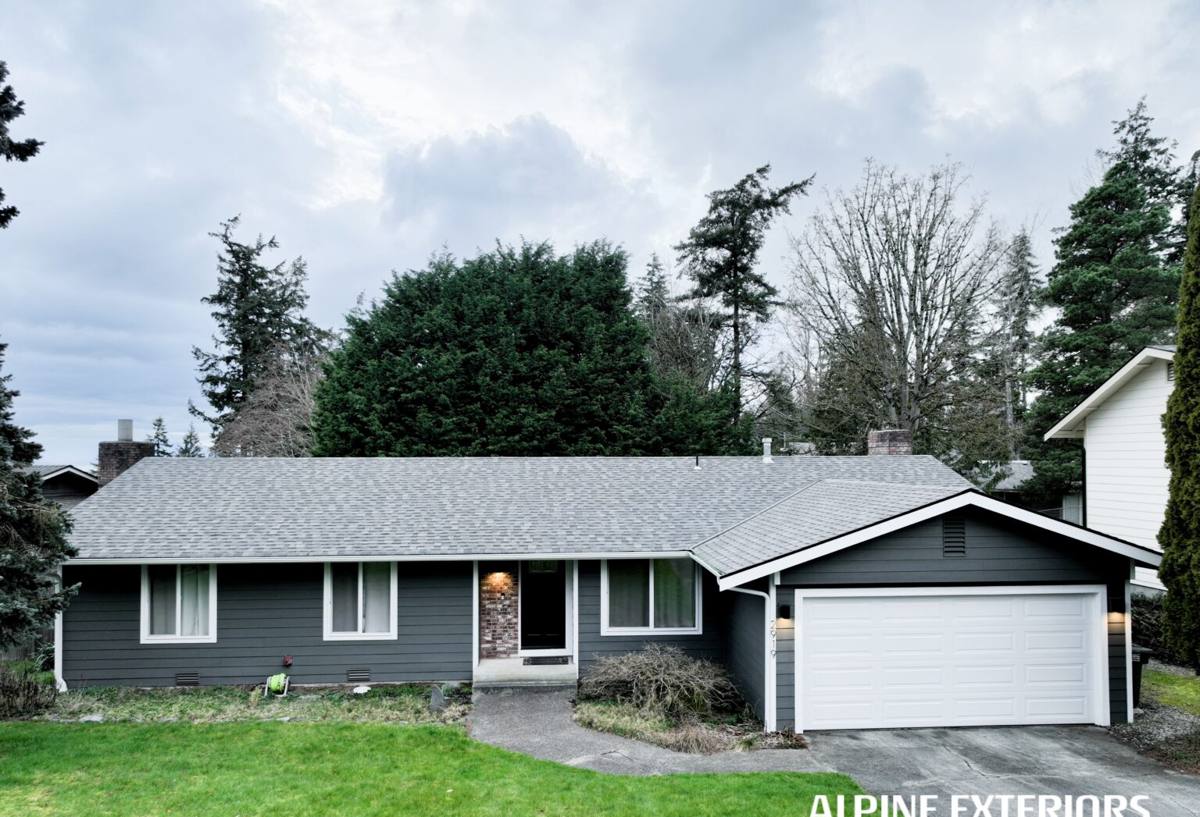
Signs a Snohomish Home Needs Replacement, Not Just Repair
Homeowners often call about a "small" siding problem and find out the damage is more widespread once we get a panel off. Some signs point clearly toward full replacement rather than a patch:
- Soft or spongy spots when you press on the siding, especially near the bottom courses and around window trim
- Persistent moss or algae staining that comes back within a season or two of cleaning
- Visible cupping, buckling, or panel separation, particularly on walls facing prevailing weather
- Paint that won't hold — bubbling, peeling, or flaking within a few years of a fresh coat
- A musty smell in an interior room that backs up to an exterior wall
- Rust streaking from fasteners, or fastener heads that have worked loose or popped through the surface
- Visible gaps at seams, corners, or trim where caulk has shrunk or failed
Any one of these on its own might be repairable. Several together, especially combined with a home's age, usually mean the underlying material and the moisture barrier behind it have already been compromised.
What a Correct Siding Replacement Actually Involves
It starts underneath the siding, not with the siding
The single biggest mistake in siding replacement is treating it as a cosmetic job. A correct replacement means pulling the old material completely off and inspecting what's underneath: sheathing, framing, and the water-resistive barrier. In a climate that gets as much driving rain as Snohomish, any soft or delaminated sheathing has to be cut out and replaced before a single new panel goes up. Covering rot with new siding just hides the problem for a few more years.
Flashing and moisture management come before finish
Every window, door, and penetration needs proper flashing integrated with the weather-resistive barrier so water is directed out and down, never behind the cladding. This detail work is invisible once the job is finished, which is exactly why it's the part that gets rushed on lower-bid jobs.
Fastening and gapping matter more here than in drier climates
Fiber cement siding needs specific fastener types, spacing, and depth to perform as designed, and panels need correct gapping at butt joints and trim to allow for expansion without trapping moisture. In a salt-air environment, fastener material and coating matter too — the wrong fastener corrodes years before the siding itself would ever fail.
Why We Install Only James Hardie Fiber Cement
We get asked regularly why we don't offer vinyl, LP SmartSide, or cedar as options. It's a fair question, and the honest answer is that we made a standardization decision based on what actually holds up in this climate over the long run.
Vinyl is inexpensive and low-maintenance in mild weather, but it's a petroleum-based product that can warp in heat, crack in cold snaps, and it has no real fire resistance. LP SmartSide is a wood-strand product with a real following, and it performs reasonably well when it's kept dry — but any wood-based siding is more vulnerable to the kind of sustained moisture exposure that driving rain and moss create, and edge damage from moisture intrusion is a known weak point of engineered wood siding. Cedar and primed spruce are beautiful materials, but they require an ongoing maintenance commitment — refinishing, caulking, and moisture monitoring — that most homeowners underestimate until they're a few years in.
James Hardie fiber cement is cement, sand, and cellulose fiber. It doesn't burn, it doesn't rot, and it isn't a food source for the moss and algae that thrive in Snohomish's wet shoulder seasons. It's heavier and more labor-intensive to install correctly, which is part of why some contractors avoid it — but installed to spec, it's the product we're willing to put our name behind in this climate.
| Material | Moisture Behavior | Fire Resistance | Long-Term Maintenance |
|---|---|---|---|
| James Hardie fiber cement | Does not rot or absorb like wood; engineered for wet climates | Non-combustible | Repaint on a long cycle; no refinishing required |
| Vinyl | Sheds water but can warp/buckle with heat and cold cycling | Combustible, can melt or deform | Low upkeep but replaces (not repaints) when damaged |
| LP SmartSide | Wood-strand core vulnerable to sustained moisture at edges/cuts | Combustible | Requires diligent caulk and paint maintenance |
| Cedar / primed spruce | Natural wood movement; needs consistent sealing | Combustible | Frequent refinishing and moisture inspection |
Built for This Climate, Not Just Any Climate
James Hardie engineers its products by climate zone rather than selling one formulation everywhere. For the Pacific Northwest, that means a product line formulated for sustained moisture exposure and moderate freeze-thaw activity rather than desert heat or Gulf Coast humidity. That distinction matters in Snohomish specifically because the combination of salt air and long wet seasons is exactly the kind of exposure that separates a climate-engineered product from a one-size-fits-all one.
The factory-applied ColorPlus finish is also part of why we standardized on Hardie. It's baked on under controlled conditions rather than field-applied, which means better adhesion and color consistency than a job-site paint job, and it holds up better against the fading effects of sun and salt air over time.
Our Process, Start to Finish
- On-site assessment — We look at your current siding, trim, and any visible moisture damage, and talk through what we're seeing.
- Tear-off and inspection — Old siding comes off completely so we can inspect sheathing and framing before covering anything back up.
- Repairs as needed — Any compromised sheathing or framing gets addressed before the new moisture barrier goes on.
- Weather barrier and flashing — A correctly lapped water-resistive barrier and integrated flashing at every window, door, and penetration.
- Hardie installation — Panels installed to manufacturer fastening and gapping specifications, not shortcuts that speed up the crew.
- Trim, caulk, and final inspection — Details finished and the whole job walked before we call it done.
Why a Crew That Already Works Snohomish Matters
Snohomish County permitting, typical lot setups, and the rhythm of local weather windows are all things a crew that works this area regularly already understands. Knowing when a stretch of dry days is reliable enough to schedule a tear-off, or how to sequence a job so sheathing isn't left exposed overnight during an unexpected rain system, comes from experience working this specific stretch of Western Washington — not from a general contractor's playbook written for a drier region.
There's also a practical maintenance angle: a crew familiar with how moss and algae behave on Snohomish homes knows which orientations and roof-siding intersections need the most attention during installation, because those are the spots that fail first if flashing and drainage aren't done right the first time.
What Siding Replacement Costs Depend On
| Factor | Why It Affects Cost |
|---|---|
| Extent of sheathing damage found at tear-off | Rot or delamination requires repair before new siding can go on |
| Home size and wall complexity | More corners, gables, and trim detail mean more labor and material cuts |
| Siding profile and accessories chosen | Lap width, trim boards, and soffit work all factor into total scope |
| Access and site conditions | Tight lots, landscaping, or multi-story walls affect staging and labor time |
| Paint versus factory-finished color | ColorPlus factory finish avoids a separate field-painting cost and timeline |
Every home is different, which is why we walk the property in person before giving a number rather than quoting off a phone call.
If your Snohomish home is showing any of the wear signs above, or you're just planning ahead before it becomes a bigger problem, we're happy to take a look and give you a straightforward, no-pressure estimate using the form below.