 Everett
 Windows Built for Snohomish's Weather, Not Just Its Openings
Snohomish homes take a beating that homes twenty miles inland never see. The combination of salt-laden air moving up from Puget Sound, long stretches of driving rain, and a moss season that can run eight months out of the year means window materials, seals, and installation details that work fine elsewhere can fail here in a handful of years. When we replace or install custom windows for a Snohomish home, we're not just fitting glass into an opening — we're solving for corrosion resistance, water management, and long-term moisture control specific to this part of Snohomish County.
"Custom" in this context doesn't mean exotic. It means the window is sized, framed, and detailed to fit your home's actual openings and exposure — not a generic stock size that leaves gaps to caulk over. Older Snohomish homes in particular often have openings that have shifted slightly over decades of settling, and a proper custom fit accounts for that rather than fighting it.
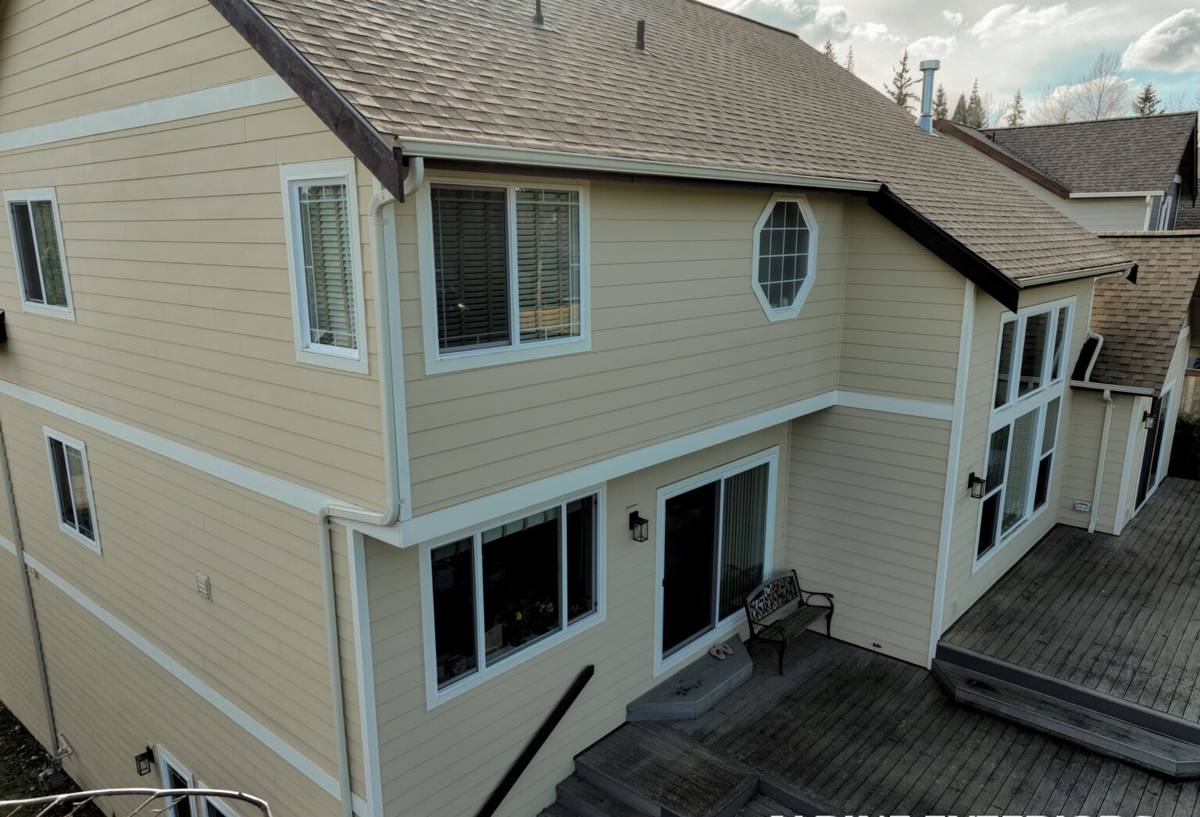
What Snohomish's Climate Actually Does to Windows
Salt Air and Metal Fatigue
Homes closer to the water deal with airborne salt that accelerates corrosion on unprotected metal hardware, fasteners, and some aluminum components. Over time this shows up as pitting, stiff or seized locks and cranks, and streaking on frames. It's not dramatic — it's slow and cumulative, which is exactly why it gets overlooked until a window won't latch properly anymore.
Driving Rain and Wind-Driven Water
Snohomish gets rain that doesn't fall straight down — wind pushes it sideways into wall assemblies, and windows are the weakest point in that assembly. A window that's watertight in a light, still rain can still leak under wind-driven conditions if the flashing, sill pan, and sealant details weren't done correctly. This is the single most common cause of "mystery" water stains below window openings that homeowners assume is a roof problem.
Moss and Sustained Moisture
Long moss season means long periods where exterior trim, sills, and the wall surface around a window stay damp. Wood components that aren't properly primed and sealed on all sides — including the back and end grain, which factory finishes often skip — will absorb moisture, swell, and eventually rot from the inside out, well before it's visible from outside.
What a Correct Custom Window Job Involves
A window replacement done right in this climate has several layers most homeowners never see, and skipping any one of them is where problems start.
- Removing the old window and inspecting the rough opening for existing rot, soft framing, or prior water intrusion before anything new goes in
- Repairing or replacing any compromised framing — never installing a new window over damaged wood
- Installing a proper sill pan flashing that directs any water that gets past the window back outside, not into the wall cavity
- Integrating window flashing correctly with the home's existing house wrap or weather-resistive barrier, shingled so water always sheds outward and downward
- Using sealants and backer rod at the right joints — not caulk as a substitute for proper flashing, but as a secondary line of defense
- Shimming and fastening the window level, plumb, and square so it operates smoothly and seals evenly for its full service life
- Insulating the gap between the window frame and rough opening without overpacking, which can bow the frame
- Finishing interior and exterior trim so it sheds water and doesn't trap moisture against the frame
Any one of these steps done poorly can undercut an otherwise good window. We've seen high-end windows fail early because of a missing sill pan, and mid-range windows outlast expectations because the installation was done with real attention to water management.
Choosing Materials That Hold Up Locally
There's no single "best" window material — the right choice depends on your home's exposure, your budget, and how much maintenance you're willing to keep up with. Here's how the common options actually perform under Snohomish conditions:
| Material | Salt Air Performance | Moisture Handling | Maintenance |
|---|---|---|---|
| Vinyl | Good — won't corrode | Good, doesn't absorb water | Low; occasional cleaning |
| Fiberglass | Very good — highly stable | Very good, minimal expansion/contraction | Low |
| Aluminum | Fair — can pit and corrode over time near water | Good if properly finished, but conducts cold and can condensate | Moderate |
| Wood (clad exterior) | Good if cladding is intact | Vulnerable at any breach in the cladding or seal | Higher; requires monitoring |
| Solid Wood | Poor unless meticulously maintained | High risk in sustained damp conditions | High; regular refinishing needed |
For homes in or near Snohomish with real salt air and moss-season exposure, we most often steer customers toward vinyl or fiberglass for their durability and low upkeep, or clad-wood when the homeowner wants a specific interior wood look and is comfortable with the added maintenance. We'll walk through the actual trade-offs for your home's exposure rather than pushing one product line.
Why We Don't Push Every Product on the Market
We install a focused set of window lines rather than trying to offer every option available. That's a deliberate professional standard, not a limitation we're apologizing for. Some products on the market look good in a showroom but have installation tolerances, warranty structures, or maintenance requirements that don't hold up well against Snohomish's combination of salt air and sustained moisture — and we'd rather stand behind a smaller lineup we trust than sell something we know is a poor fit for this climate. If a homeowner specifically wants a product outside what we typically install, we'll give an honest assessment of the trade-offs before taking the job.
Our Process, Start to Finish
- On-site assessment: We look at each window opening individually — sun exposure, wind exposure, existing signs of water intrusion, and the condition of the surrounding wall and trim.
- Honest scope and estimate: You get a clear breakdown of what's being replaced, what materials we recommend and why, and what it costs — no vague allowances that turn into surprise charges.
- Measure and order: Custom sizing is confirmed against the actual opening, not assumed dimensions, since older Snohomish homes can vary from what the original plans show.
- Removal and opening prep: We check for hidden rot or damage before the new window goes in — this is often where we find issues the homeowner didn't know existed.
- Installation with full flashing and sealing detail: Sill pan, flashing integration, insulation, and sealant applied in the correct order and layering.
- Trim and finish: Interior and exterior trim completed to shed water and match your home's existing look.
- Walkthrough: We test operation, check seals, and go over basic care so you know what to watch for going forward.
Signs Your Snohomish Home's Windows Need Attention
Not every window issue means full replacement, but these are worth having looked at:
- Visible water staining or soft drywall below a window sill
- Locks, cranks, or latches that have become stiff, corroded, or won't fully engage
- Persistent condensation between panes, which usually means a failed seal on a double- or triple-pane unit
- Drafts you can feel even with the window fully latched
- Visible gaps, cracked caulking, or wood rot at the exterior trim around the frame
- Noticeable moss or algae growth on the sill or surrounding trim that keeps returning
- Difficulty opening or closing that didn't used to be there — often a sign the frame has shifted or swelled
Maintenance That Actually Extends Window Life Here
Even a correctly installed window benefits from a little seasonal attention in this climate. Rinsing salt residue off exterior hardware a couple of times a year, keeping weep holes clear of debris and moss so water can drain out of the frame, and re-caulking any cracked exterior joints before the wet season sets in are all simple habits that meaningfully extend a window's service life. We're happy to point out what to watch for on your specific windows during an estimate visit, whether or not you move forward with work.
Why Local Installation Experience Matters
Window installation guidance in a manufacturer's manual is written for average conditions across the whole country. It doesn't account for wind-driven rain patterns specific to Snohomish County, or how quickly moss establishes itself on north-facing trim here, or which older local home styles tend to have rough openings that are slightly out of square. A crew that regularly works in this specific area brings that knowledge to every job automatically — it's not something you have to explain or negotiate for. That familiarity is often the difference between a window that performs for decades and one that starts showing problems in year five.
If you're weighing custom window replacement for your Snohomish home, we're glad to come take a look and give you a straightforward, no-pressure estimate — what we'd recommend, why, and what it would cost. Use the form below to get started.