 Everett
 Silver Lake's Climate Is Harder on Siding Than It Looks
Silver Lake is one of Everett's quieter residential pockets — mature trees, a mix of home ages, and enough tree canopy and lake-side humidity to keep everything a little damper than it looks on a dry afternoon. That combination is deceptive. Homeowners in this part of Snohomish County often assume that because they're set back from open water, their siding gets an easier ride than homes right on Puget Sound. In practice, Everett's marine air pattern moves inland across the whole city, and Silver Lake adds its own local moisture load on top of it: lake humidity, shaded lots that never fully dry out between rains, and a moss season that can run eight months or longer under the right tree cover.
Siding here isn't just fighting rain. It's fighting a slow, constant dampness cycle — wet, humid, shaded, wet again — that gives moisture-sensitive materials very little chance to dry out completely. That's the backdrop for every siding replacement decision a Silver Lake homeowner makes, and it's why we treat this neighborhood as its own case, not a copy-paste of a coastal Everett job or an inland Snohomish County job.
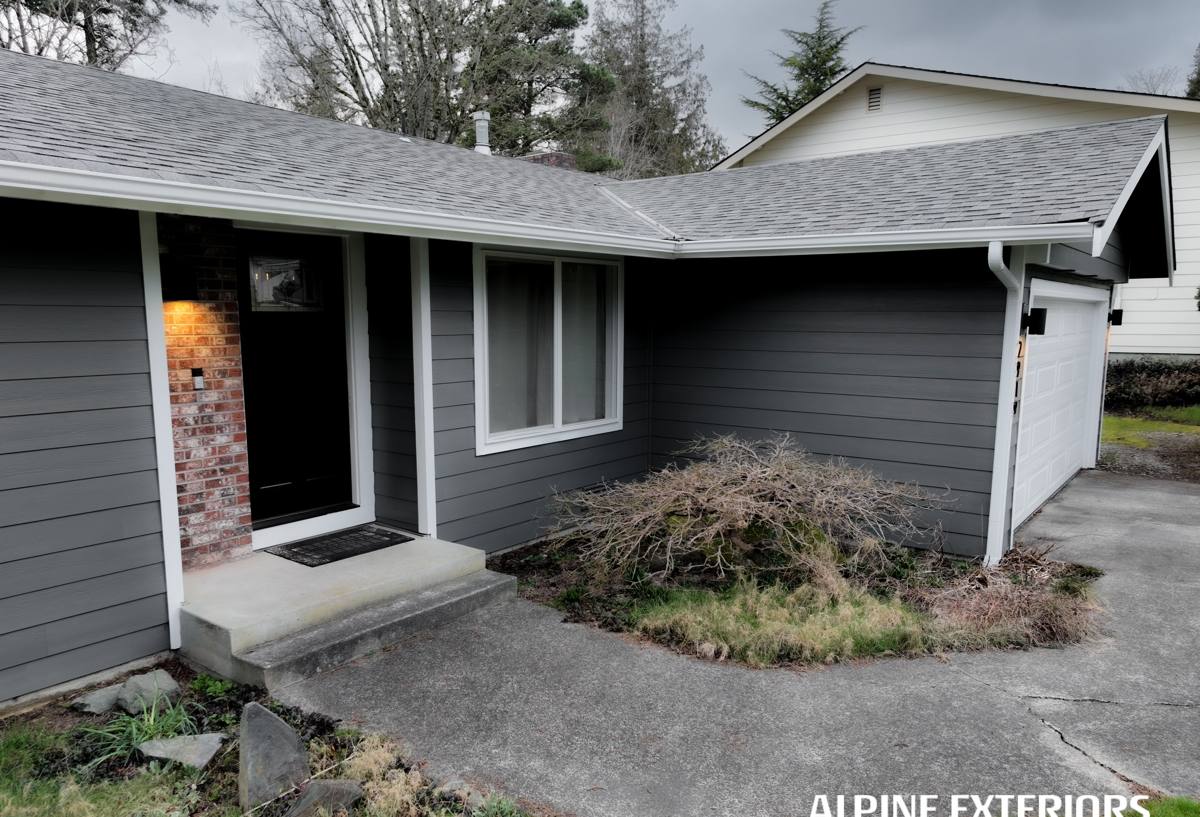
What Actually Wears Out Siding in This Neighborhood
Driving Rain and Wind-Driven Moisture
Storms moving off Puget Sound don't just rain down — they push moisture sideways into wall assemblies, especially on the west and south exposures of a home. Any gap in flashing, any under-lapped seam, or any siding that's lost its factory finish becomes an entry point. Once water gets behind the cladding, it doesn't evaporate quickly in a shaded, humid lot like the ones common around Silver Lake.
Moss, Algae, and Prolonged Dampness
Tree cover keeps a lot of Silver Lake lots shaded well into the day, which is great for the trees and tough on siding. Moss and algae need moisture and shade to establish, and once they take hold on a porous or poorly finished surface, they hold water against the material even longer than rain alone would. Over years, that constant damp-and-shade cycle is what actually breaks down wood-based and poorly sealed siding products — not one big storm, but thousands of small ones.
Salt-Influenced Marine Air
Everett sits directly on Puget Sound, and the marine air that moves through the region carries a mild salt load that reaches well beyond the immediate waterfront. It won't corrode siding the way it would on a boat dock, but over the life of a 20-30 year siding system, it's one more factor working against paint finishes, fasteners, and any material that depends on a surface coating to keep moisture out.
What Correct Siding Replacement Involves
Replacing siding is not a cosmetic swap. Done right, it's a full envelope job. Skipping any of the following is how a brand-new-looking exterior fails again in five to seven years:
- Complete tear-off and inspection of the sheathing underneath — not just the visible siding
- Repair or replacement of any water-damaged sheathing, framing, or trim found during tear-off
- Installation of a code-compliant weather-resistive barrier, lapped correctly from the bottom up
- Proper flashing at every window, door, deck ledger, and roof-to-wall intersection
- Correct fastening pattern and spacing per the manufacturer's engineering specs, not "close enough"
- Rain-screen or drainage gap where the wall assembly calls for one, so incidental moisture can escape
- Manufacturer-specified clearances at grade, roof lines, and decks to keep siding out of standing water and splash-back
- Final caulking and paint/finish detail at every cut edge and penetration
A siding job that looks finished from the curb but skips any of these steps is a job that trades a visible problem for a hidden one. In a neighborhood like Silver Lake, where moisture already has the advantage, hidden problems don't stay hidden for long.
Why We Only Install James Hardie Fiber Cement Here
We don't install vinyl, LP SmartSide, Cemplank, Allura, or bare cedar or primed spruce siding. That's a deliberate standard, not a sales pitch, and it matters more in a neighborhood like Silver Lake than almost anywhere else in Everett.
Non-Combustible, Engineered for This Climate
James Hardie fiber cement is non-combustible and manufactured in climate-specific HZ formulations, including versions engineered for the wetter conditions common to the Pacific Northwest. That matters directly for a shaded, humid lot: the product is built to resist moisture absorption and the freeze-thaw and wet-dry cycling that damages wood-based and OSB-core products over time.
A Factory Finish, Not a Field Paint Job
ColorPlus finish is baked on at the factory under controlled conditions, which gives it far better adhesion and UV/moisture resistance than a field-applied paint coat. In a neighborhood with heavy moss and mildew exposure, a finish that resists staining and holds its color under constant damp shade is doing real work, not just looking good on installation day.
Long-Term Performance and a Real Warranty
Hardie backs its siding with a transferable warranty that reflects confidence in how the product performs over decades, not just years — which matters on a lakeside lot where siding needs to shrug off moss, moisture, and marine air for the long haul, not just survive the first few winters looking fine.
Why Alternatives Struggle in a Neighborhood Like This
We get asked why we won't install other common products, and the honest answer is climate fit, not brand loyalty.
| Product | Where It Struggles in Silver Lake's Conditions |
|---|---|
| Vinyl siding | Can warp or fade under sustained UV and temperature swings, and seams give moisture a path in during driving rain |
| LP SmartSide (engineered wood) | Wood-based core is vulnerable if the factory finish is compromised and moisture gets behind it in a shaded, damp lot |
| Cemplank / Allura fiber cement | Similar base material to Hardie but without the same climate-specific HZ engineering or factory ColorPlus finish system |
| Primed cedar or spruce | Requires ongoing repainting and sealing to resist the moss, mildew, and constant dampness this area produces |
None of these are bad products in every setting. But in a neighborhood defined by shade, humidity, and moss more than almost anywhere else in Everett, we've standardized on the one material we're confident performs to spec without asking the homeowner to fight the climate every few years.
Our Process for a Silver Lake Siding Replacement
- On-site assessment — we walk the exterior, check for existing moisture damage, moss buildup, and problem areas around windows, decks, and roof lines specific to your lot's exposure and shade pattern.
- Scope and product plan — we specify the correct Hardie plank, panel, or shingle profile and HZ formulation for your home's exposure, along with trim and accessory details.
- Tear-off and sheathing inspection — old siding comes off, and we inspect what's underneath before anything new goes up. Any rot or damage gets addressed before the wall is closed back in.
- Weather barrier and flashing — a correctly lapped weather-resistive barrier and full flashing package go in at every penetration, window, and transition.
- Installation to manufacturer spec — fastening, clearances, and gapping follow Hardie's published installation requirements, not shortcuts.
- Finish and detail work — trim, caulking, and touch-up at every cut edge, so the finished product resists moisture at every seam.
- Final walkthrough — we review the completed exterior with you and address any punch-list items before calling the job done.
Signs Your Silver Lake Home Needs Siding Replacement Now
- Persistent moss or dark staining that returns within weeks of cleaning
- Soft or spongy spots when you press on siding near the base of the wall or under windows
- Visible warping, buckling, or gaps between siding panels
- Peeling or bubbling paint that keeps recurring in the same spots each season
- Rising heating bills or noticeably drafty rooms along exterior walls
- Siding that's original to a home built more than 20-25 years ago, especially wood-based products
- Visible daylight or moisture stains on the interior side of exterior walls
What Drives the Cost of a Siding Replacement
| Factor | Why It Matters |
|---|---|
| Home size and wall complexity | More corners, dormers, and roof lines mean more flashing detail and labor time |
| Extent of hidden damage | Rotted sheathing or framing found during tear-off adds repair scope beyond the siding itself |
| Siding profile and trim selection | Lap width, shingle-style panels, and trim details affect material and labor cost |
| Site access and lot conditions | Mature trees, slopes, and tight lake-side lots common in Silver Lake can affect staging and scaffolding needs |
| Existing moisture barrier condition | A full weather barrier replacement adds scope but is non-negotiable on a proper tear-off |
We won't quote a number without seeing the home, but we'll always walk you through what's driving your specific estimate before any work starts.
Why Local Experience in This Neighborhood Matters
A crew that already works Silver Lake regularly knows what to expect before the tear-off even starts: which exposures take the worst of the driving rain, how much shade a given lot holds through the day, and how aggressively moss and mildew have likely worked into the old siding. That's not guesswork you want a crew figuring out for the first time on your home. It shows up in faster, more accurate assessments, fewer surprises once tear-off begins, and a finished installation that's specified correctly for your lot's actual conditions rather than a generic Everett average.
It also matters for something homeowners don't always think about upfront: knowing which details — flashing at deck ledgers, clearance at grade on a sloped lake-side lot, trim choices that hold up under heavy tree cover — actually make a difference here, versus details that matter more in drier, sunnier parts of Snohomish County.
After Installation: What Keeps Hardie Siding Performing
Fiber cement siding is low-maintenance, not no-maintenance. A yearly rinse to clear moss spores before they establish, prompt attention to any caulking that cracks at trim joints, and keeping gutters clear so water isn't sheeting down the wall face all go a long way toward getting the full lifespan out of the installation — especially in a shaded, humid setting like Silver Lake where moss has every advantage it needs.
If you're weighing a siding replacement for a Silver Lake home, we're glad to walk the exterior with you, point out what we see, and put together a straightforward, no-pressure estimate — no obligation, just an honest look at what your home actually needs. Use the form below to get started.