 Everett
 Why Mukilteo Siding Wears Differently
Mukilteo sits right where Puget Sound weather meets the land, and that combination is harder on exterior siding than most homeowners realize until they're standing in front of a wall that's failing years ahead of schedule. Waterfront and near-waterfront homes take on salt-laden air that settles into every seam, joint, and fastener on a home's exterior. Add Snohomish County's long, wet fall-through-spring stretch of driving rain, and you get siding that stays damp far more of the year than siding fifty miles inland. Then there's moss — Western Washington's quiet destroyer of exteriors. Wherever a wall stays shaded and damp, moss and algae take hold, and they don't just look bad. They hold moisture against the siding surface for weeks at a time, which accelerates rot in wood-based products and breaks down paint films and coatings faster than manufacturers ever tested for.
None of this means Mukilteo homes need exotic materials. It means they need siding that was engineered for exactly this kind of exposure, installed by a crew that understands how water actually moves across a wall in this climate — not just how it's supposed to move on a spec sheet.
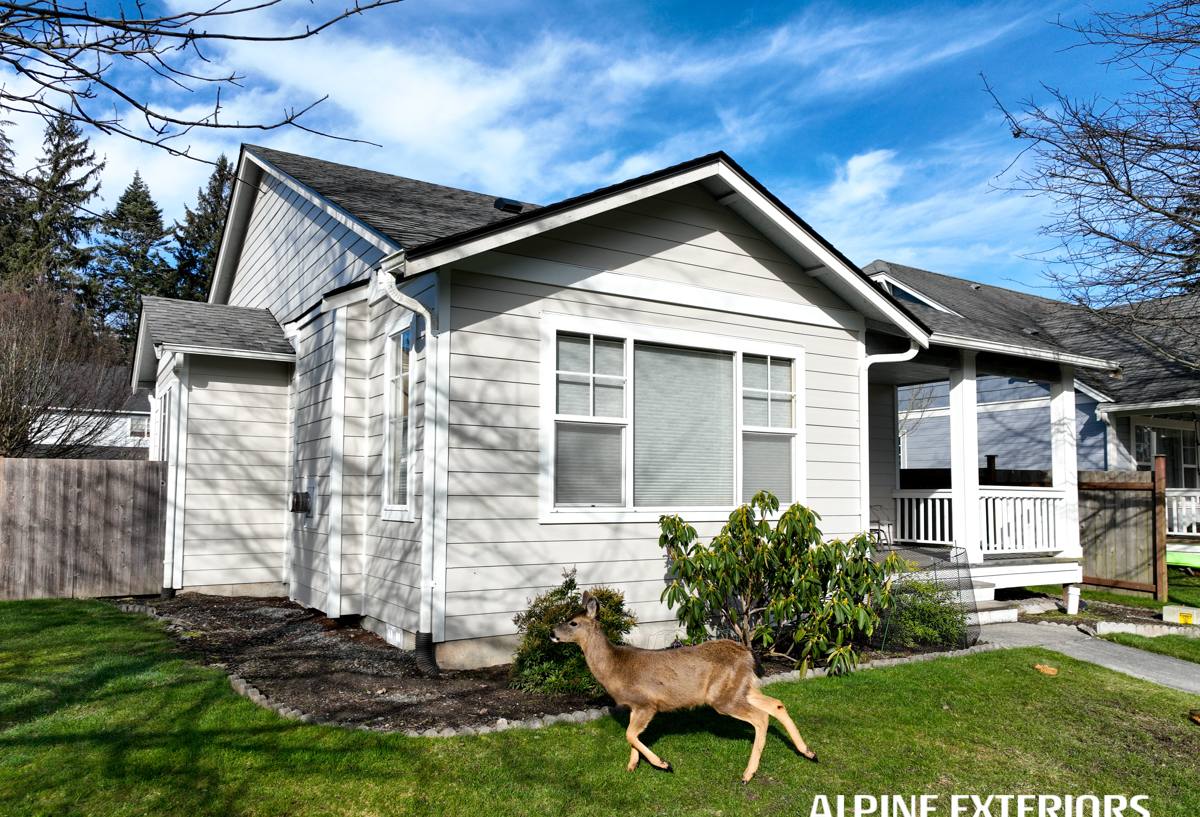
What Salt Air, Rain, and Moss Actually Do to a Wall
Salt air
Airborne salt is corrosive to metal flashing, fasteners, and trim if those components aren't rated for it or aren't fully protected by the siding system. It also accelerates the breakdown of lower-grade paint and coatings, which is part of why homes closer to the water often need repainting or re-caulking noticeably sooner than homes a few miles inland.
Driving rain
Wind-driven rain doesn't fall straight down — it gets pushed sideways into laps, seams, and butt joints. A siding system with weak overlap, poor flashing details, or gaps at penetrations will eventually let water behind the cladding, where it can sit against sheathing and framing unseen for months.
Moss and algae
Shaded north- and west-facing walls, areas under trees, and anything close to grade are prime moss territory in this climate. Moss growth on siding is a moisture problem before it's a cosmetic one — it's evidence that a surface is staying wet longer than it should.
Signs Mukilteo Siding Needs Replacing, Not Patching
Not every issue calls for a full tear-off. But there's a point where patching stops being cost-effective and starts becoming a way of throwing money at a problem that keeps coming back. Watch for:
- Soft, spongy, or crumbling spots when you press on the siding, especially near the bottom courses
- Paint that won't hold — bubbling, peeling, or needing repainting every 3-4 years instead of the 8-10 years a quality finish should last
- Visible gaps opening at seams, corners, or trim joints
- Persistent moss or algae staining that returns within a season of cleaning
- Warping, buckling, or boards that have visibly separated from the wall
- Musty odors or unexplained interior wall staining, which can point to moisture already behind the siding
- Siding that's simply reached the end of its realistic service life for its material — often 15-25 years for wood-based products in this climate, well short of what fiber cement is rated for
What a Correct Siding Replacement Job Involves
Replacing siding well in a climate like Mukilteo's is not just swapping old boards for new ones. A correct job addresses everything that sits behind the siding, because that's usually where the real problems start.
Full tear-off and inspection
Old siding comes off completely so the sheathing underneath can be inspected. Any rot, soft spots, or water-damaged sheathing gets identified and repaired before anything new goes up — covering damaged sheathing with new siding just hides a problem that will resurface.
Weather-resistive barrier
A properly lapped, correctly installed weather-resistive barrier (WRB) is the home's actual line of defense against wind-driven rain. Siding sheds most of the water, but the WRB and flashing details are what handle whatever gets past it.
Flashing at every penetration
Windows, doors, vents, hose bibs, light fixtures, and any other wall penetration need flashing detailed to shed water downward and outward — never allowing water to track behind the barrier. This is one of the most common places corners get cut on rushed jobs, and it's one of the most common sources of hidden rot in this region.
Correct fastening and clearances
Fiber cement siding has manufacturer-specified nailing patterns, fastener types, and minimum clearances from grade, decks, roofing, and other surfaces. Getting these wrong voids warranty coverage and creates the exact moisture traps that lead to premature failure.
Finish and caulking details
Factory-finished siding reduces on-site painting, but joints, cut edges, and trim transitions still need to be sealed correctly with the right products, applied at the right points in the installation sequence.
Why We Install James Hardie Fiber Cement — and Nothing Else
We made a decision to install only James Hardie fiber cement siding, and we stand behind it on every home we work on, including here in Mukilteo. Hardie's fiber cement is non-combustible, dimensionally stable in wet climates, and available in HZ product lines specifically engineered for regions with sustained moisture exposure like Western Washington. Its ColorPlus factory finish is baked on under controlled conditions, which gives it more consistent, longer-lasting color performance than field-applied paint — a real advantage in a climate where UV and salt air both work against exterior coatings.
We don't install vinyl, LP SmartSide, Cemplank, Allura, primed spruce, or cedar. That's not a knock on every homeowner who has one of those products on their home now — plenty of them perform fine when properly maintained. It's a statement about what we're willing to put our labor and our name behind, and after years of seeing how different materials actually hold up in Snohomish County's salt air, rain, and moss cycle, fiber cement from James Hardie is what we choose to install.
James Hardie Options That Make Sense for This Climate
| Product Line | Best Use | Why It Fits Mukilteo |
|---|---|---|
| HardiePlank lap siding | Most common wall application | Traditional look, engineered HZ formulation for wet-climate performance |
| HardiePanel vertical siding | Modern facades, accent walls | Clean lines, fewer horizontal laps for water to track along |
| HardieShingle siding | Gables, accent areas, PNW-style homes | Classic shingle look without the moisture sensitivity of real wood shingles |
| HardieTrim boards | Corners, window and door trim | Matches the siding's moisture resistance at the most vulnerable joints |
Our Siding Replacement Process
- On-site assessment — we walk the exterior, check exposure to prevailing wind and rain direction, note moss and moisture patterns, and inspect for existing damage
- Written estimate — a clear scope covering tear-off, sheathing repair allowances, WRB, flashing, product line, color, and trim details
- Tear-off and sheathing inspection — old material removed, damaged sheathing repaired or replaced before anything new is installed
- Weather barrier and flashing installation — the part of the job that matters most for long-term performance, done to manufacturer and code detail
- Hardie siding installation — installed to manufacturer nailing, clearance, and lap specifications so the warranty stays intact
- Trim, caulking, and final detailing — joints sealed, transitions finished, site cleaned up
- Final walkthrough — we review the finished work with you before calling the job done
What Siding Replacement Costs Depend On
We don't publish blanket per-square-foot pricing because it genuinely varies by home, but the main cost drivers are consistent from project to project:
| Factor | Impact on Cost |
|---|---|
| Home size and wall complexity | More corners, gables, and dormers mean more cutting, trim, and labor time |
| Sheathing condition | Rot or water damage found during tear-off adds repair scope |
| Siding product line chosen | Lap, panel, and shingle profiles carry different material and labor costs |
| Story height and access | Second-story and steep-site homes require more staging and safety setup |
| Trim and detail work | Extensive trim, window casings, or accent areas add labor |
| Existing exposure damage | Homes closer to the water or in heavy moss zones may need more prep |
The only way to get an accurate number for your home is a walk-through, which is exactly what our free estimate covers.
Why Hiring a Crew That Already Works Mukilteo Matters
Siding installation is not a one-size-fits-all trade. A crew that's used to dry, inland conditions can do technically fine work and still leave a home under-protected against what Mukilteo actually throws at it — driving rain from specific prevailing directions, salt-laden air near the water, and shaded walls that stay damp longer than the manufacturer's general install guidance assumes. A crew that already works this area brings a working knowledge of:
- How local wind and rain patterns hit different wall orientations
- Which details need extra attention near the water versus further inland
- Snohomish County permitting and inspection expectations
- How moss and shade patterns on a given lot affect long-term wall performance
- What clearance and drainage details actually matter on sites with limited grading options
That local familiarity doesn't replace manufacturer installation standards — it means we're applying those standards with a clear sense of where Mukilteo homes are most exposed.
After Installation: Keeping Hardie Siding Performing
Fiber cement is low-maintenance, not no-maintenance. A simple annual routine keeps it performing at its best in this climate: rinse off accumulated salt and grime, check caulked joints for cracking or separation, keep gutters clear so water isn't sheeting down the wall, and address any moss growth on shaded sections before it spreads. None of this is heavy work, but skipping it is how even good siding systems end up looking tired ahead of schedule.
If your Mukilteo home's siding is showing its age — or you're planning ahead before it does — we're glad to walk the exterior with you and put together a straightforward, no-pressure estimate. Use the form below to get started.