 Everett
 Siding Built for Lake Stevens Weather, Not Just Lake Stevens Looks
Lake Stevens sits close enough to the water — both the lake itself and the broader Puget Sound air mass — that homes here take on a specific combination of punishment most siding products were never engineered to handle well. Wind-driven rain off the lake, humid air that lingers under tree cover, and a moss season that can stretch from early fall through late spring all work on a house's exterior at the same time, year after year. A siding job that looks fine on installation day but wasn't built with this climate in mind tends to show its weaknesses within a few winters, not a few decades.
This page is specifically about installing siding on homes in and around Lake Stevens — not a generic overview of siding in general. The material, the flashing details, the moisture management, and the maintenance expectations we walk homeowners through here are shaped by what actually happens to a wall assembly in this part of Snohomish County.
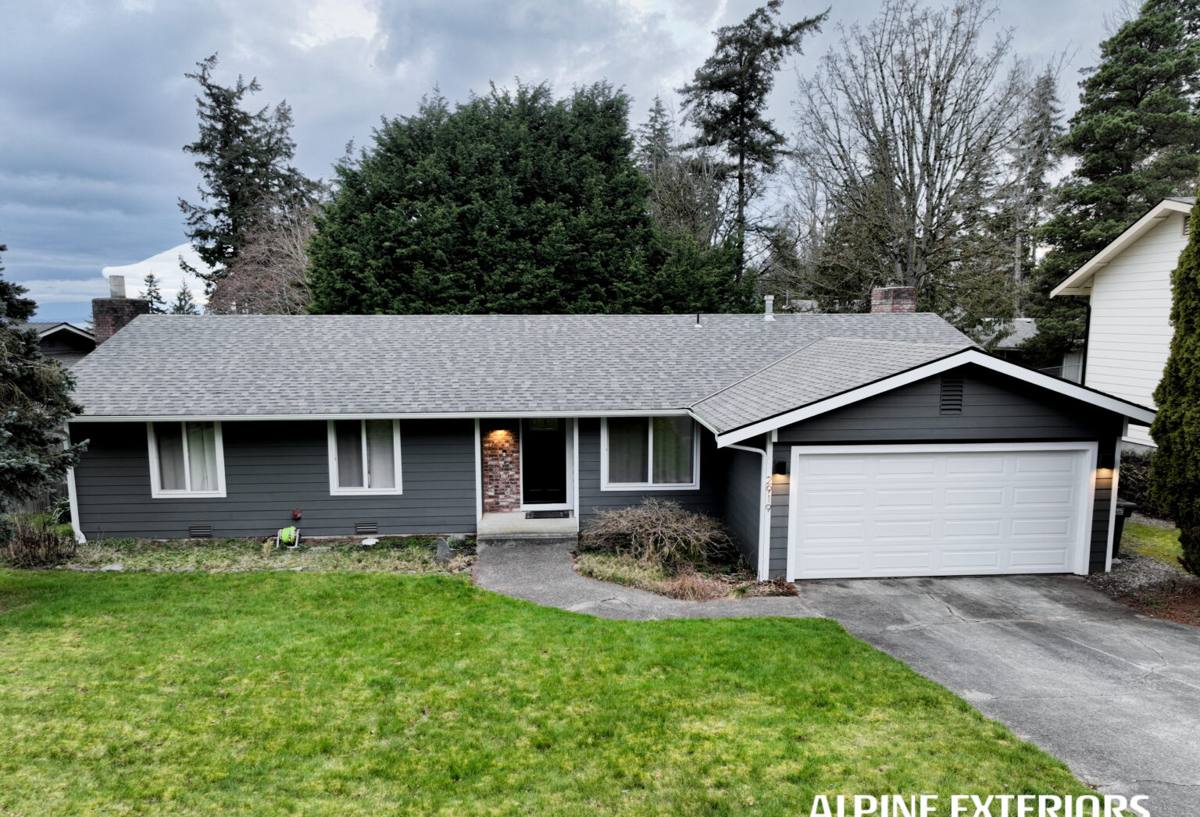
What Lake Stevens' Climate Actually Does to Siding
Moisture That Doesn't Let Up
Western Washington's rain isn't just frequent — around Lake Stevens and the greater Everett area, it's often driven sideways by wind, which means siding has to shed water that's hitting it at an angle, not just falling straight down. That puts real pressure on lap joints, corner trim, and anywhere two pieces of siding meet. If those details aren't installed correctly, water finds its way behind the cladding, and the sheathing and framing underneath start absorbing moisture long before anyone notices a problem from the outside.
A Long Moss and Algae Season
Shaded lots, tree cover, and consistently damp air give moss, algae, and mildew a long runway to establish themselves on north-facing walls and anywhere airflow is limited. Siding materials that hold surface moisture — or that have a paint or coating layer prone to breaking down — tend to show green and black staining faster here than they would in a drier climate. Once organic growth gets a foothold in a porous or degraded surface, it's far harder to fully remove than it is to prevent in the first place.
Salt Air's Slow, Steady Wear
Lake Stevens isn't oceanfront, but the broader Puget Sound region carries a mild salt-air influence that, combined with constant moisture, accelerates corrosion on fasteners, flashing, and any exposed metal components. Over years, that combination degrades weaker materials and hardware faster than a homeowner would expect from looking at a spec sheet.
What a Correct Siding Installation Actually Involves
The siding itself only does its job if everything behind and around it is done right. A quality installation in this climate includes:
- A continuous, correctly lapped weather-resistive barrier (house wrap) installed shingle-style so water always drains outward and down
- Properly flashed windows, doors, and any wall penetrations, with flashing that integrates with the weather barrier rather than just sitting on top of it
- Rainscreen or drainage gap detailing where appropriate, so bulk water and incidental moisture behind the siding has somewhere to go instead of sitting against the sheathing
- Correct fastener type, spacing, and penetration depth for the specific siding product being installed
- Proper clearance at grade, decks, and roof lines so siding isn't sitting in standing water or snow load against the foundation or a low roof
- Caulking and sealant only where the manufacturer specifies it — over-caulking can trap moisture just as easily as under-caulking lets it in
Skipping or rushing any one of these steps is usually invisible on installation day. The problems show up two, five, or ten years later — as soft spots, staining, or siding that's failing well before it should.
Why We Install Only James Hardie Fiber Cement Siding
Everett Exterior installs James Hardie fiber cement siding exclusively. We don't install vinyl, LP SmartSide, primed wood, cedar, or other fiber cement brands. That's a deliberate standard, not a limitation on options we happen to offer.
Fiber cement is dimensionally stable and doesn't absorb water the way engineered wood products can, which matters directly in a climate defined by sustained dampness. It's also non-combustible, which is increasingly relevant as wildfire smoke and fire risk become a bigger part of Pacific Northwest summers. James Hardie's ColorPlus factory-applied finish is baked on under controlled conditions and backed by its own finish warranty, which gives it a real advantage over field-applied paint that has to cure in whatever weather shows up on installation week — not something you can count on around Lake Stevens for long stretches of the year.
Hardie also engineers specific product lines (its HZ5 designation, used in this region) for the wetter, more variable climate zones on the West Coast, rather than selling one formulation nationwide. Combined with a strong transferable limited warranty, that's the combination we've chosen to stand behind on every home we side — including the homes we work on around Lake Stevens.
We're not going to tell homeowners that vinyl or engineered wood siding is garbage — plenty of it is installed correctly and performs fine elsewhere. We simply won't put our name on a product that we don't think holds up to this specific climate as well as fiber cement does, and we'd rather be straightforward about that than sell something we don't fully stand behind.
How Our Siding Installation Process Works
1. On-Site Assessment
We start with a walk-around of the home to look at current siding condition, trim and flashing details, moisture staining, roofline transitions, and anything specific to the lot — tree cover, shade patterns, drainage — that will affect the job.
2. Scope and Estimate
We put together a written estimate that spells out the siding profile and Hardie color, trim details, flashing and weather-barrier scope, and a realistic timeline. No pressure, no artificial deadlines on the quote.
3. Tear-Off and Sheathing Check
Old siding comes off and we inspect the sheathing underneath. This is the point where hidden moisture damage — if any exists — gets found and addressed before new siding goes over it. Covering up a compromised wall assembly with new siding just hides the problem.
4. Weather Barrier and Flashing
House wrap and flashing go in first, installed to shed water outward at every layer, with particular attention to window and door openings and any wall penetrations.
5. Hardie Installation
Siding is installed to James Hardie's published specifications — fastener type and spacing, clearances, joint treatment — because deviating from spec is one of the most common ways a warranty ends up unenforceable later.
6. Final Walk-Through
We review the completed job with the homeowner, cover basic care and what to expect over the first year, and make sure everything matches what was scoped.
Choosing Between Siding Materials: A Climate-Based Comparison
| Factor | James Hardie Fiber Cement | Vinyl | Engineered Wood (e.g. LP SmartSide) |
|---|---|---|---|
| Moisture resistance | Does not absorb water; won't rot or swell | Doesn't absorb water, but can warp/buckle with heat and poor installation | Wood-based core is vulnerable if edges or cuts aren't fully sealed |
| Moss/algae resistance | Factory finish resists surface growth well | Can host algae/mildew, especially in shaded areas | Susceptible where finish wears or moisture gets into the substrate |
| Fire resistance | Non-combustible | Melts/deforms under heat | Combustible wood-based product |
| Finish durability | Factory-baked ColorPlus finish, separately warrantied | Color is through-body but can fade and become brittle over time | Field or factory-primed; repainting is typically required over time |
| Long-term maintenance | Periodic washing; repainting intervals are long | Low maintenance but limited repair options if damaged | Regular inspection and repainting needed to protect the core |
Signs a Lake Stevens Home May Need New Siding
- Persistent moss, algae, or black staining that comes back shortly after cleaning
- Soft or spongy spots when pressed, especially near the bottom courses or under windows
- Visible warping, buckling, or gaps opening up between panels or boards
- Paint that's peeling, bubbling, or failing faster than a normal repaint cycle would suggest
- Rising energy bills that track with drafty walls, not just an aging furnace or old windows
- Visible rot or damage at trim, corners, or anywhere siding meets the roofline or foundation
Any one of these on its own might be minor. Several together, especially on a north-facing or heavily shaded wall, usually means moisture has been getting behind the siding for a while.
What Drives the Cost of a Siding Installation
| Cost Factor | Why It Matters |
|---|---|
| Home size and wall complexity | More corners, gables, and dormers mean more cutting, flashing, and labor time |
| Current siding removal | Tear-off and disposal of old material adds time and cost versus new construction |
| Sheathing repair | Hidden moisture damage found during tear-off may need to be addressed before new siding goes on |
| Siding profile and trim detail | Lap, shingle, or panel styles and trim complexity affect both material and labor cost |
| Color and finish selection | Factory-finished ColorPlus options versus field painting affect long-term cost, not just install cost |
We give exact numbers during the on-site estimate rather than broad ranges up front, since the two biggest cost drivers — wall complexity and whatever condition the sheathing is in underneath the old siding — can't be pinned down accurately without seeing the house.
What to Look For When Hiring a Siding Contractor Near Lake Stevens
- Manufacturer-specific installation training, not just general carpentry experience
- A written scope that spells out weather-barrier and flashing details, not just "install siding"
- Willingness to inspect and address sheathing condition before covering it back up
- Local project history in this climate, not just a regional service area on paper
- A clear, transferable warranty structure — both on the material and on the labor
- References or past work a homeowner can actually verify
Why Local Lake Stevens Experience Matters
A crew that regularly works in and around Lake Stevens already knows how the local mix of shade, moisture, and wind exposure tends to play out on a wall assembly — which elevations need the most attention, where moss problems typically start, and what flashing details actually hold up here versus in a drier part of the state. That local pattern recognition shows up in the details: where extra drainage matters, which corners need the most careful flashing, and what maintenance schedule actually fits this environment rather than a generic manufacturer guideline written for the whole country.
Everett Exterior works throughout the greater Everett area, including Lake Stevens, and installs James Hardie fiber cement siding as our sole product because we've seen how it holds up against this specific combination of rain, moss, and salt air over time.
If you're weighing a siding replacement or repair on a Lake Stevens home, we're happy to take a look and give you a straightforward, no-pressure estimate — just fill out the form below to get started.