 Everett
 Roofing in Mukilteo Has Its Own Set of Problems
Mukilteo sits right on Puget Sound in Snohomish County, and that location shapes what happens to a roof here. Homes closer to the water take on salt-laden air that speeds up corrosion on fasteners, flashing, and metal roof components. Wind-driven rain off the Sound pushes water sideways into laps and seams that would stay dry in a calmer inland storm. And the tree cover on the wooded lots up the hillside keeps roofs shaded and damp for months at a stretch, which is exactly what moss and algae need to take hold. None of this means Mukilteo roofs fail faster across the board — it means the failure points are different, and a repair that doesn't account for salt exposure, wind-driven rain, and a long moss season tends to come back sooner than it should.
A good roof repair here isn't just patching the spot that's leaking. It's understanding why that spot failed in the first place, given the specific conditions on that particular roof, and fixing it in a way that holds up through another wet, mossy Snohomish County winter.
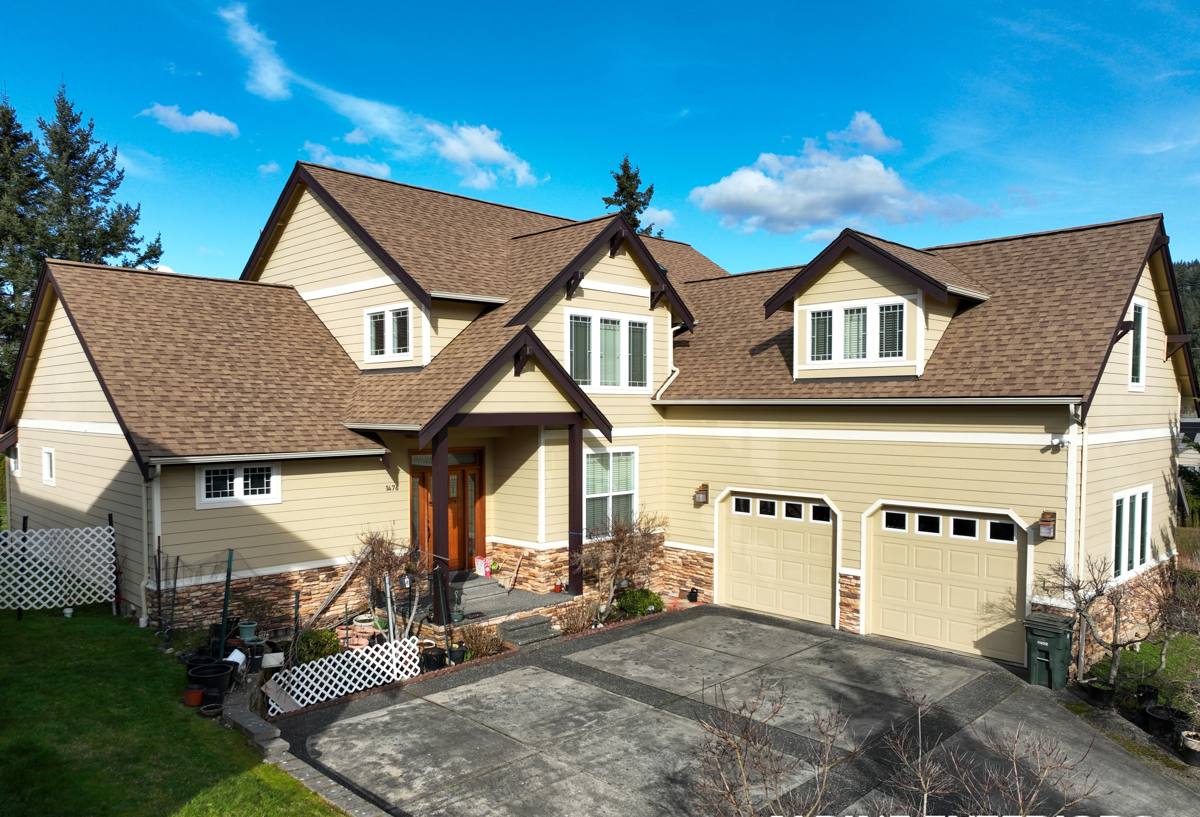
Signs a Mukilteo Roof Needs Repair
Most roof problems don't start as a dramatic leak — they start small and get ignored until water finds its way inside. Homeowners in this area should keep an eye out for:
- Granules collecting in gutters or at downspout outlets, a sign shingles are wearing thin
- Dark streaking or thick moss growth on north-facing slopes or shaded sections
- Curling, cracked, or lifted shingle edges, especially on slopes exposed to prevailing wind
- Rust staining, soft spots, or gaps around flashing at chimneys, vents, and skylights
- Water stains on interior ceilings or in the attic after a heavy or wind-driven rain event
- Sagging sections of roof deck, which can indicate trapped moisture underneath
- Loose, missing, or displaced shingles after a windstorm off the Sound
Any one of these can be a minor, inexpensive fix if caught early. Left alone through a Pacific Northwest winter, most of them turn into deck rot, insulation damage, or interior repairs that cost far more than the roof work itself.
What Actually Causes Roof Failures in This Area
Salt Air and Metal Fatigue
Homes within a mile or two of the water see accelerated corrosion on exposed fasteners, drip edge, and flashing. Galvanized materials that would last decades further inland can start showing rust and pitting noticeably sooner near Puget Sound. A repair that reuses corroded fasteners or generic flashing without accounting for this exposure is a repair that's already on borrowed time.
Driving Rain and Wind Uplift
Storms coming off the Sound don't just fall straight down — they push rain sideways under shingle edges and through anything less than a fully sealed lap. This is also what causes shingle blow-off and lifted edges after a windstorm. Repairs need to restore proper overlap, sealing, and fastening, not just cover the visible gap.
Shade, Moisture, and Moss
Tree cover keeps sections of many Mukilteo roofs damp long after the rest of the roof has dried out. That constant moisture is what feeds moss and algae growth, and moss does more than look bad — its root structure lifts shingle tabs and holds water against the roof surface, which accelerates rot in the deck underneath.
Common Repair Needs by Roof Type
The right repair approach depends heavily on what the roof is made of. Here's how the common issues and repair considerations break down across the roof types we see most often in this area:
| Roof Type | Most Common Issue Locally | Repair Consideration |
|---|---|---|
| Composition (asphalt) shingle | Granule loss, wind-lifted edges, moss on shaded slopes | Match existing shingle profile and color; reseal or replace fasteners rated for the exposure |
| Cedar shake/shingle | Moss and moisture retention, individual shingle splitting | Selective shingle replacement plus attention to ventilation, since trapped moisture is usually the root cause |
| Metal roofing | Fastener corrosion, seam and panel-lap movement | Corrosion-resistant fastener replacement; re-seal panel laps rather than just caulking over a leak point |
| Flat or low-slope (membrane) | Ponding water, seam separation, flashing pull-away | Address drainage slope issues, not just the failed seam, or the same spot leaks again |
What a Correct Roof Repair Involves
A repair that actually holds up isn't just sealant and a shingle swap. On every job we walk through the same fundamentals, adjusted for the specific roof:
- Find the real source — water often travels along the deck before it shows up as a stain, so the visible drip point and the actual failure point aren't always the same spot.
- Check the roof deck — any soft, delaminated, or rotted decking under the damaged area needs to be addressed before new roofing material goes back on, or the repair is cosmetic only.
- Match materials appropriately — shingle profile, color, and weight, or the correct flashing and fastener grade for a coastal-exposure home.
- Restore proper water shedding — correct shingle overlap, flashing laps, and sealant placement so wind-driven rain has nowhere to get under the surface.
- Clear the contributing cause — moss, debris, or a ventilation problem that led to the failure, not just the failure itself.
Our Roof Repair Process
Inspection and Honest Diagnosis
We start on the roof, not just at the leak point inside. That means checking the full slope for related wear, not only the spot the homeowner already knows about. We'll tell you plainly if what you're looking at is a contained repair or something closer to end-of-life for that section of roofing.
A Clear Scope Before We Start
You get a straightforward explanation of what failed, why, and what the fix involves — no vague line items. If we find the deck is compromised or the issue is more widespread than the original complaint, we tell you before doing the work, not after.
The Repair Itself
We use materials suited to the exposure — corrosion-resistant fasteners and flashing for homes closer to the water, proper underlayment and sealing for wind-driven rain, and shingle or shake matching that doesn't leave a patch that stands out. Deck repairs happen before new roofing material goes back down, never skipped to save time.
Cleanup and Follow-Through
Old material, nails, and debris get cleared from the roof, gutters, and ground. If moss or debris buildup contributed to the failure, we'll talk through what ongoing maintenance actually helps versus what's a waste of money.
Repair or Replacement? Honest Cost Factors
Not every roof problem needs a full replacement, and not every leak is fixable with a patch. The right call usually comes down to a few factors:
| Factor | Leans Toward Repair | Leans Toward Replacement |
|---|---|---|
| Age of roofing material | Well within expected service life | At or past typical lifespan for the material |
| Extent of damage | Isolated to one section or slope | Spread across multiple slopes or recurring in several spots |
| Deck condition | Solid, dry decking under the damaged area | Widespread rot, soft spots, or repeated moisture damage |
| History of repairs | First significant issue on this roof | Pattern of repeat leaks or patch jobs in different spots |
We'll always give you our honest read on which side of that line your roof falls on. A repair that's likely to fail again within a year or two isn't a good use of your money, and we'll say so.
Why Local Experience in Mukilteo Matters
A crew that works this stretch of Snohomish County regularly already knows which slopes hold moss longest, which fastener and flashing grades hold up against salt air, and how wind-driven rain off the Sound behaves differently than a straight-down storm. That's not something you get from a general contractor who occasionally does roof work — it comes from doing repairs on this kind of terrain and exposure repeatedly. It also means faster, more accurate diagnosis, because we're not guessing at conditions we've never encountered before.
Maintenance That Actually Extends a Repair
Once a repair is done right, a little upkeep goes a long way toward making it last through Mukilteo's wet season after wet season:
- Keep gutters and downspouts clear so water isn't backing up under roof edges
- Have moss and algae growth addressed before it spreads or thickens, not after
- Trim back overhanging branches that keep sections of roof shaded and damp
- Schedule a roof check after any major windstorm, even if nothing looks obviously wrong from the ground
- Address small leaks and lifted shingles promptly rather than waiting for the next dry stretch
If you've got a leak, storm damage, or a section of roof that's showing its age, we're happy to take a look and give you a straight answer about what it needs. Reach out for a free, no-pressure estimate using the form below.